Species Nonresidents Can’t Book a Guide For
It’s a common frustration among nonresident hunters: you’re dreaming of a North Dakota adventure, you’ve saved your money, and you’re ready to book an outfitter to maximize your chances, only to find that some of the most sought-after big game and even certain bird hunts are completely off the table for nonresidents, especially when it comes to booking a guided experience. This guide will walk you through which species fall into this category and, more importantly, why these restrictions exist, so you can plan your North Dakota hunting trips with realistic expectations.
The Core Principle: Why Some Species Are Off-Limits for Guided Nonresident Hunts
Navigating the hunting regulations of any state can feel like a maze, and North Dakota is no exception, especially for nonresidents hoping to experience its diverse wildlife. When it comes to booking a guided hunt, it’s not just about finding an outfitter; it’s fundamentally about what the state allows you to hunt in the first place. The restrictions aren't arbitrary; they stem from deeply rooted principles of conservation, resident prioritization, and population management. Understanding these underlying reasons can help you make sense of what might initially seem like confusing rules.
Prioritizing Resident Opportunities and Conservation
North Dakota, like many states with coveted hunting opportunities, places a significant emphasis on ensuring its residents have priority access to its wildlife resources. This isn't just a matter of local pride; it's often a practical approach to conservation. By limiting nonresident participation in certain highly sought-after or fragile populations, the state can better manage animal numbers, reduce hunting pressure, and ensure sustainable hunting opportunities for future generations of North Dakotans. This philosophy means that while the state welcomes nonresident hunters for many species, it draws a clear line when it comes to those populations that are either historically low, difficult to expand, or particularly important to the resident hunting heritage.
Imagine a scenario where a small, isolated herd of a unique big game animal exists. If unlimited nonresident hunters, often with deeper pockets for guided hunts, were allowed to pursue these animals, it could quickly put undue stress on the population. Therefore, the state steps in with regulations that channel those opportunities primarily to its own citizens, who often have a direct stake in local conservation efforts through their license fees and involvement in local wildlife groups. This ensures that the resource remains healthy and accessible for those who live and breathe North Dakota hunting year-round.
The Lottery System and Rarity of Tags
For many of North Dakota’s premier big game species, hunting access isn't a simple matter of buying an over-the-counter license. Instead, hunters must participate in a lottery system, where a limited number of tags are drawn. For nonresidents, this lottery system often doesn't even exist for the most exclusive species, or if it does, the allocation is so minuscule that the odds are effectively zero. This mechanism serves as another layer of control, preventing widespread hunting pressure on animals that simply cannot sustain it.
Consider the reality of a species like elk or moose in North Dakota; their populations are relatively small and localized. If everyone who wanted to hunt them could simply buy a license, those populations would be decimated in short order. The lottery system is a necessary tool to control harvest numbers precisely. For nonresidents, the absence of a lottery option or extremely poor odds means that the opportunity to hunt these animals is almost entirely reserved for residents who have invested years, sometimes decades, in applying and building preference points. This makes the idea of "booking a guided hunt" for such animals a non-starter, as the fundamental prerequisite – a legal tag – is simply unattainable for nonresidents.
Elk: The Badlands Dream Nonresidents Can't Guide For (Without a Tag)
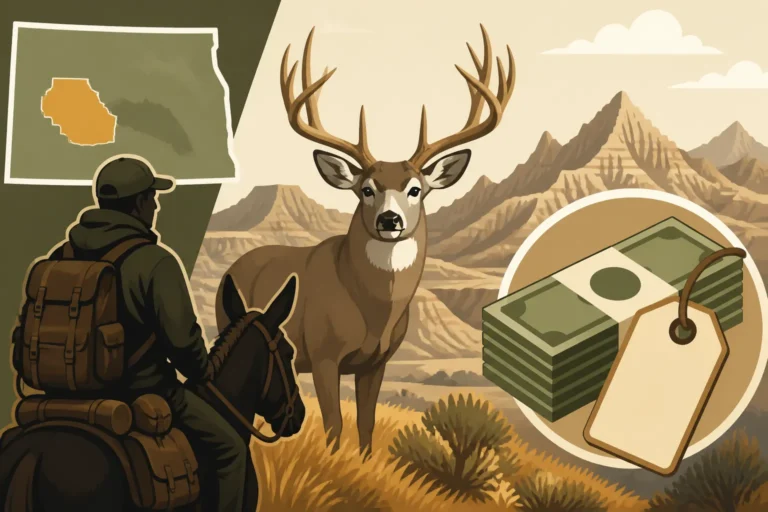
The majestic elk in North Dakota’s rugged Badlands represent a true trophy for any hunter. The idea of pursuing these incredible animals in such a breathtaking landscape is captivating. However, for nonresidents, this dream is largely just that – a dream, unless you somehow beat astronomical odds. You can't just arrive and book an elk guide; there's a fundamental hurdle that even the best outfitters cannot overcome for you.
The "Once-in-a-Lifetime" Elk Tag Reality
North Dakota manages its elk population with extreme care, recognizing the species' unique status and the limited habitat it occupies, primarily in the western Badlands. To hunt elk in North Dakota, you must draw a special license through a lottery. This license is famously considered a "once-in-a-lifetime" opportunity. What does that mean? It means if you are fortunate enough to ever draw an elk tag in North Dakota, you will never be eligible to draw another one for the rest of your life. This policy underscores the extreme rarity and value placed on each tag.
Now, here's the crucial point for nonresidents: the North Dakota Game and Fish Department allocates these "once-in-a-lifetime" elk tags exclusively to residents. There is no lottery pool, no application process, and no avenue for a nonresident to obtain a North Dakota elk tag. This isn't a matter of high competition; it's a complete legal exclusion. So, while the idea of Elk Hunting North Dakota's Badlands might sound thrilling, it's a resident-only affair when it comes to obtaining that coveted tag. Without a tag, a guide has nothing to guide you on.
Why No Outfitter Can Guarantee an Elk Hunt for Nonresidents
Given the resident-only nature of North Dakota elk tags, it becomes immediately clear why nonresidents cannot simply book a guided elk hunt. An outfitter's service is to assist you in hunting legally obtained game. If you, as a nonresident, cannot legally obtain an elk tag, then an outfitter cannot legally provide a guided elk hunting experience for you. Any outfitter claiming they can circumvent this rule for a nonresident should raise immediate red flags.
The process for residents who do draw an elk tag is intense, and many of them seek out professional help. For these fortunate residents, booking a guide to navigate the challenging terrain of the Badlands and increase their chances of success is a fantastic option. Services like GoHunt, for example, provide resources that residents might use to research hunt units and strategy, but they cannot facilitate the acquisition of a tag for nonresidents. Outfitters are there to enhance an already legal hunt, not to create one where none exists for a nonresident. So, if you're a nonresident dreaming of a guided elk hunt in North Dakota, you'll need to focus your efforts on other states where such opportunities are available for nonresidents, or perhaps consider the self-guided Spot-and-Stalk Elk in the Little Missouri Badlands if you are a resident. Otherwise, as the title implies, Why You Can't Book a North Dakota Elk Guide Without a Tag explains the harsh reality.
Moose and Bighorn Sheep: North Dakota's Ultimate Resident-Only Prizes
Beyond elk, North Dakota offers two other truly spectacular big game species: moose and bighorn sheep. These animals represent the pinnacle of North Dakota hunting for many residents, largely due to their rarity and the incredible challenge they present. For nonresidents, just like elk, these opportunities are entirely out of reach, making the concept of booking a guided hunt for them nonexistent.
Understanding the Extremely Limited Tags
Both moose and bighorn sheep populations in North Dakota are exceedingly small and managed with extreme precision. Moose are primarily found in the forested river bottoms and northern regions, while bighorn sheep are restricted to specific, rugged areas of the Badlands. The number of tags issued for either species in any given year is incredibly low, often in the single or low double digits, making them among the rarest hunting permits in the nation. This scarcity necessitates strict control over who can hunt them, and the answer is always: residents only.
The North Dakota Game and Fish Department works diligently to monitor these fragile populations, often adjusting tag numbers annually based on surveys, winter survival rates, and overall herd health. The conservation efforts surrounding these animals are paramount, and limiting hunting pressure is a key component of their management strategy. This means that if you're a nonresident, regardless of how much you might want to, you simply won't find a path to acquire a tag for these incredible animals. The state’s focus is entirely on preserving these herds and offering these unique, extremely limited opportunities to its own citizens. For more on these animals, check out North Dakota's Once-in-a-Lifetime Moose Herd and North Dakota's Small Bighorn Sheep Herd.
The "Once-in-a-Lifetime" Rule for Moose and Bighorns
Similar to elk, North Dakota's moose and bighorn sheep tags are also "once-in-a-lifetime" licenses, but with an even higher degree of exclusivity due to their extreme scarcity. Drawing one of these tags is often considered a monumental stroke of luck, a dream come true for a North Dakota resident who may have applied for decades. This "once-in-a-lifetime" designation further cements their status as exclusive resident pursuits, ensuring that those rare opportunities are distributed as broadly as possible among the state's hunting population over time.
As a nonresident, this means there is no path, legal or otherwise, to book a guided hunt for North Dakota moose or bighorn sheep. The fundamental requirement of possessing a legal tag is absent. No outfitter, no matter how reputable or connected, can bypass state law regarding tag allocation. Their services are designed to assist hunters who have successfully navigated the stringent lottery process and secured a valid tag. So, while you might find guides who specialize in other big game for nonresidents in other states, for North Dakota moose and bighorn sheep, the door is firmly closed for anyone living outside the state.
Pronghorn: A Western Prairie Hunt Reserved for North Dakota Residents
The sight of pronghorn antelope racing across the vast western prairies of North Dakota is iconic. These incredibly fast and wary animals offer a unique hunting challenge, often requiring keen glassing skills and patient stalks on open ground. Many nonresident hunters are drawn to the idea of pursuing pronghorn, a species not commonly found in every state. However, just like elk, moose, and bighorn sheep, North Dakota’s pronghorn hunting opportunities are almost exclusively reserved for its residents.
Pronghorn Allocation and Nonresident Restrictions
Pronghorn populations in North Dakota, while stable, are not as robust as in some other western states, making careful management essential. Historically, pronghorn numbers have fluctuated, experiencing significant declines during harsh winters, and the North Dakota Game and Fish Department manages them with a conservative approach to ensure long-term health and hunting sustainability. This management often involves a strictly limited number of tags, issued through a lottery, with a strong preference, if not outright exclusivity, for residents.
For nonresidents, the reality is that North Dakota does not typically offer pronghorn licenses. There might be some very rare, specific exceptions in certain years or for very specialized landowner tags (which are still highly regulated), but for the general nonresident hunter looking to apply in the lottery, the option simply isn't there. This policy ensures that the relatively smaller pronghorn population can support resident hunting pressure without being over-harvested. If you're hoping to experience Pronghorn Hunting Western North Dakota, you'll need to either be a North Dakota resident or look to other states with more liberal nonresident pronghorn opportunities.
Why a Guide Can't "Get You" a Pronghorn Hunt
The same principle applies here as with the other big game species: an outfitter provides services to enhance a legal hunt. Since nonresidents cannot obtain a North Dakota pronghorn tag through the standard lottery process, an outfitter cannot facilitate a guided pronghorn hunt. Booking an outfitter is contingent on possessing the proper license, and for nonresidents, that license for pronghorn simply isn't available.
This can be a disheartening realization for nonresident hunters who might have had successful guided hunts for pronghorn in states like Wyoming or Montana. The difference lies entirely in North Dakota's specific game management philosophy and tag allocation. While a North Dakota outfitter might be an expert in Spotting Pronghorn From a Section Road or Stalking Pronghorn on Open Grassland, their expertise cannot create a legal hunting opportunity where state law prohibits it for nonresidents. Therefore, if you're planning a nonresident hunt in North Dakota and want a guided experience, you'll need to focus your attention on species for which nonresident tags are available, such as pheasants or waterfowl.
Spring Turkey: A North Dakota Tradition Just for Locals
While big game species like elk and moose often steal the spotlight when discussing hunting restrictions, it's easy to overlook smaller game or birds that also fall under resident-only rules. North Dakota’s spring turkey season is a prime example of a popular hunting opportunity that is strictly reserved for its own residents, meaning nonresidents cannot book a guided hunt for this particular pursuit.
The Resident-Only Nature of Spring Gobbler Hunting
Spring turkey hunting in North Dakota is a cherished tradition for many locals. The sight and sound of strutting gobblers echoing through the timbered river bottoms or across the prairie draws many hunters out each year. The North Dakota Game and Fish Department manages its wild turkey populations carefully, and while robust in many areas, the spring season is specifically structured to prioritize resident participation.
For nonresidents, there is no lottery or direct license available for the regular North Dakota spring turkey season. This decision is typically made to ensure that local populations can sustain resident hunting pressure and to allocate these highly desirable opportunities to those who contribute directly to the state's wildlife conservation through their consistent license purchases and tax dollars. It's about maintaining a balance between opportunity and resource conservation, with a clear lean towards local access for this particular spring hunt. You can read more about this in North Dakota's Resident-Only Spring Turkey Season.
Exploring Fall Turkey Options (Where Nonresidents Can Hunt)
Here’s where it gets interesting for nonresidents wanting to hunt turkeys in North Dakota: while the spring season is off-limits, the fall turkey season offers a different story. North Dakota does provide opportunities for nonresidents to hunt turkeys during the fall season, and in some specific areas, guided hunts become a real possibility. This distinction is crucial for planning your trip.
One significant option for nonresidents interested in fall turkey hunting is through the Standing Rock Nation. The Standing Rock Sioux Tribe manages its own hunting and fishing regulations on tribal lands, often providing specific tags and licenses for nonresidents that open up opportunities not available through the state's general regulations. This means that a nonresident could potentially book a guided fall turkey hunt on Standing Rock tribal lands, assuming they acquire the necessary tribal permits. This provides a fantastic alternative for those eager to experience North Dakota turkey hunting. For more details on this specific option, check out Booking a North Dakota Standing Rock Nonresident Turkey Hunt. This stark contrast highlights how different regulations can be even for the same species, depending on the season and specific land management.
The Difference Between Booking a Guide and Drawing a Tag
This is arguably the most critical distinction for any nonresident hunter looking at North Dakota’s regulations. Many hunters, especially those new to western or lottery-based hunting, conflate the act of booking a guide with the act of acquiring a license. In North Dakota, for the species we've been discussing, these are two entirely separate and sequential processes, and for nonresidents, the first step is often impossible.
The Crucial Order of Operations
Think of it this way: a hunting guide is a service provider, offering expertise, equipment, scouting, and logistical support to enhance your hunt. They are not, and cannot be, a license provider or a workaround for state hunting regulations. The crucial order of operations is always:
- Acquire a legal hunting license/tag. This is the hunter's responsibility, and for certain North Dakota species, nonresidents simply cannot do this.
- Then, and only then, consider booking a guide. Once you have a valid tag for a legally huntable species, a guide can step in to help you pursue it.
This sequence means that for elk, moose, bighorn sheep, and pronghorn, a nonresident hunter will never reach step two, because step one is impossible under North Dakota law. Even if you browse platforms like BookYourHunt or GoHunt, you might find outfitters listed for North Dakota, but when you inquire about species like elk, they will inform you that you must first possess a valid North Dakota tag, which, as a nonresident, you cannot obtain. These platforms facilitate finding guides for available opportunities, they don't create new ones.
For instance, a resident who successfully draws a coveted elk tag might then look to a guide to help them navigate the challenging Badlands terrain. That guide is performing a service after the legal right to hunt the animal has been secured by the individual. The guide doesn’t provide the tag itself. This distinction is fundamental and applies across all states where tag allocation is regulated through lotteries and residency requirements. It’s essential to always understand the license requirements before even dreaming about booking a guide.
The Importance of Researching Regulations First
Before you spend a single dime on travel, gear, or even an outfitter inquiry, the absolute first step for any nonresident hunter considering North Dakota should be a thorough review of the current North Dakota Game and Fish Department (NDGFD) regulations. Their website is the definitive source for all licensing, season dates, bag limits, and—most importantly for nonresidents—which species are open to them.
Laws, regulations, and even license availability can change from year to year, so relying on outdated information or assumptions can lead to significant disappointment and wasted resources. Pay close attention to residency requirements for each species. For some, like pheasant or waterfowl, nonresident opportunities are plentiful. For others, like the big game species discussed above, they are nonexistent. Understanding North Dakota Hunting Licenses and What They Cost is the starting point. Don't let the allure of a guided hunt overshadow the critical need to confirm legal access to the species in question. A few hours of careful research can save you a world of heartache and expense later on.
Maximizing Your North Dakota Nonresident Hunting Opportunities
While the focus of this guide has been on what nonresidents cannot book a guide for, it's equally important to highlight the incredible opportunities that are available. North Dakota is a world-class hunting destination for several species, and nonresidents are more than welcome to experience these fantastic pursuits, often with the help of excellent local outfitters.
Focus on Available Species for Guided Hunts
If you’re a nonresident looking for a guided hunting experience in North Dakota, your primary focus should be on species with robust populations and established nonresident hunting seasons. The state truly shines as a destination for upland birds and waterfowl, offering some of the best hunting experiences in North America. These are the hunts where booking an outfitter can truly elevate your experience and put you on prime hunting ground.
| Category | Species | Nonresident Tags Available | Guided Hunt Option | Notes |
|---|---|---|---|---|
| Upland | Ringneck Pheasant | Yes | Yes | World-class, many outfitters, lodge packages |
| Sharptail Grouse | Yes | Yes | Often combined with pheasant, challenging | |
| Hungarian Partridge | Yes | Yes | Smaller birds, fast action | |
| Waterfowl | Ducks | Yes | Yes | Prairie potholes, Devils Lake, Missouri River |
| Geese | Yes | Yes | Field hunts, pass shooting, excellent | |
| Big Game | Deer (Archery) | Yes (after Sept. 14th on private land; check for public land dates) | Yes | Specific restrictions apply for public land access |
| Deer (Gun) | Yes (Lottery) | Yes (if you draw) | Lottery for antlered/antlerless, highly competitive | |
| Turkey | Fall Turkey | Yes (State & Tribal) | Yes | Standing Rock Tribal lands offer good options |
As you can see from the table, species like ring-necked pheasants are a nonresident hunter's dream. There are numerous reputable outfitters across the state specializing in Booking a Guided North Dakota Pheasant Hunt, offering everything from day hunts to multi-day lodge packages. Similarly, North Dakota's position on the Central and Mississippi Flyways makes it a waterfowl mecca. Nonresidents flock to the state for incredible duck and goose hunting, and a Booking a North Dakota Waterfowl Guide is a popular choice for maximizing success on the prairie potholes, Devils Lake, or the Missouri River. While nonresident deer gun tags are part of a lottery, if you are lucky enough to draw, you can absolutely Booking a North Dakota Deer Hunt with a guide.
Strategic Planning for Future Resident Status or Alternative Hunts
For those truly passionate about hunting North Dakota's restricted big game, one of the only long-term solutions is to establish residency. This is a significant life decision, of course, but for some, the lure of those "once-in-a-lifetime" tags for elk, moose, or bighorn sheep, or the annual opportunity for pronghorn and spring turkey, might make it a consideration. Establishing residency involves meeting specific legal criteria, which typically includes living in the state for a defined period, obtaining a North Dakota driver's license, registering vehicles, and other factors demonstrating intent to reside permanently.
Alternatively, if relocating isn't an option, embrace the fantastic hunting that is available. North Dakota offers unparalleled opportunities for pheasant, sharptail grouse, Hungarian partridge, and waterfowl. These hunts provide incredible experiences, challenging shooting, and the chance to immerse yourself in the unique prairie landscape. Many nonresident hunters return year after year for these experiences, often building long-standing relationships with outfitters and enjoying consistent success. Focusing on what North Dakota does offer for nonresidents will lead to much more rewarding and successful hunting adventures than continually trying to find loopholes for restricted species.
Disclaimer
This article is for general informational purposes only and does not constitute professional advice. Laws, prices and regulations vary by location and change over time. Consult a qualified professional for guidance on your specific situation.