Elk Hunting North Dakota’s Badlands
The dream of hunting elk often conjures images of vast mountain ranges out West, but for many North Dakotans, the chance to chase these majestic animals exists right in our own backyard, nestled within the rugged, breathtaking beauty of the Badlands. Drawing one of these coveted tags, however, is a once-in-a-lifetime opportunity that many pursue for years, if not decades. This isn't your typical elk hunt, and the unique challenges and incredible rewards of pursuing elk in North Dakota's Badlands demand a very specific approach, which this comprehensive guide aims to illuminate.
Understanding North Dakota's Elk Landscape
Elk in North Dakota are a testament to successful conservation and a surprising natural resilience. They're not widespread across the state like deer, but rather thrive in specific, often remote, pockets that offer the cover, forage, and solitude they need. Understanding this unique landscape is the first step toward preparing for an elk hunt here.
The Unique Badlands Terrain
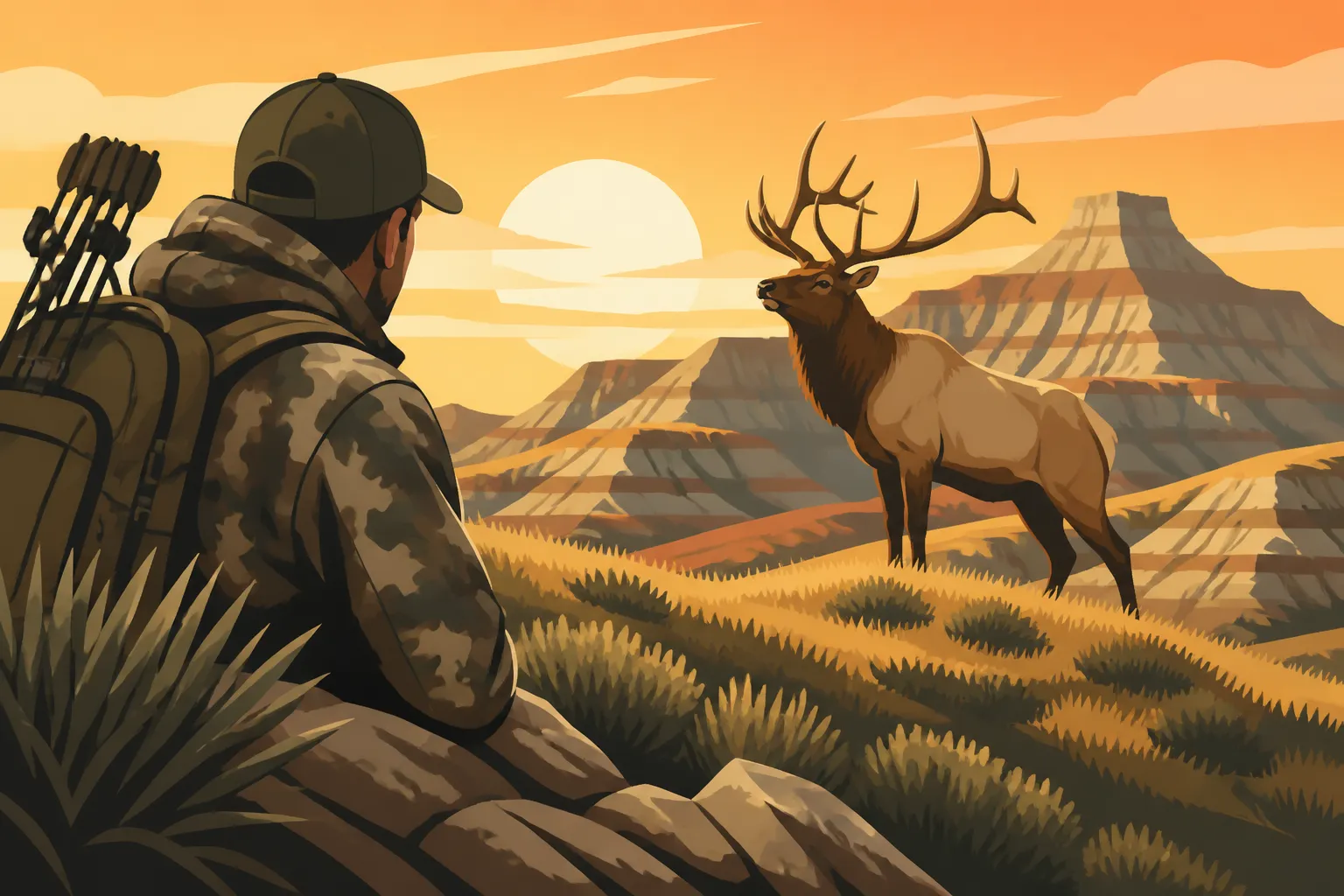
The North Dakota Badlands are an anomaly on the vast prairie, a dramatic landscape carved by wind and water, offering a stark contrast to the surrounding plains. Here, you'll find a mosaic of steep, broken buttes, deep coulees, juniper-studded hillsides, and pockets of Ponderosa pine. This terrain is physically demanding, with constant elevation changes and often loose, unstable footing. It's a place where you can quickly go from open ridgetops to dense, hidden draws, and these features are precisely what make it prime elk habitat. Unlike the sprawling timber country of the Rockies, the Badlands offer a more open, yet equally challenging, environment where elk can disappear surprisingly quickly. The scale might be smaller, but the ruggedness is no less intense.
Historical Presence and Current Recovery
Elk were once abundant across North Dakota, but like many large game species, they were extirpated from the state by the late 1800s due to unregulated hunting and habitat loss. The story of their return is a remarkable one, largely driven by natural re-colonization from populations in neighboring states, coupled with strategic reintroduction efforts by the North Dakota Game and Fish Department (NDGFD). These efforts have allowed the herd to grow steadily, supporting a limited, highly regulated hunt. The elk here aren't the same as their mountain cousins; they've adapted to a more open, prairie-edge existence, often utilizing dense pockets of cover and the broken topography for concealment and escape. It’s truly fascinating to learn How Elk Returned to the Badlands.
Key Elk Hotspots and Ranges
While elk can be found in various pockets throughout the western part of the state, their primary stronghold, and where the majority of hunting opportunities exist, is within the Little Missouri National Grassland and surrounding private lands in the Badlands. Specific units, such as those encompassing McKenzie, Billings, Golden Valley, and Slope counties, are known for holding elk. These areas offer the necessary combination of rugged topography, water sources, and diverse forage that elk require. Knowing the general areas where elk tags are offered is critical, but it's even more important to then dive into the specific units. For instance, Unit 4A and 4B in the northern Badlands, and 4E and 4F in the southern Badlands, are typically where the most tags are allocated, reflecting the highest population densities. These areas can vary from the heavily timbered draws near the Little Missouri River to more open, rolling prairie with deep cuts, offering different hunting experiences depending on the specific landscape.
The North Dakota Elk Tag Lottery System
Securing an elk tag in North Dakota is, for most, a multi-year endeavor. It operates on a lottery system, reflecting the limited nature of the herd and the high demand for these once-in-a-lifetime opportunities. It's not a matter of simply buying a tag over the counter; it requires patience, strategic application, and a good deal of luck.
Application Process and Deadlines
The application process for North Dakota elk tags is straightforward but requires attention to detail. All applications are submitted online through the North Dakota Game and Fish Department's portal. Typically, the application period for elk, moose, and bighorn sheep runs from mid-May to early June. It's absolutely crucial to pay attention to these deadlines, as missing them means waiting another year. You'll need a valid North Dakota hunting license, which includes a general game and habitat license, before you can apply for the lottery. This application is distinct from deer or other small game, so don't assume your other licenses cover it. The process is designed to be fair, giving all residents an equal shot, but the odds are long, as we'll discuss next. For a deeper dive into the specifics, check out the article on the North Dakota Elk Lottery Application Process.
Understanding Drawing Odds
Let's be real: drawing an elk tag in North Dakota is tough. These are truly North Dakota's Once-in-a-Lifetime Big Game Licenses, and the number of available tags is very limited. For example, the state might issue around North Dakota's 1,062-License Elk Season across all units, and when you consider the thousands of residents applying, the odds are often in the single-digit percentages, sometimes even less than 1%. The NDGFD publishes drawing odds from previous years, and while these are historical, they give you a realistic picture of your chances. Many hunters apply for decades before finally drawing a tag. There isn't a preference point system like some other western states, so every year is essentially a fresh start for all applicants. This means patience isn't just a virtue; it's a necessity for North Dakota elk hunters.
Resident-Only Restrictions
It's important to understand a key aspect of North Dakota's big game hunting: elk, moose, and bighorn sheep tags are strictly reserved for residents. Non-residents, unfortunately, cannot apply for these coveted permits. This is a common point of frustration for out-of-state hunters who might be interested in the unique challenge of a Badlands elk hunt, but it's a policy designed to maximize opportunities for state residents, given the limited populations of these species. So, if you're not a North Dakota resident, this part of the dream will remain just that – a dream. This is part of the broader reason Why Elk, Moose and Pronghorn Stay Resident-Only in North Dakota.
Essential Gear for Badlands Elk Hunting
Hunting elk in the Badlands requires a specific set of gear tailored to the terrain, the weather, and the unique challenges of the hunt. This isn't a leisurely walk in the park; it's an physically demanding endeavor, and having the right equipment can make or break your success and comfort.
Optics for Long-Range Scouting
The Badlands, with their open vistas and deep coulees, are a glasser's paradise – and a necessity for elk hunting. High-quality optics are not just recommended; they are absolutely essential. You'll spend a significant amount of time perched on a vantage point, scanning distant hillsides and shaded draws for any sign of elk. A good pair of 10×42 or 12×50 binoculars are a must, providing the magnification and light-gathering capability needed for dawn and dusk observations.
Even more critical is a spotting scope, ideally in the 60-80mm objective range with 20-60x magnification. This allows you to really pick apart distant cover, confirm if that dark spot is a rock or an elk, and evaluate antler size without having to hike miles to verify. Brands like Vortex, Swarovski, and Zeiss are popular choices among serious hunters for their clarity and durability. You'll also need a sturdy tripod for your spotting scope, as hand-holding at high magnifications is impossible for sustained glassing. This setup allows you to efficiently cover vast amounts of country, making the most of your limited time in the field.
Footwear and Clothing for Rugged Terrain
Your feet will be your most important asset in the Badlands. The terrain is relentless – steep, rocky, often muddy after rain, and unforgiving. Invest in high-quality, waterproof, and well-broken-in hiking boots with excellent ankle support. Brands like Kenetrek, Schnee's, or Lowa are often favored for their durability and comfort in rugged conditions. Blisters or rolled ankles can quickly end your hunt.
Clothing should be layered, emphasizing moisture-wicking base layers, insulating mid-layers, and a durable, silent, waterproof outer shell. North Dakota weather in the fall can be incredibly unpredictable, swinging from warm, sunny days to freezing rain or heavy snow within hours. You might start a morning hunt in below-freezing temperatures, only to be shedding layers by midday as you climb steep hills. Camouflage patterns that blend with the browns, grays, and sparse greens of the Badlands are advisable. Don't forget a blaze orange vest or hat, as required by law during certain seasons, to ensure safety.
Weapon Choices and Ammunition Considerations
North Dakota’s elk season typically coincides with rifle season, offering a wide range of suitable calibers. The Badlands, with its mix of open country and thick draws, often presents shots that can range from close-quarters encounters to several hundred yards across a canyon. Therefore, a flat-shooting, hard-hitting rifle is ideal. Popular choices include .30-06 Springfield, .300 Win Mag, 7mm Rem Mag, .308 Winchester, and 6.5 Creedmoor. Ensure your rifle is zeroed precisely for the expected range and that you are proficient with it under field conditions.
Ammunition choice is equally important. Use quality hunting bullets designed for elk, which means controlled expansion and good weight retention for deep penetration. Look for bullets like Nosler AccuBond, Barnes TTSX, Hornady ELD-X, or Federal Terminal Ascent. These bullets are designed to perform reliably on large, tough animals like elk. Practice extensively with your chosen load before the hunt, not just from a bench, but from various field positions, simulating real hunting scenarios. This will build confidence for that critical moment.
Scouting and Pre-Season Preparation
Drawing an elk tag in North Dakota is a monumental achievement, and it’s a shame to waste that opportunity by showing up unprepared. Pre-season scouting, both from your computer and on the ground, is absolutely non-negotiable for success in the Badlands.
Utilizing Digital Tools and Maps
In today's hunting world, digital scouting tools have become indispensable, especially for a limited-access, complex landscape like the North Dakota Badlands. Platforms like GoHunt offer invaluable satellite imagery, topo maps, land ownership overlays, and historical weather data, allowing you to identify potential bedding areas, travel corridors, water sources, and pinch points long before you ever set foot in the field. You can mark waypoints, measure distances, and visualize the terrain in incredible detail.
Beyond GoHunt, the North Dakota Game and Fish Department's PLOTS (Private Land Open To Sportsmen) map is crucial for identifying public access points and private lands where you have permission to hunt. Overlaying these maps with federal land designations for the Little Missouri National Grassland can help you identify vast tracts of public ground. Pay attention to changes in vegetation, terrain features, and even the aspect of slopes, as elk will often utilize north-facing slopes for bedding to stay cool during warmer periods.
Physical Scouting Strategies
While digital tools are powerful, there's no substitute for boots-on-the-ground scouting. If you draw a tag, try to make at least one, if not several, trips to your chosen unit during the off-season. This allows you to confirm what you see on maps, identify fresh sign, and get a feel for the scale and physical demands of the area. Look for elk tracks, droppings, rubs, and wallows. Pinpoint escape routes and natural funnels.
Early morning and late evening hikes are best for observing elk movement without disturbing them too much. Bring your optics and spend time glassing from high vantage points. Note where elk are feeding, bedding, and traveling between the two. Remember, elk are intelligent and will quickly change their patterns if pressured. Your goal during scouting is to understand their habits, not to chase them. Also, take the time to physically walk potential stalk routes and assess the noise level and wind patterns in specific areas. Understanding Physical Prep for Badlands Elk Terrain is just as important as knowing the land itself.
Understanding Elk Behavior and Movement Patterns
Elk behavior in the Badlands is a fascinating blend of typical elk characteristics and adaptations to their unique environment. They are generally crepuscular, meaning most active at dawn and dusk, feeding in more open areas or along the edges of cover, then retreating to dense draws or timbered pockets during the day to bed. During the rut (late September through October), bull elk become vocal, bugling to attract cows and challenge rivals, which can be an incredible aid to locating them.
However, North Dakota's elk are also keenly aware of hunting pressure. They will often become largely nocturnal or move into the densest, most inaccessible cover if disturbed. Pay close attention to wind direction, as elk have an incredible sense of smell. Understand that their movements will often be dictated by the availability of food, water, and security cover. They might travel significant distances between feeding and bedding areas, often using the deep coulees and draws as concealed highways. Learning to read the subtle nuances of their movement patterns will be key to your success.
Hunting Tactics for North Dakota Elk
Once you've drawn that coveted tag and completed your scouting, it's time to put a plan into action. Elk hunting in the Badlands is a chess match against a wary opponent in challenging terrain, and success often comes down to adapting your tactics to the specific situation.
Spot and Stalk in Open Country
The broken, yet often open, nature of the Badlands makes spot-and-stalk hunting a primary tactic for many elk hunters. This strategy hinges on spending significant time glassing from high vantage points, systematically picking apart the landscape with your binoculars and spotting scope. When you locate elk, the real challenge begins: planning a careful, concealed approach. This requires an acute awareness of wind direction, terrain features that offer cover, and the elk's current activity.
The beauty of the Badlands is that you can often see elk from a long distance, allowing you to formulate a strategy. The challenge lies in closing that distance without being seen, heard, or smelled by animals with incredible senses. This might involve long detours, crawling on hands and knees, or waiting for hours for elk to move into a more favorable position. This is the essence of Spot-and-Stalk Elk in the Little Missouri Badlands. Patience is paramount; a hasty stalk often results in spooked elk and a missed opportunity.
Still-Hunting Timbered Draws
While much of the Badlands appears open, there are numerous deep coulees and draws that hold significant timber pockets, often Ponderosa pine or juniper. These dense areas provide crucial thermal cover and security for elk, especially during midday or when pressured. Still-hunting these draws involves moving incredibly slowly, stopping frequently to glass and listen, relying on your eyes and ears to detect elk before they detect you.
Walk against the wind, if possible, moving just a few steps at a time, then pausing for several minutes to scan every shadow and listen for the tell-tale crunch of leaves, snapping twigs, or the subtle shift of an elk's body. Elk blend surprisingly well into this environment, and it's easy to walk past one if you're not meticulous. This tactic is particularly effective during the midday lull when elk are typically bedded. Combining this with tactics used for Hunting North Dakota's Badlands Mule Deer Country can also be highly effective, as the animals often utilize similar cover.
Calling Strategies in the Badlands
Calling can be an incredibly effective tool for locating elk and drawing them in, especially during the rut. Locator bugles can help pinpoint a bull's general location, allowing you to then strategize your approach. Once closer, cow calls, mews, and soft chirps can be used to entice curious elk into range or to stop a moving animal.
However, calling in the Badlands requires a nuanced approach. The open nature of some areas means sounds carry far, and elk are adept at pinpointing the source. Over-calling can make elk wary. Often, a subtle approach, using calls to confirm location and then setting up for a shot, is more effective than aggressive calling. If a bull responds, try to get into a good shooting position quickly, as they can sometimes come in silently or circle downwind to get your scent. Having a partner who can call while you remain ready to shoot can be a highly successful strategy. Don't underestimate the power of simply listening to locate elk, as their distinct bugles can carry for miles in the right conditions.
Field Care, Recovery, and Regulations
Successfully harvesting an elk in the North Dakota Badlands is just one part of the journey. The next critical steps involve proper field care, efficient recovery, and adhering to all regulatory requirements to ensure your hard-earned meat is preserved and your hunt is legal.
Field Dressing in Remote Terrain
Elk are large animals, and proper field dressing is paramount, especially in warmer weather. The goal is to cool the meat as quickly as possible to prevent spoilage. This means gutting the animal immediately after the shot. If you're alone, you might need to roll the elk onto its back, using rocks or logs to prop it up for easier access. Once the entrails are removed, open the body cavity wide and prop it open with a stick to allow air circulation.
If the weather is warm, quartering the animal and hanging the meat in game bags is advisable to further aid cooling. Removing the hide also greatly accelerates cooling. Be prepared with sharp knives, a bone saw, and plenty of game bags. Consider bringing a tarp or ground cloth to keep the meat clean as you work. The Badlands can be remote, and getting an elk out quickly enough to save the meat can be a serious challenge, making efficient field dressing crucial.
Packing Out Your Elk
This is where the true test of your physical preparation comes into play. Elk are heavy, and the Badlands terrain is unforgiving. Unless you're hunting very close to a road, you will likely need to quarter your elk and pack it out in multiple trips. A sturdy, internal frame backpack designed for packing heavy loads is essential. Game bags are critical to keep the meat clean and free from flies and debris.
Plan your extraction route carefully. Sometimes, it's easier to pack meat uphill to a waiting vehicle on a ridge than to try to drag it down into a deep, brushy coulee. Consider bringing a friend or two to help with the pack out; many hands make light work, especially with an animal this size. Even with a quartered elk, you'll be making multiple trips with significant weight on your back, navigating steep, uneven ground. This is the moment when all that training you did, perhaps inspired by tips from Packing for an Eight-Day North Dakota Elk Hunt, really pays off.
Mandatory Reporting and CWD Considerations
North Dakota has mandatory reporting requirements for all harvested big game, including elk. This is usually done online through the NDGFD website or their mobile app. You'll need to report your harvest within a specific timeframe, often within 12 or 24 hours of tagging the animal. This data is vital for wildlife managers to monitor herd health and population dynamics.
Additionally, Chronic Wasting Disease (CWD) is a serious concern in many deer and elk populations across the country, including North Dakota. The NDGFD has designated North Dakota's Fourteen-Unit CWD Zone where hunters may be required to submit a sample for CWD testing, or voluntary sampling stations might be available. Always check the current regulations for your specific hunting unit. Be aware of any carcass transportation restrictions from CWD-positive areas to prevent the potential spread of the disease. Proper handling and submission of samples are crucial for monitoring and managing CWD within the state's elk herd.
Common Challenges and How to Overcome Them
Elk hunting in the North Dakota Badlands is far from easy. It presents a unique set of challenges that can test even the most seasoned hunter. Recognizing these obstacles beforehand and having strategies to overcome them is vital for a successful and enjoyable experience.
Dealing with Limited Access and Private Land
One of the biggest frustrations for hunters in North Dakota, particularly when it comes to coveted species like elk, is navigating land ownership. While the Little Missouri National Grassland offers vast tracts of public land, elk don't always respect property lines. They frequently move between public and private land, seeking food, water, and sanctuary. This can lead to situations where you've spotted an elk on public ground, only for it to disappear onto adjacent private property where you don't have permission.
Overcoming this requires extensive pre-season planning. Use your digital mapping tools (like GoHunt) to identify land ownership boundaries, and during your physical scouting trips, make an effort to knock on doors and ask for permission from private landowners. A friendly, respectful approach can sometimes open doors, but be prepared for "no." Respecting private property and securing permission is not just a courtesy; it's a legal requirement in North Dakota, where North Dakota Trespass and Permission Law is quite clear. Sometimes, a "yes" on even a small parcel can grant you access to a crucial travel corridor or an overlooked bedding area.
Navigating Extreme Weather Conditions
North Dakota weather is notoriously unpredictable, especially in the fall. An elk hunt might start under clear, mild skies, only to be hit with a sudden blizzard, freezing rain, or scorching heat the next day. These extreme weather shifts can significantly impact elk behavior and hunter comfort and safety.
Preparation is key. Always pack layers of clothing that can adapt to rapid temperature changes, as discussed in the gear section. A high-quality rain suit is a must, even if the forecast looks clear. Be prepared for mud, snow, and ice, which can make steep Badlands trails treacherous. Carry emergency supplies, including extra food, water, a fire starter, and a first-aid kit, as help can be a long way off in these remote areas. Knowing how to read the weather and having a backup plan to get off the mountain safely if conditions turn severe is a critical skill. Don't let a sudden change in weather catch you unprepared and force you to abandon your hunt prematurely or, worse, put you in danger.
Physical Demands of the Badlands
The Badlands might not have the towering peaks of the Rockies, but they are incredibly physically demanding. The constant up-and-down, steep slopes, loose rock, and deep coulees can quickly wear down even fit individuals. You'll be covering miles on foot, often with heavy gear, and potentially packing out hundreds of pounds of meat.
Physical conditioning before your hunt is non-negotiable. Start a rigorous training regimen months in advance that includes hiking with a weighted pack, stair climbing, and cardiovascular endurance exercises. Focus on strengthening your legs, core, and back. Don't underestimate the impact of elevation changes; even at lower altitudes, consistent climbing and descending can be brutal. Being physically prepared not only increases your chances of success by allowing you to hunt harder and longer but also ensures you can safely recover your animal and enjoy the experience. This journey is a marathon, not a sprint, and your body needs to be ready for it.
Making the Most of Your Once-in-a-Lifetime Opportunity
Drawing a North Dakota elk tag is a dream come true for many. It's an opportunity that might only come once in a lifetime, so it's essential to approach it with the right mindset and to savor every moment, regardless of the outcome.
Embracing the Journey
Hunting, especially for a species as magnificent and elusive as elk in a unique setting like the Badlands, is about far more than just punching a tag. It's about the entire experience: the months of anticipation, the meticulous planning, the challenging scouting trips, the early mornings spent glassing vast landscapes, and the physical and mental tests you'll face.
Embrace the challenges, learn from every mistake, and appreciate the raw beauty of the Badlands. Enjoy the solitude, the wildlife you encounter, and the camaraderie if you're hunting with friends or family. Even if you don't harvest an elk, the memories forged during a North Dakota elk hunt will last a lifetime. This is truly What a Once-in-a-Lifetime Elk Tag Means.
Documenting Your Experience
Because this is such a rare opportunity, consider documenting your journey. This could be through a hunting journal, photographs, or even video. Capture the landscapes, the wildlife, the moments of frustration, and the moments of triumph. These records will serve as precious mementos of an incredible adventure and allow you to relive the experience for years to come.
Sharing your story, especially with aspiring hunters or those who might never get such an opportunity, can also be a rewarding way to give back. Show the realities of the hunt, the effort involved, and the deep respect for the animal and the land.
Respecting the Resource
Ultimately, a North Dakota elk hunt is a privilege. It’s a chance to engage with a magnificent animal in a truly special landscape. With that privilege comes a profound responsibility to respect the resource, the land, and the regulations. Hunt ethically, follow all laws, and practice good sportsmanship.
Ensure you have a clean shot and make every effort to recover any animal you hit. Leave no trace of your presence behind, packing out all trash and adhering to Leave No Trace principles. Your actions as a hunter reflect on the entire hunting community. By respecting the elk, the Badlands, and the hunting tradition, you help ensure that future generations of North Dakotans will also have the opportunity to pursue this incredible, once-in-a-lifetime dream.
Disclaimer
Please note that hunting regulations, license requirements, and season dates are subject to change. Always consult the official North Dakota Game and Fish Department website or their latest regulations booklet before planning any hunting trip. This guide provides general information and should not be used as a substitute for official sources.