Towner County Public Hunting Ground
Finding quality public hunting ground, especially in a county you might not be intimately familiar with like Towner County in North Dakota, can feel like searching for a needle in a haystack. You pore over maps, dreading the possibility of driving hours only to find "No Hunting" signs everywhere. This guide is here to cut through that frustration, offering a comprehensive look at the public hunting opportunities available in Towner County, helping you understand the lay of the land, what game to pursue, and how to best utilize these resources for a successful hunt.
Understanding the Landscape of Towner County Public Hunting
Towner County, nestled in the heart of North Dakota's prime prairie pothole region, offers a distinct blend of agricultural fields, rolling grasslands, and vital wetland habitats. Unlike the rugged Badlands or sprawling river bottomlands, hunting here often means navigating a mosaic of private farmland interspersed with public access areas. It's a landscape shaped by farming, but also blessed with enough natural cover and water to support a healthy population of game animals.
The Prairie Pothole Influence
The most defining feature of Towner County, ecologically speaking, is its abundance of prairie potholes. These glacially formed wetlands, ranging from small, temporary depressions to larger, semi-permanent sloughs, are magnets for waterfowl and provide crucial water sources and cover for upland birds and deer alike. Understanding where these potholes are concentrated can be a game-changer for your hunt. You'll find many of the public lands, especially Waterfowl Production Areas (WPAs), specifically designed to preserve and offer access to these incredible natural features. Hunting these areas often involves focusing on edges, transitions, and the small pockets of cattails and dense grasses that surround the water.
Agricultural and Grassland Habitats
Beyond the potholes, Towner County is largely an agricultural hub, dominated by fields of wheat, corn, and sunflowers. This might sound daunting for hunting, but these cultivated lands, especially after harvest, create important food sources for deer, pheasants, and geese. Interspersed among these fields are tracts of native prairie and planted cover, often enrolled in programs like PLOTS (Private Land Open To Sportsmen). These PLOTS tracts are critical, providing vital escape cover, bedding areas, and nesting habitat right alongside the food-rich fields. Hunting Standing Corn for Late-Season Geese or hunting standing sunflowers for late-season deer are tactics that become particularly effective when agricultural fields meet good cover.
Public Land Types in Towner County
When you're looking for public hunting opportunities in Towner County, you'll primarily encounter a few key types of land. Each has its own characteristics and rules, so understanding them is crucial.
- PLOTS (Private Land Open To Sportsmen): This program is a true gem for North Dakota hunters. It consists of private land where landowners have voluntarily opened their property to public hunting access. These parcels can range from small strips of grass to expansive fields and wetlands. The beauty of PLOTS land is its often strategic location, frequently bordering private areas that hold game, acting as corridors or feeding zones. You can usually identify these by distinctive yellow triangular signs. Remember, these are agreements with landowners, so always be respectful, follow the rules, and leave no trace. Checking the latest PLOTS guide or using a mapping app is essential, as these parcels can change from year to year. Scouting PLOTS Land Before Season is always a good idea.
- Waterfowl Production Areas (WPAs): Managed by the U.S. Fish and Wildlife Service, WPAs are specifically acquired and managed for the benefit of waterfowl and other migratory birds. In Towner County, these are incredibly valuable for duck and goose hunting, but they also provide excellent habitat for pheasants, deer, and other species that utilize wetland and grassland environments. While waterfowl is in the name, don't overlook a WPA for upland birds or even deer during certain times of the year, especially if it has good cattail sloughs and dense cover. Hunting a Waterfowl Production Area for Deer can be surprisingly productive.
- State School Lands: These are lands owned by the state and managed by the Department of Trust Lands. Many of these sections are open to public hunting, though some may be leased for grazing or other agricultural purposes. It's important to verify the current access status for any specific parcel you're interested in. These lands can often be found mixed in with private property, so knowing your boundaries is paramount.
To help visualize the mix of land types you might encounter, here's a quick overview:
| Public Land Type | Primary Game Focus | Typical Habitat in Towner County | Key Considerations |
|---|---|---|---|
| PLOTS (Private Land Open) | Deer, Pheasant, Waterfowl | Mixed: Crop edges, grass, wetlands, shelterbelts | Access can change yearly, respect signage |
| Waterfowl Production Areas | Waterfowl, Pheasant, Deer | Wetlands, dense grass, some upland | Excellent for birds, often high quality habitat |
| State School Lands | Deer, Pheasant, Small Game | Varied: Grassland, marginal ag, some wetlands | Verify current access, know property lines |
Navigating Public Access: Tools and Strategies
The challenge with hunting in a county like Towner isn't a lack of game, but rather figuring out where you can legally and effectively pursue it. With so much private land, having the right tools and strategies to navigate public access is absolutely non-negotiable.
The Indispensable Digital Map
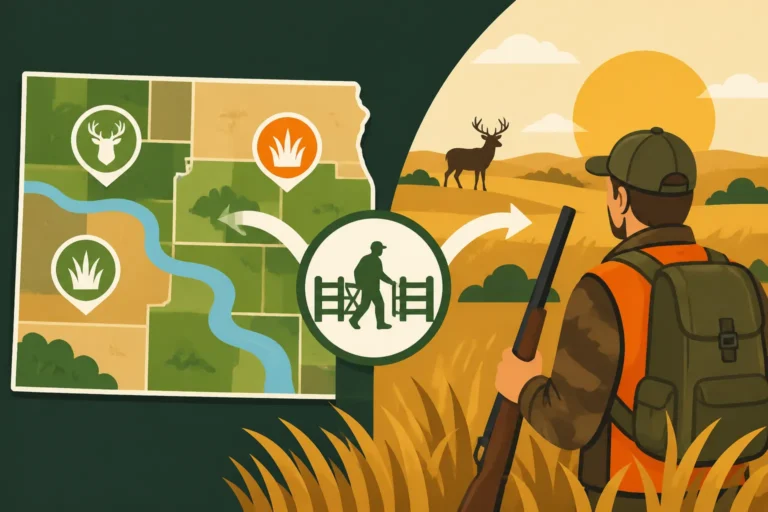
Gone are the days of relying solely on paper plat books, though they still have their place. Today, a robust digital mapping application like onX Hunt or GoHunt is your best friend when hunting Towner County. These apps overlay property ownership data onto satellite imagery, clearly showing public land boundaries, PLOTS acres, and even the names of private landowners. This is essential for:
- Identifying PLOTS: You can quickly see all available PLOTS tracts in the county, often with specific information about the habitat or rules. This saves countless hours of driving around hoping to spot a sign.
- Staying Legal: There's nothing worse than mistakenly trespassing. These apps show your exact location relative to property lines, preventing accidental incursions onto private land. This is incredibly important in North Dakota, where the definition of "posted" land is very clear, but visual boundaries can sometimes be ambiguous on the ground.
- Scouting Remotely: Before you even leave home, you can use these tools to scout potential areas, looking for cover, water sources, field edges, and access points. You can mark waypoints for potential stand locations or pheasant walks. Reading Aerial Photos for Badlands Deer is a concept that applies just as well to prairie deer, helping you identify travel corridors and bedding areas.
Even with these fantastic digital tools, remember that cell service can be spotty in rural areas. Always download offline maps before you head out, especially if you're venturing into more remote parts of the county.
Scouting for Success
While digital scouting is powerful, nothing beats boots on the ground. A quick drive or walk-through of a potential hunting area before the season, or even the day before a hunt, can reveal critical details.
- Look for Sign: Fresh tracks, droppings, rubs, and scrapes will tell you where deer are moving. For pheasants, look for dusting areas, roosting cover, and feeding patterns around crop fields. Finding Sign Along a Shelterbelt can be incredibly productive, as these linear features often act as highways for deer and excellent cover for birds.
- Observe Access Points and Pressure: How easy is it to get into an area? Are there other vehicles? High pressure can quickly push game into thicker cover or onto private land. Identifying less obvious access points can give you an edge.
- Understand the Habitat: How thick is the cover? Where are the natural funnels? Which way will the wind carry your scent? Scouting helps you formulate a game plan based on actual conditions, not just what a map suggests. Even if you're not planning a multi-day trip, taking a day to drive the county roads, noting areas of good cover and potential public access, is time well spent.
Targeting Game Species in Towner County Public Lands
Towner County might not be known for its massive elk or moose, but it offers fantastic opportunities for several other popular game species. Success here is about understanding the local populations and tailoring your approach to the unique prairie environment.
White-Tailed Deer
Whitetails are the most common big game animal you'll find in Towner County. They thrive in the mix of agricultural land, shelterbelts, and wetland fringes. While you won't find the dense timber of some other states, these deer are masters of utilizing the available cover.
- Habitat Hotspots: Look for whitetails along the edges of crop fields, particularly corn and sunflowers, where they feed. Shelterbelts (tree rows planted for windbreaks) are critical bedding and travel corridors. Creek bottoms, even small ones, provide invaluable cover and water sources. PLOTS tracts that offer dense cattail sloughs or thickets are also prime areas.
- Hunting Strategies: Still-hunting slowly along a shelterbelt or the edge of a WPA can be productive. Setting up a ground blind or small treestand on a field edge or near a natural funnel between cover areas can also pay off, especially during the early morning or late evening. Rattling and decoying can work, but consider Rattling Volume on the Open Prairie – you don't always need to go full blast.
Ring-Necked Pheasant and Upland Birds
Towner County is pheasant country, no doubt about it. The blend of cultivated fields and dense cover provides ideal habitat for these colorful birds. You'll also find Hungarian partridge and sharptail grouse, offering a diverse upland hunting experience.
- Pheasant Habitat: Look for pheasants in standing corn or sunflower fields (post-harvest), dense cattail sloughs in WPAs and PLOTS, and shelterbelts. CRP (Conservation Reserve Program) grasslands, which you'll find on many PLOTS acres, are also prime. Walking a Pheasant Field at Midday can be effective, as pheasants often hold tight in thick cover during the warmest parts of the day.
- Upland Bird Strategies: Walking with a good bird dog is often the most effective way to hunt pheasants and Huns. Focus on working cover thoroughly, pushing birds out. If hunting without a dog, a group walk-through or "push" of a long field edge or shelterbelt can work, with blockers positioned at the end. Hunting Hungarian Partridge Field Edges requires a keen eye and quick reflexes, as Huns are known for their explosive covey flushes. Sharptails will often be found in more open, native grassland.
Waterfowl (Ducks and Geese)
Given its location in the prairie pothole region, Towner County is a fantastic destination for waterfowl hunting. Mallards, pintails, gadwalls, and various geese species frequent the area during migration.
- Waterfowl Hotspots: WPAs are tailor-made for waterfowl. Look for larger potholes that hold water consistently. Nearby agricultural fields (cut grain or corn) are prime feeding grounds for geese and dabbling ducks. Decoy Spreads for Prairie Pothole Mallards can be as simple as a dozen decoys or a more elaborate setup, depending on the specific water body and desired species.
- Waterfowl Strategies: Layout blind hunting in cut fields for geese is popular. For ducks, jump-shooting smaller potholes can be exciting, or setting up a spread on a larger slough or WPA pond. Understanding migration patterns and local roosting habits is key. Remember, North Dakota has specific rules about nonresident waterfowl hunting on public lands, including North Dakota's Nine Resident-Priority Waterfowl Days, so always check current regulations.
Best Practices for a Successful Towner County Hunt
A successful hunt in Towner County, like anywhere else, goes beyond just knowing where to go and what to hunt. It's about preparedness, respect, and adapting to the conditions.
Respecting Private Land and Public Access
In a checkerboard landscape of public and private land, showing respect is paramount. The generosity of landowners through programs like PLOTS is what makes much of the hunting in North Dakota possible.
- Know Your Boundaries: Use your onX Hunt or GoHunt app constantly. Always err on the side of caution. If you're unsure, don't cross a boundary.
- Be a Good Neighbor: Close gates, don't litter, avoid driving off-road where not allowed, and be mindful of noise. This ensures these public access opportunities continue for everyone. What North Dakota Trespass Law Requires is something every hunter should be intimately familiar with.
- Ask Permission: If you see a promising looking piece of private land, don't be afraid to knock on the farmhouse door and politely ask for permission. Many North Dakota farmers are gracious, especially if you offer to help with any potential deer damage or are respectful of their land.
Weather and Gear Preparedness
North Dakota weather can change in an instant, especially on the open prairie. What starts as a crisp fall morning can quickly turn into a blustery, cold, or even snowy day.
- Layer Up: Dress in layers to adapt to fluctuating temperatures. Wind can be a major factor, so a good windbreak layer is essential.
- Rain Gear: Always have waterproof outer layers, even if the forecast looks clear. A sudden prairie shower can soak you to the bone quickly.
- Footwear: Sturdy, waterproof boots are a must, especially when navigating muddy fields or wading through wet grass around potholes.
- Safety First: Carry a first-aid kit, plenty of water, and ensure your communication devices are charged. Let someone know where you're going and when you expect to return. Blaze orange is often required or strongly recommended during certain seasons, so be sure to check the regulations. How Much Blaze Orange North Dakota Requires can vary by specific season and weapon type.
Adapting to Hunting Pressure
Public lands, especially easily accessible ones, can see a fair amount of hunting pressure. Learning to adapt to this is part of the game.
- Go Deeper: Many hunters won't walk far from their vehicle. If you're willing to put in the extra mile, you can often find unpressured pockets of game. This is where digital maps really shine, helping you identify distant cover that might be overlooked.
- Hunt Mid-Week: If your schedule allows, hunting on weekdays often means significantly less competition.
- Adjust Your Timing: Deer, pheasants, and waterfowl that have been pressured will often become more nocturnal or move into thicker cover. Adjust your hunting times (early morning, late evening) or focus on pushing dense cover during midday when animals are holding tight. Hunting Pressure on North Dakota Public Land is a real factor, but it's manageable with smart tactics.
Hunting in Towner County, North Dakota, offers a truly authentic prairie experience. With the right knowledge, tools, and a respectful approach, you'll discover a wealth of public ground ready for your next adventure. Happy hunting!
Disclaimer
This article is for general informational purposes only and does not constitute professional advice. Laws, prices and regulations vary by location and change over time. Consult a qualified professional for guidance on your specific situation.