Where North Dakota’s Bighorn Herd Ranges
Hunting for bighorn sheep in North Dakota is quite literally a once-in-a-lifetime dream for many, but even for those incredibly fortunate individuals who draw one of these rare tags, knowing where to even begin looking can feel overwhelming. You've pictured those incredible rams on the craggy peaks, but the vastness of the Badlands can make finding them seem impossible. This guide is here to demystify the range of North Dakota's bighorn herd, offering a detailed look at their preferred habitat and the specific areas where these magnificent animals roam, helping you understand their patterns whether you're scouting or simply hoping for a glimpse.
The Core of North Dakota's Bighorn Range: The Rugged Badlands
When you think of North Dakota, you might picture endless prairie, but the western part of our state holds a hidden gem: the Badlands. This dramatic landscape of eroded buttes, deep canyons, and winding coulees is the sole home to North Dakota's bighorn sheep herd. These aren't animals you'll find just anywhere; they are specially adapted to this harsh, beautiful, and unforgiving terrain. The very geology that makes the Badlands so iconic also provides the crucial elements these sheep need to survive and thrive. It's a land of sharp contrasts, and it's precisely these features that define where North Dakota's bighorn herd ranges.
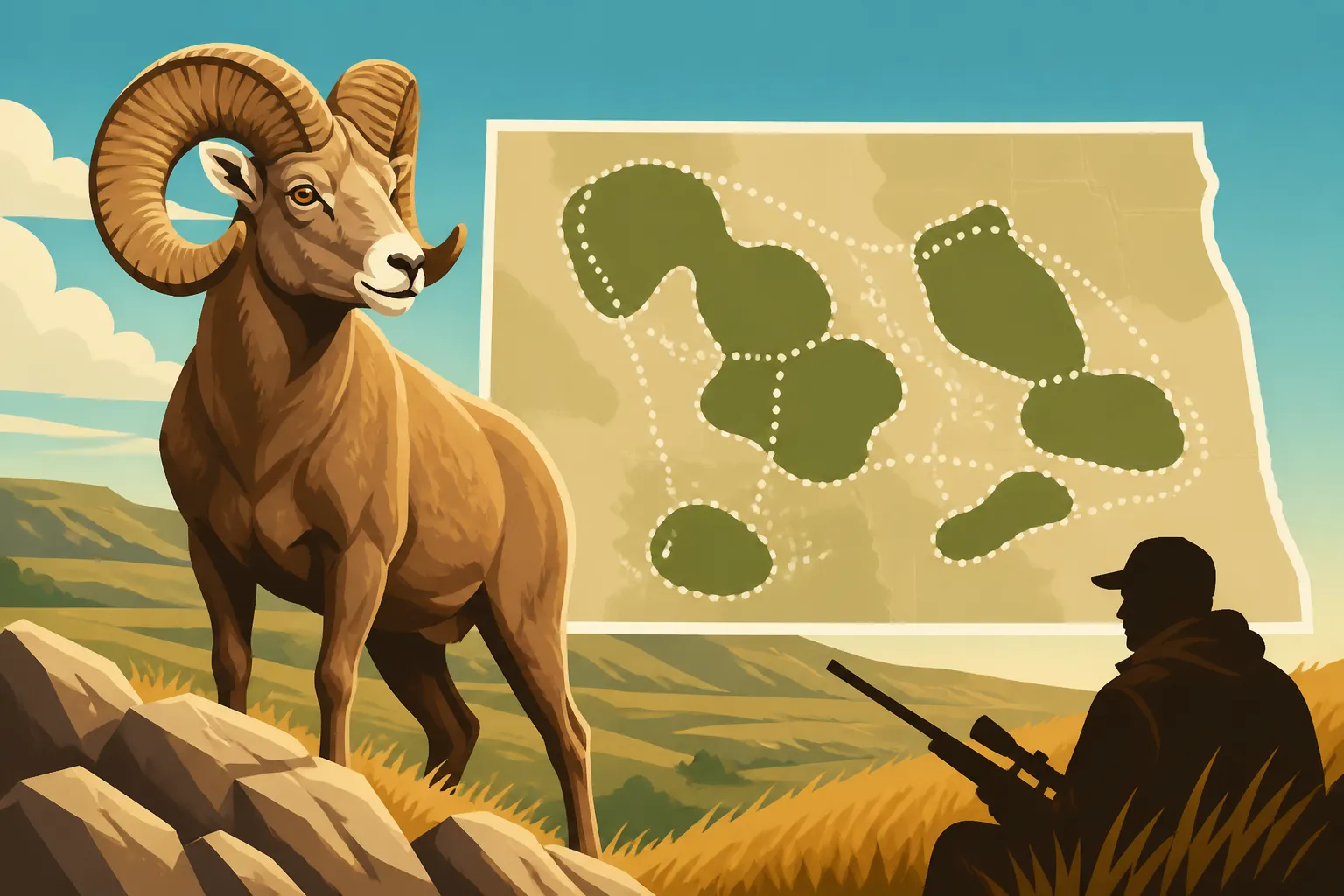
The primary range of our bighorns is concentrated in the North Dakota Badlands, particularly the areas west of the Missouri River. This includes portions of McKenzie, Billings, Golden Valley, and Slope counties. While the entire Badlands region isn't uniformly populated, these counties contain the core habitat. The deeply carved landscape, often resembling a moonscape in its ruggedness, offers the critical escape terrain that bighorn sheep rely on to evade predators. They need those steep, rocky faces and inaccessible ledges, which is why their distribution is so tied to these specific geological formations. You won't find them casually strolling across flat prairie fields; their lives revolve around the vertical world of the Badlands.
The Little Missouri National Grassland, which encompasses a significant portion of the Badlands, is a key area within this range. Within the Grassland, certain areas are renowned for bighorn presence due to their exceptional topography. These are not expansive, continuous herds; rather, they are typically smaller, distinct populations that utilize specific pockets of habitat. Understanding that their range is fragmented into these "islands" of suitable terrain is crucial. It’s not about finding a huge herd that roams broadly, but rather identifying the specific, isolated areas where these animals have established themselves. If you're planning a trip, focusing on these known pockets will be far more productive than just generally looking across the entire Badlands expanse.
Essential Bighorn Habitat: Steep Slopes, Escape Terrain, and Forage
Bighorn sheep aren't just in the Badlands; they're in very specific parts of the Badlands. Their survival hinges on a combination of factors: steep, rocky slopes, proximity to escape terrain, and access to palatable forage. This isn't just a preference; it's a fundamental requirement for a species that faces significant predatory pressures and needs specialized nutrition. Without these key habitat components, a bighorn herd simply cannot establish or sustain itself.
The Importance of Steep and Broken Topography
One of the absolute non-negotiables for bighorn sheep is steep, broken topography. Imagine sheer cliff faces, deeply cut ravines, and eroded buttes with rocky outcrops. This isn't just for dramatic photos; it's their defense system. When a predator like a coyote or a mountain lion approaches, bighorns need to be able to scramble up slopes that other animals, particularly large predators, cannot navigate. These steep grades, often exceeding 45-degree angles, provide immediate safety. Physical Prep for Badlands Elk Terrain talks about the physical demands of this landscape for hunters, and it's no different for the sheep trying to survive there daily. They use these impossible-looking cliffs as high ground to spot danger and as escape routes when necessary.
This preference for vertical relief means that even within the Badlands, you'll find them concentrating in the most rugged sections. Areas with significant elevation changes and exposed rock formations are prime territory. They'll often be found near the rims of the deepest draws or perched on benches partway up a butte. This broken country also provides excellent thermal cover in harsh North Dakota winters and crucial shade during hot summer days. The sun can beat down mercilessly in the Badlands, and those overhangs and north-facing slopes offer vital respite. It's a challenging environment for any creature, but the bighorns have perfected living within its constraints.
Forage and Water Sources within the Range
While escape terrain is critical, bighorn sheep also need food and water. Their diet primarily consists of grasses, forbs, and browse. They are often found grazing on the less steep, but still elevated, benches and plateaus that are adjacent to their escape terrain. These areas, though often sparse, provide the necessary nutrition. They are agile and will move between these areas, always keeping an eye on the nearby cliffs. The quality and availability of forage can fluctuate dramatically depending on rainfall and seasonal conditions, influencing their localized movements within their broader range.
Water is another limiting factor in the Badlands, especially during dry spells. Bighorns need reliable water sources, which might be natural springs, intermittent streams after rainfall, or even snowmelt. You’ll often find them utilizing specific trails that lead from their bedding areas down to a water source. Understanding these travel corridors can be key to locating them. Wind and Thermals in Badlands Terrain often dictates how animals move, and bighorns are no exception, using these natural forces to their advantage when traveling to and from water or feeding grounds. The specific location of water can sometimes dictate where a small band of sheep will spend most of their time, especially in arid conditions.
Here's a quick look at key habitat characteristics:
| Habitat Feature | Description | Significance for Bighorns |
|---|---|---|
| Steep, Rocky Slopes | Eroded buttes, cliffs, deep coulees, exposed rock faces. | Primary escape terrain from predators, vantage points. |
| Open Forage Areas | Sparse grasslands, benches, and plateaus adjacent to escape terrain. | Source of grasses, forbs, and browse for diet. |
| Water Sources | Natural springs, intermittent streams, snowmelt. | Essential for survival, can dictate local distribution. |
| Elevation Changes | Significant vertical relief and broken country. | Provides thermal regulation (shade/sun) and visibility for detecting threats. |
| Sparse Vegetation | Limited timber cover, primarily grasses, shrubs, and scattered junipers. | Allows for clear lines of sight, but requires sheep to utilize terrain for concealment. |
Tracing the Historical Path: Bighorn Reintroduction and Current Herd Distribution
North Dakota's bighorn sheep herd wasn't always here. These magnificent animals were once extirpated from the state due to overhunting and disease in the early 1900s. The story of their return is a testament to dedicated conservation efforts and directly impacts where you find them today. Understanding this history helps clarify why their range is so specific and why they exist in isolated pockets rather than a widespread population.
The Genesis of the Modern Herd
The reintroduction efforts began in the late 1950s, bringing bighorns from other states back to North Dakota's Badlands. These initial releases were strategically placed in areas deemed most suitable, mimicking the critical habitat we just discussed. Because these initial releases were in specific, prime Badlands locations, the subsequent population growth and expansion have naturally radiated out from these original sites. This means that the current distribution of North Dakota's Small Bighorn Sheep Herd is a direct consequence of where those first sheep were released, and how successful those initial populations were. They didn't simply colonize the entire Badlands at once.
Over the decades, additional transplants have occurred to bolster existing herds or establish new, isolated populations in other suitable Badlands units. This careful management ensures genetic diversity and expands their overall range within the Badlands. However, the nature of their preferred habitat—those isolated islands of rugged terrain—means that movement between these herds isn't always easy or frequent. This leads to distinct sub-herds, each primarily ranging within its own specific Badlands pocket.
Current Distribution Patterns and Management Units
Today, North Dakota's bighorn herd is found in several distinct management units within the Badlands. These units are largely defined by geographical barriers like the Little Missouri River or stretches of less suitable, flatter terrain. You won't find a continuous "sheet" of bighorn sheep across the entire western part of the state. Instead, think of it as a series of small, precious gems scattered throughout the Badlands. The primary concentrations are still in the deeper, more rugged sections of the Badlands, generally north and south of Theodore Roosevelt National Park's South Unit and in the vicinity of the North Unit.
The North Dakota Game and Fish Department closely monitors these herds, conducting aerial surveys and health assessments to track their numbers and range. These efforts are crucial because the bighorn population remains relatively small and vulnerable. Factors like harsh winters, disease (like pneumonia), and occasional drought can significantly impact herd health and distribution. For those lucky enough to draw one of North Dakota's North Dakota's Once-in-a-Lifetime Big Game Licenses for bighorn, understanding these specific herd units is vital for successful scouting and hunting. It's not just about being in the Badlands, it's about being in the right part of the Badlands.
Strategies for Locating North Dakota's Elusive Bighorns
Given their specialized habitat and relatively low numbers, locating North Dakota's bighorn sheep can be a significant challenge. Whether you're a fortunate tag holder or simply a wildlife enthusiast hoping to observe them, a strategic approach is essential. This isn't a game of chance; it's about understanding their habits, their environment, and using the right tools to narrow down your search.
Effective Scouting and Glassing Techniques
The Badlands are vast, and bighorns are experts at blending in. Effective scouting starts long before you even set foot in the field. Utilize topographical maps and satellite imagery to identify areas with the steepest slopes, broken terrain, and potential access to water. Look for those "bighorn hot spots" – the craggy, south-facing slopes where they often like to sun themselves in the morning, or the cool, north-facing pockets where they might seek shade midday. A tool like GoHunt can be invaluable here, allowing you to layer different maps, identify public land access, and mark potential areas of interest from the comfort of your home. They excel at using the terrain to their advantage, so you need to learn to "read" the landscape like a bighorn would.
Once you're in the field, patience and high-quality optics are your best friends. Glassing – systematically scanning the landscape with binoculars or a spotting scope – is the most effective way to find bighorns. Set up on a high vantage point that overlooks a large expanse of their known habitat. Start early in the morning, right at first light, and continue until late evening. Bighorns will often be more active during these cooler periods. Pay close attention to subtle movements, or even just patches of white against the dark rock that might be a rump or a horn. They can appear out of nowhere, or disappear just as quickly, making meticulous glassing crucial. Remember, you're not just looking for a sheep; you're looking for any sign of a sheep in that rugged country.
Understanding Bighorn Behavior and Movement Patterns
Bighorns are creatures of habit, and understanding their typical behavior can significantly increase your chances of finding them. They often move in small bands, with ewes and lambs typically separate from bachelor groups of rams, especially outside of the rut. During the day, they might move from feeding areas on benches to more inaccessible bedding areas on steep slopes where they feel secure. Their movements are often dictated by the sun and shade, as well as the need for water. In areas with higher hunting pressure, they may become even more elusive, sticking to the roughest, most remote sections of their range.
The North Dakota Game and Fish Department also provides valuable information, often highlighting areas of bighorn activity, particularly for those with a tag. Don't be afraid to utilize these resources. Also, local knowledge from ranchers, game wardens, or other experienced outdoorsmen can be golden. While GoHunt might help you identify potential areas on a map, local boots-on-the-ground intel can tell you which draws have had recent sightings or what the sheep are doing that particular season. Remember, while they are tough animals, their populations are small, and finding them is part science, part dedication, and a bit of luck. Learning to anticipate their movements based on time of day, weather, and terrain will make your search much more efficient and rewarding.
Disclaimer
This article is for general informational purposes only and does not constitute professional advice. Laws, prices and regulations vary by location and change over time. Consult a qualified professional for guidance on your specific situation.