Camping Rules on North Dakota National Grasslands
There’s a unique draw to packing up your rig, heading out to the wide-open spaces of North Dakota's National Grasslands, and setting up camp wherever the wild calls you. It’s an experience that offers unparalleled solitude and direct access to some incredible hunting and exploring opportunities. But that freedom comes with a significant responsibility, and navigating the specific camping rules can feel a bit like trying to read a topo map in the dark if you don't know where to look. This guide is here to shine a light on those regulations, ensuring your next adventure is not only memorable but also fully compliant and respectful of these precious public lands.
Why Embrace the Backcountry: The Appeal of National Grasslands Camping
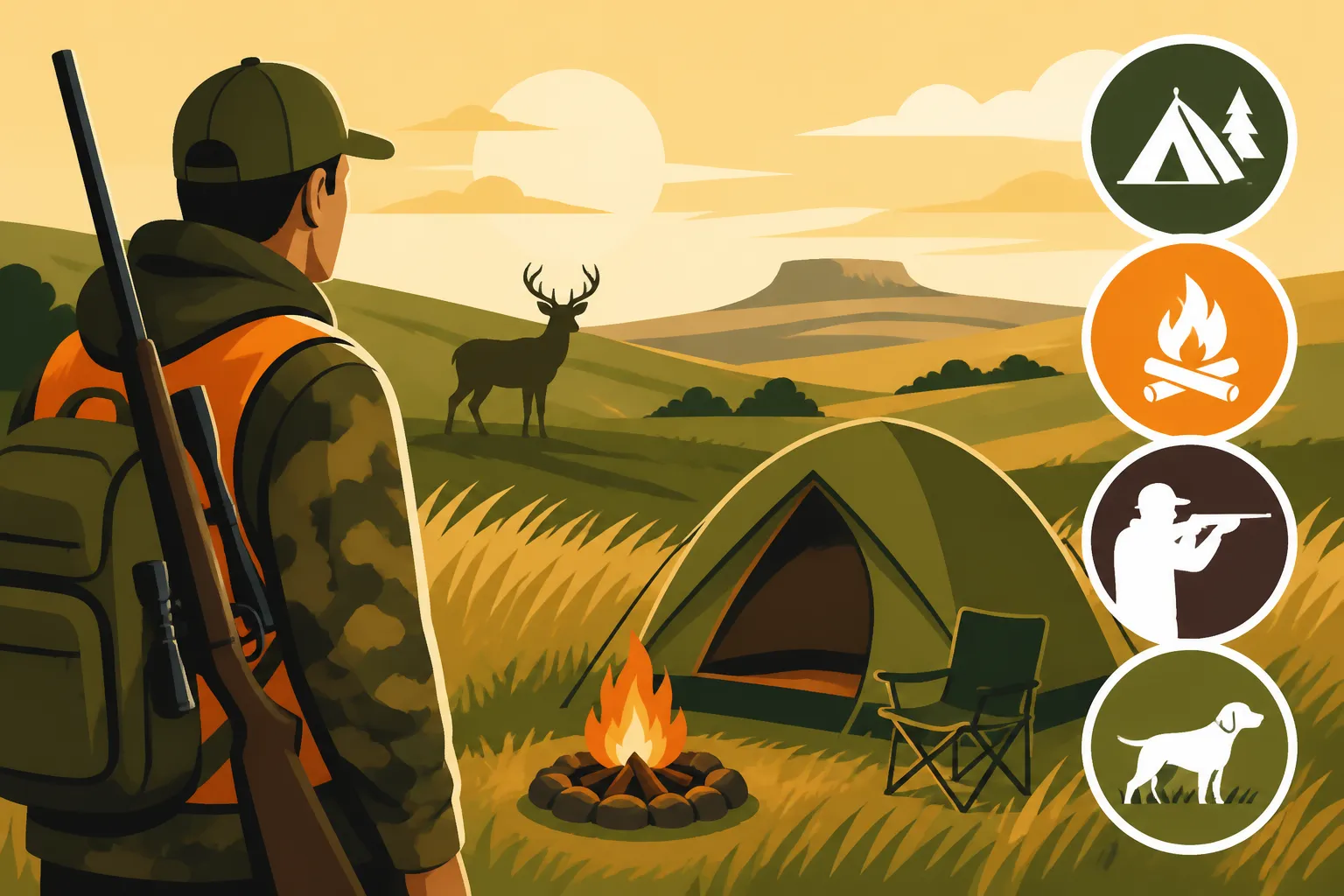
There's a special kind of magic that happens when you set up camp far from the crowds, with nothing but the prairie stars above and the whisper of the wind as your lullaby. For many of us, this is the very essence of a true outdoor adventure, a chance to really unplug and reconnect with the wild heart of North Dakota. It's not just about pitching a tent; it's about the entire immersive experience.
The Allure of Dispersed Camping
Dispersed camping, often called boondocking or dry camping, means you're not in a designated campground with paved pads, picnic tables, and hookups. Instead, you're finding your own spot within the vastness of the national grassland, truly off-grid. This offers an incredible sense of freedom that developed campgrounds just can't match. You pick your perfect view, your ideal secluded spot, and you live by your own clock, not the campground's quiet hours. Imagine waking up to a pristine sunrise over the Badlands, the air crisp and still, without hearing your neighbor’s generator hum. That quiet, that personal connection to the landscape, is what draws so many to these areas. It’s about being self-sufficient, relying on your own resources, and proving you can thrive out there.
Accessing Prime Hunting Opportunities
For hunters, camping directly on the National Grasslands is an absolute game-changer. There's no longer the need to drive an hour or more from a motel or a distant campground just to get to your hunting spot at dawn. You're already there. Imagine being able to roll out of your sleeping bag, grab your gear, and be walking into a prime coulee or over a ridge as the first hint of light paints the horizon. This proximity is invaluable, especially during early morning hunts for mule deer or during the peak of the rut when every minute in the field counts. It allows for longer scouting sessions, more time observing game, and the flexibility to adjust your plans based on animal movement without a lengthy commute. You can truly immerse yourself in the hunt, feeling the land and anticipating the patterns of the wildlife. When you’re trying to catch a gobbler coming off the roost during Fall Turkey Hunting in North Dakota, or slip into position before first light for Spot-and-Stalk Elk in the Little Missouri Badlands, being camped nearby provides an undeniable advantage.
Understanding the Core Regulations for Dispersed Camping
While the freedom of dispersed camping is exhilarating, it's absolutely crucial to remember that this isn't a free-for-all. These lands are managed by the U.S. Forest Service, and they have specific rules designed to protect the environment, ensure public safety, and allow for sustainable use. Ignoring these regulations can lead to hefty fines, environmental damage, and even the closure of areas to future camping. It’s all about balancing access with responsibility.
Leave No Trace Principles are Paramount
The core philosophy behind responsible dispersed camping on the National Grasslands is "Leave No Trace." This isn't just a suggestion; it's the guiding principle that allows these wild places to remain wild for everyone. It means planning ahead and preparing, traveling and camping on durable surfaces, disposing of waste properly, leaving what you find, minimizing campfire impacts, respecting wildlife, and being considerate of other visitors.
For instance, "disposing of waste properly" means everything you pack in, you pack out – that includes trash, food scraps, and even human waste (when appropriate methods aren't available). For human waste, you generally need to dig a "cat hole" at least 6-8 inches deep and 200 feet from water, trails, and campsites, then cover it thoroughly. This might sound tedious, but it prevents contamination and preserves the natural beauty of the area. For campfires, it means ensuring your fire is dead out, cold to the touch, before you leave it. You'd be amazed how many devastating wildfires start from seemingly extinguished embers. Practicing Leave No Trace helps keep these areas open and beautiful.
Vehicle and Distance Restrictions
One of the most common questions about dispersed camping is, "Where can I actually set up?" The general rule on National Grasslands is that you must camp a certain distance away from developed recreation sites, water sources, and paved roads. Often, this means being at least 200 feet, and sometimes up to 300 feet, from any water source like a stream, river, or stock pond. This buffer protects water quality and provides undisturbed access for wildlife.
Furthermore, vehicles are usually restricted to established roads and trails. While some areas might allow for a short drive off-road to a campsite, this is typically limited to a specific distance, perhaps 300 feet, and only on durable surfaces where you won't cause resource damage or create new tracks. Never drive on sensitive vegetation or through muddy areas. Always check the local ranger district office or website for the specific Grassland you're visiting, as these distances can vary slightly. It’s a good idea to scout your intended spot with onX Hunt or GoHunt maps to identify existing trails and understand topography before venturing too far. Understanding Vehicle Rules on North Dakota Public Land is key here.
Campfire Safety and Restrictions
Ah, the crackle of a campfire under a starry sky – it's an essential part of the camping experience for many. However, wildfires are a very real and devastating threat on the dry prairies of North Dakota. Because of this, campfire rules are strict and frequently updated based on current conditions.
Always assume there might be a fire restriction in place, especially during dry periods or high winds. Before you even strike a match, check the local Forest Service website or call the ranger district for the Little Missouri or Sheyenne National Grassland. Often, open fires are only permitted in established fire rings, or they may be completely banned. If fires are allowed, you must keep them small, attend them at all times, and have water and a shovel nearby to put them out completely. Never gather wood from live trees; only use dead and down wood that can be broken by hand. And again, before you pack up, ensure that fire is dead out – cold to the touch, with no lingering embers. A single spark can ignite a massive blaze that scars the landscape for generations.
Practicalities and Planning for Your National Grasslands Stay
Going out into the expansive National Grasslands means you're largely on your own. There are no convenience stores, no trash services, and often no cell service. Being well-prepared isn't just about comfort; it's about safety and responsible stewardship. Think of it as embracing self-reliance, which is a big part of the appeal.
Water, Waste, and Supplies
When you're dispersed camping, you are your own primary resource provider. This means bringing enough water for drinking, cooking, and basic hygiene for your entire trip. Don't underestimate how much water you'll need, especially during warmer months or if you're physically active while hunting. A good rule of thumb is at least one gallon per person per day for drinking, plus extra for cooking. If you plan to rely on natural water sources, you absolutely must have a reliable water filter or purification tablets. Surface water on the prairie can be contaminated with bacteria and parasites.
As for waste, we touched on Leave No Trace, but it bears repeating: pack out everything. This includes food scraps, wrappers, and even toilet paper. Consider bringing portable wag bags or a designated sealed container for your waste. Food storage is also critical. Bears are present in North Dakota, particularly in the Badlands, and attracting any wildlife to your campsite with improperly stored food is dangerous for both you and the animals. Use bear-resistant containers or hang your food from a tree limb at least 10-12 feet off the ground and 4 feet from the trunk. This level of diligence protects the ecosystem.
Navigation and Land Ownership
Perhaps one of the most critical aspects of dispersed camping and hunting on the National Grasslands is knowing exactly where you are. North Dakota's landscape is a patchwork quilt of public, private, and state lands, and accidentally trespassing can quickly ruin a hunt or a camping trip, leading to uncomfortable confrontations or even legal trouble. This is where modern technology becomes your best friend.
Mapping applications like onX Hunt or GoHunt are invaluable tools. They provide detailed satellite imagery overlaid with property boundaries, showing public lands, private parcels, and even different types of public access like PLOTS (Private Land Open To Sportsmen) areas. Before you head out, download offline maps to your phone or GPS device, as cell service is often nonexistent in remote areas of the Badlands or central prairies. Always double-check your location, especially if you're venturing off-road or into dense cover. It’s not uncommon for fence lines to be down or markers to be obscured, making these apps essential for Finding North Dakota Property Lines and avoiding issues with North Dakota Trespass and Permission Law. Knowing where you are at all times is key to a responsible and stress-free adventure.
Respecting Fellow Users and Wildlife
When you're out in the wild, you're rarely truly alone. Other hunters, hikers, horseback riders, and wildlife are sharing these spaces. Being considerate of others and minimizing your impact on wildlife is part of responsible outdoor ethics.
This means keeping noise levels down, especially during early morning and late evening hours when wildlife is most active and other campers are seeking quiet. Avoid setting up camp directly on game trails or near water sources that wildlife frequently use, as this can displace animals. Give wildlife ample space; never approach or feed wild animals. Proper scent control and minimizing human activity around your camp can also help keep game in the area if you’re hunting. Remember, these grasslands are a shared resource, and our actions impact everyone's experience, human and animal alike.
Specifics of the Little Missouri National Grassland
The Little Missouri National Grassland, nestled within North Dakota's iconic Badlands, is a prime example of stunning, rugged beauty. Camping here offers an entirely different experience than other parts of the state. It’s an area defined by its dramatic buttes, deep coulees, and the winding Little Missouri River.
Unique Terrain and Access Challenges
The Badlands terrain is spectacular but presents unique challenges for camping and travel. Roads can be rough, muddy after rain, and often require high-clearance 4×4 vehicles. Some areas are simply impassable when wet, so always check local conditions before venturing deep. The rolling hills and deep draws can make finding a level campsite a bit of a challenge, but the reward of a secluded spot with panoramic views is worth the effort.
Water sources are generally limited to the Little Missouri River itself and scattered stock ponds, so planning for your water supply is even more critical here. The dramatic elevation changes also mean that wind and thermals can be tricky to predict, which impacts both camp comfort and hunting strategy. Hunting North Dakota's Badlands Mule Deer Country often involves extensive glassing from high points, and having a camp established nearby allows for those long, patient hours of observation.
Water Sources and Wildlife Considerations
Beyond the Little Missouri River, natural water sources are scarce across this expansive grassland. Stock ponds, while present, are often used by cattle and wildlife, and their water quality can be questionable for human consumption without proper filtration. Always assume any natural water source needs treatment.
The Badlands are home to a diverse array of wildlife, including mule deer, elk, pronghorn, bighorn sheep (in very limited areas), and a host of predators like coyotes and bobcats. Camping responsibly means being aware of their presence. Store all food securely to prevent attracting animals. While rare, mountain lion sightings do occur, and respecting all wildlife is paramount. Keep your camp clean and free of attractants to minimize interactions. For those drawn to the challenges of Elk Hunting North Dakota's Badlands, a well-chosen, discreet campsite is part of the strategy.
Camping on the Sheyenne National Grassland
Shift your gaze eastward from the Badlands, and you'll find the vastly different landscape of the Sheyenne National Grassland. Located in southeastern North Dakota, this area is unique as it's the only tallgrass prairie managed by the National Forest System. While still public land, the camping considerations here vary significantly from its western counterpart.
Tallgrass Prairie Considerations
The Sheyenne National Grassland is characterized by its rolling tallgrass prairies, interspersed with oak savannas and wetlands. The terrain is generally flatter than the Badlands, making vehicle access a bit easier on established gravel roads, but still subject to muddy conditions after rain. Finding a truly "secluded" spot for camping might require more effort, as the open nature of the prairie offers fewer natural windbreaks or hidden nooks.
Fire danger can be extremely high, especially in the late summer and fall when the tallgrass dries out. A small spark can quickly become a raging inferno across these vast, open expanses. Adherence to fire restrictions is non-negotiable here. The distinct habitat also means different hunting opportunities; while deer are present, the Sheyenne is more often associated with Sharptail Grouse Hunting Mixed Grass Prairie and other upland birds. Your camping strategy should reflect these environmental differences.
| Camping Aspect | Dispersed (National Grasslands) | Developed Campground (Comparison) |
|---|---|---|
| Location | Anywhere legal, away from facilities/water; pick your own spot. | Designated sites, often paved; marked boundaries. |
| Amenities | None (no water, trash, restrooms, hookups). | Varies (water, restrooms, picnic tables, fire rings, hookups). |
| Cost | Usually free. | Fee-based. |
| Privacy/Solitude | High; can find truly remote spots. | Low to moderate; neighbors often close by. |
| Vehicle Access | Restricted to established roads/durable surfaces; limited off-road. | Paved or graveled access roads to specific sites. |
| Water Source | Must bring your own or filter natural sources. | Potable water usually available (spigots). |
| Waste Disposal | Pack it in, pack it out (including human waste using proper methods). | Trash receptacles, flush toilets or pit latrines. |
| Campfire | Restricted, often in fire rings, highly conditional on fire bans. | Often allowed in provided fire rings, but bans can still apply. |
| Environmental Impact | Requires strict adherence to Leave No Trace principles to minimize. | Managed impacts, but still important to be respectful. |
| Preparation Level | High; self-sufficiency is key. | Moderate; amenities reduce individual burden. |
Remember, the goal is always to leave these places better than you found them, so future generations of hunters and outdoor enthusiasts can enjoy the same solitude and wild experiences we do. Happy camping, and good luck out there!
Disclaimer
This article is for general informational purposes only and does not constitute professional advice. Laws, prices and regulations vary by location and change over time. Consult a qualified professional for guidance on your specific situation.