Hunting North Dakota’s Nine-and-a-Half-Day Bow Restriction
If you've ever dreamt of heading out to North Dakota for an early archery deer hunt as a nonresident, you've likely bumped into a rather unique challenge: the notorious nine-and-a-half-day bow restriction. This rule often throws a wrench into carefully laid plans, making the first week and a half of the season feel like an exclusive club for residents. This guide will walk you through exactly what this restriction means, why it's in place, and how you can still make the most of your nonresident bowhunting experience in the Peace Garden State.
Understanding the North Dakota Bow Restriction for Nonresidents
It's easy to feel a bit confused, or even frustrated, when you first encounter North Dakota's early season archery rules. Many states have pretty straightforward regulations, but this particular restriction often catches out-of-state hunters off guard. It's not about prohibiting nonresidents entirely, but rather about carefully managing access during a prime hunting window.
What the Restriction Actually Means
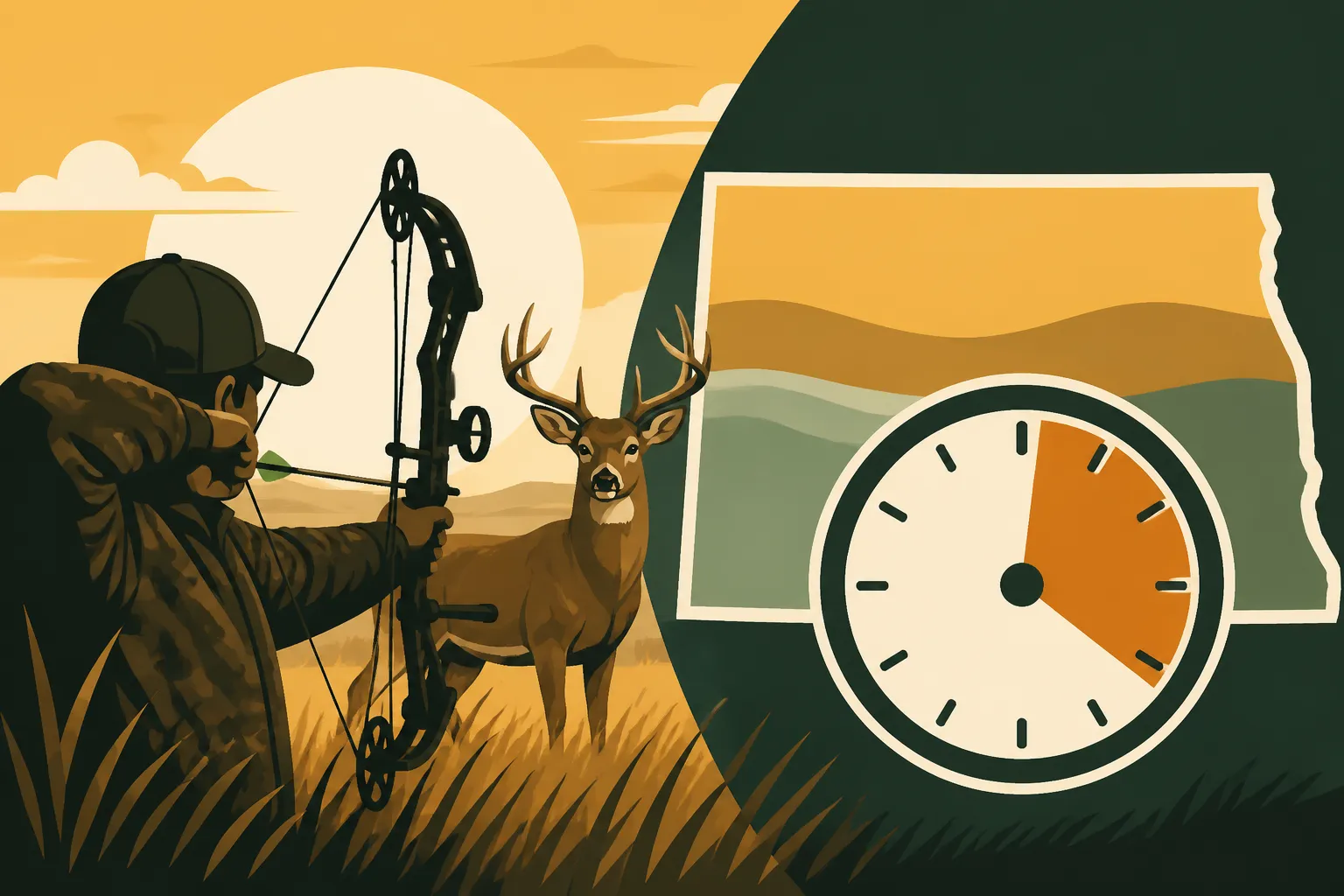
Let's get straight to it: for the first nine and a half days of North Dakota's archery deer season, nonresident bowhunters are restricted from hunting deer on public lands. That's a pretty big deal when you consider how much planning goes into an out-of-state hunt, and it covers some of the absolute best early-season conditions. The North Dakota Archery Season Opening Day usually falls in early September, which means this restriction typically runs through the middle of the month.
During this period, if you're a nonresident, you can still hunt deer with a bow in North Dakota, but only on private land for which you have explicit permission. This distinction is absolutely critical. It means that while the vast tracts of public land like PLOTS (Private Land Open To Sportsmen) areas, Wildlife Management Areas (WMAs), or National Grasslands are off-limits for deer, a handshake agreement with a friendly landowner can still get you into the woods or prairie. The goal isn't to shut out nonresidents entirely, but to ensure that residents have an initial window to pursue deer on public ground with less pressure. Understanding the precise North Dakota Archery Season Dates is key to planning around this.
Why This Restriction Exists
The reasoning behind the nine-and-a-half-day restriction largely boils down to managing hunting pressure and prioritizing resident access. North Dakota has a strong tradition of hunting, and resident hunters often value having an initial opportunity on public lands without the added competition from out-of-state hunters. This isn't unique to North Dakota; many states have various rules designed to give residents preference, especially for sought-after species or during popular seasons.
From a game management perspective, it helps distribute pressure throughout the season. Early September can offer some fantastic bowhunting opportunities, with deer still on fairly predictable summer patterns, hitting food sources, and before they become too wary from heavy hunting pressure. By limiting nonresident access during this initial burst, the state aims to maintain a higher quality experience for its residents and potentially allow deer to settle into their fall routines before the full hunting population descends. It's a balance between promoting hunting tourism and preserving the experience for those who call North Dakota home.
Navigating the Early Season for Nonresident Bowhunters
Alright, so you know about the restriction. Now what? Does it mean you should just forget about an early North Dakota bow hunt? Not necessarily! It just means your strategy needs to be laser-focused, and your efforts in preparation become even more critical.
The Crucial Role of Private Land Permission
Given that public lands are temporarily off-limits for deer hunting to nonresidents, securing private land permission becomes the absolute cornerstone of a successful early-season hunt. This isn't always easy, but it's far from impossible. North Dakota is an agricultural state, and many landowners are receptive to hunters, especially if approached respectfully and well in advance.
My personal advice? Start early. Like, really early. Months before the season, if possible. Identify areas you're interested in, look up landowner information, and make personal contact. A letter or a phone call is a good start, but nothing beats a face-to-face conversation. Show up clean, polite, and with a clear explanation of what you're looking to do. Offer to help with chores, share some of your harvest, or even offer a small monetary gift. Many landowners simply want to know who is on their land and that they can trust them. Remember to always understand and abide by North Dakota Trespass and Permission Law. Websites like GoHunt and mapping tools can be invaluable here, helping you identify land parcels and often providing landowner contact details or at least addresses for sending letters of inquiry. This proactive approach sets you apart from those who show up a week before the season hoping for a last-minute handout.
Strategies for Scouting and Preparation
Effective scouting is always important, but during this restricted period, it's paramount. Since you're relying on private land, your scouting efforts will be highly localized. Utilize every tool at your disposal. Aerial photographs are your best friend. Look for natural funnels, pinch points, cover transitions, and isolated woodlots or creek bottoms that might hold deer. Identify prime food sources like alfalfa fields, standing soybeans, or even small food plots a farmer might have planted for their own deer.
Don't underestimate the power of digital tools. Services like GoHunt provide detailed satellite imagery, property lines, and often landowner information that can help you target your permission-seeking efforts. Once you've secured permission, try to make a physical scouting trip before the season if feasible. Even a few days spent driving roads, glassing fields from a distance, and talking to locals can provide invaluable insights. Pay attention to water sources, especially during dry periods, as deer will be frequenting them. Understand that deer patterns can change quickly with crop harvests, so what you scout in July might look different by September. Flexibility is key. For more in-depth preparation, consider checking out resources on Scouting PLOTS Land Before Season – many of the principles apply even when hunting private ground.
Tactical Approaches for the Bow Restriction Period
With permission secured and some solid scouting under your belt, it's time to talk tactics. Early season bowhunting for deer, especially with the unique constraints of this nonresident restriction, requires a blend of patience, precision, and understanding deer behavior before the rut really kicks in.
Focusing on Pre-Rut and Early Season Patterns
During early to mid-September, deer behavior is still largely driven by their summer patterns: food, water, and bedding. The intense breeding activity of the rut is still weeks away, so you won't be relying on aggressive calling or rattling as much. Instead, focus on predictable movement patterns between these essentials. Whitetails, in particular, will be hitting agricultural fields hard in the evenings and early mornings. Think corn, soybeans, and alfalfa. They'll also be seeking out cool, secluded bedding areas during the heat of the day, often near water sources or in dense cover like a shelterbelt or a river bottom.
Your best bet for success often lies in evening hunts, setting up between a bedding area and a preferred food source. Pay close attention to wind direction, as deer are incredibly sensitive to scent. A slight shift in the breeze can blow your cover. Look for trails leading out of thick cover into fields, and use a rangefinder to pinpoint shooting lanes beforehand. Patience is absolutely paramount; you might only get one shot, so make it count. For more specific insights on deer behavior, you might find articles like Reading North Dakota Mud for Fresh Deer Movement helpful in deciphering what the deer are doing.
Setting Up on Private Ground During the Restriction
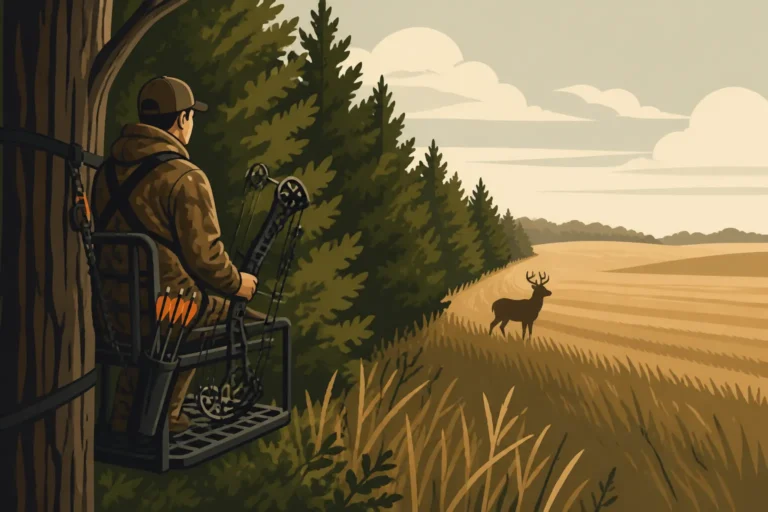
Once you've identified key areas on your permitted private land, strategic stand placement or ground blind setup is crucial. For tree stands, look for mature trees along field edges, pinch points created by terrain or cover, or within creek bottoms that deer use as travel corridors. Always prioritize an elevated position that offers good visibility and a safe shooting angle. Consider the sun's position throughout the day to avoid being silhouetted and to keep glare out of your eyes.
Ground blinds are also highly effective, especially in more open prairie environments or along brushy fencerows. They offer excellent concealment and are often quicker to set up. Remember to brush in your blind thoroughly using natural vegetation from the area to help it blend in. When hunting from a blind or stand, minimize your scent profile as much as possible, using scent-control sprays and clean hunting clothes. Crucially, always have a low-impact entry and exit route that doesn't spook deer in their bedding or feeding areas. This might mean walking extra distance or approaching from a less direct but quieter path. Hunting a Shelterbelt Edge for Deer can be a highly productive tactic on private lands, as these linear strips of trees often funnel deer movement.
Here's a quick comparison of early season access:
| Feature | Nonresident During Restriction (First 9.5 Days) | Nonresident After Restriction (Post-Sept 14/15) |
|---|---|---|
| Public Land (PLOTS, WMA) | Deer hunting not permitted for nonresidents | Deer hunting permitted for nonresidents |
| Private Land (with permission) | Deer hunting permitted for nonresidents | Deer hunting permitted for nonresidents |
| Primary Strategy | Secure private land access | Private land or public land strategies |
| Competition | Lower on public land (resident-only for deer) | Higher on public land (all hunters) |
| Scouting Focus | Intensive private land scouting | Broader public/private land scouting |
| License Type | North Dakota Bow License Options, General Game & Habitat | North Dakota Bow License Options, General Game & Habitat |
Overcoming Challenges and Maximizing Opportunity
The early season restriction can feel like an uphill battle for nonresident bowhunters. But with the right mindset and a bit of creativity, you can turn these challenges into unique opportunities. It's all about playing the hand you're dealt and adapting your approach.
Dealing with Limited Public Land Access
The stark reality is that for those first nine and a half days, public land is simply not an option for deer for nonresidents. This means you can't just roll into North Dakota and rely on the extensive PLOTS program or Wildlife Management Areas for your deer hunt during this specific window. It forces you to either focus entirely on private land or adjust your hunt dates. If you haven't secured private land access, the best strategy is often to hold off on your deer hunt until after the restriction lifts.
However, don't forget that other hunting opportunities might still be available on public lands during this period. For instance, small game hunting may be open. While you can't deer hunt, you can still be in the woods or prairie, scouting and familiarizing yourself with public tracts you will be able to hunt after the restriction. This is a subtle but effective way to use that "downtime" if your primary goal is deer and you couldn't secure private access. Just be sure to know all the rules for what you can hunt, where, and when. Always be visible and follow all safety requirements, including any blaze orange mandates for small game.
Planning Your Hunt Around the Restriction Dates
For many nonresidents, the most practical solution to this early season restriction is to simply plan their bow hunt to start after the nine-and-a-half-day period concludes. This usually means arriving in North Dakota around mid-September. By doing so, you gain access to all the state's public lands, including the incredibly valuable PLOTS areas. This significantly expands your hunting options and reduces the pressure of needing to secure private land permission.
Another option, if time and budget allow, is a multi-trip approach. Perhaps you make a short trip for small game or to secure private land permission during the restricted period, then return later in the season for your main deer hunt. Or, you could plan a longer trip that spans both the restricted and unrestricted periods, dedicating the early days to other activities or non-deer hunting, then shifting your focus to deer once public lands open up. This allows you to experience Hunting North Dakota's Long Archery Season in its entirety. Considering the later season often aligns you with the pre-rut and early rut, which can be fantastic times to be in the deer woods, as deer activity begins to pick up.
The Post-Restriction Landscape: What Changes
Once that initial nine-and-a-half-day window closes, the hunting landscape for nonresident bowhunters in North Dakota dramatically shifts. It’s like a whole new world of opportunity opens up, but it also comes with its own set of considerations.
Opening Up PLOTS and Public Lands
The biggest change, of course, is the newfound access to all of North Dakota's public lands. This includes State Wildlife Management Areas (WMAs), Bureau of Land Management (BLM) lands, National Grasslands, and critically, the Private Land Open To Sportsmen (PLOTS) program. PLOTS tracts, identifiable by their bright yellow signs, are private lands enrolled by landowners with the North Dakota Game and Fish Department (NDG&F) to allow public hunting access. This program provides an incredible amount of accessible hunting ground across the state, making it a game-changer for nonresidents once the restriction lifts.
Suddenly, those areas you previously scouted digitally or drove past are fair game for deer hunting. This means you can spread out, explore new territories, and potentially find less pressured deer. However, with increased access comes increased pressure. Other hunters, both residents and nonresidents, will also be venturing onto these lands. Strategies for hunting these areas might include walking further than most, utilizing overlooked pockets of cover, or focusing on weekdays when pressure is typically lighter. Tools like the ND Hunt App and the GoHunt mapping system become even more indispensable for navigating property boundaries and identifying prime hunting spots on these newly accessible lands. Using the PLOTS App Without Cell Service can be a lifesaver in remote areas.
Transitioning to Mid-Season Tactics
As September progresses into October, deer behavior starts to transition. The early season focus on food and bedding remains, but bucks begin to show more signs of pre-rut activity. Scrapes and rubs will become more prevalent, and bucks might start making daylight appearances in search of does. This is when vocalizations and scents can become more effective. Grunt tubes and doe bleat calls, used sparingly and realistically, can sometimes draw a curious buck closer.
By late October and early November, you're looking at the peak of the rut in many areas of North Dakota. This is arguably the most exciting time to bowhunt, as bucks throw caution to the wind in pursuit of does. During this period, understanding Hunting the Rut in Early-to-Mid November becomes crucial. Stand placement shifts to cover travel corridors where does are frequenting, or funnels between bedding and feeding areas that bucks will cruise. You might encounter more deer sign, and active scrapes can indicate buck activity. However, deer also become more nocturnal with increased pressure, so early mornings and late evenings are still your best bets. Patience and adapting to the deer's changing behavior are key to success during this transitional period.
Essential Gear and Resources for Nonresident Bowhunters
A successful hunt, especially when navigating specific regulations like North Dakota's early bow restriction, relies heavily on being well-prepared with the right tools and knowledge. It's not just about the bow and arrows; it's about all the supplementary gear and information that puts you in a position to succeed.
Must-Have Mapping and Scouting Tools
In today's hunting world, digital mapping tools are non-negotiable, and they're particularly vital for nonresidents trying to decipher North Dakota's diverse landscape and varying land ownership. An app like onX Hunt is incredibly powerful, providing detailed satellite imagery, property boundaries, and land ownership information. It allows you to identify private land for permission requests, locate public land boundaries (like PLOTS, WMAs, and National Grasslands), and mark potential hot spots from your armchair long before you ever set foot in the state. Understanding onX Layers for North Dakota Land Status can truly elevate your scouting game.
Beyond onX, I highly recommend checking out the North Dakota Game and Fish Department's (NDG&F) website and their dedicated PLOTS map. They offer a constantly updated interactive map and often a printed guide booklet that details all the publicly accessible private land parcels. While GoHunt might not directly provide a PLOTS map, it's an excellent resource for general Western hunting information, including detailed species data, tag odds, and potentially landowner data that aids in securing private land permission. Aerial photos, whether from Google Earth or your mapping app, help you visualize the terrain, identify cover, food sources, and travel corridors, allowing you to create a virtual scout that saves time and fuel once you're on the ground.
Legal Requirements and License Specifics
Before you even pack your bags, make sure all your legal ducks are in a row. As a nonresident, you'll need to purchase a North Dakota Nonresident License Options. This typically includes a General Game and Habitat License, which is a foundational requirement, and then your specific deer bow license. Always confirm the current year's costs and regulations directly through the NDG&F website. Don't forget, if you plan to hunt anything other than deer, you might need additional tags or endorsements.
North Dakota Hunter Education Requirements state that anyone born after December 31, 1961, must complete a hunter education course. If you've completed one in another state, it's likely reciprocal, but always carry proof. When you're in the field, you must carry proof of your license on your person – whether that's a printed copy or on your phone via the ND Outdoors mobile app. Make sure your phone is charged, or have a backup physical copy. Lastly, be aware of any CWD (Chronic Wasting Disease) regulations for the units you plan to hunt. Some units have mandatory testing or specific carcass transport rules. Being informed and compliant with all North Dakota's hunting laws ensures your hunt is not only successful but also legal and ethical.
Disclaimer
Please be aware that hunting regulations can change frequently. Always consult the most current North Dakota Game and Fish Department (NDG&F) hunting proclamation and regulations prior to any hunting activity. This guide provides general information and should not be considered a substitute for official state regulations.