What a Badlands Drop Camp Includes
Hunting in North Dakota's rugged Badlands is a dream for many, offering a truly wild experience far from the crowds. But when you start looking into options, the term "drop camp" can pop up, leaving you wondering if it's the right fit and, more importantly, what exactly it entails. It’s a common frustration trying to decipher the various outfitter offerings, especially when you’re planning a trip to a remote region where self-sufficiency is key. This guide is here to demystify the Badlands drop camp, breaking down what you can expect, what you'll need to bring, and why it might just be the perfect blend of adventure and logistical support for your next hunt.
Understanding the Badlands Drop Camp Concept
The idea of a "drop camp" might sound a bit vague if you're used to either fully outfitted, guided hunts or strictly DIY backpack trips. Let’s clarify what it truly means, especially when you're venturing into a place as unique and challenging as North Dakota's Badlands.
What Exactly is a Drop Camp?
Imagine this: you've always dreamed of hunting deep in the Badlands, far from any road, where the only sounds are the wind and the call of the wild. But packing in all your gear, a sturdy tent, a stove, and days worth of supplies on your back for an extended period feels daunting, if not impossible. That's where a drop camp steps in as a fantastic middle ground. Essentially, a drop camp is a service where an outfitter transports you and your gear, along with a pre-set camp, to a remote location that would be incredibly difficult or time-consuming to access on your own.
The outfitter provides the heavy infrastructure – a robust wall tent, cots, a cooking stove, and sometimes even a wood stove for heat – giving you a comfortable base camp in the heart of prime hunting territory. They "drop" you off, sometimes via horseback, ATV, or 4×4 vehicles on designated access routes, and then pick you up at a predetermined time. You, the hunter, are responsible for all the actual hunting, cooking, strategizing, and day-to-day camp life. It's not a fully guided experience where a professional hunter is with you every step of the way, nor is it a completely self-reliant backpacking trip where every spoon and every drop of water is carried on your back. It’s an empowering blend, offering remote access without the full burden of hauling a heavy camp.
Why Choose a Drop Camp in North Dakota's Badlands?
The rugged beauty and challenging terrain of the North Dakota Badlands make it an incredible destination for hunters seeking a true wilderness experience. However, this same remoteness that draws so many can also be its biggest hurdle. Choosing a drop camp here offers several distinct advantages that can significantly enhance your hunt.
Firstly, access to remote, unpressured areas is a huge benefit. Many of the most productive hunting grounds for species like Mule Deer in North Dakota's Badlands or elk are deep within areas like Hunting North Dakota's Little Missouri National Grassland, far from main roads. Trying to hike into these areas with a full camp would exhaust most hunters before the hunt even began. A drop camp allows you to get past those initial, easily accessible areas, placing you directly into country that sees far less human disturbance. This often translates to better opportunities for mature animals that have learned to avoid road hunters.
Secondly, it's a fantastic cost-effective alternative to a fully guided hunt. Guided hunts, while incredibly valuable for their expertise and high success rates, can be a significant financial investment. A drop camp provides essential logistical support – especially the transport and a comfortable camp – at a fraction of the cost. This allows budget-conscious hunters to experience the thrill of a remote, supported hunt without breaking the bank. You gain the sense of accomplishment that comes from planning and executing your own hunt, but with the safety net of a reliable base camp and knowing your extraction is handled. The Badlands can be unforgiving, so having a solid camp to return to after a long day of Glassing Badlands Coulees for Elk is invaluable.
Lastly, for many, it’s about the unique blend of adventure and comfort. You get the solitude and self-reliance of a backcountry hunt, making all your own decisions, tracking your own game, and truly immersing yourself in the landscape. Yet, you also have a warm, dry shelter, a place to cook a proper meal, and a somewhat comfortable bed at the end of a strenuous day. This balance is particularly appealing for hunters who want to push their limits but aren't quite ready for the extreme minimalist approach of a multi-day backpacking trip.
Typical Inclusions of a North Dakota Badlands Drop Camp
When you decide to book a drop camp, you're buying into a package of services and gear designed to make your remote hunt feasible and comfortable. But "comfortable" is a relative term in the Badlands, and understanding the specifics of what's provided is crucial for managing your expectations and packing correctly.
Camp Infrastructure and Gear Provided
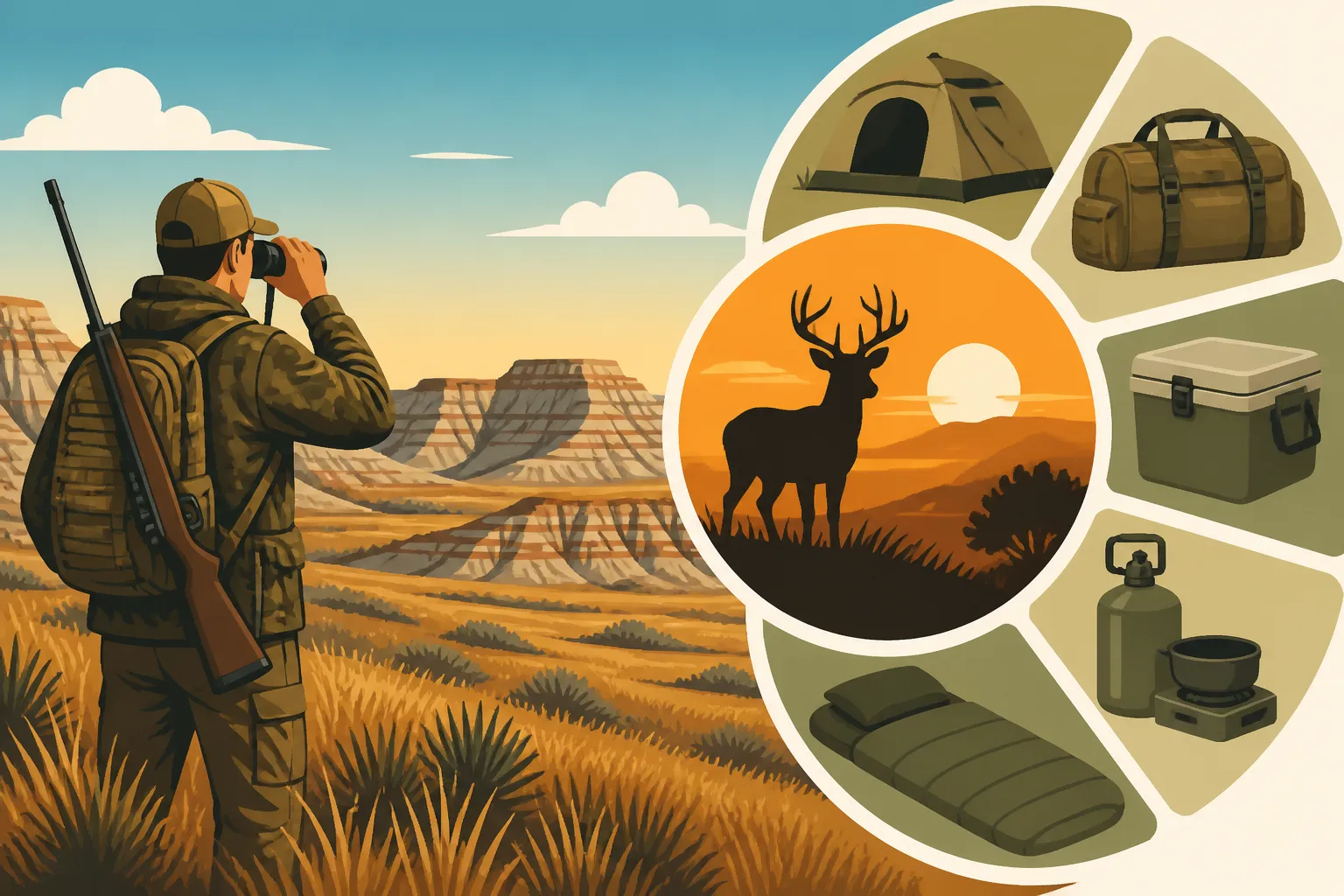
Let's talk about the heart of your drop camp: the camp itself. While specific inclusions can vary between outfitters, there's a common baseline you can generally expect. The primary offering is usually a robust, weather-resistant shelter, most commonly a large wall tent. These aren't your lightweight backpacking tents; they're substantial canvas structures designed to withstand prairie winds, rain, and even early season snow. They typically come equipped with cots for sleeping, offering a much-appreciated lift off the cold ground and a better night's rest than sleeping pads alone. You’ll still need to bring your own sleeping bag, tailored to the potential low temperatures of the North Dakota fall.
Beyond sleeping arrangements, drop camps almost always include a cooking setup. This often means a propane stove with fuel, basic pots, pans, and utensils. Sometimes, a dedicated "mess tent" or a larger cooking area within the main tent will be part of the setup, providing a communal space to prepare and eat meals. For comfort, especially during the colder parts of the hunting season, a wood-burning stove or a propane heater will likely be included in your tent, along with a supply of firewood or propane. This can be a game-changer after a long, cold day on the ridges. You might also find lanterns for lighting the camp at night, though headlamps are still essential personal items. Think of it as a bare-bones cabin that's been airlifted into the wilderness, providing foundational comfort without any of the frills.
Essential Logistics and Services
Beyond the physical camp, the logistical support is a core component of a drop camp package, and arguably its greatest value proposition. The most obvious, and perhaps most critical, service is transportation to and from the remote camp location. Getting deep into the Badlands requires specialized vehicles, knowledge of the terrain, and often access to private land routes or trails not open to the general public. Depending on the specific outfitter and the remoteness of the site, this transportation could involve 4×4 trucks, ATVs, or even a horseback ride through coulees and draws. Confirming the mode of transport and any weight restrictions for your gear is paramount when booking.
Another incredibly valuable service often included, or available for an additional fee, is game retrieval assistance. Hunting in the Badlands means dealing with steep, broken terrain. Recovering a downed animal, especially a large mule deer or elk, from a deep coulee or across miles of rugged country can be an immense challenge, often requiring multiple people and specialized equipment. Many outfitters will offer to assist with packing out your game back to a vehicle access point, which can be a huge relief and a critical service for preserving your meat. Always clarify the terms of game retrieval – is it included, an extra charge, or only available for certain distances? Knowing this beforehand can prevent a lot of stress in the field.
Finally, communication in remote areas is always a concern. While you'll be largely self-reliant, reputable outfitters will often provide some form of emergency communication. This might be a satellite phone at the camp, or at least a clear protocol for how and when to contact them in case of an urgent situation. This adds a layer of safety and peace of mind, allowing you to focus on your hunt without constant worry. When researching, resources like BookYourHunt or GoHunt sometimes include specific details about these logistical offerings from various outfitters, helping you compare options.
What a Drop Camp Usually Doesn't Include (And Why)
Understanding what's not included in a North Dakota Badlands drop camp is just as important as knowing what is. This distinction is what truly defines a drop camp experience and highlights the self-reliant nature of this type of hunt. Misconceptions in this area can lead to uncomfortable, or even dangerous, situations in the backcountry.
Personal Gear and Supplies
This is where the "self-reliant" aspect of a drop camp truly shines, or stresses, depending on your preparation. While the outfitter provides the structural camp, you are absolutely responsible for bringing all your personal hunting gear, clothing, food, and water. This means your rifle, bow, optics, calls, and hunting apparel are all on you. Don't forget essentials like a quality backpack for day hunting, a knife, game bags, and navigation tools such as a GPS, compass, and detailed topographical maps of the area. Even if the outfitter gives you some general guidance, knowing your way around the sprawling Badlands can be life-saving.
Food and water are also entirely your responsibility. Plan your meals carefully, considering caloric needs for strenuous activity in potentially cold weather. Dehydrated meals are popular for their light weight, but you'll still need enough fuel (propane for your camp stove, or solid fuel for a personal stove) to cook. For water, bring enough for your initial days, but also pack a reliable water filter or purification tablets. Natural water sources in the Badlands can be scarce or questionable, so having a plan is crucial. And, of course, your North Dakota Hunting Licenses and What They Cost, along with any required permits or tags, are always your personal responsibility. Double-check all regulations before you leave home. For an extended hunt, particularly if you're targeting big game, consider what you'll need to pack for an eight-day trip – Packing for an Eight-Day North Dakota Elk Hunt can provide a solid checklist for essential personal items.
Guiding Services and Hunting Strategy
One of the biggest distinctions between a drop camp and a fully guided hunt is the complete absence of an in-field guide. When the outfitter drops you off, you and your hunting partners are on your own to locate, stalk, and harvest your game. This means all the hunting strategy – where to go, what ridges to glass, how to approach a bedded animal, when to move – is entirely up to you. Outfitters will typically provide general area information, perhaps pointing out a few drainages that have held deer in the past, or where a certain species tends to concentrate. However, they will not be scouting for you, tracking for you, or making tactical decisions during the hunt itself.
This requires a significant level of hunting experience, self-sufficiency, and confidence in your own abilities. You need to be adept at reading terrain, understanding animal behavior, and capable of making critical decisions under pressure. Pre-scouting, even via satellite imagery before your trip, becomes incredibly important. You should arrive with a solid plan, but also the flexibility to adapt to conditions on the ground. This challenge is precisely what draws many hunters to drop camps – the satisfaction of a truly self-earned harvest. Be prepared for the physical demands; the Physical Prep for Badlands Elk Terrain is no joke, and you'll be doing it all on your own two feet, navigating the complex Badlands landscape.
Planning Your North Dakota Badlands Drop Camp Adventure
Embarking on a drop camp hunt in North Dakota's Badlands is an incredible adventure, but it requires meticulous planning and preparation to ensure a safe, successful, and enjoyable experience. This isn't a trip you just wing; the remote nature of the Badlands demands respect and foresight.
Vetting a Drop Camp Outfitter
Choosing the right outfitter for your drop camp is arguably the most critical step in your planning process. You're entrusting them with your safety, your access to prime hunting ground, and a significant portion of your hard-earned vacation time and money. Start by doing thorough research. Websites like BookYourHunt or GoHunt can be good starting points to find outfitters, but don't stop there. Seek out independent reviews, forum discussions, and, most importantly, ask for references from past clients. A reputable outfitter will be happy to provide contact information for hunters who have used their drop camp services recently.
When you speak with potential outfitters, ask specific, detailed questions:
- What exactly is included in the drop camp package (tents, cots, cooking gear, heat, fuel)?
- What is the exact mode of transportation to and from the camp, and are there any weight limits on personal gear?
- What are the specifics of game retrieval assistance, and are there any additional costs associated with it?
- What emergency communication methods are in place?
- What are their cancellation and refund policies, especially in case of unforeseen circumstances like extreme weather?
- Can they describe the typical hunting terrain around their drop camp locations?
- What are their North Dakota Outfitter License Requirements and are they fully licensed and insured?
Remember, a good outfitter prioritizes clear communication and transparency. If anything feels vague or evasive, it's a red flag. Vetting a North Dakota Hunting Outfitter covers more comprehensive tips, but for a drop camp, focus heavily on the logistics and emergency protocols. You're essentially hiring a taxi and a landlord in the wilderness, so make sure they're reliable. To aid your search, check out Finding a Badlands Drop Camp Outfitter for more resources.
Essential Prep for a Self-Sufficient Hunt
Once you've secured your outfitter, the real work begins: preparing yourself and your gear for a truly self-sufficient hunt. The Badlands can be physically demanding, with endless draws, steep inclines, and deep valleys. Physical fitness is paramount. Start a rigorous training regimen months in advance, focusing on hiking with a loaded pack, climbing, and overall endurance. You’ll be carrying your daypack for miles, often at elevation, and potentially hauling meat out of rugged country. The more physically prepared you are, the more enjoyable and successful your hunt will be. Consider tips from Physical Prep for Badlands Elk Terrain to get in peak shape, even if you’re hunting deer.
Mentally, you need to be prepared for solitude, critical decision-making, and potential setbacks. Things can and often do go wrong in the backcountry. Having a positive attitude, problem-solving skills, and a strong will to persevere are crucial. Practice your navigation skills extensively. While a GPS is invaluable, always carry a physical map and compass, and know how to use them. Technology fails, batteries die, but a map and compass are always reliable. Study your maps and satellite imagery of your hunting unit, identifying potential water sources, escape routes, and key terrain features.
Lastly, thoroughly test all your gear before you go. This includes your weapon, optics, clothing system, camping gear (even if it's the outfitter's, know how to use it), and emergency supplies. Don't try new boots or a new pack on your hunt; break them in and ensure they are comfortable and functional. Pack redundant layers, waterproof outerwear, and a reliable first-aid kit. Consider bringing a small personal satellite messenger or inReach device for non-emergency communication with family, independent of the outfitter’s emergency comms. The more prepared you are, the more you can enjoy the challenge and beauty of Hunting the North Dakota Badlands.
| Feature | Drop Camp | Fully Guided Hunt | Fully Self-Guided (Backpack) |
|---|---|---|---|
| Accommodation | Outfitter-provided tent, cots | Lodge/cabin/tent, beds | Your own tent/shelter |
| Meals | Self-provided | Provided by outfitter | Self-provided |
| Transportation to Camp | Provided by outfitter | Provided by outfitter | Self-provided (hike/drive) |
| In-Field Guiding | No | Yes | No |
| Game Retrieval | Assisted (often extra fee) | Included | Self-provided |
| Cost | Moderate | High | Low (initial gear cost) |
| Hunting Strategy | Entirely self-reliant | Directed by guide | Entirely self-reliant |
| Local Knowledge | General area info from outfitter | Deep expertise from guide | Self-researched, learned |
| Physical Demands | High | Moderate to High | Very High |
| Gear Responsibility | Mostly personal, some camp gear | Minimal personal gear | All personal gear |
Disclaimer
This article is for general informational purposes only and does not constitute professional advice. Laws, prices and regulations vary by location and change over time. Consult a qualified professional for guidance on your specific situation.