Hiring a Scout Versus Booking a Full Guide
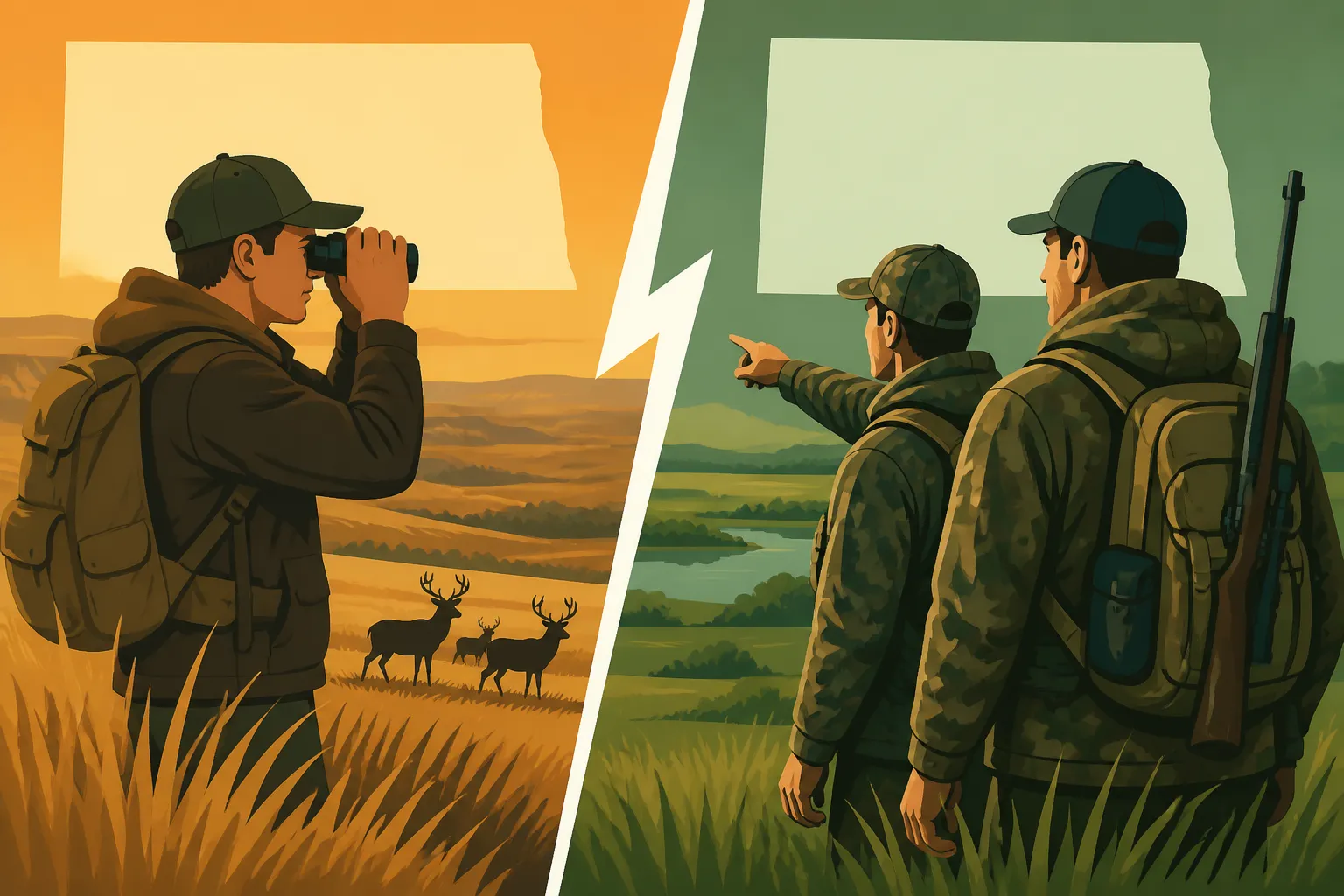
The dream of hunting in North Dakota is often painted with vast, open prairies, challenging big game, and abundant birds. But for many hunters, especially those new to the state or tackling a challenging species, the question quickly becomes: how much help do I really need? It's a common struggle to balance the desire for a truly "self-guided" experience with the practical need for local knowledge and assistance to make a hunt successful and enjoyable. This guide will help you navigate the nuances between hiring a dedicated scout and booking a full-service guide, laying out what each option truly entails so you can make the best decision for your North Dakota adventure.
Understanding the Full Guide Experience
When you envision a guided hunt, you're usually thinking of a full-service experience. This is often the path many non-residents or first-time hunters in a particular area choose, and for good reason. It’s about leveraging someone else's deep expertise and logistical support to maximize your chances of success and minimize the headaches that can come with hunting unfamiliar territory.
What a Full Guide Typically Offers
A full guide typically offers a comprehensive package, taking most of the planning and execution off your plate. Imagine flying into Bismarck or Fargo, getting picked up, and having everything from transportation to the hunting grounds, blind setups, calling sequences, and even game retrieval handled for you. This is the essence of a fully guided trip.
For instance, if you're coming from out of state to chase North Dakota pheasants, a reputable guide might meet you at your lodging, provide well-trained dogs, navigate prime private and public land, and lead you through fields with generations of knowledge about bird movement and cover. They’re not just showing you a map; they’re walking with you, making real-time decisions, and putting you in the best possible position to fill your limits. This is especially valuable for hunters who have limited vacation time and want to ensure every minute in the field is optimized. They’ve already done the Scouting PLOTS Land Before Season work, so you can focus purely on the hunt.
The Benefits of a Fully Guided Hunt
The advantages of a fully guided hunt are significant, especially when you're facing a new or challenging environment like North Dakota. Firstly, it dramatically reduces stress. You don't have to worry about securing access, understanding complex regulations, or even knowing where to start looking for game. The guide handles the minutiae, allowing you to immerse yourself in the experience.
Secondly, the local knowledge and expertise of a guide are invaluable. They understand the nuances of the terrain, the seasonal movements of game, and how weather patterns impact hunting success. Consider a tough North Dakota winter; a guide knows exactly where deer might be concentrated for late-season food sources, or where pheasants are likely to shelter in dense cover. Their insights, often honed over decades, can mean the difference between seeing nothing and having multiple shot opportunities. This local understanding can be critical when pursuing something as sought-after as elk in the Badlands, where terrain knowledge is paramount. Elk Hunting North Dakota's Badlands presents unique challenges that a seasoned guide can help you overcome.
Finally, a guided hunt often comes with higher success odds. While no guide can guarantee an animal, they significantly increase your chances by putting you in the right place at the right time, equipped with the right tactics. For someone hoping to bag a specific trophy or simply ensure a successful meat hunt, this can be a huge draw.
Potential Downsides and Costs
Of course, this level of service comes at a cost. Fully guided hunts are, by nature, the most expensive option. You’re paying for expertise, equipment, logistics, and often lodging and meals. This can be a significant investment, and it’s important to understand exactly what’s included in the package. Always clarify if tags, licenses, and gratuities are part of the stated price, or if those are additional expenses you'll need to budget for.
Another potential downside for some hunters is the perceived loss of independence. If you thrive on the challenge of figuring things out for yourself, navigating new landscapes, and making all the strategic decisions, a fully guided hunt might feel a bit too hands-off. While guides certainly listen to your preferences, they ultimately lead the hunt, which means less autonomy for the hunter. This isn't a bad thing for everyone, but it's a consideration for those who cherish the self-reliance aspect of hunting. You’ll want to review how much involvement you prefer when planning, to ensure it aligns with the outfitter's approach. When you're searching for an outfitter, platforms like BookYourHunt can show you different packages, allowing you to gauge the level of guidance offered.
The Role of a Hunting Scout
For many seasoned hunters who love the DIY aspect but still want an edge in unfamiliar territory, a hunting scout offers a compelling middle ground. This option provides crucial insights without removing you from the core decision-making process of the hunt itself.
What a Scout Provides
A scout's primary function is to provide valuable, up-to-date intelligence on an area before you even set foot in the field. Think of them as your eyes and ears on the ground, delivering pre-season intel that would take you days or weeks to gather yourself. This might include detailed maps marking recent game sightings, common travel corridors, bedding areas, watering holes, and fresh sign like rubs and scrapes. They might deploy trail cameras and share the footage, giving you a real-time understanding of what's moving through a particular coulee or shelterbelt.
For example, if you're planning a DIY mule deer hunt in North Dakota's Badlands, a scout could provide you with satellite imagery marked with potential glassing points, specific draws where bucks have been seen, and even access routes to reduce pressure on specific pockets of public land. This information empowers you to make informed decisions about where to focus your efforts, how to approach an area, and where to hang a stand or set up a ground blind. This kind of localized data is a game-changer for someone who otherwise might be Reading Aerial Photos for Badlands Deer from thousands of miles away.
Advantages of Using a Scout
One of the most significant advantages of using a scout is cost-effectiveness. A scout typically charges a day rate for their scouting services, or a flat fee for an information package, which is generally much lower than the multi-day cost of a full guide. This makes quality intelligence accessible to hunters on a tighter budget.
Another huge benefit is that it allows you to maintain your independence and the "fair chase" thrill of the hunt. The scout provides the intel, but you are still the one making the stalk, interpreting the sign in real-time, and executing the shot. This is ideal for hunters who want to test their own skills against the wild but don't want to waste precious hunting days blindly searching for game. It's a fantastic learning experience, too, as you get to understand why certain areas hold animals based on the scout's initial findings.
Finally, a scout can be invaluable for hunters targeting specific, hard-to-find game. If you've been lucky enough to draw a North Dakota's Once-in-a-Lifetime Moose Herd tag, for instance, you're not going to waste that opportunity on guesswork. A scout can pinpoint specific river bottoms or willow thickets where moose have been frequenting, giving you a massive head start on your once-in-a-lifetime adventure.
When a Scout Might Not Be Enough
While scouting services are excellent, they aren't a panacea for every hunting situation. If you're a complete novice, new to hunting in general, or entirely unfamiliar with the tactics required for a specific species, a scout's detailed intel might still leave you feeling overwhelmed. Knowing where the deer are is one thing; knowing how to effectively hunt them in that specific terrain and wind condition is another.
Similarly, if you have physical limitations that prevent you from extensive hiking or difficult game retrieval, a scout won't be physically there to assist you during the hunt. A full guide, on the other hand, often provides this crucial support, including assistance with tracking, field dressing, and packing out game from challenging areas like coulees or thick timber.
Lastly, hunters with extremely limited time might find a scout's services helpful but still prefer the seamless logistics of a full guide. If you have only a couple of days to hunt, you might not want to spend precious hours interpreting scout-provided maps and figuring out access points on your own. You'd rather step into a pre-set situation ready to hunt immediately.
Deciding Between a Scout and a Full Guide
The choice between a scout and a full guide isn't about one being inherently "better" than the other. It's about finding the right fit for your specific hunting style, experience level, budget, and desired outcome.
Assessing Your Hunting Experience and Goals
Take an honest look at your hunting background. Are you a seasoned veteran who thrives on deciphering maps and reading subtle sign, even in new territory? Or are you relatively new to the game, perhaps more accustomed to hunting familiar ground near home? Your comfort level with self-reliance is a major factor. If you're a beginner hunter looking for your first deer, a full guide offering a North Dakota Deer Camp Traditions style experience might be ideal, as they can teach you the ropes safely and effectively. If your goal is a specific trophy and you're already an accomplished hunter, a scout's precise intel could give you the edge you need without holding your hand.
Consider your specific goals too. Are you just looking to put some meat in the freezer, or are you chasing a once-in-a-lifetime trophy? The intensity and precision required for the latter might lean you towards a scout's hyper-focused intelligence if you plan to execute the hunt yourself. For a more relaxed, social hunting experience focused on camaraderie and consistent action, especially for upland birds, a fully guided pheasant lodge might be more your speed. Pheasant Hunting North Dakota's Prairie can be an amazing social event when well-organized.
Considering Your Budget and Time Commitment
Budget is often the biggest deciding factor. If your financial resources are limited but you still want an advantage, a scout provides incredible value for money. They offer the critical local knowledge without the added expense of their continuous presence during the hunt itself. This allows you to allocate more of your budget to licenses, travel, and quality gear.
Your available time is also crucial. If you have a generous amount of vacation days and enjoy the process of scouting and planning, even on unfamiliar land, then a scout's information can be a perfect jump-off point for your own extended reconnaissance. However, if you're squeezed for time, flying in for a quick weekend hunt, the efficiency and pre-planned nature of a full guide might be worth the extra investment to ensure you make the most of every precious hour. A guide can help you avoid losing time to something like Reading North Dakota Mud for Fresh Deer Movement if you're not familiar with local conditions.
Utilizing Technology and Resources
Regardless of whether you choose a scout or a guide, or even if you go completely DIY, modern technology is your friend. Mapping apps like OnX Hunt are indispensable for understanding public land boundaries, terrain features, and even tracking your own movements. Resources like GoHunt provide valuable unit statistics, harvest reports, and detailed maps that can help you cross-reference any information a scout provides or help you choose a reputable guide.
When researching guides and outfitters, don't forget online booking platforms. BookYourHunt, for example, lists many operations, often with reviews and detailed breakdowns of their services, allowing you to compare options and vet potential guides. These platforms can be a good starting point for finding both full guides and potentially even specialized scouting services that are formally listed. Remember to always cross-reference information and call potential professionals directly to discuss your needs.
Practical Considerations for North Dakota Hunts
North Dakota offers a diverse hunting landscape, from the rugged Badlands to the vast prairie potholes and river bottoms. The type of terrain and target species will heavily influence whether a scout or a guide makes more sense.
Navigating Public Land Challenges
Public land hunting in North Dakota, while abundant through programs like PLOTS (Private Land Open To Sportsmen) and vast National Grasslands, often comes with its own set of challenges. Pressure from other hunters can be significant, especially during popular seasons like the gun deer opener or peak pheasant season. A scout can be invaluable here, identifying less-pressured pockets of public land, hidden access points, or overlooked draws where game might be seeking refuge. They can help you Finding PLOTS Ground Others Walk Past, giving you an edge over the competition.
For example, on the Little Missouri National Grassland, knowing which two-track roads are accessible and where to find the subtle trail leading into a secluded coulee can save you hours of frustrated hiking. A guide will lead you directly there, while a scout provides the maps and intel for you to navigate it yourself.
Species-Specific Needs
The species you're pursuing also plays a huge role. For something like North Dakota's Lottery-Based Deer Gun Season, where tags can be hard to come by and success is often measured by a single opportunity, precise intel from a scout on buck movement and bedding areas might be enough for an experienced deer hunter. If you're targeting a once-in-a-lifetime species like elk, where the terrain is physically demanding and opportunities are extremely rare, an experienced guide who knows the specific patterns of Elk Hunting North Dakota's Badlands could be worth every penny for the hands-on assistance.
For Pheasant Hunting North Dakota's Prairie, a full guide with trained dogs offers a different kind of advantage. Their dogs can find birds you'd walk right past, and the guide's knowledge of cover types and bird flushing habits can turn a slow morning into a memorable hunt. For waterfowl, particularly on large bodies of water like Devils Lake or Lake Sakakawea, a guide often provides specialized equipment like boats, layout blinds, and extensive decoy spreads that would be cost-prohibitive for most DIY hunters. They also know the specific nuances of Decoy Spreads for Prairie Pothole Mallards and where the birds are actually flying.
Vetting Your Chosen Professional
Regardless of whether you lean towards a scout or a full guide, vetting your chosen professional is paramount. Always ask for references and check online reviews. In North Dakota, guides and outfitters are typically licensed, and you should always verify their credentials. Don't be shy about asking specific questions about their experience in the area, their success rates (and what "success" means to them), and what their services truly entail. A good starting point for this crucial step is our detailed guide on Vetting a North Dakota Hunting Outfitter. This due diligence will protect your investment and help ensure a positive hunting experience.
| Feature | Hunting Scout | Full Guide |
|---|---|---|
| Primary Service | Provides pre-hunt intelligence and mapping | Leads and directs the hunt; often all-inclusive |
| Cost | Generally lower (day rate or intel package) | Generally higher (full package, multi-day) |
| Independence | High; you make the in-field decisions | Lower; guide leads the hunting efforts |
| Physical Presence | Not present during the actual hunt | Present and active throughout the hunt |
| Logistics | You handle all in-field logistics (access, gear) | Guide handles most logistics (transport, setup) |
| Ideal For | Experienced DIY hunters, budget-conscious | Less experienced hunters, time-constrained, seeking high success |
| Learning Curve | Encourages self-reliance and skill development | Provides direct instruction and immediate solutions |
| Game Retrieval | Your responsibility | Often assisted by the guide |
The decision to hire a scout or a full guide for your North Dakota hunt ultimately boils down to a personal assessment of your skills, budget, time, and desired level of involvement. Both options offer valuable benefits, and understanding these differences will help you equip yourself for the best possible experience in North Dakota's incredible outdoors.
Disclaimer
This article is for general informational purposes only and does not constitute professional advice. Laws, prices and regulations vary by location and change over time. Consult a qualified professional for guidance on your specific situation.