Verifying an Outfitter’s PLOTS Access Claims
Booking a hunting trip to North Dakota, especially when you're traveling from out of state, is a huge investment of time, money, and anticipation. There's nothing more frustrating than arriving, full of hope, only to find that the prime hunting grounds an outfitter promised for public access aren't quite what you expected, or worse, aren't even legally exclusive to them. This guide is here to walk you through exactly how to verify an outfitter's claims about accessing North Dakota's PLOTS land, ensuring you have the clear information you need for a successful and legal hunt.
Understanding North Dakota's PLOTS Program and Outfitter Responsibilities
Before you can even begin to verify an outfitter's claims, it's absolutely crucial to have a solid understanding of what North Dakota's PLOTS program actually is and, more importantly, what it isn't. Misconceptions about this program are common, and unscrupulous outfitters can sometimes exploit these misunderstandings. Knowing the facts empowers you as a hunter.
What PLOTS Land Truly Is
PLOTS stands for Private Land Open To Sportsmen. This is a fantastic program run by the North Dakota Game and Fish Department (NDGFD) that partners with private landowners across the state. In exchange for certain incentives, these landowners agree to open up specified portions of their property for public hunting access. Think of it as a handshake agreement where the public gets a place to hunt, and the landowner receives benefits like habitat improvement assistance, weed control, and financial compensation. It's a win-win for everyone involved, especially for hunters looking for more acreage to explore.
The key takeaway here is "public hunting access." PLOTS land is designated for all licensed hunters to use, respecting the rules posted and state regulations. It is not, by definition, exclusive. While a specific outfitter might operate near or even on PLOTS land, they cannot claim exclusive rights to it for their clients. It’s important to remember that these are often working farms or ranches, and while they are open for hunting, courtesy and respect for the landowner's primary operation are paramount. You might find a great shelterbelt edge to hunt, or a promising slough within a PLOTS tract, but you should expect other hunters to potentially be in the area as well. Scouting PLOTS Land Before Season is always a good idea to understand the layout and potential pressure.
The Outfitter's Role and Restrictions
An outfitter in North Dakota can absolutely guide hunters on PLOTS land. There's nothing in the program that prohibits a licensed guide from taking their clients onto these publicly accessible parcels. However, their presence or their client's booking does not grant them any special or exclusive rights to that land. They are simply another member of the public, albeit one providing a service, utilizing publicly accessible hunting grounds.
Where things get tricky, and where a hunter needs to be vigilant, is when an outfitter implies or explicitly states that their package includes "private" or "exclusive" access to PLOTS land. This is a significant red flag. PLOTS land is designated public access. An outfitter cannot lease PLOTS land from the state or the landowner to make it private for their clients. Any claim suggesting they can restrict other public hunters from using a PLOTS tract should immediately make you question their integrity and legality. Their role is to guide, to use their knowledge of the area and game, and to improve your chances of success, not to control access to land designated for everyone. Understanding North Dakota Outfitter License Requirements is also crucial here; make sure they are properly licensed.
Why Claims of "Exclusive PLOTS Access" Should Raise a Red Flag
Imagine you're reviewing a hunting package online, perhaps through a booking platform, and you see an outfitter touting "exclusive access to thousands of acres of prime PLOTS land." On the surface, it sounds incredible, doesn't it? Who wouldn't want private access to excellent hunting ground? But this is precisely where your critical thinking needs to kick in. As we've established, the very nature of PLOTS land is public access.
A claim of "exclusive PLOTS access" is, by its definition, a contradiction. It suggests the outfitter has a special arrangement that allows them to deny other legal hunters access, which simply isn't how the program works. If an outfitter is making such a claim, it could indicate one of several things:
- Misunderstanding: They might genuinely misunderstand the PLOTS program themselves, which isn't ideal for someone guiding others.
- Misrepresentation: They might be intentionally trying to mislead potential clients into thinking they're getting something more valuable than basic public access.
- Mixing Land Types: They might have some legitimately leased private land and are conflating it with PLOTS land to make their overall offering sound more exclusive. This is often the case. They might say, "We hunt thousands of acres of private land, including PLOTS," which can be subtly deceptive if not clarified.
Your goal as a hunter is to distinguish between genuine, legal access and misleading marketing. When you hear "exclusive PLOTS," it should trigger immediate questions about the specific parcels, the nature of the exclusivity, and whether you're being led to believe something that isn't true. For example, some outfitters might have a large private lease adjacent to a PLOTS parcel and hunt both, but the PLOTS portion remains open to everyone. It's the "exclusive" part that's problematic when applied to PLOTS.
Essential Steps to Verify PLOTS Access Claims
Once you understand the fundamentals of PLOTS and an outfitter's ethical and legal boundaries, the next step is active verification. Don't just take their word for it. Empower yourself with the tools and resources provided by the state to confirm their claims. This due diligence is your best defense against disappointment or, worse, being involved in an unlawful hunting situation.
Consult the Official PLOTS Guide and Map
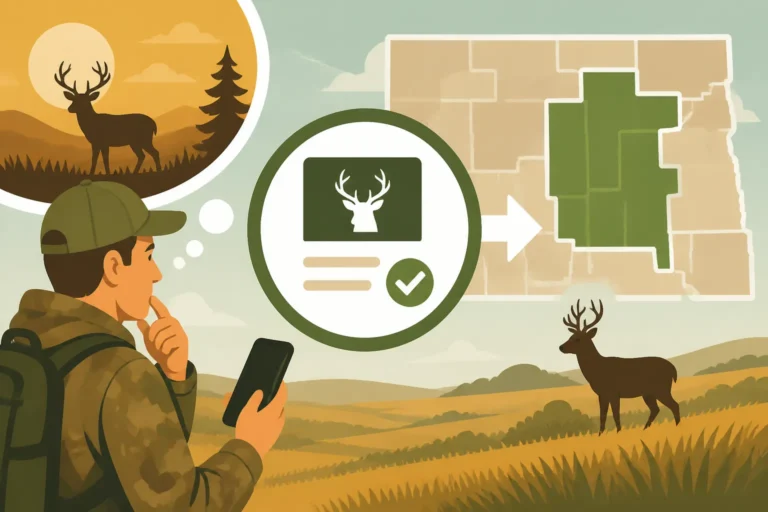
The North Dakota Game and Fish Department is your ultimate source for verifying PLOTS land. They publish an annual PLOTS Guide, which includes detailed maps of all participating tracts. This guide is usually available both as a physical booklet and, more conveniently for many, through their website and the official North Dakota Game and Fish mobile app. This app is incredibly useful because it often has GPS overlays that show precisely where PLOTS tracts are located in relation to your current position.
Your first step should be to acquire the most current PLOTS Guide and maps. When an outfitter mentions specific PLOTS areas they hunt, ask them for the specific unit numbers, county, or even better, the precise tract identification numbers. With this information, you can cross-reference it with the official guide. Take your time poring over these maps. Look at the boundaries, access points, and any specific rules or restrictions noted for those particular tracts. Remember, the digital maps, especially on the NDGFD app, are generally the most up-to-date, reflecting any last-minute changes or additions to the program. This proactive research is invaluable for Finding PLOTS Ground Others Walk Past and understanding the hunting pressure.
Cross-Reference Outfitter Information with Official Maps
This is where the rubber meets the road. An outfitter might tell you they have access to "the big PLOTS tract just south of Bismarck," but vague descriptions aren't going to cut it. You need specifics. Ask them:
- "Can you show me on the official PLOTS map which specific tracts you're referring to?"
- "What are the PLOTS unit numbers or land descriptions for the areas where you typically guide?"
- "What are the public access points for those tracts?"
Once you have these details, open your official PLOTS map or app (many hunters use mapping apps like GoHunt that integrate land ownership data, making this process even easier). Compare what the outfitter has told you with the official record.
- Do the locations match? Is the tract they describe actually a PLOTS tract?
- Are the boundaries clear? Does their description align with the published boundaries?
- Are there any inconsistencies? If they claim "exclusive access" but the map clearly shows it as public, that's your cue to dig deeper.
For instance, an outfitter might claim a specific section is "theirs" through PLOTS. However, a quick check of your onX Layers for North Dakota Land Status or the official PLOTS map might reveal that only a small corner of that section is actually enrolled in PLOTS, with the rest being private land they may or may not have permission for. This kind of discrepancy warrants further investigation. This step isn't about distrusting everyone; it's about being an informed consumer and ensuring you're getting what you're paying for.
Directly Contact the North Dakota Game and Fish Department
If you've done your preliminary research and still have questions, or if something just doesn't feel right, the North Dakota Game and Fish Department is your ultimate resource. They are there to help hunters understand regulations and ensure fair play. Don't hesitate to reach out to them.
You can contact their main office or speak with a local game warden. Provide them with the outfitter's name (if you have it), the specific claims being made, and the PLOTS tract numbers or general areas in question. Explain your concerns clearly and concisely. For example, you might say, "I'm considering booking a hunt with X Outfitting, and they mention hunting PLOTS tract #12345 near [town name]. They suggested this area would be exclusively for their clients. Can you clarify the public access rules for this specific PLOTS tract, and whether an outfitter can indeed restrict other hunters?"
Their response will be definitive. The NDGFD will confirm the public access status of any PLOTS tract and clarify what is and isn't permissible for outfitters operating on those lands. This direct verification is the most authoritative way to confirm or refute an outfitter's claims and will give you peace of mind before you commit to a booking. This is particularly important with new rules, such as North Dakota's New Nonresident Waterfowl Rule or North Dakota's Zone-Restricted Waterfowl License, which might be misunderstood or misrepresented by some.
What to Ask Your Outfitter About PLOTS Access
Beyond just verifying general claims, a proactive hunter will come armed with a list of specific questions for any potential outfitter. The quality and clarity of their answers can tell you a lot about their honesty and professionalism. This conversation is not just about PLOTS, but about setting clear expectations for your entire hunt.
Specific Questions to Pinpoint Access
When you're speaking with an outfitter, don't be shy about asking direct, pointed questions about their land access, especially concerning PLOTS. Here’s a list to get you started:
- "Can you provide a list of specific PLOTS tracts, by their official numbers or legal descriptions, that you plan to hunt with clients?" This gets them beyond vague generalities.
- "What percentage of the land we will hunt is dedicated PLOTS acreage versus genuinely private, leased land?" This helps you understand the overall landscape of your hunt.
- "How do you manage potential encounters with other public hunters on PLOTS land? Do you have strategies for mitigating pressure or ensuring our group has a good experience?" Their answer here can reveal their professionalism and realistic approach to hunting public access ground.
- "If we are hunting a PLOTS tract, how will you ensure we are not trespassing onto adjacent private land that is not enrolled in the program?" This demonstrates your awareness and pushes them to articulate their boundary management.
- "Will we primarily be hunting PLOTS land, or will PLOTS be used more as supplemental access?" This clarifies their overall strategy.
- "Where are the public access points for the PLOTS tracts you utilize, and what are the specific parking instructions?" This detail should be readily available if they truly hunt these areas.
A reputable outfitter will have clear, honest answers to these questions and should be able to point to maps or provide specific documentation. Evasiveness or vague responses should be a cause for concern. Questions to Ask a North Dakota Outfitter should always include a detailed section on land access.
Distinguishing PLOTS from Leased Private Land
This is arguably one of the most critical distinctions to make when talking to an outfitter. Many outfitters in North Dakota operate on a combination of truly private, leased land and PLOTS land. Both can offer excellent hunting, but the nature of the access is fundamentally different.
- Leased Private Land: This is land that an outfitter has a direct, often exclusive, contract with the landowner to hunt. On these parcels, they can indeed control access, and you're paying for that exclusivity. This is where you might find fewer other hunters, and the outfitter has more say over habitat management or stand placement. It's often where the premium hunting experiences are offered.
- PLOTS Land: As discussed, this is public access. While an outfitter can guide here, they cannot restrict other hunters. You are paying for their expertise, equipment, and guiding service, not for exclusive access to the land itself.
When an outfitter describes their hunting grounds, always ask them to clearly delineate which parcels are privately leased and which are PLOTS. A good question might be: "For the 'X' number of acres you advertise, how many are private leases, and how many are PLOTS?" If they are hesitant to break down these numbers, or if they constantly conflate the two, it's a significant warning sign. You want to know exactly what kind of access you're paying for. This also impacts the overall North Dakota Hunting Lease Costs versus a self-guided experience on PLOTS.
Understanding "Guiding" on Public Access Lands
It's perfectly legal for an outfitter to guide on public access lands, including PLOTS. Their value proposition here comes from their knowledge, not their control of the land. They might know:
- Specific game movements: Where deer typically cross a certain coulee, or which sloughs hold ducks later in the season.
- Best times and tactics: When to rattle, when to call, or the best wind direction for a particular setup.
- Logistics: Transportation, field dressing, recovery, and other practical aspects of the hunt.
- Equipment: Providing decoys, blinds, ATVs for access (where permitted), and other gear that enhances the hunt.
So, when an outfitter talks about guiding on PLOTS, the conversation should revolve around their expertise and service, not the exclusivity of the ground. They are acting as a professional resource to help you navigate and effectively hunt those public lands. They are not selling you exclusive access to the land. If their pitch heavily leans into the idea of "owning" or "controlling" a PLOTS tract, they are misrepresenting the situation. Their guiding fee should reflect the value of their time, knowledge, and equipment, not a phantom exclusive land right. For example, a quality waterfowl guide operating on PLOTS might specialize in Layout Blind Hunting Devils Lake Fields, leveraging their experience to pick the perfect spot and deploy an effective decoy spread, which is valuable service.
Red Flags and Best Practices When Evaluating Outfitters
Navigating the world of hunting outfitters requires a healthy dose of skepticism and a commitment to thorough research. There are many fantastic, ethical outfitters in North Dakota, but like any industry, there are also those who are less scrupulous. Knowing the red flags and adhering to best practices will protect your investment and ensure a rewarding hunting experience.
Common Misleading Claims and How to Spot Them
Beyond the "exclusive PLOTS access" claim, there are other phrases and promises that should raise your antenna. Be wary of outfitters who:
- Guarantee success: While a good outfitter can greatly increase your odds, hunting is never a guarantee. Weather, game movement, and pure luck always play a role. Claims of "100% success rates" or "guaranteed kill" are usually too good to be true and can indicate an unethical approach.
- Show pictures with vague locations: If all their trophy photos are generic or lack specific identifiable landmarks, it might be difficult to verify where the game was actually taken. Ask for more context or details on the hunt.
- Are vague about land access in general: If they can't clearly articulate the difference between private leases, PLOTS, and other public lands, or if they keep changing their story, consider it a major red flag.
- Pressure you for an immediate deposit: While deposits are standard, intense pressure tactics to pay before you've had a chance to ask questions and verify information are concerning.
- Don't provide references: Reputable outfitters should be happy to provide references from past clients. If they refuse or make excuses, walk away.
- Have very little online presence or very few, excessively positive reviews: A lack of balanced reviews or an overwhelming number of generic five-star reviews could indicate something fishy. Platforms like BookYourHunt can be useful for finding vetted outfitters with transparent reviews, but always cross-reference.
The Importance of Written Contracts
Once you've done your due diligence and feel confident in an outfitter, the next critical step is to ensure everything is documented in a clear, comprehensive written contract. Never agree to a hunting trip based solely on verbal promises.
Your contract should explicitly detail:
- Dates of the hunt: Arrival and departure.
- Cost and payment schedule: Deposit amount, balance due, and cancellation policy.
- What's included: Meals, lodging, transportation during the hunt, guide services, field dressing, trophy care, etc.
- Specifics about hunting land: This is where you want to see the clear distinction between private, leased land and PLOTS. The contract should identify specific tracts if possible, or at least clearly state the type of access. It should not claim exclusive access to PLOTS land.
- Number of hunters in your group and any other groups that might be simultaneously hunting the same areas. This helps manage expectations regarding pressure.
- Guide-to-hunter ratio.
- Any contingencies: What happens in case of extreme weather, unexpected cancellations, or other unforeseen circumstances.
Read every line of the contract carefully. If something isn't clear, ask for clarification and have it amended in writing. A professional outfitter will understand and appreciate your thoroughness. This document is your protection and your understanding of the service being provided. Ensure you understand North Dakota Outfitter Cancellation and Weather Policies thoroughly.
Trust Your Gut and Do Your Due Diligence
Ultimately, booking a hunting trip involves a significant investment of both money and personal trust. If something about an outfitter's claims, communication style, or online presence just doesn't sit right with you, trust that instinct. There are plenty of excellent, ethical outfitters in North Dakota who would be thrilled to earn your business honestly.
Your due diligence should extend beyond just PLOTS land. Look into their overall reputation, check online forums and reviews (taking them with a grain of salt, of course), and talk to past clients. Ask about their hunting philosophy, their experience in the specific areas you'll be hunting, and their commitment to fair chase. Tools like GoHunt can help you research specific areas for game populations, which can give you a baseline for an outfitter's claims.
North Dakota offers incredible hunting opportunities, and a well-researched, ethical outfitter can make your trip truly unforgettable. By understanding the PLOTS program, asking the right questions, and verifying information, you'll be well-equipped to make an informed decision and embark on a fantastic hunting adventure. Remember, you're not just booking a hunt; you're building a relationship, and that starts with trust and transparency.
Disclaimer
This article is for general informational purposes only and does not constitute professional advice. Laws, prices and regulations vary by location and change over time. Consult a qualified professional for guidance on your specific situation.