Predator Calling North Dakota’s Badlands Draws
There’s nothing quite like the rush of a coyote or fox tearing through a Badlands draw, responding to your calls, and locking onto your position. But let’s be real, North Dakota’s Badlands aren't your typical open prairie calling grounds. This rugged, unpredictable landscape presents unique challenges for predator callers, from swirling winds in deep coulees to the sheer scale of the terrain. This guide will walk you through the nuances of predator calling in these challenging yet incredibly rewarding areas, helping you understand the environment, choose the right gear, refine your techniques, and set up for maximum success.
Understanding the Badlands Environment for Predators
Hunting the North Dakota Badlands is an experience unlike any other in the state. Its unique geology and varied cover make it a prime habitat for coyotes, fox, and even bobcats, but it demands a different approach than calling flat farm country.
The Unique Landscape and Cover
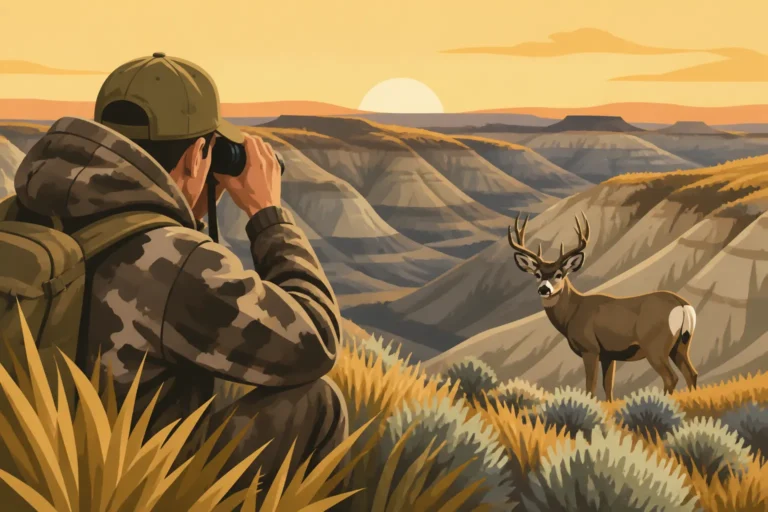
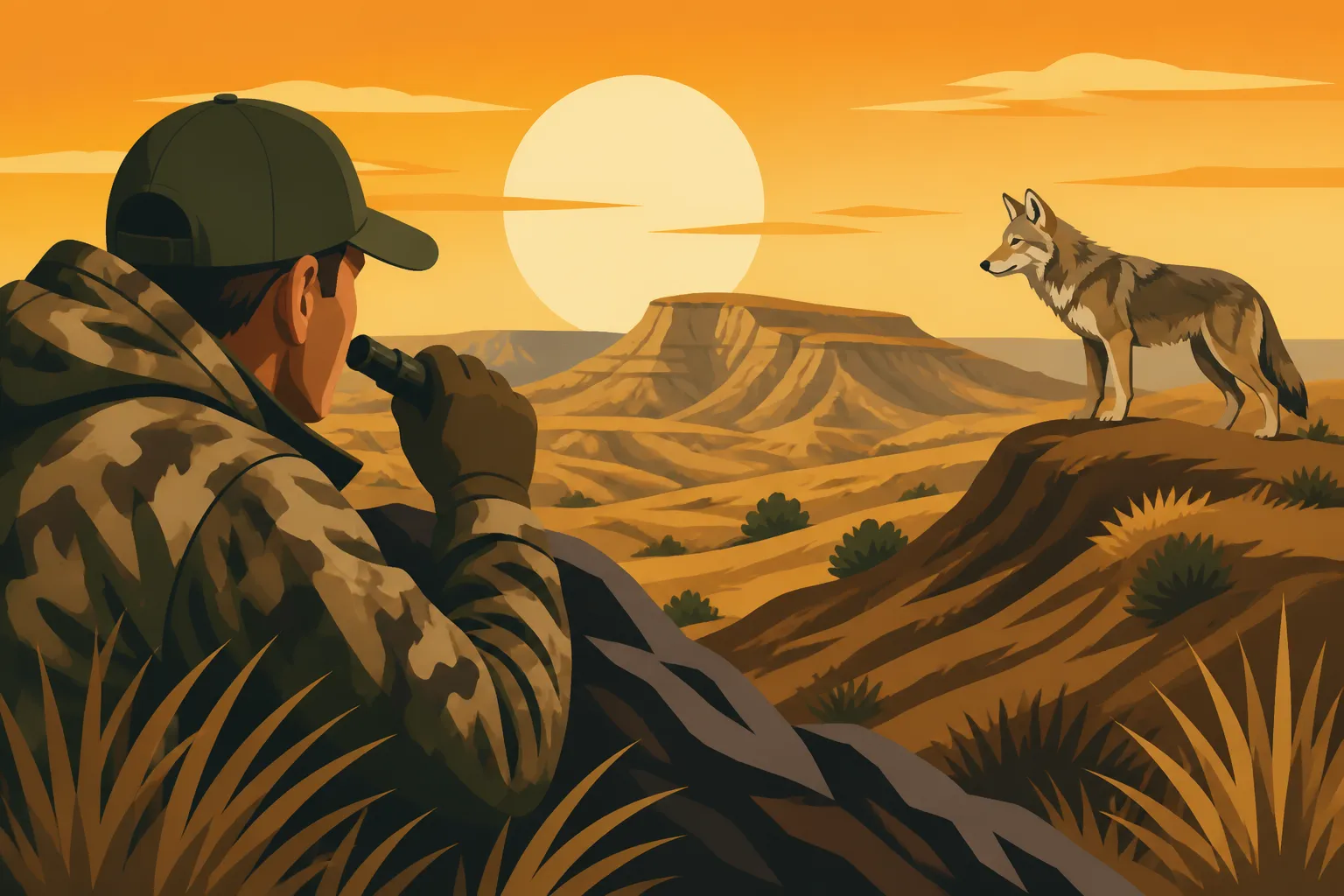
The Badlands are a maze of steep buttes, deep coulees, and carved draws, often heavily vegetated with juniper, sagebrush, and sparse pockets of timber, especially along the Little Missouri River breaks. This isn't wide-open country where you can see for miles. Instead, you'll find yourself navigating broken terrain, where a predator can pop up from seemingly nowhere, or vanish just as quickly. The draws themselves act like natural funnels and travel corridors for wildlife, but they also create incredibly tricky wind currents. What might feel like a steady breeze on a ridge top can become a swirling, unpredictable eddy down in a coulee bottom, carrying your scent in every direction. Understanding these micro-climates and how they affect scent is absolutely paramount. It’s not uncommon to hike a half-mile to a calling location, only to have the wind completely shift on you once you drop into a draw. This is where detailed scouting and an intimate knowledge of the area truly pay off.
Key Predator Species and Their Habits
In North Dakota's Badlands, coyotes are the primary target for most predator callers, but you'll also encounter red fox, and occasionally, a bobcat. Each species has its own habits and preferences. Coyotes are incredibly adaptable and can be found almost anywhere there's food, which the Badlands provides in spades—deer, rabbits, rodents, and upland birds. They use the draws and coulees for travel, cover, and ambush points. They are generally more vocal and tend to respond aggressively to distress calls, especially during the breeding season or when establishing territory. Red fox are often a bit more cautious and might hang up at a greater distance, making a closer shot more challenging. They prefer more dense cover and are masters of stealth. Bobcats, while less common, are the ultimate prize. They are incredibly elusive, often silent, and rely heavily on ambush. They tend to stick to the thickest draws and breaks, especially where rocky outcroppings provide dens. For an in-depth look at our primary calling target, you might want to check out our article on North Dakota Coyote Range and Density. Knowing these basic behaviors will help you tailor your calling strategy and anticipate how different animals might approach your setup.
Seasonal Considerations for Calling Success
The Badlands transform dramatically with the seasons, and so too should your calling strategy. In the early fall, coyotes are often less pressured and more focused on young, inexperienced prey. Pups are still learning, and older coyotes are teaching them to hunt. This can be a great time for aggressive distress calls. As winter approaches, prey becomes scarcer, and coyotes are constantly on the move looking for food. Fresh snow can reveal valuable tracks and help you pinpoint travel routes. However, deep snow can also make access incredibly difficult for you and the predators. During the late fall and early winter, temperatures can plummet, forcing coyotes to conserve energy, making them potentially less willing to travel long distances to a call. This is when long-range, loud howls might be effective to draw them out, followed by subtle distress sounds. The breeding season (late winter/early spring) is often considered prime time, as coyotes are actively seeking mates and defending territories. Howls, challenges, and female invitation howls can be incredibly effective then. Be mindful that during the colder months, coyotes often use southern-facing slopes to bed and warm themselves, so glassing these areas before calling can be very productive.
Essential Gear for Badlands Predator Calling
Hitting the Badlands unprepared is a recipe for frustration. The right gear not only increases your chances of success but also ensures your comfort and safety in this wild country.
Call Types: Electronic Versus Mouth Calls
When it comes to calls, you’ve got two main camps: electronic and mouth calls. Each has its place in the Badlands. Electronic calls, like those from Foxpro or ICOtec, offer a vast library of sounds—everything from rabbit distress to various coyote vocalizations, bird distress, and even furbearer sounds. Their volume and versatility are huge advantages in the vastness of the Badlands, allowing you to project sound across long draws and attract attention from a distance. Many models also come with remote controls, letting you position the speaker away from your hiding spot, drawing the predator's attention to the sound source instead of you. This can be a game-changer when a coyote is trying to circle downwind. A good e-caller, especially one with diverse sounds, can really mimic a struggling animal, making it irresistible to hungry predators.
Mouth calls, on the other hand, offer unparalleled realism and subtle nuance. Hand calls, like those from Primos or Crit'R Call, give you direct control over pitch, volume, and cadence. This can be crucial when a coyote hangs up, allowing you to make soft, pleading whimpers or aggressive barks. They're also lightweight, reliable (no batteries needed!), and often less intimidating for wary animals up close. Many experienced callers prefer mouth calls for their ability to react instantly to a coyote's approach, adjusting the call to match the situation. In the Badlands, where coyotes might come in silently or pop up unexpectedly, having a mouth call ready can make all the difference. Combining both—starting with an e-caller for long-distance attraction and switching to a mouth call for close-in finesse—is often the most effective strategy.
Optics and Scouting Tools
Good optics are non-negotiable in the Badlands. The broken terrain means you'll be glassing constantly to spot predators approaching or to locate potential calling spots. A quality pair of binoculars (10×42 or 12×50 are great choices) will save you countless steps and help you pick out a coyote moving through juniper far across a draw. You'll often be set up high, looking down into draws, so magnification is your friend. Don't skimp here. A spotting scope can also be invaluable for long-range scouting from a vantage point, allowing you to confirm if that distant speck is a coyote or just a rock.
Beyond glass, modern GPS and mapping apps are indispensable. Services like GoHunt provide detailed satellite imagery, topography maps, and public/private land boundaries, all crucial for navigating the Badlands. Before you even set foot out there, you can spend hours scouting from your couch, identifying potential draws, pinch points, and escape routes that coyotes might use. This pre-hunt digital scouting is particularly important for Reading Aerial Photos for Badlands Deer, and the same principles apply to predators. Many apps also work offline, which is critical in remote Badlands areas where cell service is non-existent. Make sure your phone is fully charged, and consider carrying a portable power bank.
Firearms and Ammunition Choices
Selecting the right firearm for Badlands predator calling depends on your personal preference and the expected shot distances. For rifle hunters, something in the .22-250, .204 Ruger, or .223 Remington caliber is standard. These cartridges offer flat trajectories and enough punch to humanely take coyotes, often at ranges from 100 to 300 yards, which is common in the open Badlands draws. Varmint-specific bullets that fragment quickly are generally preferred for safety and to minimize pass-throughs. If you’re planning on calling larger predators or want more versatility, a .243 Winchester or 6mm Creedmoor would also work well. Always know your rifle and practice shooting from various field positions, as you rarely get a bench rest shot in the Badlands.
Shotguns, typically 12-gauge or 20-gauge, loaded with heavy lead or tungsten shot (like #4 buckshot or T-shot), are excellent for close-range encounters, especially if you anticipate calling in thick cover or at night. They offer a wide pattern, which is forgiving for fast-moving targets. If you're hunting in areas where shots are likely to be under 50 yards, a shotgun can be a very effective tool. Remember to check local regulations on legal firearms for predator hunting in North Dakota. Regardless of your choice, understanding the effective range of your weapon and practicing regularly is key.
Effective Calling Techniques in Badlands Draws
The Badlands isn’t just about making noise; it’s about making the right noise, at the right time, and in the right way. The terrain dictates much of this.
Distress Sounds and Their Variations
The backbone of almost all predator calling is the distress sound. Mimicking a rabbit, rodent, or bird in peril taps into a coyote’s primal instinct to investigate an easy meal. In the Badlands, a jackrabbit distress is often a go-to sound. It’s loud enough to carry across draws and usually elicits a strong response. However, don’t be afraid to mix it up. Cottontail distress can be effective when coyotes are more wary or in areas with thicker cover. Fawn distress, particularly during late spring and summer, can also be very potent, as coyotes prey heavily on young deer.
Varying the intensity and duration of your distress calls is crucial. Start with a series of loud, frantic cries to grab attention, then temper it with softer, more pleading sounds as if the animal is weakening. After a few minutes of calling, incorporate periods of silence – sometimes 30 seconds, sometimes a minute or two. This allows a curious predator to come in undetected and listen for the sound to resume. Many coyotes will circle downwind during these silent periods. Remember, the goal isn't just to make a sound, but to tell a story of an easy meal. For a deeper dive into calling strategies beyond the Badlands, consider reading about Coyote Calling North Dakota Farm Country.
Vocalizations and How to Use Them
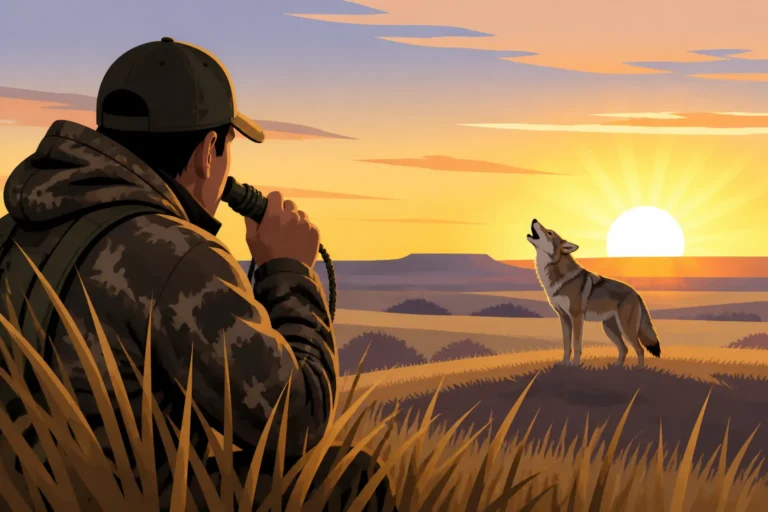
Beyond distress, predator vocalizations can add another layer of realism and draw in more territorial animals. Howls are especially effective in the Badlands, where they can carry for long distances through the draws and signal your presence to other coyotes. A lone howl or interrogation howl can provoke a response, letting you know if coyotes are in the area. Once you get a response, you can switch to distress calls or challenge howls. Challenge howls are best used sparingly, as they can sometimes intimidate younger or more timid coyotes, but they can enrage a dominant male.
Barks and yips often signal excitement, alarm, or a pack communicating. A series of excited yips after a distress sequence can sometimes bring in coyotes that were previously hanging up. It tells them, “Hey, something good is happening over here!” Knowing when to use these vocalizations and how to combine them with distress calls is an art form that comes with practice. The Badlands' broken terrain means sounds can be distorted, so projecting loud, clear howls is often the best way to initially assess if predators are in the vicinity before transitioning to more subtle distress.
Playing the Wind and Thermals
This is arguably the most critical factor for success in the Badlands. The complex topography creates unpredictable wind patterns and thermals that can utterly betray your position. Generally, you want to set up with the wind in your face or quartering, so your scent blows behind you, away from where you expect the predator to approach. However, in deep draws and coulees, this is rarely straightforward. Thermals—air currents caused by temperature differences—can be particularly tricky. In the morning, as the sun heats the ground, air (and your scent) rises up the draws. In the evening, as the air cools, it sinks down the draws.
You might set up on a ridgetop thinking the wind is steady, only to have your scent swirl into a downwind draw as the thermals shift. Always check the wind from your actual calling position, not just from the truck. Carry a small powder bottle or milkweed seeds to constantly monitor subtle air currents. Many experienced Badlands hunters will try to set up high on a point or rim overlooking a draw, allowing them to see animals coming and giving them a slight advantage with rising thermals. Our guide on Wind and Thermals in Badlands Terrain offers even more detailed advice on this crucial aspect of hunting. Be prepared to move and adjust your setup if the wind shifts, or you'll be calling to empty draws.
Setting Up for Success in Badlands Terrain
A perfect call means nothing if your setup is compromised. In the Badlands, where visibility can be limited and approaches unexpected, your position is everything.
Choosing Your Stand Location
The Badlands offers unique opportunities and challenges when it comes to choosing where to set up. Ideally, you want a position that gives you a good vantage point over the draws you intend to call, but also one that provides good concealment and protects your scent. Look for points or small knobs along the rim of a coulee or draw. These elevated positions allow you to see coyotes approaching from multiple directions and give you a commanding view of the basin or draw below. When you're scouting, pay close attention to potential travel corridors at the bottom of the draws and up the opposing slopes. Coyotes will often use the easiest path.
Consider the sun’s position. You want it behind you or to the side, not glaring into your eyes, especially during those critical first and last hours of daylight. Always envision how a coyote might approach: they’ll almost always try to circle downwind to get your scent before committing. So, try to predict their most likely downwind approach and position yourself to intercept them before they get there. Using GoHunt or other mapping tools to identify these terrain features before you go can give you a significant advantage when you're planning your hunt, even if you’re just looking for good spots to start Hunting the North Dakota Badlands.
Concealment and Camouflage Strategies
Blending into the Badlands environment is critical. The broken, rocky terrain and interspersed juniper provide excellent natural cover, but you still need to be mindful of your silhouette and movement. Dress in good quality camouflage that matches the arid, scrubby Badlands colors – tans, browns, and grays are often more effective than deep forest greens. Break up your outline by setting up in front of a bush, a large rock, or a small stand of juniper. Don't sit out in the open on a skyline.
Minimal movement is key. Once you start calling, resist the urge to constantly scan. Let your optics do the work. If you have a partner, one person can call while the other watches for incoming predators. If solo, call, then slowly scan, then call again. Patience is a virtue. Many coyotes will approach cautiously, stopping frequently to survey the area. Any sudden movement can send them packing. A good pair of shooting sticks or a bipod for your rifle can help you stay steady and reduce movement when a shot opportunity arises.
Utilizing Natural Funnels and Travel Ways
The Badlands are a natural labyrinth of funnels and travel ways for all wildlife, including predators. Coyotes consistently use the bottoms of draws, cow trails, and breaks along ridge lines to move efficiently and stay concealed. Your calling setup should leverage these natural pathways. Position yourself where you can see down a draw or where multiple draws converge. This creates a "kill zone" where a coyote is likely to appear. Look for areas where a draw narrows, forcing a coyote through a specific bottleneck.
Identifying these funnels often comes from extensive scouting, both digitally and on the ground. Look for game trails, scat, and tracks to confirm active travel routes. When you set up, think about where the predator is most likely to commit to your call. If you're calling a deep, wide basin, position yourself where you can cover the most likely entry and exit points. Remember that coyotes are smart; they won’t just run straight to your call if it’s in an exposed area. They’ll use every bit of available cover, so understand how they might work the terrain to their advantage and plan your setup accordingly.
Common Challenges and How to Overcome Them
Hunting predators in the Badlands isn't always smooth sailing. This rugged landscape throws a few curveballs that can quickly ruin a hunt if you're not prepared.
Dealing with Strong Winds
North Dakota is famous for its wind, and the Badlands is no exception – in fact, it often amplifies it. Strong winds can make calling incredibly difficult. They carry your scent far and wide, making it hard to control your odor signature, and they can distort or completely obliterate your call sounds. Trying to make a subtle mouth call heard in a 25 mph crosswind is an exercise in futility.
To overcome this, you need to adapt. On windy days, focus on using electronic calls with high volume to cut through the noise. Position your speaker strategically to project sound downwind into a draw. Look for sheltered draws or leeward slopes where the wind might be calmer. When the wind is really howling, it might be better to concentrate on visual hunting by glassing likely bedding or travel areas, rather than relying solely on calling. If you do call, stick to louder, more aggressive distress sounds that can penetrate the wind. Sometimes, the best strategy is simply to wait for a calmer day, especially if you're targeting warier animals like fox or bobcats.
Managing Calling Pressure and Educated Predators
The Badlands draws aren't a secret, and many hunters target predators there. This means you’ll often be dealing with educated coyotes that have heard it all before. An old, wise coyote has likely been called to multiple times, learned from its mistakes, and can be incredibly wary. They might come in slowly, hang up at extreme distances, or circle widely to try and scent you.
To combat this, avoid overcalling one area. Vary your calling locations and give areas a rest. When you do call, try different sound sequences that might be less common. Instead of just rabbit distress, try bird sounds, mouse squeaks, or less-used fawn distress calls. Use a mix of vocalizations and distress. Sometimes, long periods of silence (5-10 minutes) after a short calling burst can lure in a hung-up coyote that thinks the coast is clear. Using less aggressive calls initially can also help, as a full-on challenge howl might send an educated coyote running for the hills. For a more general overview of these savvy animals, you can check out our article on Game Species: North Dakota Coyote Range and Density. Remember, the goal is to present something new and enticing that overrides their past negative experiences.
Safety Concerns: Rattlesnakes and Other Wildlife
The Badlands is wild country, and with that comes inherent risks. Rattlesnakes are a significant concern, particularly during warmer months. They blend in remarkably well with the dry grasses and rocky terrain and can strike quickly if you step too close. Always watch where you put your hands and feet. Wear snake boots or gaiters, especially when walking through tall grass or dense brush. If you hear a rattle, freeze, pinpoint the sound, and slowly move away.
Beyond snakes, you might encounter other wildlife that demands respect. Bison and wild horses are present in certain areas, particularly near Theodore Roosevelt National Park. Keep a safe distance; they are wild animals and can be unpredictable. You might also stumble upon a bedded mule deer or Where Badlands Bucks Bed in a coulee. Always be aware of your surroundings, carry a first-aid kit, and let someone know your hunting plans and expected return time. The remoteness of many Badlands areas means help can be a long way off.
Post-Call Considerations and Ethics
A successful call doesn't end with the shot. There are important considerations for recovery, land use, and overall ethical conduct that every hunter should adhere to.
Tracking and Recovering Called Predators
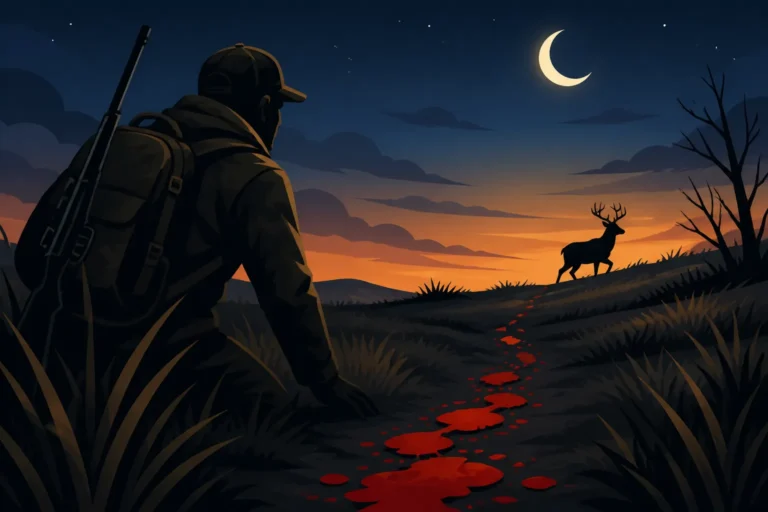
Even with a well-placed shot, predators can sometimes run a significant distance, especially coyotes. Always mark the spot where the animal was last seen and where it was hit. Take your time before tracking, giving the animal a chance to expire if it’s wounded. If you're hunting in heavy cover, it can be incredibly difficult to find a downed coyote that has run even a short distance. Follow any blood trail meticulously. If snow is on the ground, this task becomes significantly easier, but in dry conditions, you might need to look for disturbed vegetation or drag marks.
Losing an animal is frustrating and unethical. If you lose the trail, expand your search in widening circles from the last known sign. If possible, bring a tracking dog (where legal and ethical) to help locate the animal. It’s your responsibility as a hunter to make every effort to recover any animal you shoot.
Respecting Private and Public Lands
North Dakota has a mix of public and private lands, and respecting land boundaries is paramount. While there are vast tracts of public land like the Little Missouri National Grassland and various PLOTS acres, many Badlands areas are private ranchland. Always know exactly where you are and have permission before stepping onto private property. GoHunt, with its detailed public/private land overlay, is an invaluable tool for this. However, always confirm with physical signs on the ground.
If you are on public land, be mindful of other users – hikers, photographers, or other hunters. Practice Leave No Trace principles: pack out everything you pack in, and leave the area cleaner than you found it. Avoid driving off-road where not permitted, and be respectful of any gates or fences you encounter. Our comprehensive guide on Public Hunting Land in North Dakota provides extensive information on navigating these areas, and specific guidance on Hunting North Dakota's Little Missouri National Grassland is always worth a read before you head out. Ethical hunting starts with respectful land use.
Ethical Hunting Practices
Predator calling, like all hunting, should be conducted ethically. This means prioritizing humane shots, making every effort to recover animals, and not engaging in wasteful taking. Understand your effective range and only take shots you are confident in making. Avoid sky-lining animals. If you're using electronic calls, don't use sounds that might attract protected species. While some hunters might disagree on the purpose of predator hunting—whether it’s for population control, recreation, or pelt harvesting—the underlying principle remains the same: treat the animals and the environment with respect. This also includes understanding rules like North Dakota's requirement for North Dakota Blaze Orange Requirements during certain seasons, even if primarily targeting predators, to ensure your safety.
Many hunters use predator calling as a way to practice their skills for deer or elk season, or simply enjoy the challenge. Whatever your motivation, remember that you are an ambassador for hunting. Your actions reflect on the entire hunting community. By adhering to sound ethical practices, you help ensure that these opportunities remain available for future generations.
Disclaimer
Please note: Hunting regulations, season dates, and license requirements can change. Always consult the latest North Dakota Game and Fish Department proclamations and regulations before planning any hunting trip. This guide is for informational purposes only and does not supersede official state regulations. It is the hunter's responsibility to know and follow all applicable laws.