Hunting a Badlands Draw for Mule Deer
The majestic North Dakota Badlands offer some of the most challenging yet rewarding mule deer hunting experiences you can find. Navigating this rugged, broken country, particularly when trying to pinpoint where these elusive deer are bedding or feeding in a seemingly endless maze of draws, can be incredibly frustrating. This guide is here to demystify the art of hunting a Badlands draw for mule deer, offering practical strategies and insights to help you unlock success in this unique terrain.
Understanding Mule Deer Behavior in Badlands Draws
Mule deer in the Badlands are masters of their environment, using the topography to their advantage for survival. Unlike their whitetail cousins who often prefer denser timber, mule deer thrive in open, broken country, and draws are absolutely critical to their existence here. These aren't just random dips in the landscape; they are intricate systems offering food, water, thermal cover, and escape routes. Understanding why a mule deer chooses a particular draw is the first step to knowing how to hunt it.
Why Mule Deer Utilize Draws
Draws provide a vital microclimate in an otherwise exposed environment. On a blustery November day, the leeward side of a draw can offer significant protection from the biting North Dakota wind. In the searing heat of early season, the shade provided by an east-facing slope or a deeper cut can be a lifesaver. Furthermore, many draws funnel down to natural water sources, even if it's just a seep or a small pond, making them prime locations. You'll often find succulent vegetation like sagebrush, buffaloberry, or patches of chokecherry growing more abundantly within the draws where moisture collects, providing essential browse. This combination of shelter, water, and food makes draws natural magnets for mule deer. If you're wondering about the overall population, our guide on Mule Deer in North Dakota's Badlands provides a great overview of their numbers and distribution.
Typical Movement Patterns and Bedding Habits
Mule deer are creatures of habit, especially when it comes to their core bedding areas, but they adapt quickly to pressure. In the Badlands, they often bed on benches or ledges within a draw, particularly those offering a commanding view of their backtrail and the terrain below, while using the thermals and wind to detect threats. They prefer spots where they can quickly stand up and disappear over a rim or into another finger of the draw. Early morning and late afternoon will see them moving out of these bedding areas to feed on the sparse vegetation along the draw sides or on nearby plateaus. Midday, especially during the rifle season, they will typically be bedded, often surprisingly close to roads if they feel secure. It's not uncommon to find a group of does and a respectable buck tucked into the shaded side of a deep coulee, virtually invisible unless you're glassing intently. Knowing Where Badlands Bucks Bed can drastically increase your chances of intercepting them during these transitional periods.
Scouting and Identifying Productive Draws
Finding the right draw is paramount. Not all draws are created equal, and a significant portion of your success will come from diligent scouting, both remotely and boots-on-the-ground. The Badlands landscape can be daunting, a sea of similar-looking hills and valleys, but with a keen eye and the right tools, you can pinpoint high-potential areas.
Utilizing Topographical Maps and Satellite Imagery
Before you even step foot in the Badlands, spend hours poring over maps. Tools like GoHunt's mapping features are invaluable here. Look for draws that are deeper, more complex, or have unique features. Are there fingers branching off the main draw? Does it connect to a larger valley or a plateau with known feed? What about water sources? Ponds, even seasonal ones, are huge attractors. Identify potential travel corridors connecting different draws or leading to food sources. Look for subtle benches, north-facing slopes for summer bedding, and south-facing slopes that might melt out earlier in winter, exposing forage. Pay attention to the overall North Dakota's Mule Deer Range to focus your efforts in the most productive areas.
Reading the Ground: Sign, Rubs, and Scrapes
Once you're on the ground, become a detective. Fresh tracks in the dust or mud are like gold. Pay attention to their size and direction. Look for scat – fresh droppings indicate recent activity. As you walk along the rims or within the draws, scan for rubs on sparse trees or bushes, indicating bucks have passed through. During the rut, you might even find scrapes, although they're less common in such open country than in typical whitetail habitat. The presence of multiple types of fresh sign confirms that a draw is actively being used. Don't forget to consider Reading North Dakota Mud for Fresh Deer Movement as you explore. Overlooking these subtle clues can mean walking right past a hot area.
Tactics for Hunting Draws Effectively
Hunting draws demands a blend of patience, stealth, and a deep understanding of wind and thermals. This isn't about still-hunting vast timber; it's about meticulous observation and strategic movement.
Glassing from a Distance
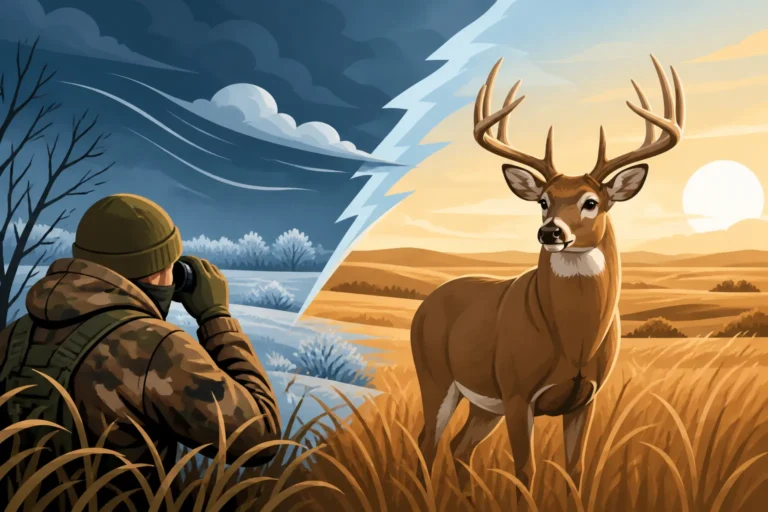
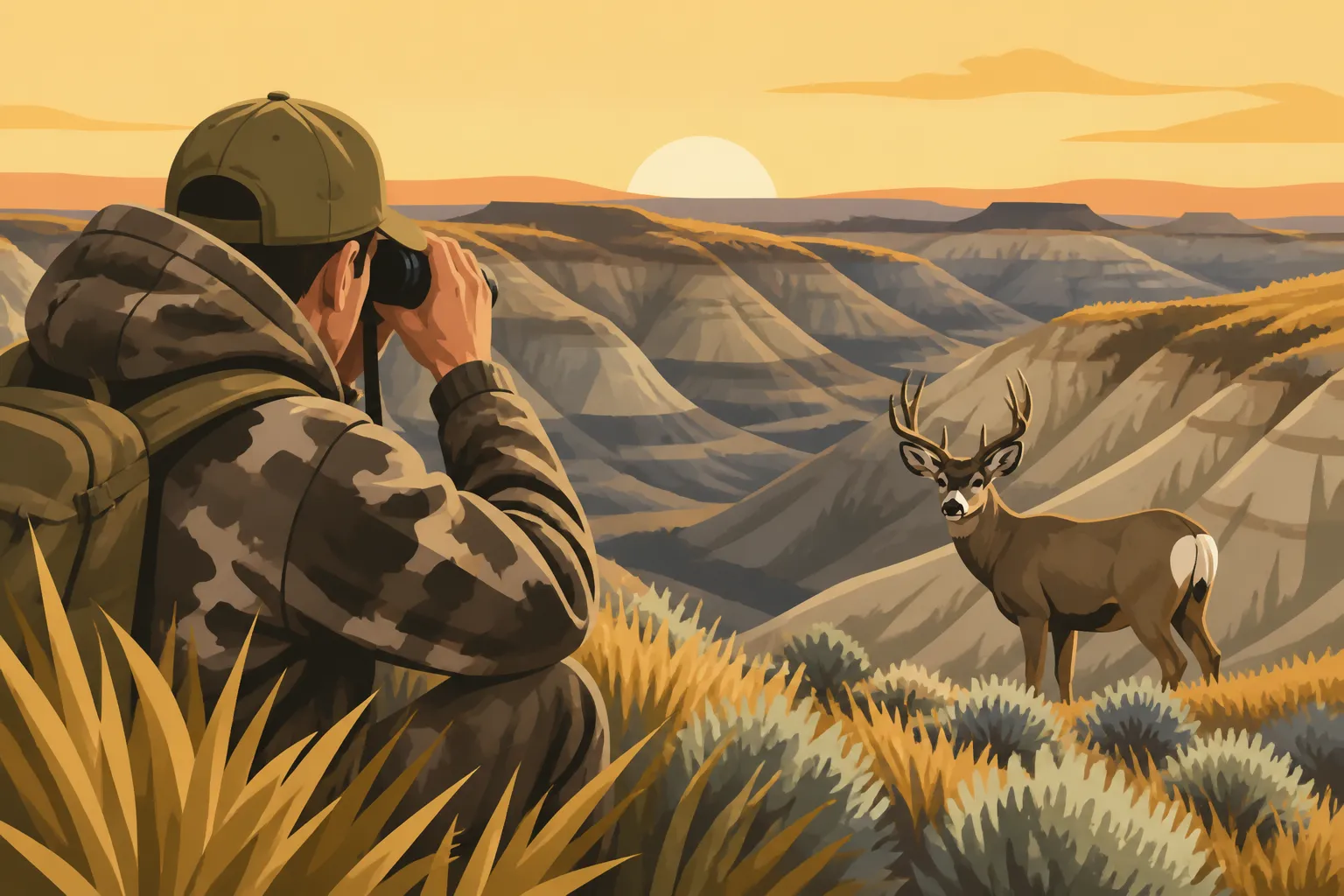
This is arguably the most crucial tactic in the Badlands. Find a high vantage point that allows you to glass multiple draws or significant portions of a large draw. Get comfortable. Bring quality optics – 10x binoculars are standard, but a good spotting scope (20-60x) on a tripod will change your game. Scan every shadow, every cluster of brush, every unusual shape. Take your time, segmenting the landscape and meticulously covering each section. Deer often blend in perfectly with the broken terrain, their coloration a natural camouflage. Many times, you'll spot them by a flick of an ear, a swish of a tail, or the glint of an antler. If you're targeting other species, the principles for Glassing Badlands Coulees for Elk apply directly to mule deer.
Playing the Wind and Thermals
The Badlands are notorious for tricky winds and thermals that shift with the sun's position and the terrain. In the mornings, as the sun warms the earth, thermals tend to rise out of the draws. In the evenings, as the air cools, they often sink. The wind, of course, can blow in any direction, often swirling unpredictably within the draws themselves. Your approach must always consider both. When you're trying to move in on a bedded animal, you need to ensure your scent cone is blowing away from them, or at least across them at an angle they aren't expecting. A simple wind checker is an essential tool. Misjudging the wind will bust your hunt almost every time. Understanding Wind and Thermals in Badlands Terrain is critical for success.
Strategic Approaches and Stalking
Once you've spotted a buck in a draw, the real work begins. Planning your stalk is an intricate chess game. Identify every piece of cover available – even a single juniper bush or a small ridge can be enough to break up your silhouette. Use the contours of the land to your advantage. Try to stay above the deer if possible, as thermals often carry scent upwards, and mule deer tend to look down less than up when bedded. Move slowly, deliberately, and always check the wind. When you think you're close enough, you might need to crawl the last few yards. Patience is key. Rushing will lead to blowing out the deer. If the draw is particularly deep and wide, you might consider looping completely around to approach from an unexpected angle, using the cover of another finger or coulee.
Here's a quick comparison of common draw types and suggested hunting approaches:
| Draw Type | Characteristics | Hunting Approach |
|---|---|---|
| Shallow, Open Draw | Less cover, often connects to larger flats, easier to glass. | Best for long-range glassing from a distant high point. Stalks are challenging due to limited cover; often requires a low crawl or a well-placed shot from afar. Approach with extreme caution and use subtle dips in terrain. |
| Deep, Brushy Coulee | Steep sides, dense vegetation (juniper, buffaloberry), complex. | Requires closer scrutiny with optics. Deer can be completely hidden. Focus on entering from the downwind side, using the steep sides for cover. Can be effective for still-hunting very slowly, pausing often to glass ahead, but risk of spooking is high. |
| Fingered Draw System | Main draw with multiple smaller side draws branching off. | Excellent for strategic positioning. Glass the main draw, then plan a route along a ridge or side finger to cut off deer moving between areas. Use thermals to your advantage, often moving in midday when deer are bedded deep within the system. Ideal for setting up ambushes. |
| Draw with Water Source | Any draw that leads to or contains a natural pond or seep. | High potential, especially during dry periods. Glass from a distance early morning/late evening. Deer may visit water after feeding. Stalking to a water source can be effective, but beware of scent contamination around the water. |
Essential Gear and Considerations for Badlands Hunting
Hunting the Badlands, especially for mule deer in draws, isn't like a walk in the park. The terrain is unforgiving, the weather can change in an instant, and you need to be prepared for everything.
Optics: Your Best Friends in the Badlands
As mentioned, optics are paramount. Don't skimp here. A good pair of 10×42 binoculars from a reputable brand like Zeiss or Swarovski will make a world of difference in picking apart the distant landscape. Pair that with a quality spotting scope, 15-45x or 20-60x, on a sturdy tripod. This setup allows you to survey vast expanses, identify deer, and then determine if a stalk is feasible, saving you countless miles of walking. Many hunters use a bino harness to keep their optics accessible and protected. When Spotting Pronghorn From a Section Road (another open country species), the same principles of patience and high-quality glass apply.
Footwear, Hydration, and Pack Essentials
Your feet are your most important asset out here. Invest in comfortable, broken-in hiking boots with good ankle support and sturdy soles to grip the steep, loose terrain. Blisters will ruin your hunt faster than anything. The Badlands are incredibly dry, so carry more water than you think you'll need. A hydration bladder in your pack is excellent. Beyond water, your pack should contain a first-aid kit, emergency fire starter, a headlamp, extra layers (weather changes rapidly!), food, and a knife. A rangefinder is also non-negotiable for accurate shot placement in broken terrain where distances can be deceiving. Don't forget to prepare physically; Physical Prep for Badlands Elk Terrain offers excellent advice that's equally relevant for mule deer hunting in this rugged landscape.
Navigation and Communication
Cell service is spotty at best in the Badlands, particularly down in the draws. Relying solely on your phone for navigation is a recipe for disaster. A dedicated GPS unit or a reliable mapping app like GoHunt with downloaded offline maps is essential. Mark your truck, potential water sources, and any deer sightings. Carry a compass and a physical map as a backup. For communication, especially if hunting alone or in a small group, consider a satellite messenger device. It can be a lifesaver in an emergency where cell service is non-existent. Our guide on Reading Aerial Photos for Badlands Deer can help you further refine your navigational skills for these challenging areas.
Disclaimer
Please note: Hunting regulations, license requirements, and season dates can change. Always consult the most current North Dakota Game and Fish Department (NDGFD) regulations before planning any hunting trip. This guide is for informational purposes only and does not supersede official NDGFD rules and laws.