Where Badlands Bucks Bed
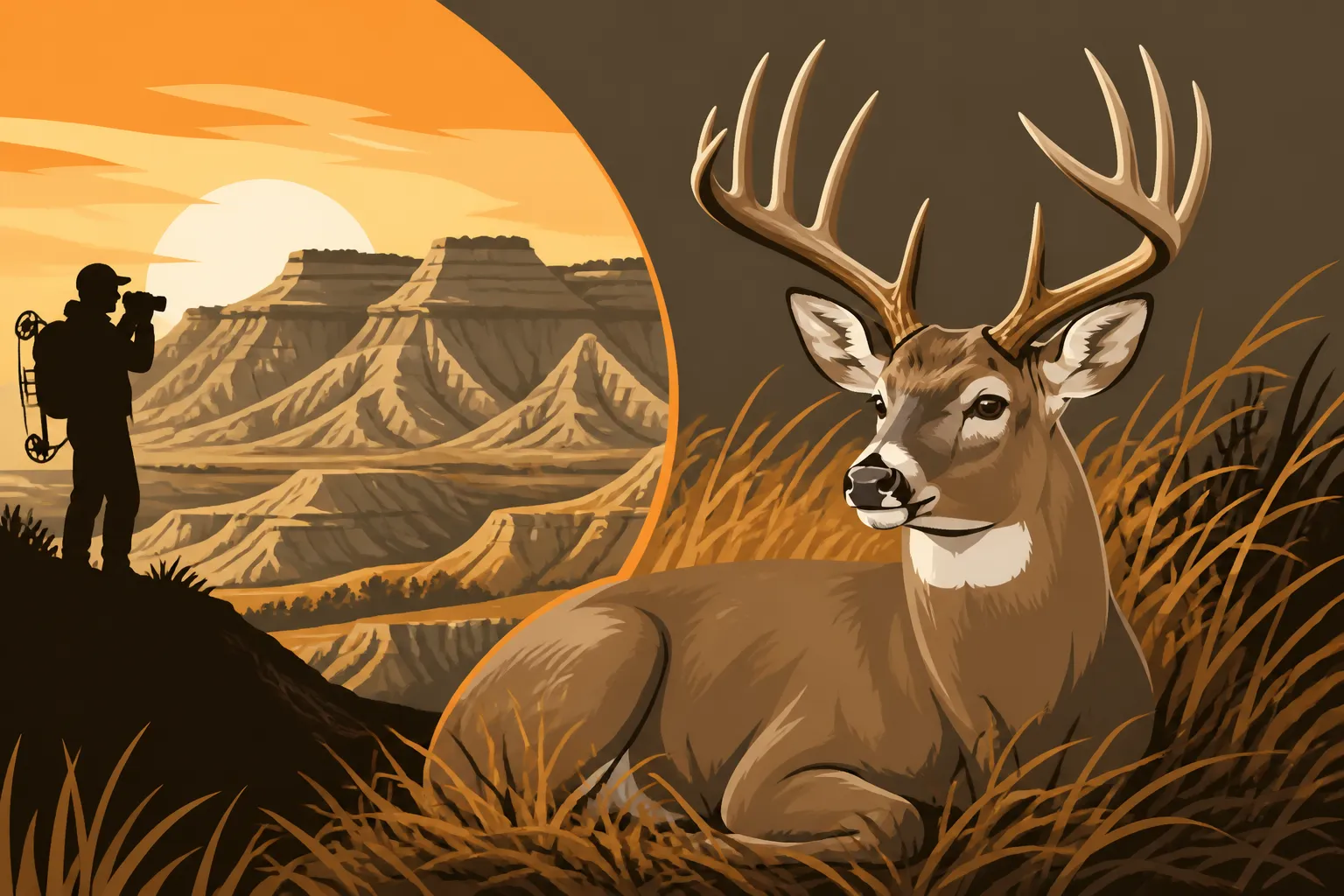
Hunting mule deer in the rugged, unforgiving North Dakota Badlands is a challenge that tests even the most seasoned hunter. Finding a mature buck often boils down to understanding their elusive bedding habits in this broken, expansive country. This guide will take a deep dive into precisely where these resilient deer choose to lay down during the day, how to identify these spots, and how to use that knowledge to your advantage.
Decoding Badlands Terrain and Buck Behavior
The North Dakota Badlands are a unique landscape, a stark contrast to the prairie flatlands that dominate much of the state. This sculpted terrain of buttes, scoria hills, deep coulees, and juniper breaks forces deer, especially mature bucks, to adapt their bedding strategies in specific ways. You can't just apply general "deer bedding" rules here; you need to think like a Badlands buck.
The Influence of Geography on Bed Selection
Unlike a flat ag field where a deer might bed in a cattail slough or a small patch of standing corn, the Badlands offer a vertical world of concealment. Bucks here aren't just looking for cover; they're looking for an escape route, a thermal advantage, and an observation point all rolled into one. They often choose beds on benches, ridges, or in thick draws that offer a commanding view of their surroundings while keeping them out of sight. This broken country, with its sudden drops and rises, creates endless pockets of cover that can be incredibly difficult to glass from a distance. Understanding the unique features of Mule Deer in North Dakota's Badlands is critical for success.
A buck's daily routine is heavily influenced by this topography. They'll typically feed in lower coulees or on flatter benches with some vegetation during the night and into the early morning hours, then retreat to their bedding areas as daylight breaks and hunting pressure mounts. These bedding areas are almost always chosen for maximum security and minimal energy expenditure. They want to be able to see you coming, smell you coming, or have a quick way to vanish over a ridge or into a deeper draw if detected. It's a game of hide-and-seek on an epic scale, and knowing the "rules" of their sanctuary is your best bet.
Seasonal Shifts in Bedding Patterns
Just like anywhere else, a buck's bedding preferences aren't static; they shift with the seasons, driven by food availability, weather, and hunting pressure. Early season (late August/September) bedding might be focused on areas close to protein-rich browse or water sources, often a bit more relaxed than later in the year. Deer are less wary, and the thicker summer foliage provides ample concealment across a wider area. As the rut approaches in late October and November, bucks might start bedding closer to doe groups, though still prioritizing escape and observation.
Post-rut and late season, when temperatures plummet and snow often blankets the landscape, bedding becomes heavily influenced by thermal cover and sun exposure. South-facing slopes that catch the most sun can be prime bedding locations, offering a crucial warmth boost. Coniferous pockets, like those stands of Rocky Mountain juniper, become invaluable for breaking the wind and holding heat. This is also when food sources become scarcer, so proximity to remaining browse, even if it's less palatable, can also play a role. These changes mean that the hot spot you found in September might be completely barren in December, requiring constant adaptation from the hunter.
Pinpointing Key Bedding Features in the Badlands
Finding where Badlands bucks bed isn't about luck; it's about systematically breaking down the landscape and understanding the specific features that offer a buck everything he needs to feel safe. This takes patience, detailed scouting, and a keen eye for subtle clues.
Steep Coulees and Draw Intersections
The Badlands are crisscrossed with an intricate network of coulees and draws, and these are often ground zero for buck bedding. Mature bucks, particularly mule deer, love to bed on benches or small knolls within these deep depressions, especially where multiple draws converge. This offers them a multi-directional escape route and often allows them to scent-check multiple downwind approaches. Imagine a buck bedded on a bench overlooking a junction of three draws: he can see down one, smell down another, and if danger approaches, he can quickly melt away into the third. These spots are natural ambush points for a hunter too, but only if you approach with extreme caution. Hunting Little Missouri's Backcountry Draws requires a deep understanding of how deer use these features.
Look for areas with slightly denser vegetation within these coulees – even just a few more junipers, sagebrush, or even taller grasses can be enough. The steep walls of the coulees themselves provide a sense of security, often blocking sightlines from higher elevations and forcing predators (or hunters) to enter from specific points. This natural funneling effect is something bucks exploit to their advantage, making these intersections critical focus points for your scouting.
Juniper and Cedar Breaks
When people think of "cover" in the Badlands, juniper and cedar breaks are often the first things that come to mind, and for good reason. These dense pockets of conifers offer invaluable thermal cover, protection from the elements (especially wind and snow), and excellent visual concealment. Bucks will absolutely bed deep within these thickets, often choosing the leeward side of a ridge that's covered in juniper. They can be incredibly difficult to spot in these areas, even with good optics.
These breaks aren't just for hiding; they're also often associated with benches or slight rises within the overall landscape. A buck might bed right on the edge of a juniper patch, looking out, but with the dense cover at his back. Or, he might be completely swallowed by the trees, relying on his nose and ears. Tools like GoHunt's satellite imagery can help identify these darker, dense patches of vegetation, allowing you to mark them for closer inspection on the ground. When approaching these areas, assume a buck is there and plan your stalk accordingly.
Ridgelines, Buttes, and Scoria Caps
While deep coulees offer concealment, bucks also frequently bed on higher ground – specifically, on the leeward sides of ridgelines, the tops of buttes, or on the flat caps of scoria hills. These elevated positions offer an expansive view, allowing a buck to observe large swaths of terrain below him. He's often looking for danger approaching from downwind or below. A buck bedded on a ridgeline, just below the crest, can often see movement from a great distance without silhouetting himself. This is where Reading Aerial Photos for Badlands Deer really pays off, as you can identify these strategic vantage points.
The key is "leeward side." Bucks are acutely aware of the wind, and they nearly always want it at their back, blowing towards their bedded position from an unobservable angle. This means they can watch downwind and use their nose for anything approaching from upwind. The scoria caps, with their often barren but elevated positions, can be surprisingly productive, especially if they have a small patch of sagebrush or juniper for minimal concealment. Don't overlook these high points, even if they seem exposed at first glance.
The Critical Role of Wind and Thermals
In the Badlands, understanding how wind and thermals interact with the rugged terrain is not just helpful; it's absolutely essential for finding and approaching bedded bucks. Ignoring these forces is a surefire way to spook deer. This is especially true when considering Wind and Thermals in Badlands Terrain.
How Bucks Use Wind for Security
A Badlands buck's bedding strategy is inextricably linked to the wind. They consistently orient themselves to have the wind at their back, or at least quartering to them, allowing them to detect anything approaching from their downwind side by scent. Simultaneously, they position themselves to have a clear line of sight into the terrain below and in front of them, covering their upwind approach visually. This "nose-to-the-wind, eyes-to-the-front" principle is almost universal.
For example, a buck might bed on a bench on the side of a large butte. If the wind is blowing from the west, he'll likely be on an east-facing bench, looking east. Anything approaching from the west (upwind) will be smelled, and anything approaching from the east (downwind) will be seen. This creates a highly secure, almost impenetrable fortress for the bedded buck. Your challenge as a hunter is to break this security system without being detected. GoHunt's detailed wind direction and topographical maps can be invaluable for predicting these setups.
Understanding Thermal Air Currents
Thermals are the rising and falling air currents caused by temperature differences, and they play a significant role, especially in the mornings and evenings. As the sun rises and heats the earth, air in the lower elevations warms and rises, creating an updraft. In the evening, as the sun sets and the earth cools, air in the higher elevations cools and sinks, creating a downdraft. Bucks are keenly aware of these changes.
- Morning Thermals (Updrafts): In the early morning, as you're approaching a bedding area in a draw, the rising thermal air will carry your scent up and out of the draw. This means you want to approach from above the bedding area, letting your scent blow over the buck, or stay well to the side.
- Evening Thermals (Downdrafts): In the late afternoon, as thermals begin to fall, your scent will travel down into the draws. This means approaching from below the bedding area could be disastrous. You'd want to approach from above, or again, well to the side.
The interplay of thermals with the prevailing wind can be complex, especially in steep, broken country. Sometimes, the thermal might temporarily override the wind direction, creating swirling conditions that are a hunter's worst nightmare. Always carry a small bottle of wind-checker powder and use it religiously as you approach potential bedding areas to get a real-time understanding of air movement.
Hunting Approaches for Bedded Badlands Bucks
Once you've done your scouting, identified potential bedding areas using tools like GoHunt, and carefully considered the wind and thermals, it's time to plan your approach. Hunting bedded bucks in the Badlands is often a game of extreme patience and meticulous execution.
Glassing Strategies to Locate Bucks
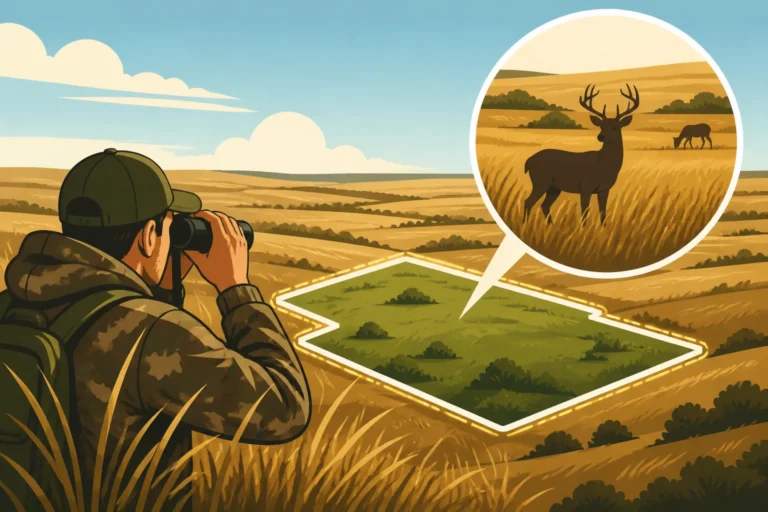
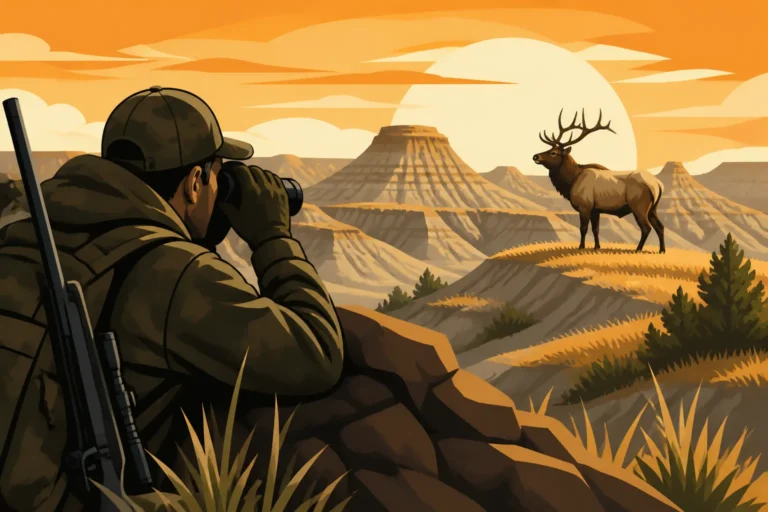
Before you even think about putting boot to ground in a suspected bedding area, your optics should be working overtime. Glassing from a distance is paramount, especially when you're targeting Hunting North Dakota's Badlands Mule Deer Country. Find a high vantage point that allows you to observe multiple coulees, draws, and ridgelines without being detected. Use high-quality binoculars (10x or 12x) or a spotting scope (15-45x or higher) on a sturdy tripod. Don't just scan; grid the area slowly, looking for unnatural shapes, a horizontal line in a vertical world, a flicker of an ear, or even just a darker patch that seems out of place.
Pay particular attention to those junipers and cedar breaks, as well as the shaded sides of coulees and the edges of ridgelines. Early morning and late evening often provide the best light for glassing, as the low sun angle can highlight deer, but don't discount midday. Bucks will often shift slightly in their beds or stand up to stretch, offering a fleeting opportunity to spot them. Remember that "grey ghost" reputation of mule deer; they blend incredibly well into their environment. It might take hours of patient glassing to pick out a bedded buck, but it's time well spent to avoid spooking him. For additional tips, consider reading about Glassing for Moose in River Bottom Willows for general long-distance observation techniques, even though the habitat is different.
The Art of the Stalk
Once you've spotted a bedded buck, the real challenge begins: the stalk. This is where your understanding of terrain, wind, and thermals comes together. Your goal is to get within shooting range without being seen, smelled, or heard. This is significantly harder than it sounds in the Badlands.
Before you move:
- Re-evaluate the wind and thermals: Use your wind checker. If it's swirling or unfavorable, wait, or abandon the stalk. A bad wind will bust you every time.
- Plan your route: Look for terrain features that will conceal your approach—ridges, deep creases, thick vegetation. Identify checkpoints along the way.
- Identify potential escape routes for the buck: Know where he's likely to go if he busts you, and try to position yourself to cut him off or get a shot before he disappears.
During the stalk:
- Move slowly and deliberately: Every step should be intentional. Test the ground for crunching rocks or twigs.
- Stay low: Use all available cover. Crawl if you have to.
- Minimize movement: Don't wave your arms, don't stand up unless absolutely necessary to check your position.
- Use the terrain to your advantage: If you're on a ridgeline, stay just below the crest. If you're in a coulee, use the walls for concealment.
- Be patient: This could take hours. A quick, rushed stalk is usually a failed stalk.
- Don't force it: If conditions change, or you feel you can't make a clean approach, back out and try again another day or from a different angle. There's no shame in preserving a good spot for a better attempt.
Post-Shot Tracking in Badlands Terrain
Successfully executing a stalk and taking a shot is only half the battle; recovering your buck in the Badlands can be just as challenging. The broken terrain, deep coulees, and thick vegetation can make tracking a wounded deer incredibly difficult, especially as daylight fades.
Immediate Actions:
- Mark the shot location: Mentally or physically mark exactly where the deer was standing when you shot, and where it ran from. Pick out a specific tree, rock, or other landmark.
- Listen and observe: After the shot, listen for crashing, snapping branches, or the sound of the deer falling. Watch its direction of travel and try to spot where it disappeared from view.
- Wait: Unless you saw the deer drop dead, wait at least 30 minutes to an hour (longer for a marginal shot, 4-6 hours). This gives the deer time to bed down and stiffen up. Pushing a wounded deer too soon is one of the most common mistakes, often leading to a lost animal.
Tracking:
- Follow the blood trail slowly and meticulously: Look for any sign – blood, broken branches, disturbed earth, deer hair. Mark the last spot of blood with flagging tape (and remove it when you're done) or a physical marker.
- Recruit help: If possible, a second set of eyes can make a huge difference. Having a partner to flank the blood trail or look for the animal ahead can save valuable time and effort.
- Utilize elevation: If the blood trail becomes sparse, one person can stay on the last sign while another climbs to a higher point to glass ahead, looking for the deer or other signs of disturbance.
- Think like the deer: Wounded deer often seek the path of least resistance or thick cover. They might head downhill, or into the densest juniper break they can find.
- Don't give up: North Dakota's Badlands are unforgiving, and a lost deer is a hard lesson. Keep looking as long as there's light, and come back at first light if you run out of daylight.
| Bedding Feature | Typical Location | Wind/Thermal Strategy | Pros for Buck | Cons for Buck | Hunter Approach Consideration |
|---|---|---|---|---|---|
| Steep Coulee Bench | Mid-slope, often near draw intersections. | Wind at back/quartering; uses rising morning thermals to carry scent. | Multiple escape routes; concealed. | Can be surrounded if careless. | Approach from above with falling thermals (evening) or crosswind. |
| Juniper/Cedar Break | Dense thickets, leeward side of ridges/buttes. | Blocks wind; retains heat; uses nose primarily. | Maximum concealment & thermal protection. | Limited visibility. | Slow, quiet stalk; use wind checker constantly. |
| Butte/Ridgeline Cap | Just below crest, typically leeward side. | Expansive visual range; uses wind for scenting. | High vantage point; early detection. | More exposed to long-range glassing. | Glass from extreme distance; approach below crest. |
| South-Facing Slope | Exposed to sun, usually with some cover. | Catches warmth; wind at back/quartering. | Thermal comfort (especially cold weather). | Can be more visible to glassing. | Best for late season; approach from shaded side or over ridge. |
Disclaimer
The information provided in this guide is for general informational purposes only. Hunting regulations, seasons, and access can change. Always consult the North Dakota Game and Fish Department's official regulations before planning any hunting trip. Ensure you have all necessary licenses and permits, and adhere to all ethical hunting practices.