Deer Drives With Three or Four Hunters
It’s a common dilemma for hunters: you’ve secured a coveted deer tag, but your hunting crew is a smaller, more intimate group, perhaps just three or four reliable friends. Trying to organize a deer drive that effectively moves whitetails or mule deer without a small army of hunters can feel daunting, leading many to dismiss the tactic entirely. This comprehensive guide will show you how to successfully execute deer drives with a limited number of hunters, leveraging North Dakota's diverse terrain and animal behavior to your advantage.
Understanding the Dynamics of Small Deer Drives
When you're working with fewer people, the traditional, wide-area "push" style of deer driving simply won't cut it. You can't cover vast tracts of land, and you'll quickly find deer slipping out the sides or doubling back before they ever get close to a stander. Instead, small deer drives in North Dakota demand a more strategic, surgical approach, focusing on funneling deer through specific pinch points or dense cover rather than just pushing them aimlessly.
The Principles of a Micro-Drive
Think of a small drive less like a sweeping net and more like a carefully placed snare. The goal isn't to blast deer out of a massive bedding area. It's about nudging them from a smaller, more definable patch of cover, such as a thick shelterbelt, a small pocket of timber along a river bottom, or a secluded coulee, directly into a prepared ambush. Success hinges on a deep understanding of deer behavior, terrain features, and meticulous planning. You're trying to outsmart a deer's natural escape instincts by predicting its most likely path under minimal pressure. This often means working with, rather than against, the wind and topography.
Why Small Drives Can Be More Effective (When Done Right)
Believe it or not, a well-executed small drive can sometimes be more effective than a large, uncoordinated one. With fewer people, there's less noise, less scent left behind, and a greater ability to maintain stealth and control. Deer are highly attuned to pressure, and a slow, deliberate push from just one or two hunters can be less alarming than a cacophony of voices and stomping boots. This softer pressure can cause deer to move more naturally, often walking or trotting rather than busting out at full speed, giving standers better shot opportunities. Plus, it fosters a much more coordinated and communicative effort within the group, which is absolutely critical for safety and success.
Planning Your Three or Four-Person Drive
The success of a small deer drive lies almost entirely in the planning phase. You can't just wing it. This is where you leverage maps, scouting, and a thorough understanding of the local deer to ensure everyone is on the same page.
Intensive Pre-Season Scouting and Map Analysis
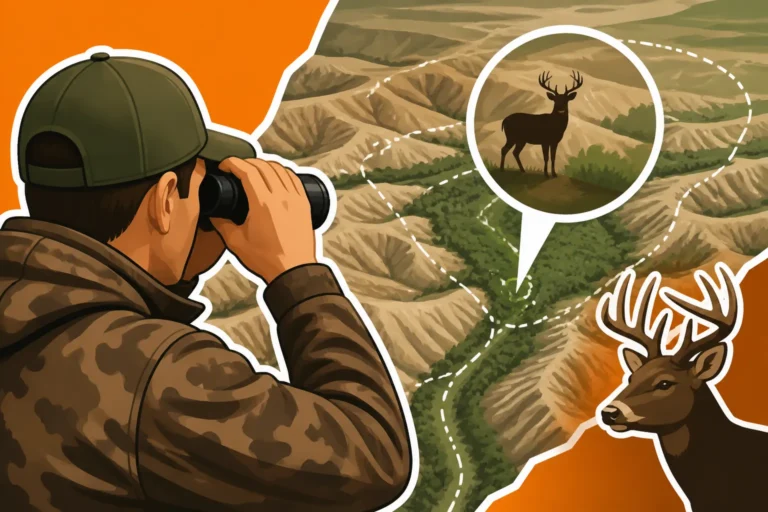
Before you even consider a drive, you need to know your ground inside and out. Start with detailed map analysis using tools like aerial imagery. You're looking for prime bedding areas—think thick willow bottoms, dense cattail sloughs, or the leeward side of a ridge in the Badlands. Then, identify natural escape routes, pinch points, and corridors that deer are likely to use when pressured. These might be narrow strips of cover, low spots in fences, or creek crossings.
Actual boots-on-the-ground scouting is non-negotiable. Spend time walking the potential drive areas. Look for fresh tracks, rub lines, and scrapes. Pay particular attention to trails leading out of bedding cover. Are there heavy trails heading towards a specific food source? Do they skirt a field edge or cut through a narrow brushy finger? These observations will tell you how deer typically move through the area. Understanding "Reading North Dakota Mud for Fresh Deer Movement" can be incredibly insightful here, helping you determine current travel patterns. Remember to scout adjacent properties too, even if you don't have permission to hunt them, as deer might push onto or off them. Utilizing the advanced mapping features of GoHunt can help you visualize these scenarios, test different push routes virtually, and mark key features like dense cover or water bodies that deer might avoid or use as escape routes.
Designating Roles: Driver, Stander, and Flanker
With only three or four hunters, every person's role is critical and must be clearly defined.
| Role | Description | Key Considerations |
|---|---|---|
| Driver (1-2 people) | Moves slowly and deliberately through cover, pushing deer. | Needs good woodsmanship, awareness of stander positions, and understanding of deer escape routes. Maintain slow, consistent pace. Avoid making excessive noise. |
| Stander (2-3 people) | Positioned on escape routes or pinch points, awaiting pushed deer. | Needs clear shooting lanes, knowledge of wind/thermals, and patience. Concealment is crucial. Avoid moving or talking. Must communicate with drivers. |
| Flanker (Optional, 1 person) | Moves along the edge of the drive, slightly ahead of drivers, to prevent deer from slipping out the sides. | Requires stealth and ability to anticipate deer movement. Can be combined with a driver role in a 3-person team, or a dedicated role in a 4-person team. |
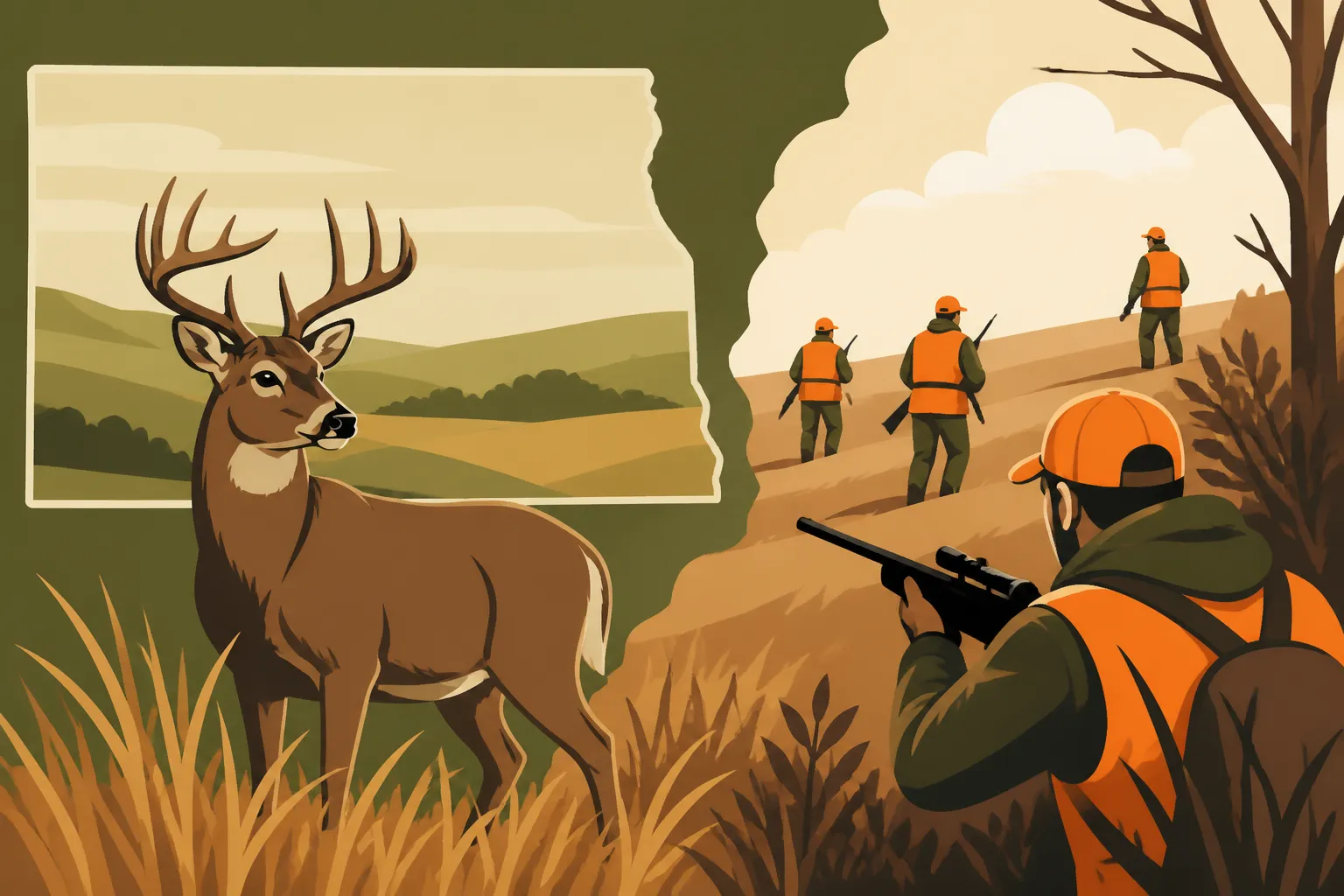
In a three-person team, you might have one driver and two standers, or two drivers working a small pocket while one stander covers the primary exit. For a four-person team, you could have two drivers and two standers, or even one driver, two standers, and one mobile "flanker" who works the edge of the cover to keep deer from veering off course. The key is to match your numbers to the size and shape of the cover you're targeting.
Utilizing Wind, Thermals, and Topography
North Dakota's landscape offers unique challenges and opportunities. In the Badlands, understanding "Wind and Thermals in Badlands Terrain" is paramount. Deer will almost always try to use the wind to their advantage, circling downwind of perceived threats. Your standers should be positioned downwind of the expected escape route, while drivers often work crosswind or even slightly upwind to push deer towards the standers.
In flatter prairie or river bottom areas, like those found when "Reading a Missouri River Bottom for Deer", topography might mean using subtle elevation changes, creek beds, or natural ditches to funnel deer. A common mistake is to push deer with the wind directly at them; they'll often just circle back or bust out a different direction. Instead, try to angle your drive so deer are pushed across or into a crosswind toward your standers. Tools like GoHunt can show you detailed topographical lines, helping you identify these subtle terrain features that act as natural funnels.
Executing the Drive Effectively
Positioning Standers First
Before any drivers move, all standers must be in position, concealed, and ready. This often means getting them into place well before daylight or during a quiet period. They should select spots that offer clear shooting lanes along the anticipated escape routes. Think about "Posting a Drive Around a Shelterbelt" – your standers should be on the downwind side, covering the ends or any gaps the deer might exploit. Standers need to be still, quiet, and aware of their surroundings, including the positions of other hunters. For areas with denser vegetation, a ground blind can be an excellent option, especially if you're "Using a Ground Blind on PLOTS Land" where cover might be sparser.
The Slow, Deliberate Push
The driver's role in a small drive is not to run deer out like a rodeo clown. It’s to apply subtle, consistent pressure. Walk slowly, pausing frequently, and use natural sounds rather than loud yelling. A slow, steady pace encourages deer to move cautiously, sometimes even stopping to assess the situation, which gives your standers a better chance. If you move too fast, deer will often bolt, making them harder to hit and increasing the risk of them blowing through your standers or circling the drive completely. In specific situations like "Hunting a Standing Corn Field for Deer" or utilizing "Entry Routes Through Standing Sunflowers", drivers can move directly through the thick cover, knowing deer will often follow the path of least resistance or try to slip out the most natural exit.
Communication and Safety Protocols
Clear communication is paramount. Before the drive, everyone should know the exact boundaries, the starting points, the ending points, and each other's positions. Many groups use two-way radios to coordinate, especially for drivers to give updates on deer movement or to signal when the drive is complete. However, keep radio chatter to a minimum to avoid spooking deer.
Safety cannot be overstated. All hunters should wear blaze orange, as required by North Dakota law during firearms seasons. Never shoot until you are 100% certain of your target and what lies beyond it. Always know where your fellow hunters are. Before the drive, mark your positions on a map, and verbally confirm them. Having a clear communication plan is critical, especially when hunters are spread out. Many groups use two-way radios, and some hunters even use mapping apps like GoHunt to mark each other's positions in real-time, preventing confusion and enhancing safety. Always treat every firearm as if it's loaded, keep the muzzle pointed in a safe direction, and keep your finger off the trigger until you are ready to shoot.
Strategic Drive Locations for Small Groups
North Dakota offers a variety of terrain types perfect for small-group deer drives. Knowing where to focus your efforts is key to success.
Shelterbelts and Field Edges
Shelterbelts—those long, narrow strips of trees planted as windbreaks—are prime locations for small drives, especially when "Hunting a Shelterbelt Edge for Deer". They are often linear, making it easier for a small group to contain and push. One or two drivers can walk the length of the shelterbelt, while standers cover the ends and any obvious escape routes into adjacent fields or draws. Deer often bed deep within these belts, feeling secure from the wind and open prairie. Similarly, thick strips of cover along field edges can be perfect for quick, targeted pushes. These areas can hold deer seeking refuge, especially when "Late-Season Food Sources for North Dakota Whitetails" are nearby in harvested fields.
Coulees and Draws in the Badlands
The broken topography of the North Dakota Badlands is tailor-made for funneling deer. Deep coulees and draws provide excellent bedding cover for both whitetails and mule deer. A small team can position standers at the mouth or along the rim of a coulee, while a driver or two slowly work their way through the bottom or along the slopes. The steep sides of these formations act as natural barriers, guiding deer towards your waiting hunters. This is where understanding deer movement patterns and how "Hunting Pressure on North Dakota Public Land" might affect them becomes invaluable; deer often seek out these remote, broken areas to avoid disturbance. For scouting these intricate areas, GoHunt's satellite imagery and topographical maps are incredibly useful for identifying secluded pockets and predicting deer movement.
Small Pockets of River Bottom Timber
Along the Missouri River and its tributaries, you'll find isolated pockets of timber and dense brush. These smaller woodlots, often surrounded by agricultural fields, can hold a surprising number of deer. They're perfect for a small group to surround and push. Standers can take positions along the edges, covering the most likely escape paths, while one or two drivers slowly move through the timber. The goal here is to get deer to slip out quietly, offering standing shots rather than running shots. It requires patience from the drivers and excellent concealment from the standers. Whether you're hunting during "North Dakota's Lottery-Based Deer Gun Season" or a later muzzleloader period, these isolated cover areas can be goldmines for small-group drives.
Disclaimer
Hunting is an inherently dangerous activity. Always prioritize safety, understand and follow all North Dakota Game and Fish Department regulations, and respect private property. This guide is for informational purposes only and does not replace proper hunter education or local law enforcement consultation. Be aware of your surroundings, wear appropriate safety gear, and ensure your equipment is in good working order.