Hunting Turtle Mountain Timber Pockets
Hunting in the dense, often overlooked timber pockets of North Dakota's Turtle Mountains presents a unique set of challenges compared to the vast, open prairies most hunters associate with the state. Many hunters feel overwhelmed by the thick cover, the rolling, uneven terrain, and the seemingly unpredictable movement of deer within these smaller, isolated forests. This guide is designed to cut through that frustration, offering practical, in-depth strategies for successfully navigating and hunting these distinctive woodland environments, turning those timber pockets from frustrating obstacles into prime hunting grounds.
Understanding the Unique Challenges of Turtle Mountain Timber
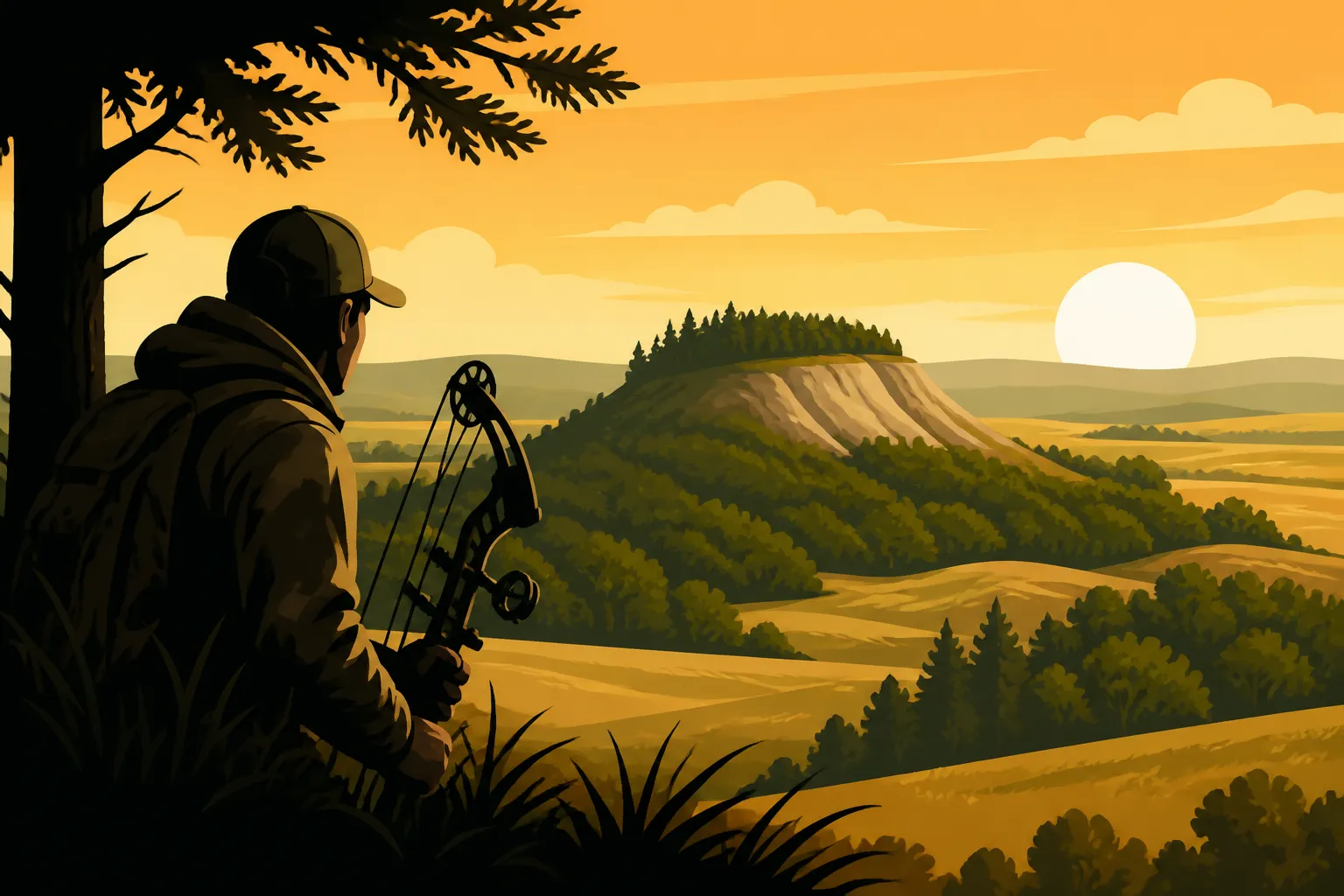
The Turtle Mountains, sitting like an island forest in the middle of a prairie ocean, offer a stark contrast to much of North Dakota's landscape. This isn't your typical sprawling national forest; rather, it's a collection of rolling hills, deep ravines, and countless small timber pockets, interspersed with agricultural fields and scattered wetlands. Understanding this unique geography is the first step to unlocking its hunting potential.
The Landscape and Its Influence on Deer Behavior
Unlike the river bottomlands or shelterbelts found elsewhere in the state, the Turtle Mountains are characterized by a mix of aspen, oak, and conifer stands. These timber pockets, ranging from a few acres to hundreds, are often dense, providing unparalleled cover for deer, especially mature bucks looking to escape pressure. The rolling topography means constant changes in elevation, creating natural funnels, hidden draws, and thermal sinks that deer instinctively use.
Deer in the Turtle Mountains leverage this cover for bedding, especially during the day, and for travel corridors between feeding areas in the surrounding agricultural fields. They know these woods intimately, often using subtle terrain features to evade hunters. Because the timber pockets aren't always connected, deer might make short, quick dashes across open areas to move from one sanctuary to another. You'll often find concentrated sign within these smaller patches – heavy rub lines, multiple scrapes, and well-worn trails – because the available cover is limited, forcing deer into predictable patterns within the timber. It's a completely different game than trying to Spotting Pronghorn From a Section Road out west or even Hunting North Dakota's Missouri River Bottomland where timber lines are more continuous.
Navigating Dense Cover and Limited Visibility
The sheer density of the timber in many Turtle Mountain pockets is perhaps the biggest challenge. Visibility can be extremely limited, often down to 20-30 yards or even less in some areas, especially in the thickest conifer stands or young aspen regeneration. This demands a change in your hunting approach. Long-range shooting opportunities are rare; instead, you're looking for close-quarters encounters. The brush itself can be loud, making quiet movement a true test of skill and patience. Every step needs to be deliberate, every branch avoided.
Furthermore, the rolling terrain means that while you might see deer sign on one side of a hill, they could be bedded just out of sight on the other. Sound also travels differently in dense timber compared to open prairie. A snapping twig that seems minor to you could alert deer a hundred yards away. This environment requires a heightened sense of awareness, constantly scanning for subtle movements, flicking ears, or the horizontal lines of a deer's back in a vertical forest. The frustration of feeling like deer are always one step ahead is real, but with the right mindset, it becomes part of the rewarding challenge.
Scouting and Pre-Season Preparation for Turtle Mountain Pockets
Successful hunting in the Turtle Mountains begins long before opening day. Pre-season scouting, both from your computer and on the ground, is absolutely critical to understanding these intricate timber pockets and predicting deer movement.
Leveraging Technology for Timber Scouting
In today's hunting world, mapping apps like GoHunt have become indispensable tools, especially for deciphering complex terrain like the Turtle Mountains. Start by using aerial imagery to identify the timber pockets themselves. Look for variations in tree species – darker greens might indicate conifers, while lighter shades could be aspen or oak. These distinctions matter, as deer often prefer different cover types for bedding or feeding. Pay close attention to the edges of these timber patches, where they meet agricultural fields or open grasslands, as these are natural transition zones for deer moving to feed.
Next, switch to topographical maps. The contour lines will reveal the subtle (and sometimes not-so-subtle) elevation changes. Identify ravines, saddles, ridges, and pinch points. A narrow neck of timber connecting two larger blocks, or a subtle dip in a ridge line, can act as a natural funnel for deer moving through the woods. Look for areas where several draws converge, or where a ridge offers a dominant vantage point for deer to bed while still being tucked into cover. You can even overlay layers to see Public Hunting Land in North Dakota boundaries or North Dakota Wildlife Management Areas to plan your access. Don't forget to check out the ND Game and Fish PLOTS app, especially if you're looking to Scouting PLOTS Land Before Season, as it provides up-to-date access info.
Boots-on-the-Ground Reconnaissance
While technology is a fantastic starting point, nothing replaces walking the ground. Once you've identified promising areas on your map, it's time to put boots on the ground. Your goal is to verify what you saw on the map and find fresh deer sign. Walk the edges of timber pockets, looking for entry and exit points deer are using to access fields. Head into the timber and look for well-worn trails, especially those that parallel ridge lines or drop into draws.
During your reconnaissance, focus on finding rubs and scrapes. Fresh rubs indicate active bucks in the area, and scrape lines along a section line trail or deep in the timber are communication hubs. Look for bedding areas – typically dense thickets or the leeward side of a ridge where deer can escape the wind and sun. Pay attention to the understory: are there browse lines? What kind of mast crops are present (acorns from oak trees, for example)? Understanding Late-Season Food Sources for North Dakota Whitetails is crucial, especially as the season progresses. The more time you spend deciphering the movements within these pockets, the better your chances of success.
Understanding Food and Water Sources
Deer, like all wildlife, need food, water, and cover. In the Turtle Mountains, cover is abundant, but understanding the specific food and water sources within and around the timber pockets is key. During the early season, deer might be drawn to natural browse, lush green vegetation, or early mast crops. As fall progresses, acorns become a major draw, pulling deer into oak-dominated timber patches. Later in the season, after harvests, deer will heavily utilize residual crops like corn or soybeans in adjacent fields.
Water sources can be less obvious in the Turtle Mountains. While there are numerous small lakes and sloughs, deer might rely on ephemeral seeps in draws or even snow melt in late fall and winter. During dry periods, identifying perennial water sources becomes even more critical. Keep an eye out for tracks near any water body, no matter how small. A small, overgrown pond within a timber block could be a consistent magnet for deer, especially if other water sources are scarce.
| Scouting Method | Pros | Cons | Ideal Application |
|---|---|---|---|
| Aerial Imagery | Efficiently covers large areas, identifies cover types. | Doesn't show fresh sign, limited terrain detail. | Initial identification of timber pockets, field edges, travel corridors. |
| Topographical Maps | Reveals terrain features, funnels, draws. | Requires interpretation, doesn't show vegetation density. | Pinpointing likely bedding areas, movement patterns, pinch points. |
| Boots-on-Ground | Confirms sign, finds hidden features, assesses cover density. | Time-consuming, noisy, risk of disturbing deer. | Verifying digital scouting, finding fresh rubs, scrapes, beds, escape routes. |
| GoHunt/PLOTS App | Integrates maps, public land, and often ownership data. | Requires subscription/download, cell service can be spotty. | Comprehensive pre-season planning, real-time navigation in the field. |
Effective Hunting Tactics for Dense Timber Pockets
Once you've done your homework and understand the lay of the land, it's time to adapt your hunting tactics to the unique demands of Turtle Mountain timber. Forget about mile-long shots; this is about stealth, patience, and making the most of close-range opportunities.
Still-Hunting and Stalking the Timber
Still-hunting is perhaps the most effective method for these dense timber pockets. It's about moving incredibly slowly, taking one or two steps, then pausing for several minutes to observe, listen, and scan. Think of it as a moving ambush. Use your binoculars constantly, not just for distant objects, but for finding a piece of a deer that doesn't quite blend in – an ear twitch, a horizontal line, a patch of different color.
Always hunt into the wind, or at least with a crosswind, to prevent deer from scenting you. Pay attention to thermals, which can be tricky in rolling terrain. In the mornings, thermals often drop down into draws, while in the afternoons, they rise. Understanding Wind and Thermals in Badlands Terrain provides a good foundation, but remember that timber can create its own micro-thermals. Focus on moving silently, placing each foot carefully, avoiding crunchy leaves or snapping twigs. This patient approach allows you to cover ground slowly, often spotting deer before they spot you, leading to close-range shot opportunities.
Utilizing Stand and Blind Setups
While still-hunting is great for covering ground, ambush hunting from a stand or blind can be incredibly effective when you've identified a consistent travel corridor or feeding area. The key is strategic placement. Look for pinch points where deer are funneled through a narrow section of timber, a saddle between two ridges, or a crossing point over a creek. Setting up on the edge of a timber pocket, overlooking a food plot or agricultural field, can also be productive, especially during the morning or evening hours when deer are moving to feed.
When selecting a tree for a stand, prioritize good cover. You don't want to be silhouetted. Consider the prevailing wind direction for the time of day you plan to hunt. Remember that deer in dense cover are hyper-aware of their surroundings. A well-brushed-in ground blind can also be excellent, especially if you can set it up along a thick edge or within a small clearing where deer are known to pass. Just like Hanging a Stand on a Shelterbelt Edge, the more natural your setup, the better.
Group Hunting and Deer Drives
In smaller, isolated timber pockets, especially those holding pressured deer, a well-executed deer drive can be a highly effective tactic. This isn't about simply walking through the woods and hoping for the best. A successful drive is highly coordinated and safety-conscious. You'll need at least three or four hunters: drivers to push through the timber and standers positioned strategically to intercept deer as they try to escape.
Standers should be placed at known escape routes, pinch points, or downwind edges where deer are likely to flee. Drivers should move slowly and deliberately, making just enough noise to encourage deer to move, but not so much that they bolt blindly. Communication among the group is paramount. Consider using radios to ensure everyone is on the same page and aware of each other's positions. This tactic is particularly good for clearing smaller, dense blocks that might otherwise be impossible to still-hunt effectively.
Calling and Decoying in Timber
Calling strategies in dense timber pockets differ significantly from calling on the open prairie. Rattling Volume on the Open Prairie needs to be loud to carry, but in the Turtle Mountains, subtlety is key. Bucks in dense cover are often cautious. Soft grunts and subtle bleats can be very effective at drawing a curious deer closer, especially during the rut. Intense rattling might be too aggressive and scare off a buck that already feels vulnerable in the thick woods. Try soft rattling sequences, breaking them up with pauses, and listen intently for any response.
Decoys can be used, but their effectiveness is limited by visibility. A standing doe or buck decoy placed in a small opening or along a well-used trail might draw a deer's attention, but if the deer can't see it clearly from a distance, it loses its purpose. If you do use a decoy, ensure it's positioned for the most likely approach angle and that you have a clear shooting lane. When utilizing grunt calls in river bottom timber, the principles are similar; less is often more.
Essential Gear and Considerations for Turtle Mountain Hunting
The unique environment of Turtle Mountain timber demands specific gear choices and a heightened focus on certain aspects of your hunt. Being prepared for the conditions and challenges can make or break your experience.
Clothing and Footwear for Stealth and Comfort
Quiet clothing is non-negotiable when hunting in dense timber. Fleece, wool, or soft-shell fabrics are far superior to noisy nylons or stiff cottons that can rustle against brush. Layering is also essential, as the physical exertion of still-hunting can quickly build body heat, but prolonged periods of sitting in a stand can lead to a chill, especially during Hunting Into a December Cold Snap. You'll want to be able to shed or add layers easily.
For footwear, prioritize comfort and support. The rolling, uneven terrain with fallen logs and hidden holes can be tough on your ankles. Waterproof boots with good traction are a must, as you'll likely encounter wet leaves, mud, and possibly snow. Pay attention to how quietly your boots move through the undergrowth – heavy, clunky boots will give you away.
Weapon Choice and Shot Placement
Given the close-quarters nature of hunting in dense timber, your weapon choice becomes critical. For archery hunters, a compound bow or crossbow is ideal. Shots will likely be under 30 yards, so practice at those closer ranges to ensure precision. A crossbow can be a good option in tight spots where drawing a compound bow might be difficult due to heavy brush. For gun hunters, shotguns with slugs or muzzleloaders are excellent choices, offering good stopping power and accuracy at typical timber ranges. Even if you're participating in North Dakota's Lottery-Based Deer Gun Season, consider if a rifle is truly the best tool for the timber pockets you're targeting. Some hunters even prefer lever-action rifles in brush-busting calibers for quick follow-up shots in dense cover.
Regardless of your weapon, ethical shot placement is paramount. With limited visibility and potentially moving deer, you need to be confident in your ability to place a shot accurately. Practice shooting quickly and instinctively at close range, understanding that opportunities may be fleeting.
Post-Shot Tracking in Thick Timber
One of the most disheartening experiences in hunting is losing a deer, and dense timber makes blood trailing exponentially harder. Before you even take a shot, mentally mark the exact spot where the deer was standing and where it went after the shot. Pick out a specific tree or landmark beyond the deer's last known location.
After the shot, give the deer ample time before you begin tracking, especially if it was not a clear pass-through. When you do start, move slowly and meticulously. Look for tiny specks of blood on leaves, broken twigs, or disturbed ground. A good headlamp or powerful flashlight is invaluable, even during daylight hours, as it can make blood glow. If you lose the trail, spread out and grid search the area, paying attention to likely escape routes or areas of thicker cover where a wounded deer might bed down. If you're Blood Trailing After Dark in North Dakota, take extra precautions and move even slower. Don't be afraid to call in friends or fellow hunters to help, as fresh eyes can make all the difference.
Disclaimer
Please note: Hunting regulations, seasons, and licensing requirements in North Dakota are subject to change. Always consult the most current North Dakota Game and Fish Department official regulations before planning any hunting trip. This guide is for informational purposes only and does not supersede state laws or regulations.