Minimum Bullet Diameter for North Dakota Rifles
It’s a common question that pops into every deer hunter’s mind, especially when you’re new to a state or simply trying to ensure you’re always on the right side of the law: "What’s the minimum bullet diameter I need for my rifle to hunt deer in North Dakota?" This isn’t just a technicality; it’s about ethical hunting and avoiding a serious violation. This guide will cut through the noise, clarify North Dakota’s specific regulations, and help you choose the right rifle for a responsible and successful deer season.
Understanding North Dakota's Legal Rifle Requirements for Deer Hunting
Many states have a simple, straightforward minimum bullet diameter or caliber requirement for deer hunting. You might expect North Dakota to be the same, and it’s a valid assumption given how common those rules are elsewhere. But here’s where North Dakota sets itself apart: the regulations for centerfire rifles focus on something a bit different, and arguably more effective, than just the bullet's width.
The Focus on Muzzle Energy, Not Just Diameter
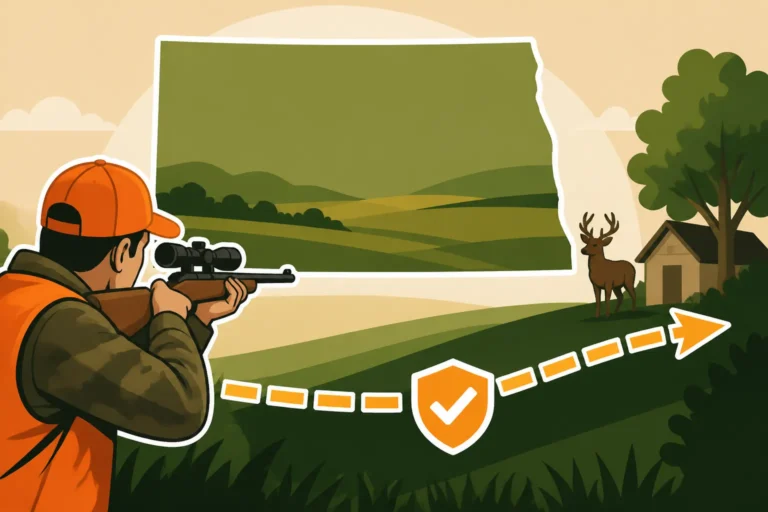
North Dakota Game and Fish Department (NDG&F) regulations for centerfire rifles used in deer hunting emphasize the energy a cartridge delivers, rather than a specific minimum bullet diameter. The rule states that a legal centerfire rifle cartridge must produce at least 1,000 foot-pounds of muzzle energy at 100 yards. This is a critical distinction because a smaller diameter bullet traveling at a very high velocity can carry more kinetic energy than a larger diameter, slower bullet. The goal here is to ensure that the bullet has enough power to humanely and effectively harvest a deer, providing a clean kill and reducing the chance of wounding an animal.
Think about it this way: a .243 Winchester, a popular deer cartridge, uses a relatively small .243-inch diameter bullet. However, its high velocity allows it to easily exceed the 1,000 ft-lbs energy requirement at 100 yards. Conversely, a .45-70 Government with a much larger diameter bullet might have a lower velocity, but its heavy bullet still carries immense energy. The NDG&F is focused on the terminal performance – the bullet’s ability to do its job – which is directly tied to energy. This approach is rooted in ensuring an ethical harvest, where the animal is dispatched quickly and humanely. Many hunters find resources like the GoHunt platform incredibly useful for researching ballistic data, ensuring their chosen cartridge meets these crucial energy requirements.
Prohibited Ammunition Types and Ethical Bullet Selection
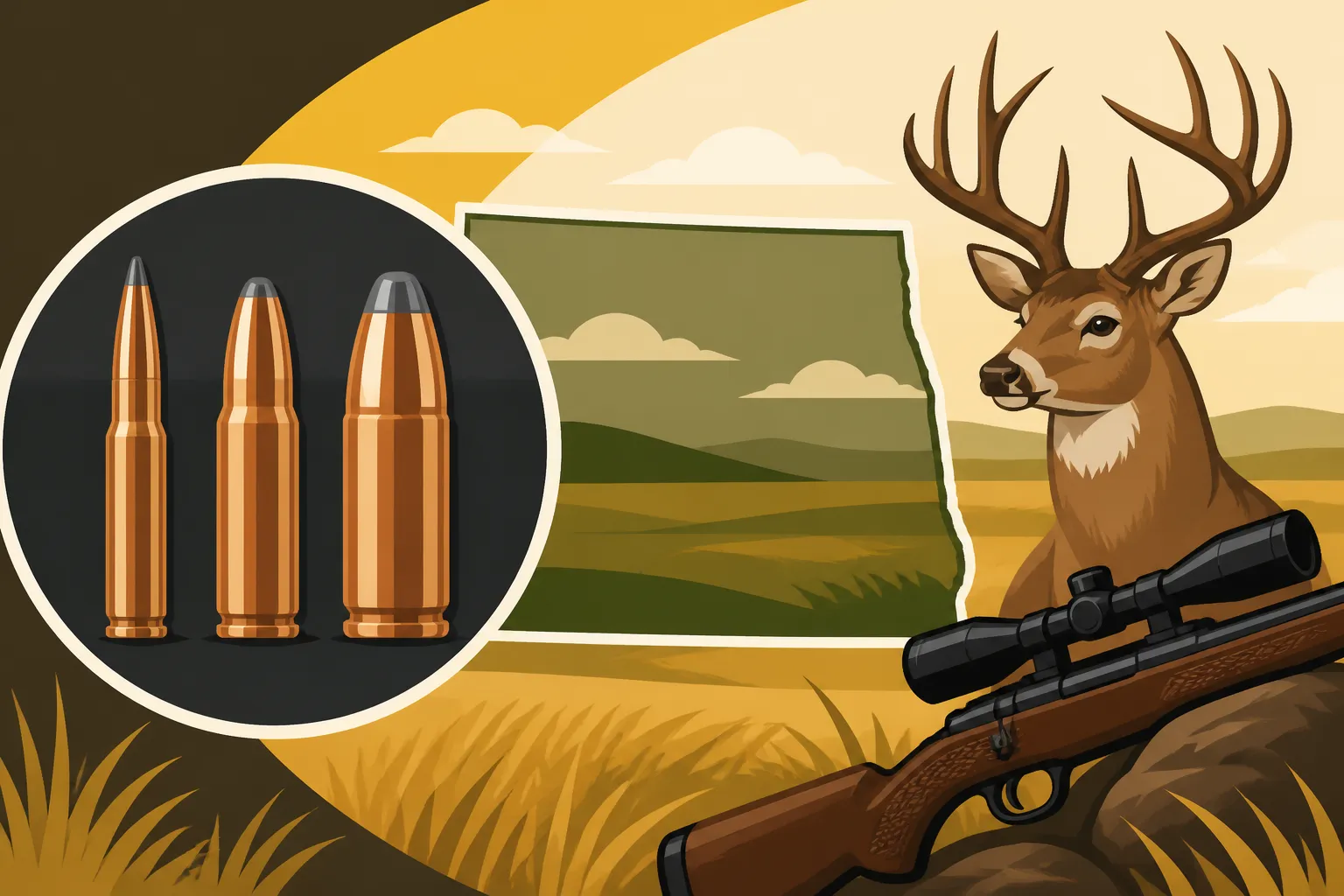
While there isn't a minimum bullet diameter for rifles, North Dakota does explicitly prohibit certain types of ammunition that are not considered suitable for ethical deer hunting. Specifically, full metal jacket (FMJ) bullets are strictly forbidden for deer hunting. This makes perfect sense when you consider the purpose of FMJ ammunition. These bullets are designed to penetrate with minimal expansion, often passing straight through an animal without imparting sufficient energy or causing enough tissue damage for a quick, humane kill. This can lead to wounded animals that run a long distance, causing unnecessary suffering and often resulting in unrecovered game.
Instead, hunters are expected to use expanding bullets, such as soft points, hollow points, or various bonded and monolithic designs. These bullets are engineered to expand rapidly upon impact, creating a larger wound channel and transferring more energy to the animal, maximizing the chance of a clean, ethical kill. When you're standing in the aisle at your local sporting goods store, it's easy to get overwhelmed by all the options. But remembering the "no FMJ" rule and opting for a quality hunting bullet designed for expansion is one of the most important decisions you can make to ensure a responsible hunt.
Navigating Common Calibers and Their Suitability
With the energy requirement rather than a strict diameter minimum, you might feel like your options are wide open, and in many ways, they are! However, it's still important to understand which calibers are generally accepted and perform well, and to avoid those that might be marginal, even if they technically meet the energy threshold.
Calibers That Consistently Meet the Energy Threshold
The good news is that many of the most popular and time-tested deer hunting calibers easily meet North Dakota's 1,000 ft-lbs at 100 yards energy requirement. These are the cartridges you'll see in gun safes across the country, and for good reason: they're proven performers for harvesting whitetails and mule deer.
Here's a look at some common calibers that reliably fit the bill:
- .243 Winchester: Often considered an excellent entry-level deer cartridge due to its mild recoil, the .243 Win (using a .243-inch bullet) delivers plenty of energy for deer when loaded with appropriate hunting bullets (typically 85-100 grain). It's effective for both younger hunters and those sensitive to recoil, and is a solid choice for hunting the more open prairie or even in some of the brushier shelterbelts.
- 6.5 Creedmoor: This modern darling of the shooting world (using a .264-inch bullet) has gained immense popularity for its flat trajectory, moderate recoil, and excellent accuracy. It easily surpasses the energy requirement with standard hunting loads, making it a fantastic option for deer across North Dakota's varied landscapes, from the Missouri River bottomland to the wide-open spaces of the Badlands.
- .270 Winchester: A classic cartridge (using a .277-inch bullet) that has accounted for countless deer over the decades. It offers a flat trajectory and ample power, making it a versatile choice for any deer hunting scenario you might encounter in North Dakota.
- .30-30 Winchester: While primarily known as a lever-action cartridge, the .30-30 (using a .308-inch bullet) remains highly effective at shorter to moderate ranges, especially in thick cover. It consistently meets the energy requirement and is a popular choice for hunting in areas with tighter timber like the Turtle Mountains or river corridors.
- .308 Winchester: A compact and efficient cartridge (using a .308-inch bullet), the .308 Win is renowned for its accuracy and sufficient power for deer at all reasonable hunting ranges. Its moderate recoil and availability make it a go-to for many hunters.
- .30-06 Springfield: The venerable .30-06 (using a .308-inch bullet) is perhaps the most versatile North American hunting cartridge. It far exceeds the 1,000 ft-lbs energy minimum, offering plenty of punch for deer, and even larger game if you ever draw an elk tag.
It's also worth noting that within any given caliber, bullet weight can play a role in energy delivery. Heavier bullets typically carry more energy downrange, even if they start a bit slower. Always check the ballistic data for your specific ammunition to confirm it meets the 100-yard energy threshold. You can find more detailed information on which rifle calibers North Dakota allows for deer directly from the NDG&F website.
Avoiding Pitfalls: When "Legal" Doesn't Mean "Optimal"
While the NDG&F regulations focus on energy, it's crucial to understand that simply meeting the 1,000 ft-lbs at 100 yards doesn't automatically mean a cartridge is optimal for deer. This is where ethical hunting and practical experience come into play. Some smaller centerfire cartridges, like certain loads of .223 Remington (which uses a .224-inch bullet), might barely squeeze past the 1,000 ft-lbs mark with specific, heavy-for-caliber hunting bullets at close range. However, relying on such marginal performance leaves very little room for error.
For instance, if you're Hunting North Dakota's Badlands Mule Deer Country, you might encounter longer shots than you would in a dense timber stand. A cartridge that’s marginal at 100 yards will likely be underpowered at 200 or 300 yards. The frustration of tracking a wounded deer, especially across rugged terrain, is something every hunter wants to avoid. That's why most seasoned North Dakota hunters will advise opting for a cartridge that comfortably exceeds the minimum, giving you a wider margin for error and a more consistent, humane kill. It's not just about what's legal; it's about what's responsible. Always prioritize shot placement and knowing your rifle's capabilities. A good shot with a well-performing, suitable caliber is always better than a poor shot with the biggest cannon you can find.
Here's a quick look at some common calibers and their typical energy performance for deer:
| Cartridge | Bullet Diameter | Typical Bullet Weight (gr) | Approx. Energy @ 100 yds (ft-lbs) | NDG&F Legal (Deer Rifle) |
|---|---|---|---|---|
| .223 Remington | .224" | 55-77 | 800-1100 (varies greatly) | Marginal/Situational |
| .243 Winchester | .243" | 85-100 | 1500-1800 | Yes |
| 6.5 Creedmoor | .264" | 120-143 | 1600-1900 | Yes |
| .270 Winchester | .277" | 130-150 | 2000-2400 | Yes |
| .30-30 Winchester | .308" | 150-170 | 1400-1700 | Yes |
| .308 Winchester | .308" | 150-180 | 2000-2400 | Yes |
| .30-06 Springfield | .308" | 150-180 | 2400-2800 | Yes |
Note: Energy figures are approximate and vary based on specific bullet type, load, and barrel length. Always check manufacturer data for your chosen ammunition.
Beyond Rifles: Other Legal Firearm Considerations for Deer
While our focus today is on rifle bullet diameter, it's worth briefly touching on other legal firearms for deer hunting in North Dakota, as these also have specific requirements you need to know. The laws are designed to ensure ethical hunting across all weapon types.
Handgun and Shotgun Regulations
If you prefer to hunt with a handgun or a shotgun during the North Dakota Gun Season Dates, the regulations are a bit different. For handguns, North Dakota does specify a minimum bullet diameter: it must be at least .24 caliber (0.24 inches). Additionally, the cartridge must produce at least 500 foot-pounds of energy at 50 yards. This ensures handguns have adequate power for a clean kill. Common legal handgun calibers include .357 Magnum, .44 Magnum, .45 Colt, and larger.
For shotguns, only slugs are legal for deer hunting. Buckshot, birdshot, and other multi-pellet loads are strictly prohibited. The focus on slugs ensures that the projectile acts like a large, heavy bullet, delivering significant energy for a humane kill. Shotgun hunters will find themselves using 12-gauge or 20-gauge shotguns, typically with rifled barrels for increased accuracy with slugs. Make sure you understand the nuances of Legal Weapons During North Dakota Gun Season before heading afield.
Muzzleloaders and Archery Equipment
Muzzleloaders offer a unique hunting experience and also have their own set of rules. Generally, any muzzleloader that is .45 caliber or larger (for rifles) and .50 caliber or larger (for handguns) is legal, provided it uses a projectile that expands or is designed for hunting. You can dive deeper into the specifics of Muzzleloader Deer Hunting in Select North Dakota Units if that's your preferred method.
For archery equipment, the regulations revolve around draw weight, arrow length, and broadhead type. Generally, broadheads must have at least two sharp cutting edges and a minimum cutting diameter of 7/8 inch. There are no energy requirements for archery equipment, but the focus is on a sharp, effective broadhead and sufficient arrow weight to achieve penetration. If you're considering Bowhunting North Dakota's Long Archery Season, you'll want to ensure your setup meets all these criteria. Each of these weapon types is governed by careful thought to promote responsible hunting practices, something the NDG&F takes seriously.
Practical Considerations for Rifle Selection in North Dakota
Knowing the regulations is the first step, but choosing a rifle and caliber involves more than just legality. It’s about matching your equipment to the environment, your skill level, and your hunting style to maximize your chances of a successful and ethical hunt in North Dakota.
Matching Your Cartridge to North Dakota's Diverse Terrain
North Dakota's hunting landscape is incredibly diverse, from the wide-open expanse of the prairie pothole region to the rugged, broken terrain of the Badlands, and the dense timber along the Missouri River. Each of these environments can influence your shot distances and, consequently, your ideal caliber choice.
- Open Prairie: If you're Spotting Pronghorn on North Dakota's Open Prairie or hunting whitetails along a field edge, you might encounter longer shots. Calibers like the 6.5 Creedmoor, .270 Winchester, or .30-06 Springfield, known for their flatter trajectories, shine in these situations. The ability to reach out accurately with sufficient energy is paramount.
- Badlands: The Badlands offer steep coulees and draws, often presenting varied shot distances. A versatile caliber that performs well at both closer ranges and extended distances, such as the .308 Winchester or 7mm-08 Remington, can be an excellent choice for hunting mule deer in this challenging landscape. Understanding Hunting a Badlands Draw for Mule Deer requires knowing your rifle’s capabilities in varied terrain.
- River Bottoms and Shelterbelts: In areas with denser cover, like those found when Hunting North Dakota's Missouri River Bottomland or thick shelterbelts, shots are often closer and quicker. Here, calibers like the .30-30 Winchester, .308 Winchester, or even the .45-70 Government can be highly effective, delivering significant knockdown power at close range.
Remember, the goal is always a clean, ethical kill. Understanding your hunting environment and the realistic shot distances it presents will help you select a rifle and cartridge that instill confidence. Tools from GoHunt can provide detailed ballistic charts for various loads, helping you visualize how different cartridges perform at varying distances in North Dakota's conditions.
Ensuring Compliance and a Successful Hunt
The North Dakota Game and Fish Department publishes new regulations annually, and it's always your responsibility as a hunter to stay informed. Regulations can change, and what was legal last year might have been adjusted for the current season. Before Hunting North Dakota's November 6 Gun Opener or any other season, make it a habit to review the latest proclamation. The NDG&F website is the best source for this up-to-date information.
Beyond just the letter of the law, a successful hunt hinges on your preparation and proficiency. Practice with your chosen rifle and ammunition. Know how it shoots at various distances, understand its limitations, and critically, understand your own limitations as a shooter. Being able to confidently place your shot, even under pressure, is far more important than any specific bullet diameter.
For additional resources and to ensure you're fully prepared, consider checking out the various hunting guides and articles available. For example, understanding North Dakota Hunter Education Requirements is crucial for anyone new to hunting, and for all hunters, scouting tools like the ND Hunt App and services such as GoHunt can offer invaluable insights into public land access and potential hunting spots. By combining solid knowledge of the regulations with consistent practice and smart scouting, you'll be well on your way to a rewarding hunting experience in North Dakota.
Disclaimer
Please note that hunting regulations, including those concerning firearms and ammunition, can change. While this guide aims to provide accurate and up-to-date information, it is the individual hunter's responsibility to consult the most current North Dakota Game and Fish Department (NDG&F) hunting proclamation and laws before heading afield. This content is for informational purposes only and should not be considered legal advice.