North Dakota Firearms Discharge Setback Distance
Navigating the vast and often sparsely populated landscapes of North Dakota as a hunter comes with an important responsibility: understanding the specific regulations governing firearm discharge distances. It's a common source of anxiety for many, wondering if their shot will unintentionally land them in legal hot water. This comprehensive guide is designed to clarify North Dakota's firearms discharge setback distances, providing you with the knowledge and practical tips needed to hunt safely, legally, and with complete peace of mind, protecting both yourself and others.
Understanding the Legal Landscape of Discharge Setbacks
When you're out in the field, whether it's chasing pheasants in a stubble field or pursuing deer along a river bottom, the law dictates not just what you can hunt, but how and where you can discharge your firearm. These rules aren't arbitrary; they are put in place for public safety and to respect private property rights, ensuring that everyone, hunters and non-hunters alike, can enjoy North Dakota's outdoor spaces without undue risk or conflict.
Why Setback Distances Exist
The primary reason for firearms discharge setback distances is, unequivocally, public safety. Imagine a scenario where someone could legally shoot a high-powered rifle just a few feet from a busy road or an occupied farmstead. The potential for tragic accidents from stray bullets or ricochets is immense. These regulations create a buffer zone, minimizing the risk to people, livestock, and property that aren't involved in the hunt. They acknowledge the inherent danger of firearms and establish responsible operating parameters. Beyond safety, these rules also serve to reduce noise disturbances and ensure a respectful coexistence between hunters and rural residents. No one wants to hear rifle shots cracking off right next to their home, even if the intent is purely to harvest game. It's about being a good neighbor and a responsible hunter.
Differentiating Between State and Local Rules
One of the nuances that can often trip up hunters is that firearm discharge laws aren't always uniform across the state. While the North Dakota Game and Fish Department sets many overarching hunting regulations, individual counties, townships, or even municipalities can enact their own, more restrictive ordinances regarding firearm discharge within their specific jurisdictions. For example, some populated areas or recreational zones might have stricter "no shooting" zones than the general state law allows.
It's absolutely vital to do your homework before you head out, especially if you're hunting in an area you're not intimately familiar with. Don't assume that what applies in one rural county automatically applies in another, or that general state law covers every possible scenario. A good starting point is always to check the North Dakota Game and Fish proclamation booklet, but if you're hunting near a town or a densely populated rural area, a quick call to the local sheriff's office or county courthouse can save you a world of trouble. This is also where tools like GoHunt can be invaluable, sometimes overlaying local restrictions on their mapping systems, though always double-check with official sources. Understanding the North Dakota Hunter Education Requirements often includes a module on these legal distinctions, emphasizing the importance of local knowledge.
Specific Setback Distances and Scenarios
North Dakota has clear, legally defined distances that you must maintain when discharging a firearm. Failing to respect these can lead to serious legal consequences, not to mention putting others at risk. The most common and widely applicable rule revolves around occupied dwellings and structures.
Discharging Near Occupied Buildings and Dwellings
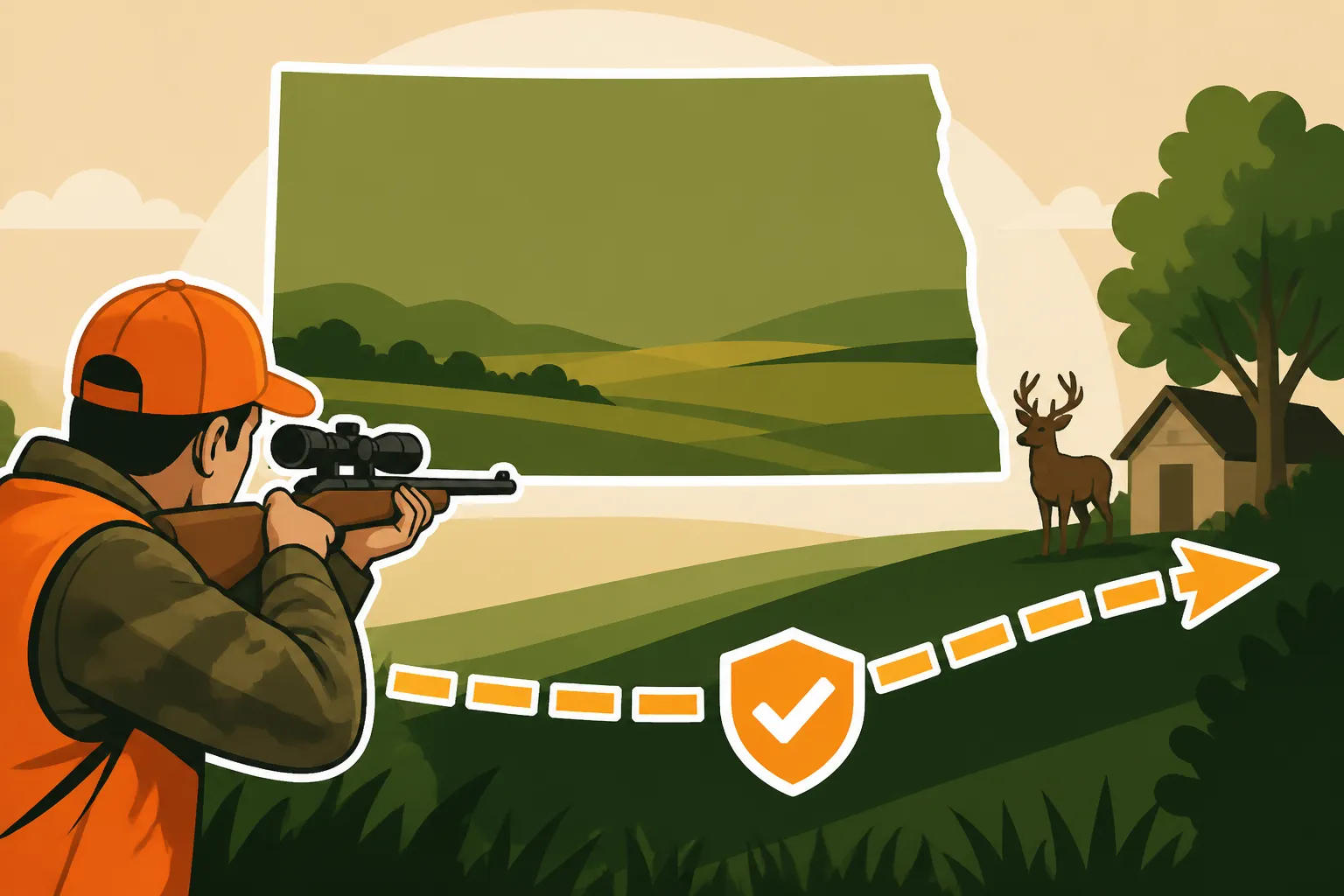
The cornerstone of North Dakota's firearm discharge law states that it is generally illegal to discharge a firearm within 400 yards of an occupied dwelling, whether that's a house, cabin, or even a temporary structure like a camper that's actively being used. This isn't just about a physical building; it includes the curtilage, or the area immediately surrounding the dwelling that's used for domestic purposes. The 400-yard rule applies to all firearms, including rifles, shotguns, and muzzleloaders, when used for hunting.
Think about what 400 yards actually looks like in the field. That's nearly a quarter-mile, a significant distance that can be easy to misjudge, especially in open prairie or rolling terrain. If you're on a private farm, even if you have permission to hunt, you must respect this distance from the farmhouse, any occupied barns, or other outbuildings where people might be present. The crucial word here is "occupied." If a building is clearly abandoned or unoccupied, the 400-yard rule technically doesn't apply to that specific structure, though you still need to be mindful of other safety considerations and property lines. However, it's always best to err on the side of caution. If there's any doubt about occupancy, treat it as if it is occupied. When you're trying to figure out What Counts as Posted Land in North Dakota, this 400-yard rule is a separate, but equally critical, consideration from simply having permission to be on the land.
Setbacks on Public Versus Private Land
The 400-yard rule applies regardless of whether you're on public or private land. However, navigating these rules can feel different depending on the land type. On public lands, such as Wildlife Management Areas (WMAs) or federal lands, you generally don't need explicit permission to hunt, but you must still abide by all discharge setbacks. This means that if a WMA borders a private residence, you still cannot shoot within 400 yards of that home, even if you are entirely within the WMA boundary. This can create "no-shoot" zones within otherwise legal hunting areas.
On private land, the conversation changes slightly. While you still must adhere to the 400-yard rule from any occupied dwellings, you also need explicit permission to hunt. When you're Asking a North Dakota Farmer for Permission, it's a perfect opportunity to discuss specific areas where they might not want you to hunt, or areas near their home or livestock. Even if they say, "go ahead and hunt anywhere," the 400-yard rule is still in effect. Good landowners will often point out these sensitive areas, but it's ultimately your responsibility to know and follow the law. Never assume silence implies consent for close shooting. For instance, hunting in areas like Hunting North Dakota's Missouri River Corridor often means dealing with a mix of public and private lands, and often homes or cabins near the river, making these setback distances especially relevant.
Vehicle-Related Discharge Rules
North Dakota also has strict rules about discharging firearms from or across public roadways and from vehicles. It is illegal to shoot a firearm from any vehicle, whether it's moving or stationary, on a public road or highway. This includes cars, trucks, ATVs, snowmobiles, or any other motorized vehicle. The intent here is clear: to prevent dangerous situations where shots could unintentionally travel onto roadways, strike other vehicles, or endanger the public. It's not just about the act of shooting, but also the safety implied by not having loaded firearms easily accessible in or on vehicles where they could be quickly fired.
Furthermore, it is illegal to discharge a firearm across the right-of-way of any public road or highway. This means you cannot aim or shoot in a way that your projectile would travel over a road. You must have a clear and safe backdrop, and that backdrop cannot include a public thoroughfare. These rules are non-negotiable and are consistently enforced by game wardens. Understanding Vehicle Rules on North Dakota Public Land will provide more context on transportation of firearms and safe practices, but generally, the rule of thumb is: your hunting ends before you get into your vehicle or near a public road.
| Scenario | Minimum Setback Distance | Notes |
|---|---|---|
| Occupied Dwelling/Building | 400 Yards | Applies to homes, cabins, occupied structures. Err on side of caution if occupancy is uncertain. |
| Public Road/Highway (Shooting from/across) | Prohibited | Cannot shoot from any vehicle on a public road, or shoot across a public road right-of-way. |
| Livestock/Other Property | Responsible Distance | While no specific legal setback exists, a responsible hunter avoids shooting near livestock or valuable property. |
| Posted Private Land | Permission Required | Separate from setback, you need landowner permission to hunt on posted land. |
Practical Tips for Avoiding Violations in the Field
Even with the best intentions, misjudging distances or mistakenly assuming land status can lead to unintentional violations. Thankfully, modern technology and good old-fashioned hunter etiquette offer excellent ways to stay on the right side of the law.
Utilizing Mapping Tools and Apps
In today's hunting world, digital mapping tools are an absolute game-changer. Apps like GoHunt, onX Hunt, and other GPS-enabled mapping applications provide invaluable real-time information about land ownership, property boundaries, and often, setback distances. You can literally see your location on the map, identify nearby dwellings, and measure the 400-yard buffer zone with accuracy. This technology takes the guesswork out of judging distance, especially in unfamiliar terrain or when visibility is poor. Before you even leave home, you can scout potential hunting spots, identify properties with dwellings, and plan your approach and shooting lanes accordingly.
Many of these apps even allow you to download maps for offline use, which is critical in North Dakota's expansive rural areas where cell service can be spotty at best. Investing in one of these tools and learning how to use it effectively is arguably one of the best ways to ensure you're always aware of your surroundings and adhering to all discharge rules. It's a proactive step that every responsible hunter should take, allowing you to focus on the hunt itself rather than worrying about legal boundaries.
Communication and Landowner Relations
When hunting private land, open and honest communication with the landowner is your most powerful tool. Beyond simply asking for permission, engage them in a conversation about their property. Ask about the location of their home, any occupied outbuildings, where their livestock might be grazing, or any other areas where they would prefer you not shoot. Landowners appreciate this level of respect and consideration. It builds trust and often leads to long-term hunting access. Many landowners are happy to let you hunt, but they want to know you'll be safe and respectful of their property and livelihood.
Even on public land that borders private property, it can sometimes be wise to acknowledge the proximity to private residences. While you don't need to ask permission to hunt public land, being aware of and respecting adjacent private landowners by proactively avoiding shooting too close to their homes goes a long way. This kind of courtesy helps maintain a positive image for hunters and can prevent complaints to game wardens, even if you are technically legal. Understanding North Dakota Trespass and Permission Law isn't just about legality; it's about good relations.
Pre-Season Scouting and Planning
There's no substitute for boots-on-the-ground scouting, even in the age of digital maps. Physically walking the area you plan to hunt before the season opens allows you to confirm what you see on a map. You can identify potential hazards, confirm the location of dwellings, and note natural barriers or changes in terrain that might affect your shot or bullet travel. For example, a hill or a stand of timber might provide a safe backstop that's not immediately obvious on a flat aerial map.
Scouting also lets you identify potential travel routes for game that might take them near areas where shooting is restricted. Knowing these patterns helps you position yourself in a way that provides safe, ethical shots while maintaining legal setback distances. This kind of thorough preparation is especially important for Reading a PLOTS Sign Correctly to ensure you're not only on legal land but also hunting in a safe manner regarding setbacks. Taking the time to scout shows a commitment to safety and responsibility, which are hallmarks of a truly ethical hunter.
Consequences of Non-Compliance and Enforcement
Ignoring or simply being ignorant of North Dakota's firearm discharge setback distances can lead to a host of unpleasant consequences, ranging from fines to license revocation, and in severe cases, even jail time. It's not something to take lightly, and enforcement officers are serious about these rules.
Legal Ramifications and Penalties
Violating firearm discharge setback rules typically falls under a class B misdemeanor in North Dakota. This means you could face a fine of up to $1,500, up to 30 days in jail, or both. Beyond these immediate penalties, a conviction can also lead to the suspension or revocation of your hunting privileges for a period of time, which for any avid hunter is a devastating blow. If your violation involves property damage or, tragically, injury to a person, the legal ramifications escalate dramatically, potentially leading to felony charges and far more severe sentences.
The North Dakota Game and Fish Department and local law enforcement agencies work together to enforce these regulations. Game wardens have the authority to issue citations on the spot. It's important to remember that claiming ignorance of the law is generally not a valid defense. As hunters, we are expected to know and abide by all state and local hunting regulations. Understanding the full scope of North Dakota Wildlife Violation Penalties can put the severity of these infractions into perspective. This is why paying close attention to every detail, including North Dakota Legal Firearms for Deer Hunting and how they interact with setback distances, is so crucial.
Reporting Violations and Game Warden Authority
If you witness a violation of firearm discharge setback distances, or any other unsafe hunting practice, it's important to report it. North Dakota has a Report All Poachers (RAP) program, which provides a confidential way for citizens to report suspected violations. This isn't about being a "tattletale;" it's about ensuring the safety of the public and the integrity of hunting. Unsafe hunters give all hunters a bad name and put others at risk, and reporting them helps protect both people and the future of hunting in the state.
When you call to report, try to provide as much detail as possible: the exact location, a description of the individuals and vehicles involved, and the nature of the violation. Game wardens have broad authority to investigate these reports, detain individuals suspected of violations, and issue citations. They are dedicated to protecting North Dakota's wildlife resources and ensuring that hunting is conducted safely and ethically. Never confront individuals you suspect are violating the law yourself; always contact law enforcement and let them handle the situation.
Disclaimer
Please remember that this guide is intended for informational purposes only and should not be considered legal advice. Hunting regulations can change, and interpretations may vary. Always consult the most current North Dakota Game and Fish Department hunting proclamations and, if necessary, local authorities or legal counsel to ensure complete compliance with all applicable laws and regulations before engaging in any hunting activities.