Applying for a Gratis License at the Bismarck Office
Trying to navigate the ins and outs of North Dakota's hunting licenses can feel like a puzzle, especially when you’re dealing with specific programs like the Gratis License. It's easy to get confused about who qualifies, what paperwork you need, and whether you can even apply in person. This guide is here to simplify that process, walking you through everything you need to know about applying for a Gratis License directly at the North Dakota Game and Fish Department office in Bismarck.
Understanding the North Dakota Gratis License
The North Dakota Gratis License is a fantastic opportunity for eligible landowners and their immediate family members to hunt deer on their own property, or land they operate, without going through the public lottery system for that specific unit. It’s a way for the state to acknowledge the role landowners play in wildlife management and provide a direct benefit. However, it's not a free-for-all, and there are very specific rules to follow, which can sometimes be a little opaque if you're not familiar with them.
Who Qualifies for a Gratis License
First things first, let’s talk about who can actually get one of these. A gratis license is primarily designed for resident landowners or lessees who farm or ranch at least 160 acres of land. The key here is "operated land," meaning you're actively involved in agricultural production on that acreage. It's not just about owning the land; it's about working it. This ensures the benefit goes to those actively stewarding the land that deer often inhabit.
Beyond the primary landowner or operator, certain immediate family members can also qualify. This typically includes the spouse, children, and grandchildren of the qualifying landowner or lessee. This is where things can sometimes get a bit complicated, as proving these family relationships with the right documentation is crucial. For instance, a grandchild living far away might qualify if their grandparent meets the land criteria, but you'll need the proper birth certificates to show that lineage. It's a privilege that acknowledges the family's connection to the land and its resources, but it demands careful attention to the details of North Dakota Gratis License Rules. Remember, this isn't a general "free tag" for anyone; it's specific to the land and the direct family ties. If you're looking into general hunting opportunities, you might want to review North Dakota Resident License Options for other pathways to a tag.
Why the Bismarck Office is Key for Certain Applications
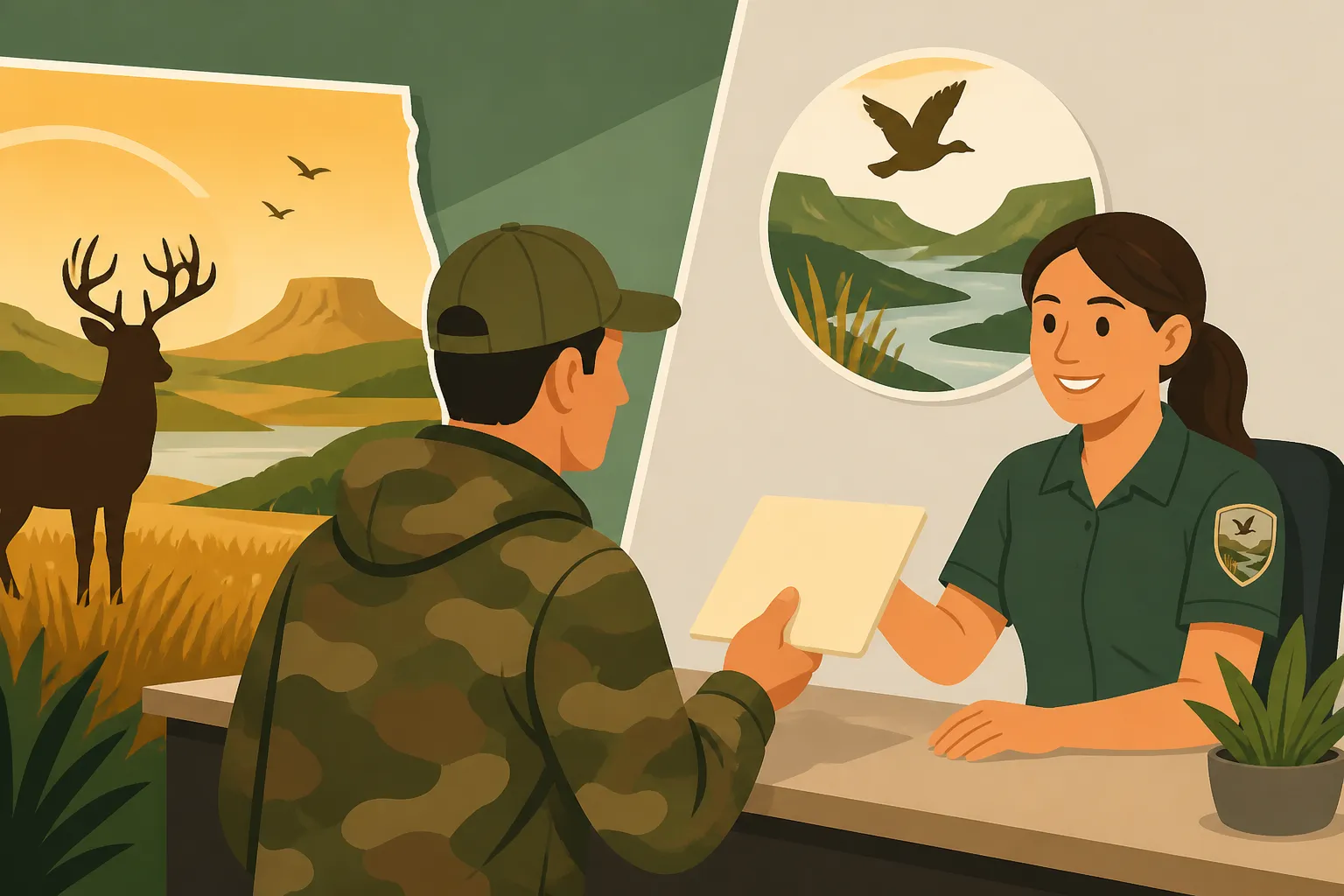
While many standard licenses can be purchased online through Buying a License Through North Dakota's Online Portal, the gratis license often involves a more personal touch. Applying in person at the North Dakota Game and Fish Department headquarters in Bismarck can be incredibly advantageous, especially for those with unique or slightly complex situations. Think about it: you’re dealing with a specific set of rules tied to land ownership and family relationships. Sometimes, simply talking to a real person, face-to-face, can clarify doubts that an online form or a phone call just can't resolve.
For instance, if you're a new landowner, or if there's a recent change in family status, bringing all your documents to the Bismarck office allows the staff to verify everything on the spot. They can look at your deeds, birth certificates, and marriage licenses, and answer any questions you might have immediately. This direct interaction minimizes the chances of your application being held up due to missing information or a misunderstanding of the rules. For complex family situations, where multiple generations are applying under one landowner, having everyone's documentation present ensures a smooth verification process. It's also particularly helpful if you're on a tight schedule or need that license quickly before the season opens, as mail-in applications always carry the risk of delays.
Navigating the Application Process at the Bismarck Office
Alright, so you’ve decided to make the trip to Bismarck. Smart move! But before you hit the road, there are a few essential steps you need to take to ensure your visit is as smooth and efficient as possible. Nobody wants to drive all that way only to find they've forgotten a crucial piece of paper.
Pre-Application Checklist and Required Documentation
Preparation is your best friend when applying for a gratis license. The North Dakota Game and Fish Department office staff are there to help, but their job is much easier if you arrive with all your ducks in a row. Think of it like packing for a hunt: you wouldn't forget your rifle or your blaze orange, so don't forget your critical documents for this process.
Here's a detailed list of what you should gather before you head to Bismarck:
- Valid Photo Identification: This is non-negotiable. A current driver's license or state-issued ID is usually sufficient. Make sure it clearly shows your residency.
- Proof of Land Ownership or Lease: This is the cornerstone of your gratis application. You'll need documentation that clearly shows you own or are leasing the qualifying acreage (160 acres minimum).
- Deed: A copy of your property deed is often the clearest evidence of ownership.
- Property Tax Statement: A recent property tax statement showing your name and the acreage can also serve as proof.
- Lease Agreement: If you're a lessee, bring a copy of your current, signed lease agreement that specifies the land involved and its use for agricultural purposes.
- Legal Description of Property: Make sure you have the exact legal description or parcel ID numbers for the land in question. This helps the staff verify the acreage. Tools like GoHunt can be invaluable here, as they often provide detailed parcel information and ownership maps, which can help you cross-reference your documentation and ensure accuracy before you even walk through the door. Knowing your Finding North Dakota Property Lines accurately will make a huge difference.
- Proof of Relationship to Landowner/Lessee (if applicable): If you're applying as a spouse, child, or grandchild, you'll need documents proving your relationship to the qualifying landowner.
- Marriage Certificate: For spouses.
- Birth Certificate: For children and grandchildren. If you're a grandchild, you'll need your birth certificate and your parent's birth certificate to establish the chain of lineage back to the landowner.
- Adoption Papers: If applicable, to show legal guardianship or adoption.
- Previous License Information: If you've applied for or received a gratis license before, having that information (like your previous license number) can sometimes speed up the process, though it's not always strictly required for initial verification.
- Hunter Education Certificate: While not directly for the gratis license application itself, remember that most hunters in North Dakota need to have completed a hunter education course. Make sure you're compliant with North Dakota Hunter Education Requirements before you even plan your hunt.
- Payment Method: Although gratis licenses often have no fee, there might be nominal processing charges or you might decide to pick up other licenses while you're there. It's always wise to have a credit card or checkbook on hand.
Organize all these documents in a folder. It makes a great impression, shows you’re serious, and helps the staff process your application quickly.
Step-by-Step Walkthrough for In-Person Submission
You’ve got your documents, you know who qualifies, and you’re ready. Here’s what you can expect when you actually arrive at the North Dakota Game and Fish Department office in Bismarck. The address is 100 N Bismarck Expy, Bismarck, ND 58501-5095. It’s pretty central and generally easy to find.
- Arrival and Parking: The NDG&F office has visitor parking available. Head inside and look for the main reception or licensing counter. During peak times, especially right before a major season like North Dakota's Lottery-Based Deer Gun Season or Bowhunting North Dakota's Long Archery Season, you might encounter a bit of a wait, so try to plan your visit for off-peak hours if possible. Weekday mornings tend to be less busy than late afternoons.
- Check-in and Initial Inquiry: When you approach the counter, let the staff know you are there to apply for a gratis license. They will direct you to the appropriate forms or personnel. Be polite and clear about your intentions.
- Filling Out Forms: You'll be provided with a specific application form for the gratis license. Take your time to fill it out completely and accurately. This is where all those documents you gathered come into play. You'll transcribe information like property legal descriptions, your personal details, and the names and relationships of any family members applying with you. Don't hesitate to ask the staff if you have questions about any section. It's better to ask than to guess and make a mistake.
- Document Verification: This is the critical step. The staff member will review your completed form and cross-reference it with all the supporting documents you brought. They'll confirm land ownership, acreage, and family relationships. This is why having original documents or certified copies is so important. They might ask clarifying questions, so be prepared to explain your situation if needed.
- License Issuance: Once everything is verified and approved, your gratis license will be issued directly to you. This is usually printed on the spot. Double-check all the information on the license—your name, the unit, the season, and the tag details—before you leave the counter. If there's any discrepancy, point it out immediately.
- Associated Fees (if any): While the gratis license itself is typically free, there might be a small processing fee, or you might choose to purchase a general game and habitat license or other tags while you're there. Be prepared for this, even if it's just a few dollars.
By following these steps, your in-person application at the Bismarck office should be a straightforward and positive experience, getting you one step closer to your hunt.
Common Pitfalls and Expert Tips for Success
Even with the best intentions, it's easy to make a mistake or overlook a detail when applying for licenses. I've seen it happen countless times. A little foresight and knowing what to watch out for can save you a lot of headache and potentially a ruined hunt.
Avoiding Delays and Denials
The biggest reason for delays or even denials in gratis license applications usually boils down to incomplete or incorrect paperwork. It sounds simple, but you'd be surprised how often people forget a birth certificate or misstate the acreage of their land.
- Incomplete Documentation: This is probably the number one culprit. Forgetting a spouse's marriage certificate, a child's birth certificate, or not having clear proof of land ownership can bring the entire process to a screeching halt. Always remember the hierarchy: landowner/lessee proof first, then clear, verifiable family lineage.
- Misinterpreting Eligibility Rules: Sometimes, applicants mistakenly believe they or a family member qualify when they don't, based on the strict definitions. For example, a distant cousin or a friend who helps on the farm does not qualify. It's strictly defined as spouse, child, or grandchild. Ensure you understand the nuances of North Dakota Gratis License Eligibility before you even start gathering documents.
- Outdated Information: If you've recently moved, sold property, or had a change in family status, make sure all your documents reflect the most current information. An old deed or a driver's license with an outdated address can cause confusion.
- Timing: While the Bismarck office can often help with last-minute applications, don't push your luck. Applying well in advance gives you a buffer in case anything is missing or needs clarification. Waiting until the day before the season opens is a recipe for stress, particularly if you're also waiting on a specific deer tag for White-Tailed Deer Across North Dakota.
- Property Line Ambiguity: While not a denial reason, a lack of clear documentation on property lines can cause delays. Having a detailed map or using an app like GoHunt to pinpoint your exact acreage and boundaries, especially for parcels that might span different sections, can be incredibly helpful for the Game and Fish staff.
Leveraging Resources and Planning Ahead
Making the most of the resources available and planning effectively can significantly streamline your gratis license application experience. Don't underestimate the power of a quick phone call or a review of online materials.
- Call Ahead: Before you even leave your house, consider calling the North Dakota Game and Fish Department directly. Their licensing division can often answer specific questions about your situation and might even preemptively tell you if you're missing a document or if there's a particular nuance to your application. This is especially useful if your situation is complex or unusual.
- Review the NDG&F Website: The official North Dakota Game and Fish Department website is a treasure trove of information. They often have downloadable forms and detailed explanations of rules and regulations. Familiarize yourself with these materials before your visit. You can learn about things like North Dakota Landowner Deer Permit Rules which might interact with your gratis application.
- Utilize Mapping Software: For confirming your acreage and boundaries, using a robust mapping app like GoHunt or similar tools is invaluable. These platforms often provide parcel data, allowing you to clearly delineate your 160+ acres and ensure there are no ambiguities. Knowing your land well, even virtually, can boost your confidence and help you answer any questions the staff might have. This level of preparation is also crucial if you plan to hunt on public land and want to maximize your time in the field, as detailed in Scouting PLOTS Land With the ND Hunt App.
- Plan Your Travel: Bismarck isn't necessarily a quick drive for everyone in North Dakota. Factor in travel time, potential traffic, and even the weather, especially if you're traveling during hunting season when conditions can change rapidly. A successful application starts long before you walk through the door of the NDG&F office.
- Understand Reporting: Once you have that gratis license and successfully fill your tag, remember that North Dakota has strict North Dakota Deer Reporting Requirements. Getting your license is just the first step; completing the hunting cycle properly is important for wildlife management data.
| Criteria/Document | Description | Required For (Applicant Type) |
|---|---|---|
| Qualifying Land | 160+ acres operated for agricultural purposes | Landowner/Lessee |
| Valid Photo ID | Driver's License or State ID (showing residency) | All Applicants |
| Proof of Land Ownership | Deed or Property Tax Statement (matching applicant's name) | Landowner/Lessee |
| Proof of Land Lease | Current, signed Lease Agreement (specifying acreage/use) | Lessee |
| Marriage Certificate | Verifies relationship to qualifying landowner | Spouse |
| Birth Certificate | Verifies relationship to qualifying landowner | Child/Grandchild |
| Hunter Education Cert. | Proof of completion (if born after Dec. 31, 1961) | All Hunters (unless exempt by age or apprentice) |
Taking the time to understand these rules, prepare your documents, and plan your visit to the Bismarck office will make your gratis license application a breeze, ensuring you're ready for the field.
Disclaimer
The information provided in this guide is for general informational purposes only and is subject to change. While we strive to provide accurate and up-to-date content, hunting regulations, license requirements, and fees are determined by the North Dakota Game and Fish Department and can be updated at any time. Always consult the official North Dakota Game and Fish Department website or contact them directly for the most current and authoritative information before making any hunting plans or applying for licenses. Compliance with all state and federal hunting laws is the hunter's sole responsibility.