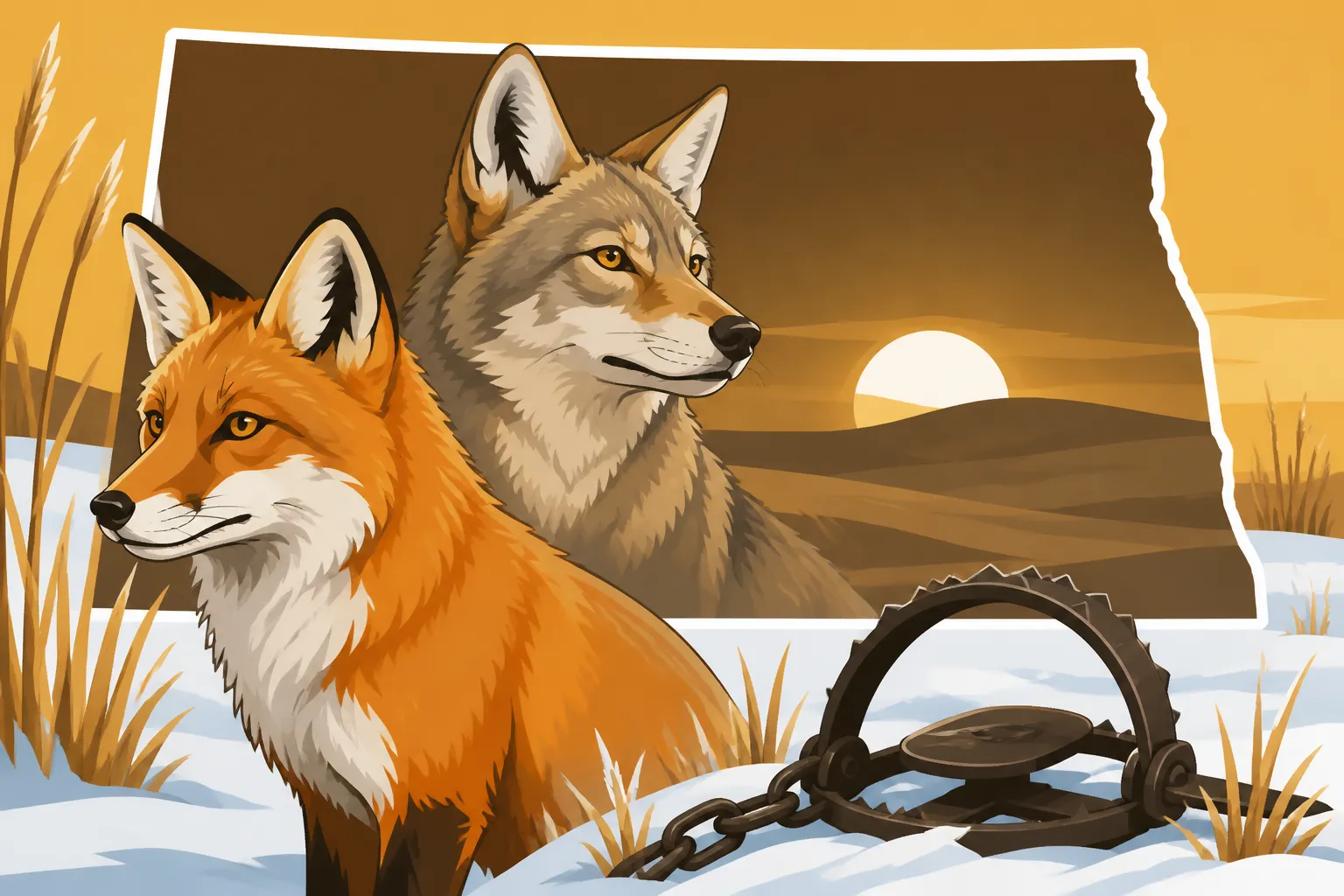
North Dakota Fox and Coyote Trapping Season
Navigating the regulations for trapping furbearers in North Dakota can feel like trying to untangle a stubbornly knotted fishing line, especially when you're keen to target cunning predators like foxes and coyotes. These animals are abundant across the prairie, but without a clear understanding of season dates, permissible methods, and licensing, you risk wasting valuable time or, worse, running afoul of the law. This comprehensive guide is designed to clarify the specific rules and offer practical insights for a successful North Dakota fox and coyote trapping season.
Understanding North Dakota's Fox and Coyote Trapping Seasons
One of the most appealing aspects of pursuing foxes and coyotes in North Dakota is the extended season, which differs significantly from many other furbearer or big game seasons. However, "extended" doesn't mean "unregulated," and knowing the precise dates and what permits you need is paramount before you even think about setting your first trap.
General Season Dates and Residency Rules
For resident trappers, the fox and coyote trapping season in North Dakota is often open year-round. Yes, you read that right – 365 days a year for those of us who call the Flickertail State home! This incredible opportunity reflects the state's management goals for these prolific predators, recognizing their impact on game species and livestock. This continuous season offers immense flexibility, allowing you to focus on specific times of the year when fur quality is prime, or when other hunting seasons aren't taking up your time. Many trappers prefer the colder months, from late fall through winter, when fox and coyote pelts are at their thickest and most luxurious, fetching better prices if you're trapping for fur.
However, if you're coming from out of state, the rules shift considerably. Nonresident trapping is often restricted to specific time frames and might not be year-round. It’s absolutely critical for nonresidents to consult the North Dakota Game and Fish Department (NDG&F) official proclamation each year for precise dates, as these can be subject to change. These nonresident rules are in place to manage pressure on furbearer populations and often align with general furbearer seasons rather than the year-round resident exception. Always double-check the current year's regulations; never assume last year's rules still apply.
Licensing and Permitting Requirements
Before you even touch a trap, you need to ensure you're properly licensed. For residents, this typically means purchasing a valid General Game and Habitat License, which is a foundational requirement for almost any hunting or trapping activity in North Dakota. On top of that, you'll need a Furbearer License. These two licenses usually cover your resident fox and coyote trapping endeavors. The cost for these licenses is generally quite reasonable, making trapping an accessible pursuit for many. You can find specific details on the North Dakota Resident Base License Cost and the North Dakota furbearer license requirements.
For nonresidents, the licensing structure is often a bit more complex. You'll also need a nonresident version of the General Game and Habitat License, plus a nonresident Furbearer License. The costs for these can be substantially higher than resident fees, which is common across many states to prioritize resident opportunities. It’s imperative that nonresident trappers not only obtain the correct licenses but also pay close attention to the specific dates and potential unit restrictions that may apply to them, as these can limit where and when they can legally set traps. Don't forget that these licenses are typically valid for a specific license year, usually starting around September 1st.
Beyond the basic licenses, there might be specific unit restrictions or special permits depending on your exact trapping location, particularly if you're on federal lands like Waterfowl Production Areas or National Grasslands, or even some Wildlife Management Areas. While foxes and coyotes are widespread, some areas might have specific limitations on trap types or seasons to protect other species or manage public access. Checking with the local land management office or using mapping tools like GoHunt can help you understand these nuances, ensuring you stay compliant with all regulations.
Key Regulations for North Dakota Trappers
Once you have your licenses in hand and know the season dates, it's time to dive into the nitty-gritty of how you can legally trap foxes and coyotes. North Dakota has a comprehensive set of rules designed to ensure humane practices, public safety, and responsible furbearer management. Ignoring these details can lead to fines, confiscation of equipment, and even loss of trapping privileges.
Permissible Traps and Setback Distances
North Dakota permits a variety of trap types for foxes and coyotes, primarily focusing on foothold traps and snares. Body-gripping traps (like Conibears) are generally restricted to water sets or specific cubby sets to minimize incidental catches of non-target animals, especially larger game. When using foothold traps, there are often size limitations, ensuring the trap is appropriate for the target species without being overly large and potentially injuring larger animals. For instance, a trap like a #1.75 or #2 coilspring is commonly used for foxes, while a #3 or #4 is more suited for coyotes.
Snares are also a popular and effective tool for coyote and fox trapping in North Dakota's open country. However, snares come with their own strict regulations. They typically need to be equipped with a breakaway device and a stop to prevent them from closing too tightly, and they often have a maximum loop diameter. These measures are designed to increase the chance of non-target animals freeing themselves or to prevent strangulation of target animals once caught. You'll also find regulations on the height of the snare loop off the ground, often dictating a maximum height to minimize the risk to deer.
Perhaps one of the most crucial regulations involves setback distances. To ensure public safety and minimize conflicts with property owners, North Dakota has specific rules about how far traps must be set from dwellings, public roads, and other specific locations. For example, traps often cannot be set within a certain distance, like 50 feet, of a public road right-of-way, or a much greater distance from occupied dwellings without explicit permission. Always carry a measuring tape and err on the side of caution. Utilizing a mapping tool like GoHunt can help you identify these critical distances in relation to property lines and public access points when you're scouting.
Trap Check Requirements and Tagging
One of the fundamental ethical and legal responsibilities of any trapper is to regularly check their traps. In North Dakota, all traps, including snares, must typically be checked at least once every 48 hours. This requirement is in place for humane reasons, to minimize the suffering of any animal caught, and to ensure quick processing of the fur or release of non-target animals. Experienced trappers often aim to check their traps daily, especially in colder weather, to preserve fur quality and prevent an animal from being exposed to the elements for too long. Missing trap checks is a serious offense and can result in significant penalties.
Furthermore, every trap you set must be tagged with your name and address, or your North Dakota Game and Fish Department identification number. This tagging requirement is not just a formality; it allows wardens to identify the owner of the trap and ensures accountability. It’s also crucial if a trap is found or needs to be relocated. Ensuring your tags are legible, durable, and securely attached to each trap is a small but vital detail.
Landowner Permission and Public Land Access
North Dakota is largely comprised of private land, which means Getting Private Land Permission in North Dakota is an absolute must for successful and legal trapping. You cannot simply set traps on someone's land without explicit permission. This means knocking on doors, introducing yourself, and respectfully requesting permission. Building good relationships with landowners is essential for long-term trapping success. Many landowners appreciate trappers helping to manage predator populations, especially if they have livestock or game birds they are trying to protect. Always get permission before scouting or setting traps.
While much of North Dakota is private, there are also public lands available for trapping. Wildlife Management Areas (WMAs), National Grasslands like the Little Missouri National Grassland, and some State School Lands often permit trapping. However, each of these public land types may have their own specific rules or restrictions. For example, some WMAs might have different setback requirements or prohibit certain trap types. The PLOTS program (Private Land Open To Sportsmen) is primarily for hunting, and trapping on PLOTS land may not always be explicitly permitted, or may have restrictions, so always confirm with the NDG&F or the landowner if it's a private PLOTS tract. Tools like the Scouting PLOTS Land With the ND Hunt App can be invaluable for identifying public land boundaries, but always verify trapping allowances for specific parcels.
Here's a quick overview of key regulations:
| Regulation Aspect | Details for Fox and Coyote Trapping |
|---|---|
| Season Dates (Resident) | Typically year-round (365 days). Best fur quality is generally from late fall through winter. |
| Season Dates (Nonresident) | Specific, shorter seasons apply. Always check the current year's NDG&F proclamation. |
| Required Licenses | Residents: General Game and Habitat License + Furbearer License. Nonresidents: Nonresident General Game and Habitat License + Nonresident Furbearer License. |
| Permissible Trap Types | Foothold traps (size restrictions apply, e.g., #1.75 to #4). Snares (must have breakaway devices, stops, and height restrictions for deer protection). Body-gripping traps generally restricted to water or cubby sets. |
| Trap Checks | All traps and snares must be checked at least once every 48 hours. Daily checks are recommended for humane reasons and fur quality. |
| Tagging | Every trap/snare must be tagged with the trapper's name and address or NDG&F identification number. |
| Setback Distances | Specific distances from public roads, dwellings, and other areas. Always consult current proclamation for exact measurements (e.g., 50ft from public road right-of-way, greater from occupied buildings without permission). |
| Land Access | Private Land: Explicit landowner permission required. Public Land: Generally permitted on WMAs, National Grasslands, State School Lands, but specific area rules apply. Verify trapping allowances on PLOTS. |
| Baiting | While generally permitted, specific rules apply regarding the type of bait, how it's secured, and where it's placed to avoid attracting non-target animals or creating health hazards. |
Other Important Considerations: Baiting, Fur Handling, and Reporting
Baiting is a common and effective practice in fox and coyote trapping, but it's not without its rules. Generally, natural baits are preferred, and they must be secured in a way that prevents them from being carried off by non-target animals. The placement of bait can also be a factor, especially near residences or public areas. Be mindful of scent dispersal and how it might impact local wildlife or even domestic pets. It's often advisable to use smaller pieces of bait and integrate them into your set design (e.g., dirt hole sets) rather than scattering large quantities.
Once you've successfully harvested a fox or coyote, proper fur handling is paramount if you intend to sell the pelts. This involves skinning, fleshing, stretching, and drying the fur according to industry standards. Poor fur handling can drastically reduce the value of your catch. Many experienced trappers learn these skills through mentorship, workshops, or detailed guides. The NDG&F often provides resources or links to fur buyer information, which is helpful for those new to the trade.
Unlike deer or other big game, there's typically no mandatory reporting requirement for harvested foxes and coyotes. However, the NDG&F does conduct surveys and relies on voluntary reporting or harvest questionnaires to gauge furbearer populations and harvest trends. Participating in these surveys, when requested, helps the department make informed management decisions that benefit future trapping opportunities. Knowing about the North Dakota Fox and Bobcat Populations can give you a good context for management efforts.
Effective Strategies for North Dakota Fox and Coyote Trapping
Trapping isn't just about setting a legal trap; it's an art and a science, requiring a keen understanding of animal behavior, habitat, and local conditions. North Dakota's diverse landscapes, from rolling prairies to river bottoms, offer unique challenges and opportunities for the aspiring furbearer trapper.
Scouting for Productive Trap Locations
The most successful trappers are often the most diligent scouts. You can't just throw a trap anywhere and expect results. For foxes and coyotes, you're looking for signs of travel, feeding, and denning. Key areas to focus your scouting efforts include:
- Travel Corridors: Look for pinch points, fence lines, field edges, drainage ditches, and old trails that animals consistently use to move from bedding to feeding areas. A coyote will often take the path of least resistance, following a two-track road or a grassy strip along a field.
- Edge Habitats: The transition zones between different habitat types (e.g., CRP grass and a harvested cornfield, shelterbelt edge and open pasture) are often hotspots for predators. These areas provide cover, hunting opportunities, and natural travel routes. You can learn more about Hunting a Shelterbelt Edge for Deer, and similar principles apply to predators.
- Food Sources: Pay attention to areas with high rodent populations, deer carcasses, or even winter cattle pastures. Where there's food, predators will be close by.
- Sign: Look for tracks in mud or snow, scat (droppings), urine posts (often marked by coyotes), and diggings. Fresh sign is always best. A tool like GoHunt's mapping features can help you mark these locations and plan your trap lines efficiently, even noting things like past catch locations or observations.
- Wind and Topography: Understanding how wind affects scent dispersal is critical. Coyotes and foxes rely heavily on their sense of smell. Consider prevailing winds when choosing set locations, ensuring your lure scent carries into likely travel paths. Topography, such as coulees and draws, can funnel animals, making them excellent places for sets.
Choosing and Setting Your Traps
Once you've identified promising locations, selecting the right trap and set type is next. For both foxes and coyotes, dirt hole sets and flat sets are mainstays, mimicking natural digging sites or attractive spots for animals to investigate.
- Dirt Hole Set: This classic set involves digging a small, angled hole about 6-8 inches deep, typically at the base of a clump of grass or a mound of dirt. The trap is buried level with the ground in front of the hole, and then a strong lure or bait is placed inside the hole. The idea is that the animal investigates the hole, stepping on the hidden trap. This is highly effective because it appeals to their natural curiosity and hunting instincts.
- Flat Set: A flat set is simpler, often placed near a visual attractor like a tuft of grass, a fence post, or even a bone. No hole is dug; instead, the lure or bait is placed on the surface near the attractor, with the trap carefully buried in a natural-looking spot nearby. This set is less intrusive and can be great for wary animals or in areas where digging is difficult.
- Snares: When used correctly, snares can be incredibly efficient, especially in areas with heavy brush, fence lines, or narrow trails where coyotes and foxes are funneled. You need to ensure the snare is properly anchored, set at the correct height, and camouflaged. Understanding Running a Trapline in Rural North Dakota often involves mastering snaring techniques for both efficiency and ethical capture.
Regardless of the set type, meticulous trap preparation is key. Traps should be clean, scent-free (often boiled or dyed), and camouflaged to blend into the surroundings. Using local soil, grass, and leaves to cover the trap and blend the site is crucial for fooling these intelligent predators. Always wear clean gloves to prevent transferring human scent to your traps. Anchoring your traps securely is also non-negotiable, whether using rebar stakes, drag devices, or earth anchors, to prevent an animal from escaping with your equipment.
Predator Calling and Concurrent Methods
While this guide focuses on trapping, it's worth noting that some trappers combine methods or leverage knowledge from other predator pursuits. For example, understanding how coyotes respond to calls, as detailed in Coyote Calling North Dakota Farm Country or Predator Calling North Dakota's Badlands Draws, can inform your trapping strategy. If you know how coyotes typically approach a call, you might place your traps in analogous locations along their predicted approach vector.
Furthermore, being aware of the North Dakota Coyote Hunting Season Rules can help you understand overall pressure and animal behavior in your trapping areas. The year-round nature of the coyote season for residents means you might encounter situations where hunting and trapping activities occur in the same general area, necessitating good communication with other land users and adherence to all safety regulations.
Practical Considerations for the North Dakota Trapper
Trapping in North Dakota isn't just about seasons and sets; it's about preparedness, resilience, and respect for the land and its wildlife. The state's unique environment presents specific challenges and rewards.
Weather and Safety on the Trapline
North Dakota winters can be brutally cold, with heavy snow and strong winds. This weather significantly impacts your trapping efforts and personal safety.
- Cold Weather Gear: Dressing in layers, wearing insulated boots, and having a quality pair of gloves are non-negotiable. Frostbite can set in quickly.
- Vehicle Preparedness: Your vehicle is your lifeline on the trapline. Ensure it's in excellent mechanical condition, especially your battery and tires. Carry an emergency kit with extra food, water, blankets, a shovel, and recovery gear like a high-lift jack or traction boards. Getting stuck miles from pavement in a blizzard is a serious risk.
- Trap Check Challenges: Snow can bury traps, making them hard to find and check. Freezing rain can lock up trap mechanisms. You'll need tools like a small ice chisel or sturdy trowel to clear sets. Wind can blow snow over tracks, making scouting challenging.
- Ice Safety: If trapping near water, be extremely cautious about ice conditions. Never assume ice is safe.
- Communication: Always tell someone where you're going and when you expect to return. Cell service can be spotty in remote areas; consider a satellite communicator for emergencies.
Building Relationships and Ethical Practices
Successful long-term trapping in North Dakota hinges on good relationships, especially with landowners.
- Landowner Respect: Always ask permission, never assume. Respect their property, close gates, avoid driving in wet fields, and leave no trash. Offering landowners some processed fur or even some help around the farm can go a long way in maintaining access.
- Public Perception: Trapping sometimes faces scrutiny from the non-trapping public. By adhering strictly to regulations, checking traps regularly, and using humane methods, trappers contribute to a positive image of the activity. Quickly dispatching animals humanely and handling fur respectfully are ethical imperatives.
- Non-Target Animals: While sets are targeted, incidental catches can happen. Know how to safely and quickly release non-target animals like deer, domestic dogs, or even raptors. Some trappers carry specific tools for this purpose. This is why breakaway devices on snares and trap size limits are so important.
Keeping Current with Regulations
The North Dakota Game and Fish Department is the primary source for all current regulations. While guides like this provide an overview, the official proclamations are the final word.
- Annual Review: Always review the furbearer proclamation annually, usually released in late summer or early fall. Regulations can change based on population surveys, legislative action, or unforeseen circumstances.
- NDG&F Resources: The NDG&F website is an invaluable resource. They often have PDFs of the proclamations, interactive maps, and contact information for local game wardens or wildlife biologists who can answer specific questions. Tools like GoHunt can also often help consolidate and interpret these regulations, but always cross-reference with the official source.
- Stay Informed: Join local trapping associations or online forums where North Dakota trappers share information and discuss changes. Staying connected with the trapping community can help you adapt to new challenges and improve your skills.
Trapping foxes and coyotes in North Dakota is a challenging but rewarding pursuit, offering a unique connection to the landscape and its wildlife. By understanding the seasons, meticulously following regulations, and embracing ethical practices, you can enjoy a successful and responsible trapping season for years to come.
Disclaimer
This guide is intended for informational purposes only and is not a substitute for the official North Dakota Game and Fish Department hunting and trapping proclamations. Regulations can change annually. Always consult the most current official sources before participating in any hunting or trapping activities.