North Dakota Bison Before European Settlement
It's easy to look at the wide-open spaces of North Dakota today and envision the deer, pheasant, and waterfowl that call it home, but what about the undisputed monarch of the prairie? Many folks don't fully grasp the sheer magnitude of bison across this landscape before European settlers arrived, and this guide will take you on a journey back in time to understand their ecological dominance and profound impact.
The Undisputed Monarchs of the Prairie: Bison Across Pre-Settlement North Dakota
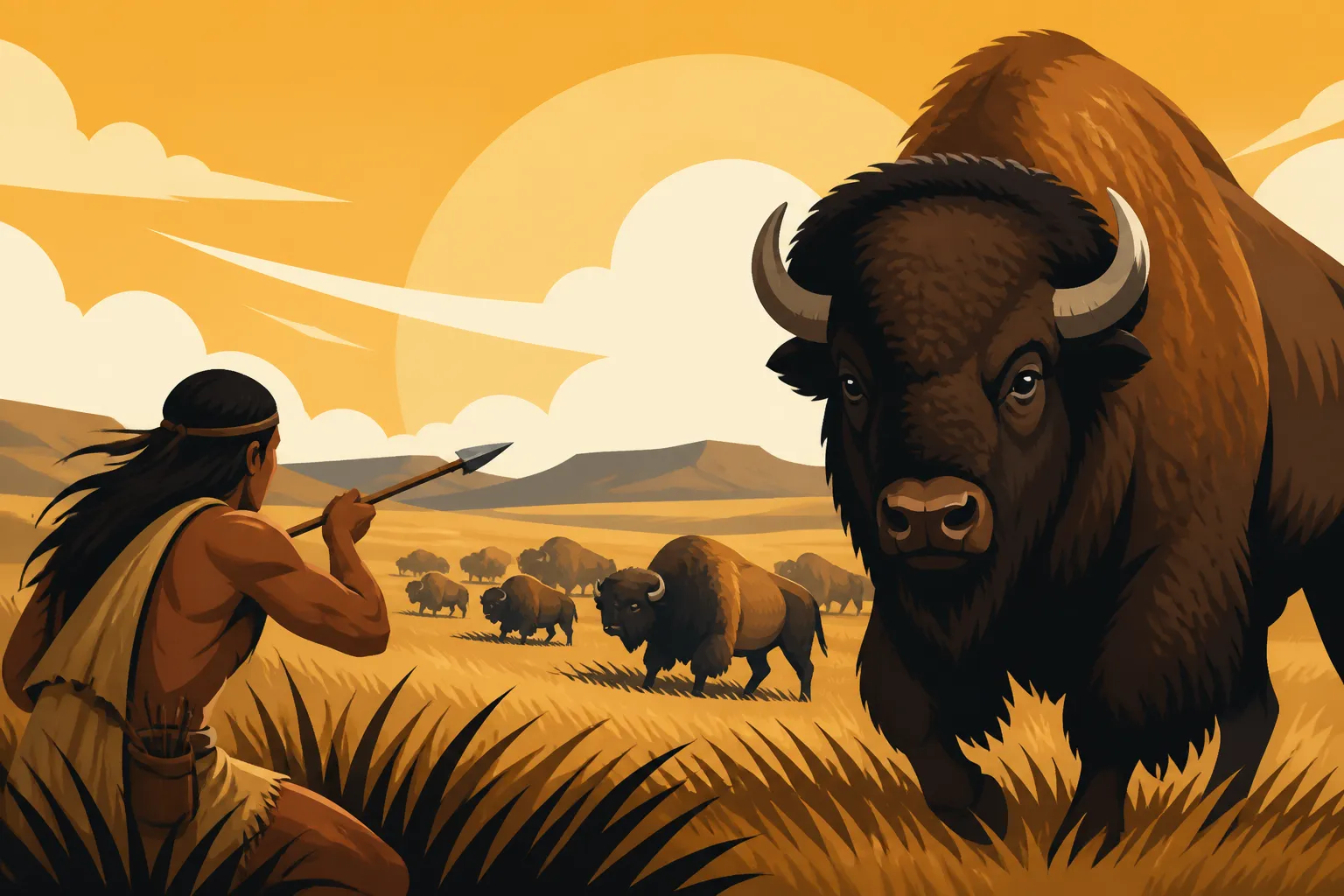
Before the arrival of European settlers and the subsequent westward expansion forever altered the North American landscape, the vast prairies of what is now North Dakota were dominated by an animal so numerous, it defied modern comprehension: the American bison, often simply called buffalo. These magnificent creatures weren't just another species; they were the very architects of the prairie ecosystem, shaping the land, dictating the movements of other animals, and serving as the lifeblood for Indigenous cultures. Their presence wasn't merely significant; it was the defining characteristic of the North Dakota plains for millennia.
Imagine standing on a small rise near the Missouri River breaks, perhaps a spot not far from where you might now be Hunting North Dakota's Missouri River Corridor, and seeing a horizon that literally moved with the tide of thousands upon thousands of shaggy beasts. It wasn't a rare sight; it was the everyday reality for countless generations. The sheer scale of these herds often leaves modern minds struggling to grasp the immensity. Early explorers' accounts, which sometimes seem fantastical, often speak of herds stretching for miles, taking days to pass a single point. This wasn't exaggeration; it was a snapshot of a natural world brimming with life on a level we can scarcely imagine today. The prairie was a living, breathing entity, and the bison were its beating heart.
Estimating Pre-Settlement Bison Numbers
While precise figures are impossible to ascertain, historical records, archaeological findings, and ecological models paint a picture of truly astronomical bison populations across the Great Plains, including North Dakota. Estimates for the total North American bison population before European contact range widely, often citing figures between 30 and 60 million animals. North Dakota, with its rich grasslands and abundant water sources, would have hosted a significant portion of this population, especially across the central and western prairie pothole regions and the Badlands.
Consider the implications of such numbers. These weren't isolated pockets of animals; they were dense, migratory populations that moved in unison, guided by instinct and the seasonal availability of forage and water. Thinking about the sheer biomass represented by tens of millions of large herbivores can put into perspective the immense productivity of the pre-settlement prairie ecosystem. These animals formed an integral part of a complex food web, supporting an equally robust predator population of wolves, bears, and other carnivores. Trying to wrap your head around such a dynamic system is a challenge, even with all our modern data and mapping capabilities, much like how today's hunters use advanced mapping platforms (such as those offered by GoHunt) to understand modern game distribution and movement patterns, albeit on a far smaller scale.
Bison as Ecosystem Engineers
The term "ecosystem engineer" perfectly describes the bison's role on the North Dakota prairie. These weren't passive residents; they were active shapers of their environment, constantly modifying the landscape through their grazing, trampling, wallowing, and fertilizing activities. Their presence created a mosaic of habitats, contributing to the incredible biodiversity of the prairie.
Their incessant grazing, for instance, prevented woody encroachment, maintaining vast expanses of grassland that benefited other prairie species like Sharptail Grouse and Hungarian Partridge in North Dakota. By selectively grazing certain grasses and forbs, they promoted a greater diversity of plant life, creating varied forage opportunities for themselves and others. Their hooves, constantly churning the soil, helped to break up tough sod, aerate the earth, and distribute seeds, aiding in plant propagation. Wallowing, where bison roll in dusty depressions, created temporary pools that collected water, providing crucial drinking spots for smaller animals and insects, and often becoming prime amphibian habitat. Even their dung, rich in nutrients, provided fertilizer for the soil and food for countless insects, playing a vital role in nutrient cycling. The prairie ecosystem was in a constant dance with the bison, a relationship that evolved over thousands of years and created a highly resilient and productive landscape.
Bison Life on the Pre-Settlement North Dakota Prairie
The life of a bison before European settlement was one of constant movement, driven by the rhythms of the seasons and the search for sustenance. These animals were perfectly adapted to the harsh realities of the prairie, from scorching summers to brutal North Dakota winters, a far cry from the more structured environment you might encounter today, even when Hunting North Dakota's Badlands Mule Deer Country. Their social structure, migratory patterns, and dietary habits were finely tuned to maximize survival and thrive in an environment that demanded resilience.
Their sheer adaptability meant they could endure conditions that would decimate lesser animals. Thick winter coats provided insulation against blizzards and extreme cold, while their broad heads and powerful necks were ideal for "plowing" through deep snow to reach buried forage. During the hot summers, they sought out wallows to cool off and rid themselves of insects, further reinforcing their role as landscape modifiers. Understanding these historical patterns gives us a deeper appreciation for the modern challenges facing wildlife management, where tools for analyzing habitat, like those found on platforms such as GoHunt, are essential for tracking and protecting species.
Migratory Patterns and Herd Dynamics
The bison of North Dakota were highly migratory, their movements often stretching for hundreds of miles each year. While there wasn't a single, monolithic migratory route across the entire continent, local and regional herds exhibited distinct seasonal movements. These patterns were primarily driven by the availability of fresh forage, water sources, and protection from severe weather or predators.
Spring saw herds moving to new growth areas after the long winter, often following rivers and streams as green-up occurred. Summer movements might have been more localized, driven by daily forage needs and access to water, while fall heralded a shift towards areas with abundant browse and richer grasses in preparation for winter. These migrations weren't random; they were incredibly complex, almost like a living map, responding to rainfall, fire, and even the grazing patterns of the herd itself. The lead cows, often the oldest and most experienced, would guide the herd, passing down generations of knowledge about the land. Such intricate, large-scale movements underscore how deeply interwoven bison were with the very fabric of the North Dakota ecosystem, much like understanding the nuanced movements of White-Tailed Deer Across North Dakota requires a deep knowledge of their seasonal habits.
Diet and Physical Characteristics
Bison are primarily grazers, meaning their diet consisted almost entirely of grasses and sedges. Their digestive systems are incredibly efficient at breaking down tough fibrous plant material, allowing them to thrive on the abundant, though sometimes nutrient-poor, prairie vegetation. This specialization in grass consumption meant they directly competed with few other large herbivores, allowing them to achieve their massive numbers.
Physically, the American bison is a marvel of evolutionary adaptation. Males, or bulls, could weigh over 2,000 pounds and stand six feet tall at the shoulder, with massive heads and powerful humps built for pushing through snow and fighting. Females, or cows, were smaller but still formidable, typically weighing between 800 and 1,200 pounds. Both sexes possess sharp, curved horns used for defense and in dominance displays. Their shaggy, dark brown coats provided exceptional insulation. Their sheer size, combined with their herd mentality, made them incredibly resilient against predators and the elements.
| Characteristic | Bison (Pre-Settlement) | White-Tailed Deer | Mule Deer | Elk | Pronghorn |
|---|---|---|---|---|---|
| Primary Diet | Grasses, Sedges | Browse, Forbs | Browse | Grasses, Browse | Forbs, Sagebrush |
| Average Weight (Adult Male) | 1,500-2,000+ lbs | 150-300 lbs | 200-450 lbs | 700-1,000 lbs | 100-150 lbs |
| Social Structure | Large Herds, Migratory | Small Groups/Solitary | Small Groups/Solitary | Herds, Migratory | Herds, Migratory |
| Habitat Preference | Open Prairie, Grassland | Timber, River Bottoms | Badlands, Rough Terrain | Forests, Openings | Open Prairie |
| Ecosystem Role | Ecosystem Engineer | Browse Specialist | Browse Specialist | Grazing/Browsing | Forb Specialist |
The Intertwined Lives: Indigenous Peoples and Bison
For thousands of years before European settlement, the Indigenous peoples of the Great Plains, including numerous tribes in what would become North Dakota, lived in a profound and symbiotic relationship with the bison. The bison was not just a food source; it was the cornerstone of their culture, spirituality, and very existence. This relationship was deeply respectful and sustained, a testament to living in harmony with the natural world.
From the Mandan and Hidatsa who lived in earthlodge villages along the Missouri River, combining agriculture with bison hunting, to the nomadic Lakota and Dakota who followed the herds across the vast grasslands, every aspect of life was influenced by the buffalo. The survival of these communities hinged on their intimate understanding of bison behavior, migration patterns, and the skills required to hunt them effectively. This deep connection formed the bedrock of their societies, shaping their beliefs, their social structures, and their daily routines. It's a stark contrast to how modern societies often view natural resources, though contemporary efforts like those promoted by platforms such as GoHunt to connect hunters with responsible resource management hint at a return to a more holistic understanding.
Sustenance and Survival
The bison provided everything necessary for survival. Meat was the primary food source, eaten fresh, dried into jerky (pemmican), or stored for winter. Every part of the animal was utilized, ensuring nothing went to waste. Hides were processed into robes for warmth, coverings for tipis, and leather for clothing, bags, and countless other items. Bones were fashioned into tools, utensils, and weapons. Horns became cups, spoons, and ceremonial objects. Tendons were used for thread and bowstrings. The stomach and bladder served as containers for water and food. Even dung, or "buffalo chips," was used as fuel for fires on the treeless plains.
This incredible utilization meant that a successful bison hunt was not merely a meal; it was a renewal of resources for the entire community. The efficiency and respect with which Indigenous peoples used the bison stands as a powerful example of sustainable living, a concept many modern conservationists strive to emulate in managing contemporary game species such as Moose and Bighorn Sheep in North Dakota.
Cultural and Spiritual Significance
Beyond its practical uses, the bison held immense cultural and spiritual significance for Indigenous peoples. It was revered as a sacred animal, a giver of life, and a powerful symbol of strength, resilience, and abundance. Many ceremonies, dances, and rituals were directly tied to the bison, honoring its spirit and seeking its continued presence. Storytelling, art, and oral traditions often featured the buffalo as a central figure, passing down knowledge, values, and history through generations.
The communal bison hunt itself was a spiritual act, often preceded by prayers and rituals, and followed by thanksgiving ceremonies. It was an event that brought communities together, reinforcing social bonds and shared purpose. The deep respect shown to the animal's spirit was integral to the hunt, a recognition that taking a life was a sacred act, not to be done lightly or without gratitude. This reverence for the natural world and its creatures is a profound lesson that resonates deeply, reminding us that hunting is often more than just a pursuit of game; it's a connection to something ancient and essential.
The Early Whispers of Decline and Enduring Legacy
While the catastrophic decline of the bison largely occurred after widespread European settlement and industrial hunting, the earliest whispers of trouble for the immense herds began even before the full force of westward expansion hit North Dakota. Understanding these precursors and the eventual impact helps us appreciate the scale of loss and the enduring legacy of this magnificent animal, especially when considering the modern challenges of maintaining healthy wildlife populations, like North Dakota Deer Population Estimate.
The changes were subtle at first, perhaps unnoticed amidst the vastness, but they set the stage for the dramatic alterations that would follow. It's a somber chapter in North Dakota's natural history, but one that offers crucial lessons in conservation and the delicate balance of ecosystems.
Pre-Colonial Impacts and European Diseases
Even before large numbers of European settlers arrived, the introduction of diseases by earlier explorers and traders had devastating effects on Indigenous populations, which indirectly impacted the bison. As Indigenous communities, who were the primary managers and users of the bison resource, faced widespread epidemics, their ability to conduct large-scale, coordinated hunts may have been temporarily disrupted in some areas. While not a direct cause of bison decline, it represents an early layer of external impact on the human-bison relationship.
Furthermore, the early trade in furs and hides, though initially focused on smaller furbearers, gradually began to include bison hides. While this early trade was nowhere near the scale of later commercial hunting, it introduced an economic incentive for killing bison that transcended the immediate needs of sustenance and cultural use. These were faint precursors, but they signify the initial shifts in how humans interacted with the vast bison herds of North Dakota.
The Landscape of Change: Early Influences
As the 19th century progressed, the encroaching frontier brought more substantial changes. The establishment of trading posts, military forts, and early settlements, even if small, began to fragment traditional bison migration routes. While the herds were still immense, these localized disturbances started to create subtle barriers, potentially altering seasonal movements and increasing pressure in certain areas. The introduction of horses to Indigenous cultures, while revolutionizing their hunting capabilities and allowing for more efficient pursuit of bison, also meant a potential for greater harvest. This was still within a sustainable framework for most tribes, but it changed the dynamic of the hunt.
The eventual arrival of the railroad, though beyond the scope of "before European settlement" in its full impact, was foreshadowed by exploratory expeditions and surveying parties. These early incursions, though temporary, represented the cutting edge of a technological and cultural force that would eventually, and rapidly, dismantle the prairie ecosystem that bison had shaped for millennia. The shift from a subsistence and spiritual economy to one driven by commerce and conquest would prove to be the ultimate undoing of the vast bison herds.
Relearning the Past for Future Conservation
Today, while wild bison exist in North Dakota, primarily in national parks and on tribal lands, they are a mere shadow of their former glory. Understanding their historical dominance and ecological role provides invaluable lessons for modern conservation efforts. It teaches us about the resilience of nature, the delicate balance of ecosystems, and the profound impact of human actions. Studying the bison's story helps us appreciate the importance of maintaining large, interconnected habitats and managing wildlife populations with a holistic perspective.
For those interested in the grand ecological narratives of North Dakota, reflecting on the bison's pre-settlement reign helps contextualize every aspect of our wild spaces, from our North Dakota Mule Deer Range to the North Dakota Waterfowl Production Areas. It reminds us that the land we hunt and appreciate today carries the indelible imprint of these magnificent giants, and that respecting their legacy means striving for robust and healthy ecosystems for all species.
Disclaimer
This article is for general informational purposes only and does not constitute professional advice. Laws, prices and regulations vary by location and change over time. Consult a qualified professional for guidance on your specific situation.