Sharptail Grouse and Hungarian Partridge in North Dakota
For many of us who love chasing birds across the vast North Dakota landscape, there's a unique thrill, and sometimes an equal amount of frustration, in pursuing sharptail grouse and Hungarian partridge. These aren't your typical pheasants that often hold tight in dense cover; sharps and Huns are notoriously wary, fast-flying, and can disappear into seemingly barren land in the blink of an eye. This guide is here to demystify hunting these incredible birds, offering deep insights into their habits, habitats, and how to put a few in the bag.
An Introduction to North Dakota's Agile Upland Duo
North Dakota is a treasure trove for upland bird hunters, and while pheasants often steal the spotlight, the state's native sharptail grouse and introduced Hungarian partridge offer a distinctly challenging and rewarding experience. These birds represent the wild heart of the prairie, thriving in landscapes that would seem barren to many, but are, in fact, rich with life and opportunity. The journey to understand and successfully hunt these birds is as much about appreciating their resilience and the unique ecosystems they inhabit as it is about developing hunting skill.
The Allure of Sharptail Grouse and Hungarian Partridge
There's something incredibly captivating about these two species. Sharptails, with their intricate mating dances on ancestral leks and their explosive flush from mixed-grass prairie, embody the spirit of the untamed West. Huns, on the other hand, often found in coveys on field edges or shelterbelts, are a testament to successful introduction, offering fast, acrobatic flight that tests even the most seasoned wingshooter. The challenge lies in their unpredictability and their ability to use the subtle contours of the land to their advantage, making every successful hunt feel like a hard-earned victory. For many, the quiet walk on a crisp autumn morning, anticipating the sudden flush, is the true prize.
Why They Present a Unique Hunting Challenge
Unlike the more predictable pheasant, which often prefers thicker, heavier cover, sharptails and Huns thrive in more open environments. Sharptails will hold in native prairie grasses or sagebrush, often flushing well out of range if you don't approach carefully or have a good dog. Huns, while sometimes found near agricultural fields, often stick to sparse cover, fencelines, and even bare ground, making them incredibly difficult to sneak up on. Their coveys can erupt in a flurry of wings, scattering in multiple directions, demanding quick reflexes and precise shooting. The wide-open spaces of North Dakota mean these birds have vast areas to roam, and finding them often requires covering a lot of ground and keen observational skills. It's not uncommon to walk miles without seeing a bird, only to stumble into a large covey when you least expect it.
Understanding Sharptail Grouse: Prairie Dancers
Sharptail grouse are truly a bird of the prairie, ingrained in the landscape and its history. Their presence is a good indicator of healthy grassland ecosystems, and hunting them connects you directly to the wild heart of North Dakota. To truly appreciate them, you need to understand their lifestyle, from their unique mating rituals to their preferred habitats.
Identifying North Dakota's Sharptails
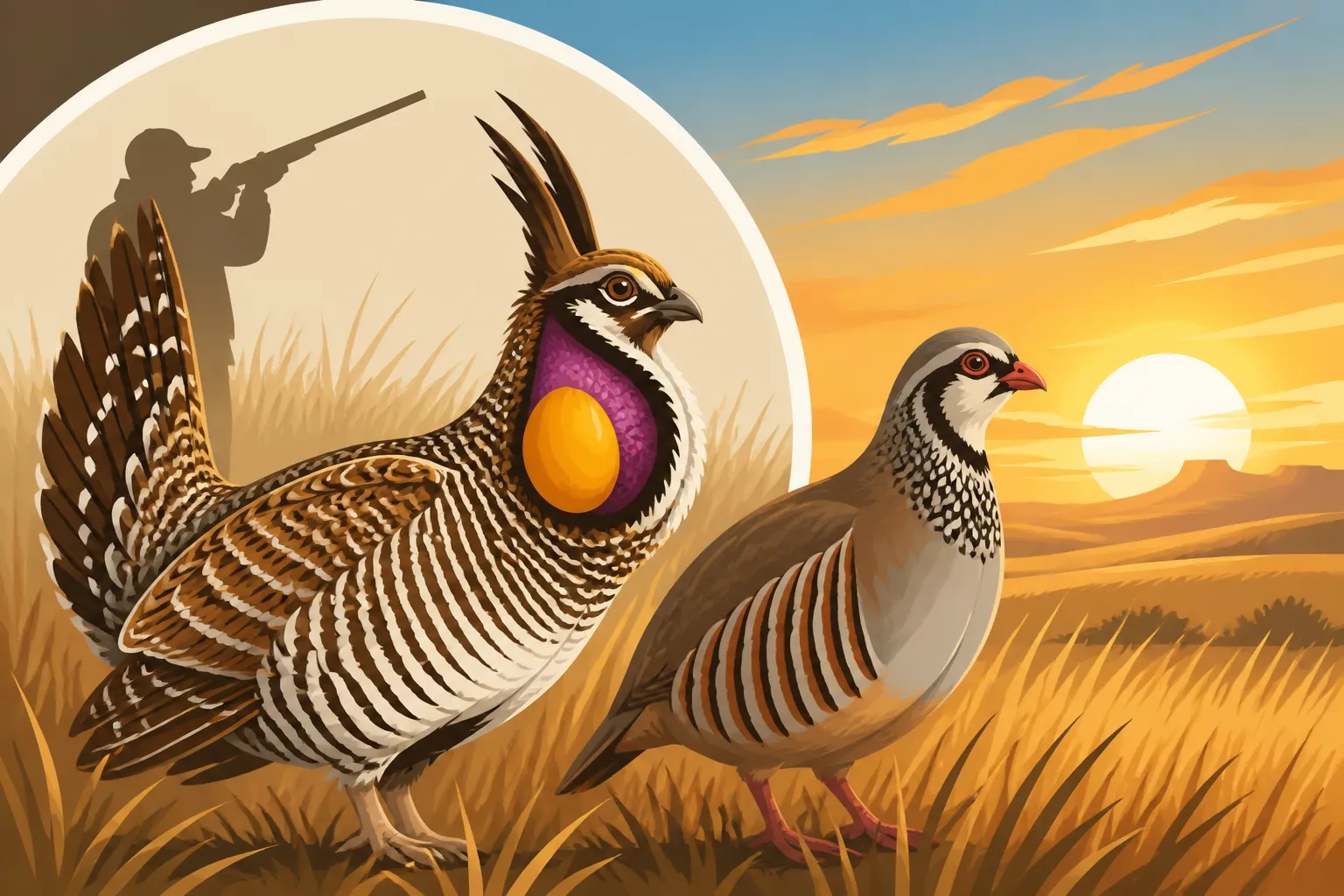
Sharptails are medium-sized upland birds, a bit smaller than a pheasant but larger than a partridge. They have a distinctive, pointed tail (hence "sharptail"), which is often held upright when they flush or strut. Their plumage is a beautiful blend of mottled browns, grays, and whites, providing excellent camouflage against the prairie landscape. Look for their light-colored belly and the V-shaped markings on their breast. In flight, their wings beat rapidly, producing a characteristic whirring sound, and they often glide after an initial burst, sometimes covering significant distances. Differentiating them from pheasants is easy by their tail, and from partridge by their larger size and habitat. Knowing these details helps ensure you're targeting the right species and adhering to bag limits.
Preferred Habitats and Behavior
Sharptails are inextricably linked to native prairie grasslands, particularly those with a mix of tall and short grasses, interspersed with brushy draws, sagebrush, and patches of woody cover like buffaloberry or chokecherry. These areas provide everything they need: food, nesting cover, and escape routes from predators. You'll often find them on elevated positions in the mornings, warming themselves in the sun, or along the edges of fields where they can feed on waste grains or forbs. During the heat of the day, they might seek refuge in denser coulees or brushy bottoms.
Their behavior is what makes them so challenging. They are notorious for flushing wild, often 50-70 yards out, especially if they've been pressured. However, with good dog work, or by approaching carefully into the wind, you can sometimes get them to hold tighter. In the early season, coveys might be smaller, but as fall progresses, they often group into larger flocks, sometimes numbering in the dozens, which can make for an exciting, albeit chaotic, flush. They are creatures of habit, often returning to the same areas year after year, especially their traditional dancing grounds or "leks" in the spring.
Sharptail Population Trends in North Dakota
North Dakota has a robust sharptail grouse population, often fluctuating with habitat conditions and winter severity. The state's vast expanses of mixed-grass prairie, including areas managed under the PLOTS (Private Land Open to Sportsmen) program and various Wildlife Management Areas, provide critical habitat. Droughts can impact nesting success, and severe winters can affect survival, but generally, the North Dakota Game and Fish Department (NDGFD) monitors populations closely through spring lek counts and summer brood surveys. These surveys provide valuable insights into bird numbers and inform season recommendations. Lately, North Dakota Sharptail Grouse Population numbers have shown resilience, often bouncing back after tough years, which is great news for hunters. It's a testament to the health of the prairie and ongoing conservation efforts.
The Elusive Hungarian Partridge: Farmland Phantoms
The Hungarian partridge, often simply called "Huns" by hunters, is another incredible upland bird that calls North Dakota home. Originally introduced from Europe, these birds have found a niche in the state's agricultural landscape, offering fast-paced, often surprising hunting opportunities that require a keen eye and quick reflexes.
Identifying North Dakota's Hungarian Partridge
Hungarian partridge are smaller than sharptails, roughly the size of a pigeon, with a compact, rotund body. Their plumage is a beautiful, intricate mix of grays, browns, and chestnut, with fine barring on their flanks and a distinctive reddish-brown patch on their face and throat. Males often have a more pronounced dark, horseshoe-shaped patch on their lower breast, though this can vary. In flight, they reveal rusty-colored tail feathers, which is a key identifying feature, and they fly with incredibly rapid wingbeats, often in a tight covey formation. They also have a characteristic "kee-kee" call that they use to communicate, especially when flushed and trying to regroup. If you hear that sound, get ready!
Preferred Habitats and Behavior
Huns are perfectly adapted to the mosaic of agricultural lands and open prairie in North Dakota. You'll typically find them in areas with a mix of croplands (especially small grain fields like wheat or barley), fencelines, grassy field margins, shelterbelts, and sparse native prairie. They love edge habitat – the transition zones where one type of cover meets another. These areas provide both food (seeds, waste grain, insects) and escape cover.
Their behavior is what makes them so challenging and exciting. Huns are almost always found in coveys, which can range from a few birds to over twenty. They are notorious for running before flushing, making them incredibly frustrating for hunters and dogs alike. You might see them scurrying along a fenceline, only for them to disappear into thin air. When they do flush, they do so as a tightly packed covey, exploding into the air with incredible speed and often banking and weaving, making them tough targets. After an initial flush, the covey will often scatter, and diligent hunters can then work to find the singles, which tend to hold tighter. This "flush and scatter" tactic is a classic Hun hunting scenario.
Hungarian Partridge Population Trends
Like sharptails, Hungarian partridge populations in North Dakota are influenced by weather patterns, particularly nesting success, and habitat availability. They generally thrive in years following mild winters and with good nesting cover. The NDGFD tracks their numbers through roadside counts and hunter harvest data, which helps them set season lengths and bag limits. While not as numerous as pheasants, North Dakota Hungarian Partridge Origins and their continued presence are a testament to their adaptability and the suitability of North Dakota's agricultural landscape. Their numbers can fluctuate more dramatically than sharptails, sometimes seeing impressive spikes after several favorable years. This resilience keeps hunters coming back year after year, hoping for that banner season.
Prime Habitats and Where to Find Them
Knowing where to look is half the battle when hunting sharptails and Huns in North Dakota. These birds aren't uniformly distributed across the state; they concentrate in specific types of habitat. Understanding these prime areas and how to identify them on a map or on the ground is crucial for success.
Key North Dakota Regions for Upland Birds
North Dakota offers diverse landscapes, and different regions tend to favor one bird over the other, though overlap is common.
- Western North Dakota (Badlands and Surrounding Prairie): This is prime sharptail country. The rugged Badlands, with its mix of native prairie, sagebrush flats, and brushy coulees, provides ideal habitat. Counties like Billings, McKenzie, and Slope are well-known for their sharptail opportunities. You'll also find Huns here, often concentrated along the edges of agricultural fields that border the native prairie. The sheer vastness of the public lands, like the Little Missouri National Grassland, can be overwhelming but also offers incredible solitude.
- Central North Dakota (Prairie Pothole Region): While famous for waterfowl, the central part of the state also holds good numbers of both sharptails and Huns. Sharptails will utilize native prairie remnants, CRP (Conservation Reserve Program) fields, and grassy waterways. Huns are particularly strong here, thriving in the mosaic of small grain fields, hayland, and shelterbelts. The abundance of Waterfowl Production Areas (WPAs) and North Dakota Wildlife Management Areas can provide excellent opportunities if you're willing to walk.
- Eastern North Dakota (Red River Valley Edges): While the Red River Valley itself is intensely agricultural and less ideal for upland birds, the transition zones to the west can hold good populations of Hungarian partridge, especially in counties like Ransom and Sargent. Sharptails become less common as you move east, as the native prairie gives way to more cultivated land. Focus on areas with diverse crop rotations, fencelines, and small patches of cover.
Spotting Productive Cover Types
When you're out in the field, or even scouting from your truck or with a mapping app like GoHunt, look for specific features that scream "upland bird habitat."
- Mixed-Grass Prairie: For sharptails, this is king. Look for areas where taller grasses are interspersed with shorter, often grazed, sections. Brushy draws and coulees breaking up the prairie provide crucial thermal cover and escape routes. Think about areas where Sharptail Grouse Hunting Mixed Grass Prairie would be ideal.
- Field Edges and Fencelines: Huns absolutely love these linear features. They use them to travel, feed, and escape predators. Areas where stubble fields meet grassy ditches or shelterbelts are prime Hun territory.
- Shelterbelts and Tree Rows: These provide critical winter cover and often hold both Huns and, less commonly, sharptails seeking refuge from the wind and snow. They are also excellent places for birds to roost overnight.
- CRP and Hayland: These managed grasslands can offer excellent nesting and foraging cover for both species. Don't overlook large CRP tracts, especially those with some topographical variation or nearby food sources.
- Drainage Ditches and Coulees: These low-lying areas often accumulate more moisture, leading to denser vegetation and provide excellent thermal and escape cover, particularly for sharptails.
Essential Gear and Tactics for Success
Hunting sharptails and Huns requires specific gear and a strategic approach. These aren't sit-and-wait hunts; they demand mobility, keen observation, and often, the companionship of a good bird dog. Let's delve into what you'll need and how to approach these fast-flying birds.
Shotguns, Loads, and Chokes
Choosing the right firearm and ammunition can make a significant difference.
- Shotguns: Most upland hunters prefer a fast-handling shotgun for these quick-flushing birds. 12-gauge and 20-gauge are the most popular choices. A 20-gauge is often favored for its lighter weight, making it easier to carry during long walks, and its sufficient power for these smaller birds. Over/under, side-by-side, or semi-automatic actions are all perfectly suitable, it really comes down to personal preference and fit.
- Loads: For both sharptails and Huns, which are generally smaller and less hardy than pheasants, lighter loads and smaller shot sizes are often preferred. #6 or #7.5 shot are excellent choices, offering a dense pattern for good coverage. Some hunters even opt for #5 shot if they expect longer shots on sharptails. You want enough pellets to ensure a clean kill without over-damaging the meat.
- Chokes: Given the varying flush distances, a modified choke is a fantastic all-around choice. It provides a good balance between pattern density for close-range flushes and sufficient range for those birds that get up a bit further out. For tighter holding birds, an improved cylinder might be beneficial, while more open country hunters might consider a light modified or even full for sharptails that get up wild.
Dog Work and Strategies
A good bird dog is perhaps the most valuable asset when hunting sharptails and Huns. Their ability to find scent, hold birds, and retrieve downed game vastly increases your success and enjoyment.
- Pointing Dogs: Breeds like German Shorthaired Pointers, English Pointers, Brittanys, and Setters are excellent for sharptails and Huns. They range wide to cover ground, find scent, and then hold the birds on point, allowing you to approach for the flush. Their methodical work is crucial for birds that run. When Running Pointing Dogs on North Dakota Pheasant, the same principles apply to these other upland species. Remember that these birds can be "runners," meaning the dog might have to relocate multiple times before pinning them.
- Flushing Dogs: Labs, Springers, and other flushing breeds can also be effective, especially for Huns that tend to hold tighter after the initial covey flush. The key is to work them thoroughly through cover, ensuring they push birds into the air within shooting range.
- Working without a Dog: While more challenging, hunting without a dog is certainly possible. You'll need to focus on methodical walking, pausing frequently to try and make nervous birds flush, and being keenly aware of escape cover and wind direction. Walking slowly into the wind, especially along fencelines or coulee edges, can sometimes allow you to get closer to coveys.
Scouting and Field Tactics
Success often hinges on thorough scouting and smart field tactics.
- Pre-Season Scouting: Use online mapping tools like GoHunt, satellite imagery, and even drive county roads to identify promising habitat before the season opens. Look for the mix of habitat types discussed earlier. Pay attention to water sources and potential roosting cover. Scouting PLOTS Land Before Season is always a good idea, as bird numbers and habitat can change annually.
- Working the Wind: Always try to hunt into the wind. This allows your scent to blow away from the birds, giving you a better chance to approach unnoticed. It also aids your dog in picking up scent and can help hold birds tighter for the flush.
- Walking Patterns: Don't just wander aimlessly. For sharptails, systematically grid larger prairie tracts, paying special attention to draws, ridges, and transitions in vegetation. For Huns, focus on linear features: fencelines, shelterbelt edges, and the borders between different crop fields. When Walking North Dakota PLOTS Land for Pheasant, apply similar systematic approaches for these smaller birds.
- Post-Flush Strategy: When a covey of Huns flushes and scatters, mark where individual birds land. Wait a few minutes, then work those scattered singles, as they often hold much tighter than the original covey. This can turn a single flush into multiple shooting opportunities. For sharptails, they often fly long distances, so marking their general direction is key for potential follow-up, though often less productive than with Huns.
Hunting Regulations and Conservation Efforts
Understanding North Dakota's hunting regulations and the conservation efforts protecting these species is paramount for any responsible hunter. These rules are in place to ensure healthy populations for future generations and to provide fair chase opportunities.
Season Dates and Bag Limits
The North Dakota Game and Fish Department (NDGFD) sets specific season dates and bag limits annually. These are crucial details to check before every hunting season, as they can sometimes change based on population surveys and habitat conditions.
- Season Dates: Typically, the season for both sharptail grouse and Hungarian partridge opens in early September and extends through early January. This long season allows hunters to pursue birds from the early fall, when birds are often in smaller family groups and habitat is dense, through the late season, when snow can concentrate birds and make them easier to locate. Always consult the current year's proclamation for exact dates. You can find comprehensive details in the North Dakota Pheasant and Upland Season Rules booklet issued by the NDGFD.
- Daily Bag Limit: For both species, the daily bag limit is generally three birds per hunter. This means you can harvest three sharptails and three Huns in a single day.
- Possession Limit: The possession limit is usually twice the daily bag limit, so six sharptails and six Huns. This limit applies to birds in your immediate possession, in cold storage, or being transported.
- Blaze Orange Requirements: While not strictly mandatory for upland bird hunting in North Dakota, wearing blaze orange or pink is highly recommended for safety, especially on public lands where other hunters might be present. Check the North Dakota Blaze Orange Requirements for specific situations where it might be required.
License Requirements and Hunter Education
Before heading afield, ensure you have all the necessary licenses and certifications.
- Licenses: All hunters, resident and nonresident, must possess a valid North Dakota hunting license. This typically includes a general game and habitat license, and specific licenses for upland birds. Nonresidents have specific upland game license options. It's imperative to buy your licenses well in advance and carry proof while hunting. You can purchase them online through the NDGFD website.
- Hunter Education: Anyone born after December 31, 1961, must complete a hunter education course to hunt in North Dakota. There are exceptions for mentored youth hunters and those with apprentice licenses. Ensure you meet these requirements. The North Dakota Hunter Education Requirements are clearly outlined by the state.
- Federal Duck Stamp: While not required for upland birds, if you plan to hunt waterfowl in addition to sharptails and Huns, you will need a Federal Duck Stamp.
Conservation Efforts and CWD Considerations
The health of North Dakota's upland bird populations relies heavily on habitat conservation and disease management.
- Habitat Conservation: Programs like the CRP (Conservation Reserve Program) pay landowners to convert erodible cropland into perennial vegetative cover, which creates crucial nesting and brood-rearing habitat for sharptails, Huns, and pheasants. The PLOTS program (Private Land Open to Sportsmen) also incentivizes landowners to maintain habitat and open it to public hunting. Without these efforts, hunting opportunities would be severely limited.
- Disease Monitoring: While Chronic Wasting Disease (CWD) is primarily a concern for deer and elk, the NDGFD monitors all game species for potential health issues. Currently, CWD is not known to affect upland birds, but staying informed on wildlife health advisories is always good practice for ethical hunters.
- Ethical Hunting Practices: As hunters, we are critical stewards of these resources. This includes adhering to bag limits, avoiding wanton waste, respecting private property, and reporting any suspicious activity or violations to game wardens. Our actions directly impact the public perception and future of hunting.
Hunting Public and Private Lands for Upland Birds
North Dakota offers a diverse array of hunting opportunities on both public and private lands, each with its own advantages and challenges. Navigating these options effectively is key to a successful upland bird hunt.
Public Hunting Land Access
North Dakota boasts a significant amount of public land, a blessing for both residents and nonresidents. Understanding how to find and utilize these areas is crucial.
- PLOTS (Private Land Open to Sportsmen): This program is a cornerstone of North Dakota's public hunting access. Landowners enroll acres into the program, opening them to hunters, typically for a fee paid by the state. PLOTS tracts often include excellent upland habitat like CRP fields, native prairie, and food plots. The NDGFD publishes an annual PLOTS Guide booklet and maintains an interactive map online and on their app (which is very useful with GoHunt as well!), detailing all available PLOTS land. The PLOTS Program Explained further elaborates on how this system operates. Always respect the rules posted on PLOTS signs and remember that these are often working farms.
- Waterfowl Production Areas (WPAs) and Wildlife Management Areas (WMAs): These federal and state-owned lands are managed specifically for wildlife and often contain superb habitat for sharptails and Huns, especially in the central and western parts of the state. WPAs are managed by the U.S. Fish and Wildlife Service, while WMAs are managed by the NDGFD. Both types of areas are generally open to public hunting, though specific rules and regulations may apply. They often provide extensive walk-in opportunities. For more information, check out North Dakota Wildlife Management Areas.
- National Grasslands: The Little Missouri National Grassland in western North Dakota is a vast expanse of public land that is excellent for sharptail grouse. This rugged, scenic area offers immense opportunities for those willing to walk. While there are some restrictions on vehicle use, much of it is open to foot traffic. The sheer size can be daunting, but it also means less pressure in many areas.
- State School Lands: These lands are generally open to public hunting unless they are legally posted closed. Look for sections marked as "School Land" on plat maps or mapping apps.
Gaining Private Land Permission
While public lands are abundant, a significant portion of North Dakota is private. Gaining permission to hunt private land can unlock prime, unpressured opportunities, especially for Huns.
- Knocking on Doors: The traditional method of asking landowners for permission is still highly effective in North Dakota. Be polite, respectful, and prepared to be told no. The best time to ask is often well before the season, or during the early season, rather than opening morning. Dress respectfully, have your license ready, and offer to share some of your harvest. Many landowners appreciate a hunter who asks rather than assumes access.
- Building Relationships: If you frequent the same areas, try to establish long-term relationships with landowners. A good reputation can lead to future hunting opportunities and even exclusive access. Offering to help with chores or sharing game can go a long way.
- Respecting Posted Land: North Dakota has clear laws regarding posted land. If land is posted with "No Hunting" or "No Trespassing" signs, or with bright orange paint on fence posts, it is off-limits without explicit permission. Always abide by these rules. Public Hunting Land in North Dakota covers the various forms of access, including how to handle posted land. Even if it looks like great habitat, if it's posted, move on.
Field Care and Culinary Delights
The hunt doesn't end when the bird hits the ground. Proper field care is essential for ensuring the highest quality meat, and knowing how to prepare these delicious game birds is the culmination of the entire experience.
Field Dressing and Transporting Your Harvest
Taking care of your birds quickly and correctly in the field is crucial, especially in North Dakota's often variable weather.
- Cooling Down: As soon as a bird is harvested, try to cool it down as quickly as possible. This prevents bacterial growth and improves meat quality. If it's warm out, gutting the bird in the field is highly recommended. Simply make a small incision and remove the entrails.
- Plucking or Skinning: Back at camp or at home, you have the choice of plucking or skinning. Plucking (removing the feathers) keeps the skin intact, which is excellent for roasting or grilling as the skin helps retain moisture and flavor. Skinning is much faster and often preferred if you plan to breast out the birds or use the meat in stews or casseroles.
- Breast Out or Whole Bird: For sharptails and Huns, many hunters simply breast out the birds, taking just the breast meat and sometimes the leg/thigh meat if desired. This reduces bulk for transport and is efficient. If you want to roast them whole, you'll pluck and clean the entire bird. Remember to leave a fully feathered wing attached if required by law for species identification during transport, though North Dakota generally doesn't require this for upland game after the initial bag limit is established and you're leaving the field. Always check the current regulations to be safe.
- Storage and Transport: Once cleaned, keep your birds cool. In colder weather, a cooler with ice might not be necessary, but for prolonged trips or warmer days, pack them on ice. Transport them in a way that respects local game laws, ensuring proper tagging if required (though not typically for ND upland birds after field care, beyond maintaining daily/possession limits).
Culinary Versatility and Recipes
Both sharptail grouse and Hungarian partridge are fantastic table fare, offering lean, flavorful meat that is incredibly versatile in the kitchen.
- Flavor Profile: Sharptail grouse have a richer, slightly darker meat with a more "gamey" flavor, reminiscent of darker chicken meat or even duck, depending on their diet. Hungarian partridge meat is lighter in color and has a milder, delicate flavor, often compared to quail or Cornish game hen.
- Sharptail Recipes:
- Roasted Sharptail with Root Vegetables: A simple and classic preparation. Season whole plucked birds with herbs, salt, and pepper, stuff with aromatics, and roast alongside carrots, potatoes, and onions. The skin helps crisp up beautifully.
- Sharptail Breast Skewers: Cut breast meat into chunks, marinate in a savory blend (like soy sauce, ginger, garlic), and grill on skewers with bell peppers and onions.
- Sharptail Gumbo or Stew: For tougher older birds, or just for a hearty meal, slow-cooking sharptail meat in a rich gumbo or stew tenderizes it beautifully and allows the game flavor to shine.
- Hungarian Partridge Recipes:
- Pan-Seared Partridge with Wine Sauce: The delicate flavor of Huns is perfect for pan-searing. Quickly sear the breasts in butter, then create a simple pan sauce with white wine, chicken broth, and herbs.
- Partridge Rillettes: A more advanced preparation, but incredibly rewarding. Confit the partridge meat in duck fat, then shred it and mix with herbs and more fat to create a spreadable, rich pâté.
- Partridge Salad: For a lighter meal, roast or grill the breasts, then slice them thinly over a fresh green salad with a vinaigrette dressing. The mild flavor pairs wonderfully with fresh vegetables.
No matter how you prepare them, the taste of a wild sharptail or Hun is a delicious reward for a hard-earned hunt, a true taste of the North Dakota prairie.
| Feature / Species | Sharptail Grouse | Hungarian Partridge |
|---|---|---|
| Size | Medium (Pheasant-like, but smaller) | Small (Pigeon-like) |
| Appearance | Mottled brown/gray, pointed tail, light belly, V-markings on breast | Gray/brown, reddish face, rusty tail in flight, horseshoe patch (males) |
| Primary Habitat | Native mixed-grass prairie, sagebrush, brushy coulees | Agricultural field edges, fencelines, shelterbelts, sparse prairie |
| Typical Behavior | Often flushes wild (50-70 yds), may glide in flight, larger coveys in late season | Runs before flushing, coveys flush tight & scatter, fast & acrobatic flight |
| Dog Work | Excellent for pointing dogs (long range), can be runners | Excellent for pointing/flushing dogs, singles hold tight after scatter |
| Recommended Shot | #6 or #7.5 | #7.5 or #6 |
| Flavor Profile | Richer, darker, slightly gamey | Milder, delicate, lighter meat |
Disclaimer
Hunting is an inherently risky activity. Always prioritize safety, understand and follow all North Dakota Game and Fish Department regulations, and respect private property. This guide is for informational purposes only and should not replace official hunting proclamations or professional advice. Conditions can change rapidly, so stay informed and hunt responsibly.