North Dakota Turkey Gobbling Activity Timing
One of the most thrilling sounds in the spring woods is the thunderous gobble of a wild turkey, but knowing when those birds are most vocal in North Dakota can feel like trying to catch smoke. You've probably experienced those frustrating mornings where the woods stay silent, leaving you wondering if you missed the window or if the birds just aren't there. This guide is dedicated to breaking down the intricacies of North Dakota turkey gobbling activity, helping you understand the rhythms of the birds and time your hunts for maximum success, turning those silent mornings into opportunities for action.
Understanding the Wild Turkey's Spring Soundtrack in North Dakota
The spring wild turkey season in North Dakota is all about communication, and the gobble is the male turkey's primary way of telling hens he's ready and warning other toms to keep their distance. But it's not a constant sound; it ebbs and flows throughout the season, driven by hormones, weather, and the birds' daily routines. Understanding these fluctuations is key to putting yourself in the right place at the right time.
The Early Season Whispers: Pre-Peak Gobbling
When North Dakota's spring turkey season first kicks off, often in late April, you might notice gobbling activity is a bit more subdued than what you've seen in hunting videos from more southern states. The toms are certainly feeling the urge, but the hens might not be quite as receptive yet, and the full-blown breeding frenzy hasn't quite ignited. Think of it as the warming-up act before the main event. You'll hear sporadic gobbles from the roost, often just a few and then silence, as the toms test the waters.
During this early phase, cold mornings or late snowfalls, which aren't uncommon here in North Dakota, can really dampen their enthusiasm. A tom might gobble a few times from his roost in the river bottom timber or a shelterbelt, but once his feet hit the ground, he might go quiet, choosing to strut and display to a small group of hens rather than broadcasting his location. This means hunters need to be exceptionally patient and ready to adapt their calling, often being more subtle and focusing on locating silent birds rather than expecting a hot gobble to lead them right to a bird. You might find success by scouting known roosting areas just before fly-down.
This early period is also a time when hens are still in larger groups, and sometimes a gobbler will stick tight to them, making him harder to pull away. If you hear a distant gobble, it’s often a lone wolf trying to assert his presence rather than a chorus. Focusing on smaller, more secluded woodlots or river bends where birds might be establishing their individual territories can be productive. Don't be discouraged by limited gobbling; it just means the game is a little different, requiring more woodsmanship and less reliance on aggressive calling.
The Crescendo: Peak Gobbling Activity
Ah, the peak. This is what every North Dakota turkey hunter dreams of, and it typically hits in early to mid-May, aligning with the height of the breeding season. This is when the hens are most receptive, and the toms are in full competition mode. On those perfect spring mornings with calm winds and comfortable temperatures, the woods literally come alive with gobbling, starting well before legal shooting light and often continuing for a good hour or two after fly-down.
During this peak period, gobblers are not only gobbling from the roost but will often continue to gobble aggressively on the ground as they try to gather hens or challenge rival toms. It’s not uncommon to hear multiple birds sounding off from different directions, creating an almost overwhelming symphony of gobbles, yelps, and clucks. This is the time when aggressive calling can really pay off, as toms are eager to investigate any new hen sounds. You can often pinpoint a bird's exact location and even track his movement by his constant vocalizations.
This is the sweet spot for many hunters, where the birds are most vulnerable to calling strategies. Locating a roosting gobbler the night before, sometimes called Roosting a Fall Gobbler the Night Before, although the principle applies to spring too, and setting up before first light can lead to an explosive hunt. The competition among toms is so fierce that they're often less wary, more driven by instinct. However, even during the peak, intense hunting pressure can cause birds to go silent or become "call shy," so always be mindful of how other hunters might be affecting the birds' behavior.
The Lingering Echoes: Post-Peak Gobbling
As May progresses into late May and early June, North Dakota's turkey gobbling activity will typically start to taper off. This is the post-peak phase. Many hens have been bred and are now nesting, meaning the toms have fewer receptive females to pursue. The intense competition among gobblers begins to wane, and their drive to gobble loudly to attract mates diminishes. You might still hear sporadic gobbling, especially at first light, but it’s often less consistent and less enthusiastic than during the peak.
During this period, successful hunting often requires a significant shift in tactics. Gobblers may become "lonely" or "henned-up" with one or two remaining receptive hens, making them incredibly difficult to pull away. You might encounter more "two-year-old" or "sub-dominant" toms that are still actively looking, while the older, dominant birds are more focused on a small harem. When you do hear a gobble, it might be an older tom that has lost his hens or a younger bird still trying to find his place. This is a time to become a woods detective, looking for fresh tracks, droppings, and strut marks.
Patience is even more paramount now. You might have to sit longer in one spot, use softer, more subtle calls, and be prepared to move and relocate birds. Sometimes, finding a group of hens and subtly calling to them can eventually bring a silent gobbler into range who is trailing them. Don't assume quiet woods mean no turkeys; it simply means they're not broadcasting their presence as readily. This late season can be very rewarding for persistent hunters who are willing to put in the legwork and adapt their approach.
Factors Influencing North Dakota Gobbling Timelines
While there's a general timeline for turkey gobbling, many elements can influence whether a tom sounds off or stays silent. These factors are crucial for North Dakota hunters to understand, as our prairie state can deliver a wide array of conditions that significantly impact turkey behavior.
Weather's Role: Temperature, Wind, and Precipitation
North Dakota weather is notoriously unpredictable, especially in spring, and it plays a huge role in how much a turkey gobbles. Think about it: would you want to shout your location from a tree if a blizzard was rolling in, or if the wind was howling so hard no one could hear you anyway? Gobblers feel the same way.
Mild, calm mornings with comfortable temperatures (think 40s to 60s Fahrenheit) are usually prime gobbling conditions. These conditions allow sound to travel well, encourage hens to move and feed, and generally put turkeys in a good mood for vocalizing. Conversely, strong winds can drastically reduce gobbling activity. A 20 mph wind can make it incredibly difficult for a turkey to hear a distant gobble or your calls, and it often makes them more wary. Similarly, heavy rain or snow will often shut down gobbling almost entirely, forcing birds to seek shelter and conserve energy. On those blustery, wet days, focus more on finding birds in protected areas like dense shelterbelts or deep coulees, and less on listening for distant gobbles. A light drizzle, however, might not bother them much, and sometimes even encourages a little gobbling as they shake off the moisture.
Extreme temperature swings, which North Dakota often experiences, can also impact gobbling. A sudden cold snap after a warm spell can put the brakes on activity, while a warming trend can kickstart it. Always check the forecast and adjust your expectations and strategies accordingly. If the forecast calls for nasty weather, you might want to try hitting a spot you've scouted where birds might seek refuge, rather than trying to call birds across wide-open, wind-swept terrain. For detailed scouting information, tools like GoHunt can provide valuable insights into terrain and potential weather impacts on specific areas you're interested in.
Daylight and Biological Rhythms
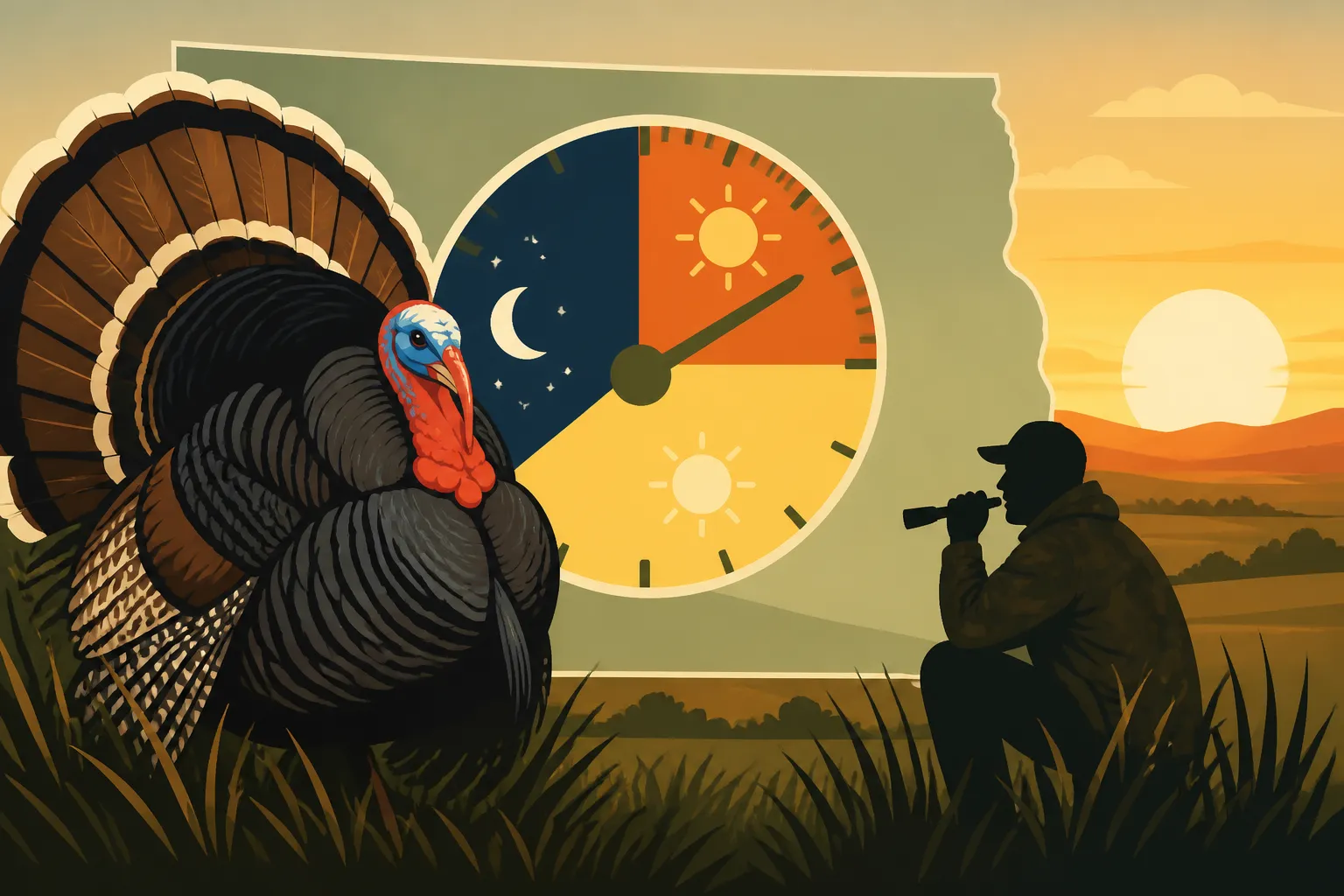
Turkeys, like many wild animals, are creatures of routine, and their gobbling is heavily influenced by the rise and fall of the sun. The most intense gobbling universally occurs right before and just after fly-down. As the sky lightens, turkeys on the roost start to vocalize, first with soft tree yelps, then gradually escalating to full-blown gobbles as they anticipate flying down to the ground. This "roost gobbling" is often the most consistent and predictable activity of the day.
However, after the initial morning frenzy, gobbling tends to slow down, especially as hens disperse to nest or feed. There's often a significant "mid-morning lull" where the woods go quiet. Don't despair during this time! While gobblers aren't broadcasting their location, they are still active. They might be strutting silently for hens, feeding, or moving between areas. Sometimes, a "shock gobble" from a loud noise like a crow call or a distant siren can get them to betray their presence. Gobbling can sometimes pick up again in the late afternoon, particularly in the hours leading up to sundown, as toms start to think about heading back to the roost and re-establishing their presence for the evening.
These daily rhythms mean that North Dakota hunters need to be flexible. While mornings are undeniably prime, don't overlook late afternoon hunts. Setting up near known roosting sites or feeding areas in the evening can be just as productive, albeit different, from a morning hunt. Understanding these rhythms also helps you manage your energy; you don't need to be running and gunning all day if the birds are mostly silent, but you do need to be patient and ready for those specific windows of activity.
Hunting Pressure and Gobbling Lulls
Let's be real, North Dakota's wild turkeys are pretty sharp, and they quickly learn to associate certain sounds and behaviors with danger. Hunting pressure, especially on public lands or easily accessible private tracts, can significantly impact gobbling activity. When birds are hammered by hunters early in the season, they can become "call shy" or simply go silent, even during prime conditions. This isn't just about avoiding hunters; it's about survival.
Imagine a gobbler who gets blasted at every time he sounds off. He's going to quickly learn that gobbling is a bad idea. Public lands, like many of North Dakota's PLOTS Program Explained tracts or Wildlife Management Areas (WMAs), might see more hunting pressure, causing the birds to become warier. This doesn't mean you can't find success, but it means you might have to adjust. Birds might gobble less on the roost, or only gobble a few times before shutting down completely after fly-down. They might also gobble less frequently throughout the day, choosing to only vocalize when they feel safe or when a highly desirable hen sound is presented.
In areas with high pressure, try hunting midweek instead of weekends, or hiking deeper into public land to find areas less frequented by other hunters. Sometimes, a bird that's been pressured will respond to very subtle calling, or even visual decoys, when loud, aggressive calling just scares him away. Understanding that hunting pressure is a reality of North Dakota turkey hunting, and being prepared to adapt your calling and location strategies, is crucial for continued success as the season progresses.
Strategic Timings for North Dakota Turkey Hunters
Knowing when turkeys gobble is one thing, but translating that knowledge into successful hunting strategies is where the rubber meets the road. Every minute in the turkey woods, especially in North Dakota, holds potential if you know how to leverage the birds' natural timing.
Roosting and Fly-Down Tactics
The first hour of daylight is arguably the most critical for spring turkey hunting, and it's all centered around the roost and fly-down. Turkeys are most vocal and vulnerable when they're still in the tree, confidently gobbling, and right after they hit the ground, trying to gather their hens. This is your absolute best window. To maximize this, try to pinpoint a roosting bird the evening before. This could involve listening for their "fly-up" cackles or evening gobbles, or using a locator call like an owl hooter or crow call at last light.
Once a bird is located, plan your approach for the next morning. You want to get as close as possible without being detected, ideally within 100-150 yards, and set up your ambush before legal shooting light. Use the cover of darkness to your advantage. As the sky begins to lighten, a soft tree yelp or two, followed by a cluck, can often get a roosted tom to gobble furiously. When he flies down, continue with soft, enticing calls. The goal is to make him believe a hen is waiting for him just out of sight. Remember that North Dakota Public Land Hunting Hours are typically 30 minutes before sunrise to sunset, giving you plenty of time for this early morning action.
Be prepared for the unexpected. Sometimes a tom will fly down in a completely different direction than you anticipated, or he might have hens with him right off the roost, making him harder to pull away. Don't panic; just adjust. If he has hens, you might need to try and call the hens in, hoping the tom follows. If he flies down silent, give it some time; he might just be strutting for a bit before vocalizing again. Patience during this critical fly-down period is key; rushing your setup or calling too aggressively too soon can blow the whole opportunity.
Mid-Morning Lulls and Afternoon Opportunities
Once the initial morning gobbling subsides, many hunters pack up and head home, assuming the action is over. Big mistake in North Dakota! While gobbling often decreases, turkeys don't just disappear. The mid-morning (roughly 9:00 AM to noon) can be surprisingly productive for persistent hunters who are willing to change tactics. During this period, hens often leave the gobblers to go lay eggs, leaving the toms "lonely" and much more susceptible to a hunter's calls.
This is a great time to implement a "run and gun" strategy on larger public areas like those found within Hunting North Dakota's Missouri River Corridor or vast PLOTS tracts. Walk quietly, stopping every few hundred yards to send out a series of calls – yelps, clucks, and cutting – and then listen intently for a response. Pay close attention to subtle sounds, as a mid-morning gobble might be less enthusiastic than a fly-down gobble. If you get a response, quickly try to close the distance and set up. Sometimes, a hot gobbler will be covering a lot of ground looking for hens, and you can intercept him.
The afternoon, particularly the last few hours before dark, also offers unique opportunities. As the day cools and birds start thinking about heading back to their roosts, gobbling can pick up again. Focus on areas that provide good roosting cover, like mature timber edges along creeks or in shelterbelts. Sometimes, hitting a locator call an hour or two before sunset can get a tom to gobble from his roost tree, allowing you to mark him for a morning hunt, or even try to call him in for a late-day stalk. Don't be afraid to try different areas or switch up your calling style during these quieter periods; the right call at the right time to a lonely mid-day tom can make all the difference.
Adjusting Your Strategy to Gobbling Patterns
The most successful North Dakota turkey hunters aren't rigid in their approach; they're masters of adaptation. If the birds aren't gobbling much, you can't keep trying the same aggressive calling routine. You need to read the birds and the environment and change your game plan. For instance, in the early season when gobbling is sparse, focus more on scouting and setting up on known travel corridors or feeding areas rather than relying on calling a bird in from a long distance.
If you encounter "henned-up" gobblers during the peak or post-peak, aggressive calling might not pull them away from their real hens. Instead, try "finessing" the hens – subtle clucks and purrs might make them curious enough to come investigate, and the tom will often follow his harem. Or, try to get ahead of the group and set up in their anticipated travel path, patiently waiting for them to come to you. Tools like GoHunt can help you scout and identify these travel corridors or feeding zones even before you step foot in the woods, giving you a serious advantage.
On windy days, gobbling will be suppressed. Instead of trying to call loudly, focus on tight-quarters hunting. Move into thick cover, use softer calls, and rely more on visual decoys. The wind helps mask your movements and makes it harder for turkeys to pinpoint your exact location by sound, but it also makes it harder for them to hear you. By understanding the typical gobbling patterns of North Dakota turkeys and the factors that influence them, you can develop a flexible strategy that gives you the best chance of success, no matter what the day brings.
Beyond the Gobble: Other Cues to Look For
While the gobble is undeniably the star of the show, it's not the only indicator of turkey presence or activity. Relying solely on gobbling in North Dakota, where conditions can vary wildly, can lead to missed opportunities. A truly savvy turkey hunter learns to read the entire story the woods are telling.
Visual Cues and Non-Vocalizations
Turkeys are visually oriented animals, and sometimes seeing them is far more effective than just listening. Look for strut marks in dusty roads or field edges, indicating a tom has been displaying there. Fresh tracks in mud or soft dirt can tell you how recently birds have passed through and in what direction. Droppings can reveal what birds are feeding on and how fresh their presence is. These are all subtle, non-vocal cues that can guide you to birds that aren't gobbling.
Beyond the gobble, turkeys make a wide range of other sounds. Hens yelp, cluck, purr, and cut – often far more frequently than toms gobble. Listening for these hen vocalizations can lead you to a group of birds, and often, a silent tom will be trailing or accompanying them. Toms also make drumming sounds – a low-frequency "thump" that's hard to pinpoint but signifies a strutting tom. They also spit and drum during their strut, a sound that can be heard up close. Learning to recognize these subtle sounds, and not just waiting for the loud gobble, will make you a much more effective hunter. In areas where spring turkeys are pressured or simply not vocal, like in some units for North Dakota Fall Turkey Season Rules, these non-gobbling cues become paramount.
Decoys are another powerful visual cue. A well-placed hen or jake decoy can often pull in a silent tom that might ignore your calls, especially if he sees what he thinks is a rival or a potential mate. Combine subtle calling with an enticing visual setup, and you dramatically increase your odds, even when gobbling is minimal. Remember, turkeys use all their senses, and so should you.
Scout, Adapt, and Stay Persistent
Ultimately, success in North Dakota turkey hunting, especially when it comes to understanding gobbling timing, boils down to a commitment to scouting, an ability to adapt, and unwavering persistence. Don't just show up on opening morning hoping to hear a symphony of gobbles. Get out weeks before the season. Learn North Dakota Turkey Population Trends in your area. Walk the woods, listen for roosting birds, look for sign, and understand the terrain. Using scouting tools like the GoHunt app on your phone, or reviewing the Using the PLOTS Guide Booklet can give you a major head start. Pay attention to changes in cover, food sources, and travel routes. This pre-season work will give you invaluable insight into where birds are holding and what their habits are likely to be.
During the season, be ready to adapt your strategy on the fly. If your initial setup yields no gobbles, don't just sit there all morning. Move. Try different calls. If you're hunting river bottom timber, and nothing is gobbling, consider moving to a nearby shelterbelt or open field edge. If the birds are hang-up and not coming into your calls, try a different approach, like setting up for a blind ambush or trying to "slip" into their area silently. The more tools you have in your toolbox, and the more willing you are to use them, the better your chances.
And finally, persistence pays off. There will be silent mornings. There will be birds that gobble once and then disappear. There will be toms that hang up just out of range. Don't let it discourage you. The turkey woods are full of surprises, and often, it's the hunter who stays out just a little longer, walks just a little further, or tries just one more call that finally punches their tag. Embrace the challenge, learn from every outing, and those incredible North Dakota gobblers will eventually provide you with that unforgettable spring soundtrack.
| Gobbling Activity Phase | Typical Timing (North Dakota) | Key Characteristics | Hunting Strategy Focus |
|---|---|---|---|
| Pre-Peak | Late April – Early May | Sporadic, subdued gobbling; cold weather impacts activity; hens still in larger groups. | Patient, subtle calling; focus on scouting roosts & travel corridors; locate silent birds. |
| Peak | Early May – Mid May | Intense, consistent gobbling; multiple birds vocalizing; high competition among toms. | Aggressive calling; roosting birds evening before; target fly-down; capitalize on tom's aggression. |
| Post-Peak | Late May – Early June | Gobbling tapers off; less consistent; hens nesting; "lonely" or "henned-up" toms. | Focus on mid-day/afternoon; "run and gun"; subtle calls; locate lone toms; visual cues/decoys. |
Disclaimer
This article is for general informational purposes only and does not constitute professional advice. Laws, prices and regulations vary by location and change over time. Consult a qualified professional for guidance on your specific situation.