North Dakota Waterfowl Banding Programs
When you're out in a duck blind or walking a slough edge in North Dakota, perhaps on a brisk October morning, the last thing you're probably thinking about is a tiny metal band. But for those fortunate few who actually harvest a bird wearing one, it's a moment of curiosity, excitement, and sometimes, a little confusion about what to do next. This guide is here to shed light on North Dakota's waterfowl banding programs, explaining what they are, why they're so incredibly important for the future of our duck and goose hunting, and how your simple act of reporting a band makes a real difference.
Understanding Waterfowl Banding: Why It Matters
Waterfowl banding isn't just some quaint, old-school tradition. It's a critical scientific endeavor, a foundational cornerstone of waterfowl management across North America, and certainly here in the heart of the North Dakota Waterfowl on the Prairie Pothole Flyway. For decades, biologists have been catching ducks and geese, attaching these small, uniquely numbered bands, and then releasing them back into the wild. It might seem like a needle in a haystack, but every single band recovered and reported tells a vital part of a much larger story.
The frustrations for hunters often lie in the mystery surrounding these bands. You hear about them, maybe see a picture online, but rarely encounter one yourself. And if you do, the "now what?" question can be daunting. Understanding the program's purpose demystifies the whole process and empowers you as a hunter to become a citizen scientist, directly contributing to the conservation efforts that ensure future generations have ducks and geese to pursue. It's about more than just a trophy; it's about giving back to the resource.
What's a Band and How Does It Get There?
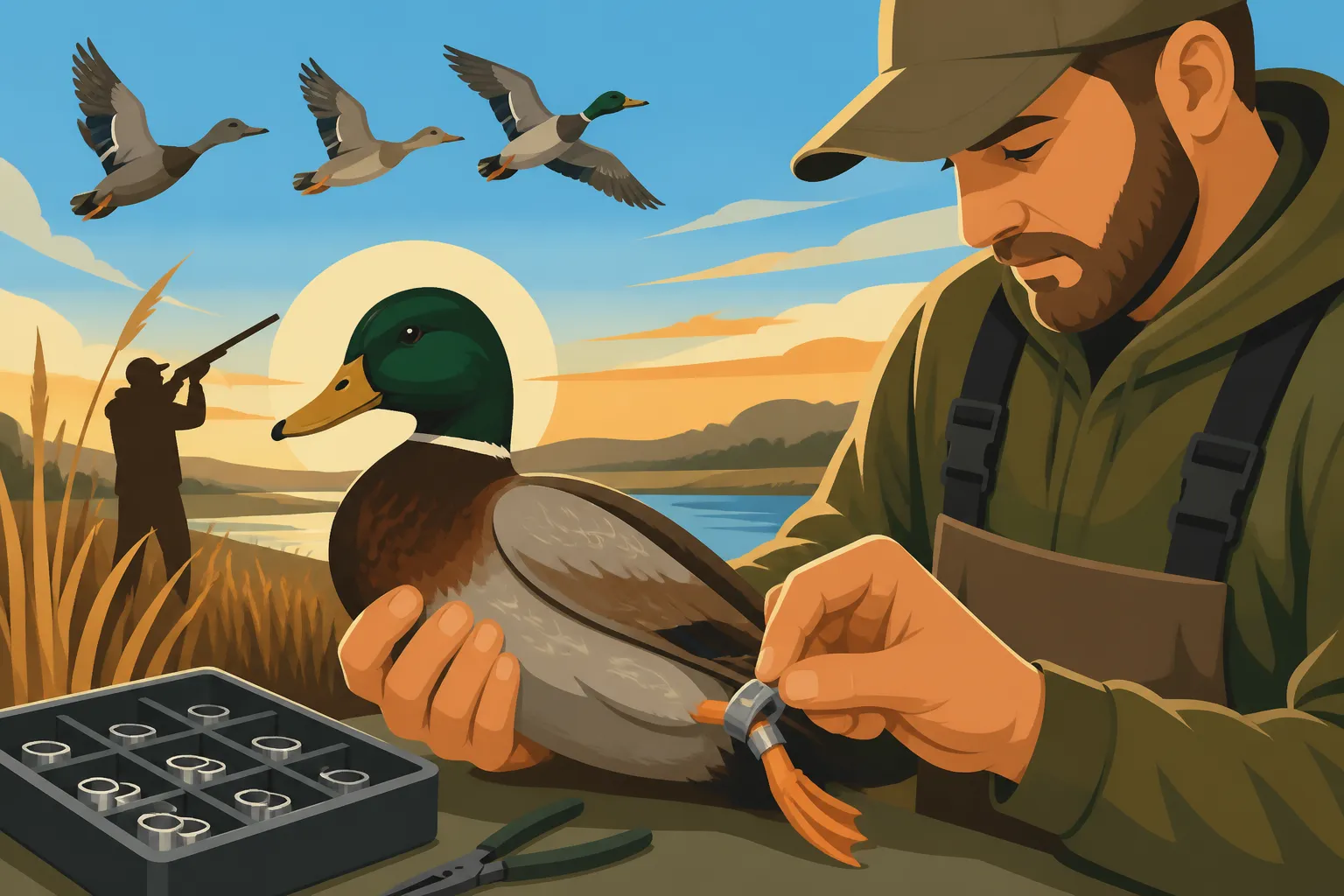
At its core, a waterfowl band is a small, lightweight metal ring, typically made of aluminum, that's crimped onto a bird's leg. Each band has a unique serial number stamped on it, along with a contact address or website for reporting. These bands come in various sizes, adapted to the specific species—a mallard gets a different size band than a giant Canada goose, for instance. There are also sometimes colored leg bands or neck collars, particularly for geese, which allow biologists to identify individual birds from a distance without needing to recapture them.
The process of banding itself is a specialized skill performed by trained biologists and technicians. It often involves baiting birds into traps that safely capture them, or using rocket nets to catch larger flocks. Once captured, each bird is quickly and gently processed. They're identified by species, sex, and age, and then a band is carefully applied to one leg. This entire process is designed to minimize stress on the bird, ensuring they can be released quickly and resume their normal activities. It's a meticulous operation, often conducted in remote North Dakota Waterfowl Production Areas or wetlands, far from human disturbance, where the birds congregate during molting or before migration.
Think of the effort involved: biologists spending countless hours, often in less-than-ideal weather, out in the marshes and sloughs of the North Dakota's Prairie Pothole Region Explained, patiently waiting for the right conditions to capture these birds. They're dedicated to this work because they know that each band, each piece of data, is crucial. Without this hands-on work, our understanding of these incredible migratory birds would be severely limited, impacting our ability to manage seasons and limits responsibly.
The Big Picture: Why Banding Benefits Hunters and Biologists
For biologists, waterfowl bands are like tiny, flying data loggers. They provide invaluable information on survival rates, migration routes, harvest rates, and population dynamics. When a banded bird is recovered and reported, it provides a "data point" that connects the place and time of banding to the place and time of recovery. Over thousands of such data points, complex patterns emerge, helping to paint a comprehensive picture of waterfowl health and movement. This allows for informed decisions about North Dakota Duck and Goose Bag Limits and season structures, balancing hunter opportunity with species conservation.
For hunters, the benefit might seem less direct than seeing more birds in the sky, but it's absolutely there. The data from banding directly influences the hunting regulations that are put in place. For example, if banding data shows a decline in survival rates for a particular species, wildlife managers can adjust bag limits or shorten seasons to help that population recover. Conversely, robust populations, indicated by high survival and recruitment, might allow for more generous seasons. This isn't just guesswork; it's management based on hard data, much of which comes from hunters reporting their bands.
Moreover, every time a hunter reports a band, they're acknowledged for their contribution. You receive a certificate with information about where and when your bird was banded, and often its species, age, and sex. It's a tangible connection to the broader conservation effort and a cool story to share around the campfire. It makes you part of something bigger than just your personal hunt, reinforcing the idea that hunters are, and always have been, the most vital conservationists.
Participating in the Banding Program: Your Role as a Hunter
Finding a banded bird is a rare and exciting event for most hunters. It's a moment of connection to the vast migratory journeys these birds undertake and a direct link to the scientific efforts behind their management. Your participation in reporting that band is not just encouraged; it's essential. Without hunters reporting their recoveries, a significant portion of the data collected by biologists would be lost, rendering countless hours of fieldwork less effective.
It's easy to get caught up in the excitement of a successful hunt, and that's perfectly understandable. But taking a few extra minutes to check for a band and then report it is one of the most impactful things you can do as a waterfowl hunter in North Dakota. It's a simple act that has profound implications for how we understand and manage our shared resources, ensuring that the spectacle of migration continues for generations.
Finding a Banded Bird: The Thrill of the Hunt
Imagine you're out on a crisp autumn morning, hiding in your layout blind on the edge of a cut wheat field, calling in a flock of Canada geese. You make a good shot, retrieve the bird, and as you're admiring its plumage, you notice a small, dull metal ring on its leg. That's the moment! It's truly a lottery ticket, considering the sheer number of unbanded birds out there. Many hunters go a lifetime without finding one, while others seem to have a knack for it. I've only found a handful in all my years hunting ducks and geese across North Dakota, and each one felt like a special prize.
Bands can be found on any legal waterfowl species you harvest—mallards, pintails, canvasbacks, North Dakota Resident Canada Goose Population, snow geese, and more. While some species are banded more frequently in certain areas than others, it's truly a matter of chance. The best way to find a banded bird? Get out there and hunt! The more ducks and geese you successfully harvest, the higher your odds. And always, always take a moment to thoroughly check the legs of every bird you retrieve. Sometimes the bands are obscured by mud or feathers, so a quick wipe-down is a good habit.
There’s a unique satisfaction that comes with retrieving a banded bird. It's not just the weight of the bird in your hand; it's the weight of the history it carries. This bird has traveled, perhaps thousands of miles, crossing state and even international borders, and now it's telling you a small part of its story. It’s a tangible link between your hunt and the incredible natural world of migratory birds.
Reporting Your Band: The Simple Process
Once you've found a band, the reporting process is surprisingly straightforward, and it's free. The band itself will have instructions, usually directing you to a specific website or a toll-free phone number. I generally recommend using the website, as it's quick and efficient, and you can verify all your information easily.
Here's a general step-by-step rundown:
- Retrieve the Band: Carefully remove the band from the bird's leg. Sometimes they can be a bit tight, but gentle pressure usually works. If the band is damaged or hard to read, try to preserve it as best you can.
- Gather Information: Note the unique serial number on the band. You'll also need the date you harvested the bird and the precise location (county, nearest town, or GPS coordinates if you have them). Knowing the species, sex, and age of the bird is also helpful if you can confidently identify them, though not always mandatory for reporting the band itself.
- Go Online or Call: Visit the website printed on the band (often www.reportband.gov or a similar address) or call the toll-free number.
- Enter Data: Follow the prompts to enter the band number and your recovery information. They'll ask for your name and contact details so they can send you a certificate.
- Receive Your Certificate: Within a few weeks (sometimes faster online), you'll receive a certificate detailing when and where your bird was banded, along with the species. It’s a cool memento of your contribution!
It really is that simple. Don't let the thought of bureaucracy deter you. This isn't about getting in trouble; it's about contributing to vital wildlife data. Every reported band helps fill in the gaps in our knowledge, strengthening the research that ultimately helps ensure healthy waterfowl populations and robust North Dakota Duck Harvest Numbers for everyone. I've personally reported several, and the process has always been smooth. Plus, that certificate makes a great addition to the hunting room wall!
The Data Behind the Band: What We Learn
The data collected from waterfowl banding programs is a treasure trove for wildlife biologists and managers. Each reported band contributes to a massive database, revealing insights into waterfowl populations that would be impossible to gather through any other means. It's like piecing together a giant, continent-spanning puzzle, where each hunter's reported band is a critical piece.
This information isn't just for academic interest. It directly informs the management decisions that affect hunters in North Dakota and across the flyways. From understanding How Many Ducks Nest in North Dakota Potholes to tracking the success of various conservation initiatives, banding data is at the heart of science-based waterfowl management. As you prepare for your next hunt, perhaps reviewing potential locations with tools like GoHunt, remember that the data you might be looking at to predict bird movements is often rooted in decades of banding studies.
Migration Mysteries Unveiled
One of the most exciting aspects of waterfowl banding is its ability to reveal the incredible journeys of migratory birds. When a duck or goose banded in North Dakota is recovered in, say, Louisiana or Mexico, it provides direct evidence of its migratory pathway. Over time, these individual data points map out precise Duck Migration Timing Through North Dakota, preferred stopover sites, and critical wintering grounds. This knowledge is crucial for understanding the full lifecycle of these birds and identifying areas that need protection or habitat enhancement along their entire flyway.
For instance, banding efforts have clearly shown that many of the mallards raised in the North Dakota prairie potholes spend their winters in the Mississippi River Delta. This kind of information helps guide conservation funding and habitat work, ensuring that efforts in one region complement those in another. Without banding, these connections would remain largely theoretical. This is why even a band found on a bird that traveled just a few counties away is valuable; it helps fine-tune our understanding of local movements and dispersal patterns.
It's truly mind-boggling to think about the distances these birds cover. Knowing that a duck you harvested near Devils Lake was banded as a duckling in a slough near Minot, and might have otherwise ended up near the Gulf Coast, puts the scale of migration into perspective. Tools like GoHunt can help you visualize these vast landscapes, but the bands themselves are the proof of the journeys.
Population Health and Harvest Management
Beyond migration, banding data is fundamental to assessing population health. By analyzing how many banded birds are harvested each year compared to the total number banded, biologists can estimate annual survival rates and harvest rates for different species and age classes. This is critical for setting sustainable hunting seasons and North Dakota Duck Daily Bag Limit. If, for example, analysis shows a declining survival rate for a specific duck species, managers can propose adjustments to regulations to reduce harvest pressure and help the population recover.
Consider the challenge of managing a resource like migratory waterfowl, which crosses state and international borders. Without accurate, long-term data on survival and harvest, setting responsible limits would be a shot in the dark. Banding data provides the scientific backbone for these decisions, ensuring that we can continue to enjoy hunting while also maintaining healthy, robust waterfowl populations. It's a delicate balance, and hunters' contributions are key to keeping it stable.
Moreover, banding data helps track population trends. Are more young birds surviving to adulthood? Is a certain species experiencing higher mortality in particular regions? These are questions that banding helps answer, leading to targeted conservation efforts, like habitat projects aimed at increasing nesting success or efforts to restore wetlands in key breeding areas. This means your contribution directly impacts the abundance you see in the skies each fall.
Disease Monitoring and Environmental Insights
While perhaps less talked about, waterfowl banding also provides valuable insights into disease prevalence and environmental changes. A banded bird recovered with signs of disease can offer clues about disease outbreaks and their spread through a population. This data can be crucial for understanding avian influenza, botulism, or other illnesses that can devastate waterfowl populations.
Furthermore, long-term banding data can subtly reflect environmental shifts. For example, changes in migration timing or wintering locations over decades might correlate with broader climate patterns or habitat alterations. If biologists notice a consistent shift in where birds are recovered, it can prompt further investigation into changes in habitat quality or food availability along certain routes. This is macro-level conservation in action, and every reported band contributes to that big picture understanding.
It’s a powerful illustration of how interconnected everything is in the natural world. A single band reported by a hunter in North Dakota might contribute to research on habitat degradation in Texas or disease transmission across multiple states. It elevates the act of hunting from a personal pursuit to a meaningful contribution to continental conservation science.
Beyond the Band: Other North Dakota Waterfowl Research Efforts
While banding is undeniably important, it's just one piece of the larger puzzle of waterfowl research and management in North Dakota. The state is a critically important breeding ground and migration corridor for millions of ducks and geese, and a multitude of other efforts complement banding to provide a holistic view of waterfowl populations. These ongoing studies, often funded by hunters' license fees and federal duck stamp purchases, ensure a robust future for Duck and Goose Hunting North Dakota's Potholes.
Understanding these various programs can give you an even deeper appreciation for the work being done on behalf of waterfowl. It highlights that conservation is a multi-faceted endeavor, constantly evolving to address new challenges and gather more comprehensive data.
Brood Surveys and Nest Counts
Each spring and summer, wildlife biologists fan out across the North Dakota's Prairie Pothole Region Explained to conduct breeding pair counts and brood surveys. Breeding pair counts estimate the number of potential breeding pairs of ducks, providing an early indication of the reproductive potential for the year. Brood surveys, conducted later in the summer, count ducklings to assess actual reproductive success. These surveys involve driving established routes and observing wetlands for ducks, identifying species, and counting broods.
These surveys are critical for predicting fall flight numbers and understanding the impact of factors like wetland conditions, predator populations, and nesting habitat quality. A year with abundant water in the potholes generally means higher breeding success, and thus more ducks in the fall. Conversely, drought years often lead to depressed breeding numbers. This annual snapshot, combined with banding data, gives managers a powerful tool for setting season frameworks and identifying areas where habitat improvements are most needed.
It's a huge undertaking, covering vast expanses of the state, often in remote and challenging terrain. The dedication of the biologists driving these routes, counting every pair and every duckling, is what provides the foundational data for our hunting seasons. Without these consistent, long-term surveys, we'd be flying blind.
Habitat Restoration and Conservation
All the data in the world, whether from banding or surveys, is meaningless without action. That's where habitat restoration and conservation come into play. Organizations like the North Dakota Game and Fish Department, along with numerous conservation partners, actively work to preserve, restore, and enhance wetland and grassland habitats across the state. This includes restoring drained potholes, establishing dense nesting cover in upland areas, and promoting conservation practices on private lands.
These efforts are vital for providing the nesting habitat, brood-rearing cover, and migration staging areas that waterfowl need to thrive. Waterfowl Production Areas Explained are prime examples of this work, protected and managed specifically for migratory birds. Hunters play a crucial role in funding these initiatives through license sales and, notably, the purchase of federal duck stamps, which dedicate revenue directly to wetland conservation. So, every time you buy a license or a stamp, you're directly contributing to the habitat that supports the birds you love to hunt.
The health of our waterfowl populations directly correlates with the health of their habitat. Years of dedicated work by countless individuals have gone into making North Dakota one of the most important waterfowl factories on the continent. These efforts, driven by scientific data like that from banding programs, are a testament to the commitment to ensuring waterfowl abundance for generations to come.
| Data Source / Method | Primary Information Gained | Hunter Contribution | Benefit to Hunter |
|---|---|---|---|
| Banding Programs | Survival rates, harvest rates, migration routes, population movements, age/sex ratios | Reporting recovered bands | Sustainable seasons, understanding bird origins, personal connection to conservation |
| Breeding Pair Counts | Number of breeding pairs, habitat conditions | N/A | Early prediction of fall flight, insight into population health |
| Brood Surveys | Reproductive success, duckling survival | N/A | Confirmation of fall flight predictions, habitat efficacy |
| Hunter Harvest Surveys | Total harvest numbers, hunter effort | Reporting harvest via surveys/apps | Accurate harvest data guides future regulations |
| Habitat Restoration | Effectiveness of conservation projects, land use impact | Funding via licenses/stamps | Increased bird numbers, improved hunting areas |
Disclaimer
This article is for general informational purposes only and does not constitute professional advice. Laws, prices and regulations vary by location and change over time. Consult a qualified professional for guidance on your specific situation.