North Dakota Deer Weight Averages by Region
It's incredibly frustrating when you hear stories of monster bucks weighing in at 250 pounds, only to haul out a deer that feels significantly lighter. The truth is, deer weights can vary wildly, not just from year to year, but dramatically depending on where you're hunting in North Dakota. This guide will dive deep into the factors that influence deer size and provide a regional breakdown of what you can realistically expect when you connect with a deer across the diverse landscapes of our state.
Understanding the Factors That Influence Deer Weight in North Dakota
When you're out in the field, every deer feels like a hundred pounds heavier once you're dragging it. But what actually dictates how much venison you'll be putting in the freezer? It’s not just about a big rack. Several key factors contribute to a deer's overall mass, and understanding these can help set your expectations for what you might encounter.
Age and Sex: The Primary Drivers
The two biggest factors, hands down, are the age and sex of the deer. A mature buck, say 3.5 years old or older, is going to naturally weigh more than a yearling buck or a doe of any age. Bucks spend their younger years growing bone and muscle, packing on pounds steadily until they hit their prime. Once they're mature, their weight might fluctuate seasonally due to the rut, but their skeletal frame is fully developed. Does, while they can get quite large, typically don't reach the sheer mass of a mature buck, as their energy is often diverted into reproduction and fawn rearing.
Think about a 1.5-year-old buck, sometimes called a "fork horn" or "basket rack." He's still growing, often putting all his energy into that first real set of antlers. His body weight will be noticeably less than a 4.5-year-old brute who has years of feeding and growing under his belt. The same goes for does; a fawn will be tiny, a yearling doe growing into her own, and a mature doe will be at her peak weight, usually before she drops fawns. These are the fundamental truths of deer biology, whether you're chasing White-Tailed Deer Across North Dakota or Mule Deer in North Dakota's Badlands.
Habitat, Nutrition, and Climate
Beyond age and sex, where a deer lives and what it eats are massive influences on its size. North Dakota offers a fascinating array of habitats, from the rich agricultural fields of the east to the rugged, less fertile Badlands of the west. A deer living in an area with abundant, high-quality forage – think corn, soybeans, alfalfa, and native forbs – will have the nutritional resources to grow larger and healthier. Areas with poor soil quality or sparse vegetation simply can't support deer that reach the same maximum potential weight.
Climate also plays a significant role. Harsh winters, especially those with deep snow and prolonged cold, can be incredibly tough on deer. They burn through their fat reserves just trying to stay warm, and if food sources are buried, they can enter spring in a weakened, lighter state. Consecutive tough winters can even impact the overall health and size of a regional herd for years, influencing factors like North Dakota Buck Age Structure and North Dakota Fawn Survival Rates. Conversely, mild winters and abundant moisture leading to lush forage growth can lead to heavier, healthier deer across the board.
Genetics and Herd Health
While we often focus on environmental factors, genetics undeniably play a part in a deer's potential size. Just like people, some deer are simply predisposed to being larger or smaller, regardless of how much they eat. A herd with strong genetics for body size, passed down through generations, will tend to produce heavier deer. This isn't something hunters can control directly, but it's an underlying current in population dynamics.
Herd health is another critical component. Diseases, even sub-lethal ones, can take a toll on an individual deer's vitality and weight. For example, if a deer is battling a chronic illness or dealing with a high parasite load, it might divert energy from growth and fat storage towards fighting off infection, resulting in a lighter body weight. The presence of diseases like Chronic Wasting Disease (CWD), which North Dakota actively monitors through mandatory testing in certain units, can also impact herd health and potentially the average weight of animals in affected areas. Understanding North Dakota's Fourteen-Unit CWD Zone is increasingly important for hunters.
Regional Breakdown of North Dakota Deer Weights
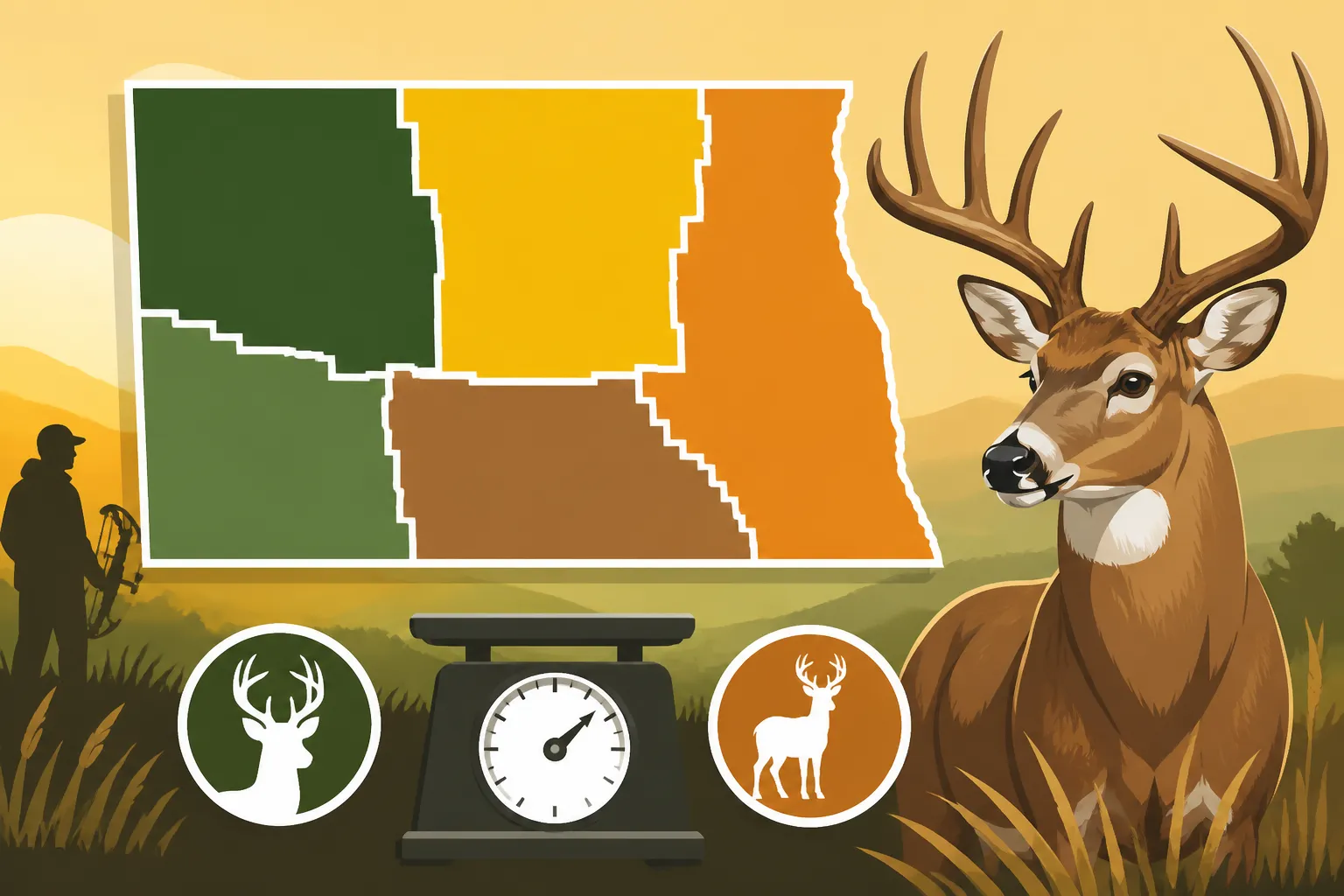
North Dakota is a big state, and the landscape changes dramatically from east to west. This variation in habitat and resources means that a "typical" deer in the Red River Valley might look very different from one found scrambling up a coulee in the Badlands. Let's break down what you can expect in different parts of the state.
Eastern North Dakota: Red River Valley & James River Basin
The eastern part of North Dakota, encompassing the rich agricultural lands of the Red River Valley and the productive James River Basin, is often considered prime country for deer to pack on serious pounds. Here, deer have access to an almost unlimited buffet of high-energy crops like corn, soybeans, wheat, and sunflowers. This nutritional richness, combined with ample shelter in vast shelterbelts, river bottoms, and scattered woodlots, provides an ideal environment for deer to thrive.
In these regions, it's not uncommon to find mature whitetail bucks (3.5 years and older) with live weights often pushing into the 200-pound range, with some exceptional individuals exceeding that. Does also tend to be robust, with mature does often weighing 120-150 pounds live. The sheer volume and quality of feed mean deer here can recover quickly from winter and put on significant weight throughout the growing season. If you're hunting in these fertile areas, say for Deer Drives With Three or Four Hunters near a standing cornfield, you should be prepared for a substantial animal.
Central North Dakota: Prairie Pothole Region & Missouri River Corridor
Moving into central North Dakota, we encounter the iconic Prairie Pothole Region, a landscape dotted with wetlands, surrounded by mixed-grass prairie, and interspersed with agricultural fields. The Missouri River Corridor, with its rugged breaks and timbered bottoms, also offers fantastic deer habitat. Here, deer have a diverse diet, foraging on native grasses, forbs, and browse, supplemented by agricultural crops. The habitat can be a bit more varied than the eastern plains, offering different challenges and opportunities for deer to find food and cover.
In this central zone, particularly around the Missouri River breaks, you'll still find some truly impressive whitetails. Mature bucks typically weigh in the 180-200 pound range live, with some pushing higher, especially those with access to prime river bottom food plots or unharvested crops. Mature does might average 110-140 pounds. The deer populations here are often a bit more spread out, and their diet can fluctuate more seasonally than those strictly in agricultural zones. Hunting here might involve Still-Hunting North Dakota's Missouri River Bottomland or stalking a Prairie Pothole Slough Edge, and you'll find deer that are well-adapted to this varied environment.
Western North Dakota: Badlands & Little Missouri National Grassland
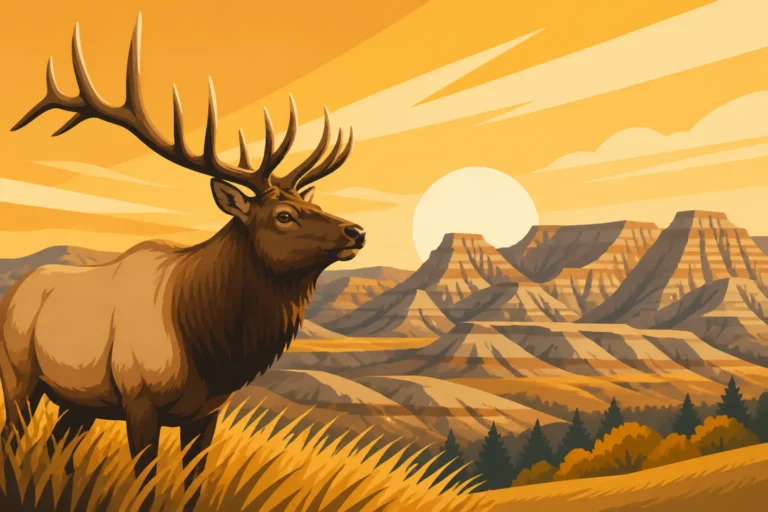
Ah, the Badlands. This rugged, breathtaking landscape of buttes, coulees, and juniper breaks is a completely different world from the fertile plains. While it might not offer the endless crop fields of the east, it provides incredibly diverse browse and forbs, critical for both whitetail and mule deer. Deer here are often leaner and more athletic, built for navigating steep terrain rather than gorging on corn.
Mule deer, which are more prevalent in the western Badlands, tend to be physically larger-framed than whitetails, but their live weights can sometimes be similar or even a bit less than a heavily-fed whitetail from the east, depending on the individual. Mature mule deer bucks in the Badlands might typically weigh 170-190 pounds live, with some breaking 200 pounds on rare occasions. Whitetails in the Badlands often run a bit smaller than their eastern counterparts, with mature bucks usually in the 160-185 pound range live, and mature does around 100-125 pounds. These deer are often considered "wilder" and certainly tough. If you're on a Spot-and-Stalk Elk in the Little Missouri Badlands hunt and happen to cross paths with a deer, you'll see the difference in their build compared to a flatlander. The diet in the Badlands is primarily natural forage, which can lead to leaner muscle mass.
Practical Implications for Hunters
Knowing the average deer weights by region isn't just a fun fact; it has real, practical implications for your hunting trip. From planning your recovery strategy to processing your harvest, understanding these figures can save you a lot of guesswork and potential headaches.
Estimating Live Weight vs. Dressed Weight
One of the most common points of confusion for hunters is the difference between live weight and dressed weight (also known as field-dressed weight). Live weight is the animal's weight before it's harvested. Dressed weight is the weight after the entrails have been removed, but before the hide, head, and lower legs are taken off. This is the weight you'll typically have at a check station or when you first get the deer back to camp.
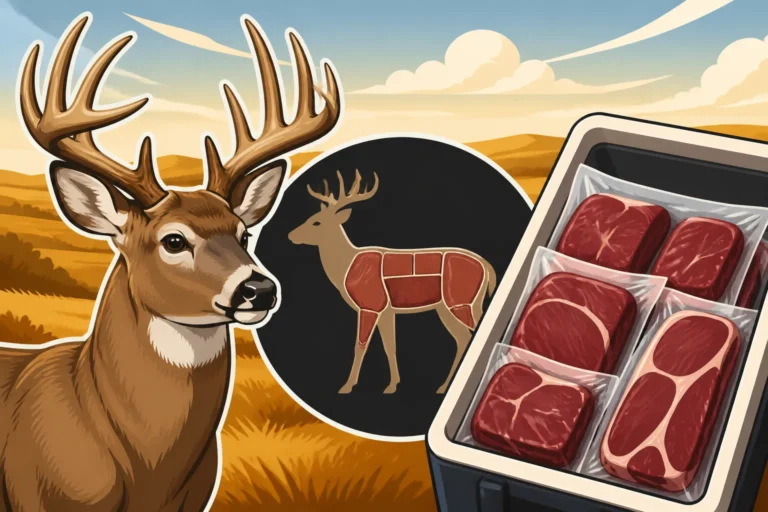
Generally, you can estimate that a field-dressed deer will weigh approximately 25-30% less than its live weight. This percentage can vary slightly based on the deer's condition and how thoroughly it's field-dressed. It's a crucial distinction, especially if you're trying to figure out how much meat you'll yield. When you hear about those 200-pound bucks, remember if it's live or dressed weight! Here's a general idea to help you visualize:
| Deer Category | Estimated Live Weight (lbs) | Estimated Dressed Weight (lbs) | Typical North Dakota Region |
|---|---|---|---|
| Yearling Whitetail Buck | 120-160 | 90-120 | All regions |
| Mature Whitetail Buck | 180-220+ | 135-165+ | Eastern, Central |
| Mature Whitetail Doe | 120-150 | 90-115 | All regions |
| Yearling Mule Deer Buck | 130-170 | 98-128 | Western |
| Mature Mule Deer Buck | 170-200+ | 128-150+ | Western |
| Mature Mule Deer Doe | 110-140 | 83-105 | Western |
Remember, these are averages, and individual deer can always surprise you! These numbers can help inform your decision if you are Hunting the Rut in Early-to-Mid November and come across an absolute tank of a buck.
Planning for Game Recovery and Processing
Knowing the average size of deer in your hunting unit can significantly impact your recovery strategy. If you're hunting in eastern North Dakota and anticipate a 200-pound-plus whitetail, you'll want to have a plan for extraction. This might mean having a sturdy game cart, extra hands, or being prepared for a serious drag. A smaller mule deer buck in the Badlands, while still heavy, might be manageable by one person in rugged terrain, but a large eastern whitetail could be a two-person job, especially if it's far from a road.
Consider how you'll get the deer from where it falls to your vehicle, especially if you're deep in a Badlands Draw for Mule Deer or miles into a North Dakota Waterfowl Production Area. Do you have rope? A good knife for field dressing? A tarp or sled? Thinking about these logistics before you pull the trigger can save you immense effort and ensure the meat is handled properly. Processing also ties into this; a larger deer means more meat, requiring more cooler space, more time for butchering, or a larger bill from a local processor. When you're Butchering a Deer at Camp, having an idea of its size beforehand helps you plan your day.
Interpreting Harvest Data and Trophy Potential
Deer weight, particularly dressed weight, is often collected at check stations and contributes to the state's harvest data. This data helps wildlife biologists assess herd health, population trends, and the impact of hunting seasons. If you're using tools like GoHunt or similar platforms to research hunting units, knowing what typical weights indicate about the local deer population can be valuable. A consistently high average weight for mature bucks in a unit might suggest excellent habitat and a healthy, well-managed herd. Conversely, declining average weights could signal overpopulation, poor habitat, or disease concerns.
While trophy potential is often measured by antler size, body weight is a strong indicator of a deer's overall health and the quality of its environment. A heavy-bodied deer, even if its antlers aren't record-breaking, speaks volumes about the ecosystem it inhabades. For many hunters, the satisfaction comes not just from the antlers, but from the challenge of pursuing a robust, healthy animal and the bounty of venison it provides. Paying attention to these regional averages can give you a deeper appreciation for the deer you're pursuing and the unique landscapes of North Dakota.
Disclaimer
This article is for general informational purposes only and does not constitute professional advice. Laws, prices and regulations vary by location and change over time. Consult a qualified professional for guidance on your specific situation.