Roosting a Fall Gobbler the Night Before
There’s nothing quite as frustrating as chasing fall turkeys across what feels like endless North Dakota prairie, only to have them seemingly vanish into thin air. You’ve walked miles, called till you’re hoarse, and still, those elusive gobblers remain just out of reach. It can feel like finding a needle in a haystack, especially when the leaves are down, and they’re not gobbling their heads off like in spring. But what if there was a way to dramatically increase your odds of success, a method that puts you exactly where they want to be? This guide is all about mastering the art of roosting a fall gobbler the night before, a tactic that can transform your fall turkey hunts from a disheartening wander into a strategic strike.
Why Roosting is Your Secret Weapon for Fall Turkeys
Fall turkey hunting is a beast of a different color compared to the spring. Gone are the days of aggressive gobblers sounding off at every call. In the fall, turkeys are often in large, family flocks, focused on feeding and survival, and generally much quieter. They’re less inclined to come charging into calls, which means you need to be in their world, on their terms. This is precisely where knowing their roosting location becomes an absolute game-changer.
Think about it: every single turkey in your hunting area is going to fly up into a tree to roost at dusk and fly down at dawn. If you know which tree, or at least which small grove of trees, they’re using, you've essentially cut out 90% of the guesswork for the next morning's hunt. You're no longer just wandering and hoping; you're executing a calculated ambush. This strategy minimizes disturbance, maximizes your proximity to the birds when they're most vulnerable, and allows for a much more controlled and ethical shot opportunity. It’s about leveraging their predictable behavior to your advantage, giving you a distinct edge in an otherwise challenging season.
Decoding North Dakota's Roosting Preferences
North Dakota might not be thought of as prime turkey country by everyone, but we have some fantastic opportunities, especially in areas with good timber. Understanding what kind of trees and terrain features fall turkeys prefer for roosting here is absolutely key. They’re looking for security, shelter, and a good vantage point to spot predators.
Ideal Roosting Tree Characteristics
When turkeys choose a roost tree, they're not just picking any old branch. They want something sturdy, with strong horizontal limbs that can support their weight. In many parts of North Dakota, especially along river systems, large cottonwoods are absolute magnets for roosting turkeys. These giants often have massive, sprawling branches that offer multiple birds a comfortable spot to settle in for the night. You'll also find them using mature oaks, boxelders, and sometimes even thick stands of aspen in areas like the Turtle Mountains. The key is mature trees that provide plenty of cover and sturdy perches. They’ll rarely choose small, flimsy trees, as these don't offer the security they need from predators like coyotes or great horned owls.
Terrain Features That Attract Roosts
Turkeys, like most wildlife, are creatures of habit and efficiency. They're going to roost near reliable food sources and water, often in sheltered areas that provide a buffer from harsh weather. In North Dakota, this means focusing your search on a few specific habitat types. River bottomlands, such as those found along the Missouri River corridor or the James River Basin, are prime locations. The dense timber and consistent water sources make them ideal. Shelterbelts, those lines of trees planted around farmsteads and fields, can also be critical, particularly in the more open prairie regions. These provide isolated pockets of cover where birds can feel safe. Don't overlook coulees and draws in the Badlands or other hilly areas either; the natural topography often offers excellent protection from wind and weather, making the trees within them attractive roosting spots. Knowing what kinds of areas to focus on dramatically narrows your search, allowing you to prioritize your scouting efforts.
The Art of Scouting and Locating a Roost
Finding a fall turkey roost isn't about blindly walking through the woods; it's about strategic, patient, and quiet scouting. This is where your efforts the evening before the hunt truly pay off.
Evening Reconnaissance and Glassing
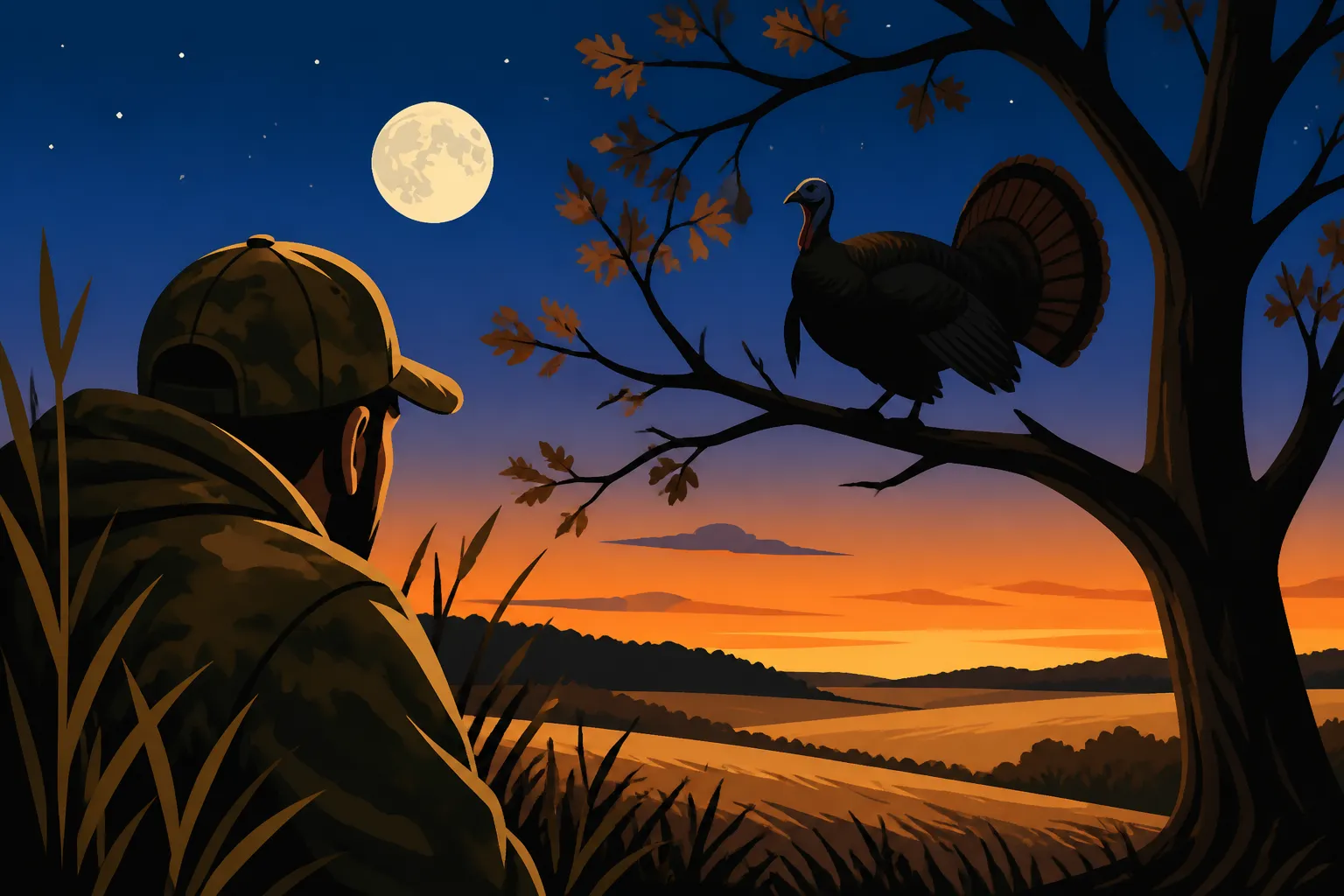
Your best bet for locating a roost is to be out in the field during the last hour or two of daylight. You’ll want to position yourself in an elevated spot, if possible, or along an open field edge that offers a good view of potential roosting areas, often several hundred yards away. Bring a good set of binoculars or a spotting scope. The goal is to visually locate the birds as they head to roost. Turkeys will often feed their way towards their roosting area as dusk approaches. Watch for dark shapes moving along tree lines or heading into timber. The moment of truth usually comes right at last light when they fly up. It’s a distinct sound – a flurry of wing beats followed by a series of soft "tree yelps" or "clucks" as they settle in.
Silence is paramount during this phase. You don't want to alert them to your presence. Park your vehicle well away from where you expect them to be, and approach your observation point stealthily. If you see birds, stay put and watch until it's completely dark, making a mental note (or marking a waypoint on an app like GoHunt) of exactly which trees they flew into. Don't try to get too close once they're on the roost; that’s a recipe for busting them the next morning. The more you can use Scouting PLOTS Land Before Season or your GoHunt app for aerial imagery to identify likely roosting groves beforehand, the more efficient your evening stakeout will be.
Listening for the Roost Fly-Up
Sometimes, visual confirmation isn't possible, whether due to dense cover, dim light, or terrain. In these situations, your ears become your most valuable tool. As mentioned, the sound of turkeys flying up to roost is unmistakable: a loud, heavy whoosh of wings as they launch themselves off the ground, often followed by the sounds of branches creaking and soft vocalizations as they adjust their positions.
Position yourself strategically where sound travels well, perhaps on a ridge overlooking a river bottom or in an open area adjacent to a shelterbelt. Listen intently as daylight fades. Don't be afraid to stay out a little longer than you might think necessary, as turkeys can sometimes take their time to settle. If you hear a fly-up, try to triangulate the sound to pinpoint the general area. If you're using a mapping tool, mark that spot. This listening technique is incredibly effective, especially if you know North Dakota Turkey Roost Tree Preferences and can predict where they might be. Even if you don't hear much, the absence of sound in a prime area can tell you they're not there, allowing you to focus your efforts elsewhere the next evening.
Setting Up for Success the Morning After
Once you've successfully located a roost, the real challenge begins: turning that knowledge into a successful harvest. The pre-dawn setup is critical and requires careful planning and execution.
Pre-Dawn Approach and Blind Placement
The most crucial rule for a morning roost hunt is absolute stealth. Turkeys have exceptional eyesight, even in low light, and they'll notice anything out of place. Plan your approach in the pitch black, using a headlamp with a red or green lens to preserve your night vision and minimize disturbance. Your goal is to get as close as possible without alerting the birds, ideally within 100-150 yards, placing yourself between the roost and their likely morning feeding area.
If you’re using a ground blind, set it up the day before, if private land permission allows, or at least get it brushed in quickly and quietly in the dark. For bowhunters, having a natural brush blind or an existing treestand (where allowed) is even better. Remember that turkeys will likely fly down in the same general direction they were facing when they flew up, so try to anticipate their landing zone. If you have the luxury of choice, pick a spot with some sparse cover to break up your silhouette, but where you also have a clear shooting lane. Use mapping software like GoHunt to plot your exact entry route and blind location in advance. Understanding Getting Private Land Permission in North Dakota or knowing the rules for North Dakota Wildlife Management Areas is essential for pre-setting blinds.
Calling Strategy at First Light
Unlike spring, where aggressive gobbling is the norm, fall calling is usually much subtler. Once the first hints of dawn appear and you can faintly make out the shapes of the roosted birds, a few soft tree yelps or muffled clucks can be effective. You're trying to mimic a bird waking up and communicating with the flock. Don’t overcall; you just want to let them know you’re there and sound like part of the group. As they start to fly down, switch to more realistic assembly calls – soft yelps, clucks, and purrs to entice them your way. If they're a large flock, they might fly down in different directions, so be prepared for birds coming from multiple angles.
A common scenario is that the whole flock will fly down and start feeding away from you. This is where patience is key. Let them move a bit, then try soft calls again to pique their curiosity. If you know how to perform a "fly-down cackle" when the first birds hit the ground, it can sometimes pull the rest of the flock in. Remember, you’re trying to gather them, not necessarily challenge a dominant tom. Consider watching our guide on Calling a Fall Gobbler Flock for more insights into subtle fall calling.
Dealing with Multiple Birds and Ethical Shots
When the birds hit the ground, especially if it’s a large fall flock, things can get a little chaotic. Remain absolutely still. If you’re hunting with a shotgun, pick out a single bird, ideally a jake or a hen, and wait for a clear, ethical shot. Avoid shooting into the flock, as you could wound multiple birds. For archery, this becomes even more critical. You need a standing, broadside target, and it can be tough to get one when 20 pairs of eyes are scanning.
One strategy for breaking up a tight flock is to rush them or make loud noises after they've flown down and moved off a bit. This scatters them, and then you can set up quickly and try to call individual birds back in, mimicking lost calls. This is a classic fall tactic, but it requires quick decision-making and often means a follow-up hunt. The beauty of roosting, however, is that you’re often set up close enough to get a shot on the initial fly-down, if you’ve chosen your spot wisely. Just remember, once that opportunity presents itself, make it count.
| Roosting Scouting Checklist | Action Item | Notes |
|---|---|---|
| Pre-Scout Map Work | Identify potential timbered areas | Use GoHunt or aerial photos to find river bottoms, shelterbelts, coulees. |
| Evening Drive/Walk | Approach potential areas quietly | Park far, walk in, minimize noise. |
| Glassing | Use binoculars/spotting scope (last 1-2 hours) | Look for birds feeding towards timber, flying up. |
| Listening | Pay attention for wing beats and tree yelps | Crucial at dusk, especially in dense cover. |
| Waypoint Mark | Pinpoint exact roost location (if found) | Use GPS device or GoHunt app for accuracy. |
| Morning Entry Plan | Determine quietest, darkest approach route | Avoid spooking birds on approach. |
| Setup Strategy | Identify blind/cover location for first light | Between roost and feeding area, clear shooting lanes. |
| Weather Check | Note wind direction for scent and sound | Plan approach and setup accordingly. |
Remember, successful fall turkey hunting often comes down to dedication and smart scouting. Knowing where those birds are going to spend the night is half the battle won. So next time you're heading out, dedicate some time to evening reconnaissance. It just might be the most productive time you spend afield.
Disclaimer
Hunting is an inherently dangerous activity. Always prioritize safety, understand and follow all North Dakota Game and Fish Department regulations, and respect private property. The information provided here is for educational and informational purposes only and should not be considered a substitute for professional guidance or official hunting regulations. Always consult the current North Dakota hunting proclamation for the most up-to-date rules and seasons.