Calling Coyotes Over a Winter Feed Site
Winter in North Dakota can be an incredibly tough time for wildlife, and coyotes are no exception. While they're cunning and adaptable, the deep snow, biting winds, and scarcity of natural prey push them toward reliable food sources. If you've ever spent hours freezing in a blind, attempting to call in a ghost only to have them hang up or vanish, you know the particular frustration. This guide will walk you through the precise strategies and nuanced tactics to effectively call coyotes directly to winter feed sites, transforming those challenging hunts into successful opportunities by understanding their behavior and leveraging their drive to survive.
Understanding Winter Feed Sites and Coyote Behavior
When the landscape is blanketed in snow and temperatures plummet, coyotes, like many predators, become incredibly efficient opportunists. They’re looking for the easiest meal possible to conserve precious energy, and that often leads them straight to human-influenced feed sites. Knowing what these sites are and how coyotes interact with them is your first, crucial step.
What Constitutes a Winter Feed Site?
A "winter feed site" isn't just one thing; it's a broad category of locations where consistent food sources draw in coyotes. The most common and obvious examples across North Dakota's vast agricultural landscape are cattle feedlots or pastures where ranchers are supplementing their herd's diet with hay or silage. These areas often result in inevitable scraps, discarded feed, or even unfortunate winter-killed livestock, all of which become a coyote buffet. You might also find them around deer season gut piles, which remain a draw for days or even weeks in freezing temperatures. Farmers sometimes have old potato piles or discarded produce that, while not a primary food source, can still attract rodents and, in turn, coyotes. Even less obvious spots like rural garbage dumps or the outskirts of small towns with readily available waste can become magnets. It's about recognizing where the food energy is concentrated and easily accessible during the lean months. A good tool like GoHunt or the North Dakota Game and Fish Department's interactive maps can help you identify land use patterns and potential feed site locations even before you step foot in the field, allowing you to scout efficiently from your couch.
These feed sites are often characterized by a consistent presence of animals or waste, leading to a lingering scent profile that travels on the wind. Coyotes don't just stumble upon them; they learn their locations and patrol them regularly. They understand that a feedlot, for instance, means a steady supply of potential prey (calves, weak animals, rodents) or carrion. Their internal GPS registers these as high-value territories, especially when hunting natural prey like rabbits or mice becomes a high-energy, low-reward endeavor due to deep snow cover. This consistent draw creates predictable patterns you can exploit.
Why Coyotes are Drawn to These Sites in Winter
The simple answer is survival. Winter is an energy deficit game for coyotes. Every calorie expended must be justified by calories gained. Chasing a healthy deer through deep snow or digging relentlessly for a mouse under a foot of hard-packed drifts is incredibly demanding. A feed site, on the other hand, offers a concentrated, relatively easy meal. Think of a feedlot: there's always a chance of a weak calf, a rodent population thriving on spilled feed, or carrion from an animal that didn't make it through the cold snap. These locations represent a significant reduction in hunting effort for a coyote.
Furthermore, competition among coyotes increases in winter. When resources are scarce, territories shrink, and more coyotes might be vying for the same limited food sources. This heightened competition makes them more aggressive and responsive to territorial calls, but also more wary. They’re acutely aware of other coyotes in the area, and a distress call near a known food source can trigger a rapid investigative response, whether out of hunger, curiosity, or a desire to defend their perceived territory. Understanding North Dakota Coyote Range and Density can give you an edge in knowing how much competition might be present in a given area, influencing your calling strategy.
Essential Gear for Winter Coyote Calling
Winter coyote calling in North Dakota isn't just about showing up with a gun and a call. The extreme cold, deep snow, and often wide-open landscape demand specific gear choices to ensure both your success and your safety. Proper preparation, from your clothing to your calls, can make or break a hunt.
Calls: Electronic Versus Hand Calls
When it comes to calls, you have two primary options: electronic calls and hand calls. Both have their place, but winter feed sites often favor specific attributes.
Electronic Calls (E-Calls) are often the go-to for their versatility and volume. Brands like Foxpro and Lucky Duck are popular for good reason; they offer a vast library of realistic sounds, from various distress calls (rabbit, bird, pup) to coyote vocalizations (howls, barks, whimpers). In winter, especially on windy North Dakota prairies, the sheer volume an e-call can produce is a huge advantage, allowing your sound to carry further. You can also place the e-call away from your position, drawing the coyote's attention away from you and potentially closer to your shooting lane. Critically, e-calls allow you to remain perfectly still, minimizing movement that can alert a sharp-eyed coyote. However, remember that batteries drain much faster in cold weather, so always carry spares or use cold-weather specific batteries. A remote control that works flawlessly through thick gloves is also a must. For expansive properties identified through tools like GoHunt, an e-call can broadcast sounds over greater distances, pulling coyotes from far-off draws or shelterbelts.
Hand Calls require more skill and practice but offer an undeniable authenticity and responsiveness. They are invaluable for finishing a hung-up coyote or when you need to switch sounds instantly. Open-reed calls are fantastic for generating loud, sharp distress cries, while closed-reed calls allow for more nuanced barks and whimpers. In the extreme cold, hand calls won't suffer from battery drain, but they can sometimes freeze up if moisture builds inside. Keep them warm against your body when not in use. While an e-call might be your primary tool for reaching out and touching a distant coyote, a hand call is excellent for the close-in work, adding realism, or even Grunt Calls in River Bottom Timber to imitate deer in distress, which can also attract curious coyotes.
Here's a comparison of call types for winter conditions:
| Feature | Electronic Call (E-Call) | Hand Call |
|---|---|---|
| Sound Variety | Virtually unlimited (distress, howls, barks, pup calls) | Limited by call type, operator skill |
| Volume | High, excellent for long distances and wind | Moderate to high, depends on call type and skill |
| Stealth | Allows hunter to remain motionless, can be placed remotely | Requires hand/mouth movement, potentially alerting |
| Cold Tolerance | Battery drain is a major concern, needs spares | Can freeze if moisture builds, reliable otherwise |
| Realism | Very realistic with quality speakers | Highly realistic with skilled operator |
| Ease of Use | Simple button presses for varied sounds | Requires practice to master various sounds and tones |
| Cost | Higher initial investment | Generally more affordable |
Optics and Scent Control
You simply cannot overstate the importance of good optics for winter coyote hunting. The vast, open nature of North Dakota's terrain, often combined with bright snow, means coyotes can be spotted from a long distance. A quality pair of binoculars (10×42 or 12×50) is non-negotiable for scanning the landscape and spotting approaching coyotes before they spot you. A spotting scope can be incredibly useful for confirming distant animals or observing their behavior without moving. A rangefinder is also essential, especially when estimating shots over snow-covered fields where distances can be deceiving. Remember, coyotes often circle, trying to get downwind of the call, so knowing the exact distance to potential shooting lanes is critical.
Scent control is another often-overlooked aspect, especially at feed sites where coyotes are already accustomed to human scent from ranchers or farmers. While you'll never completely eliminate your scent, minimizing it can give you a crucial edge. Wear clean clothes, use scent-eliminating sprays, and store your hunting gear in airtight containers. More importantly, always play the wind. Coyotes rely heavily on their nose, and a direct downwind approach will almost always result in a busted hunt. Consider where your scent cone will travel and set up accordingly, even if it means a longer walk or a less comfortable position. Even in areas you've identified using GoHunt's property line overlays, understanding wind direction on specific features is paramount.
Winter Clothing and Camouflage
North Dakota winters are famously brutal, and being comfortable and properly camouflaged is paramount. Layering is key: start with a moisture-wicking base layer, add insulating mid-layers (fleece, down), and top it off with a windproof and waterproof outer shell. White camouflage or snow-specific patterns are highly effective against a snowy backdrop, breaking up your outline and allowing you to blend seamlessly into drifts or brush lines. Make sure your face mask and gloves are also appropriate for the snowy environment. When Hunting Into a December Cold Snap, frostbite and hypothermia are real threats, so don't skimp on quality cold-weather gear. Your comfort directly impacts your ability to remain still and focused for extended periods, which is vital for calling in wary predators.
Beyond warmth, proper camo ensures you don't stick out like a sore thumb. Coyotes have excellent eyesight, and any contrasting movement or shape will immediately put them on high alert. If you're setting up near a specific feature like a shelterbelt or a fence line, consider how your camo interacts with that specific background. Sometimes, a full white suit isn't necessary; strategic use of natural cover combined with white accessories (like a face mask and a throw-over sheet) can be just as effective. Remember, the goal is to disappear into the landscape, becoming just another part of the winter scene.
Strategic Calling Techniques for Feed Sites
Once you’ve got your gear sorted for the brutal North Dakota winter, the real art of coyote calling begins. It's not just about pushing buttons or blowing on a reed; it's about understanding the psychology of the coyote, especially when they're near a reliable food source.
Approaching and Set Up
Your approach and setup are paramount. Coyotes are incredibly wary, especially around feed sites where they might regularly encounter humans or livestock. Always approach from a direction that keeps you out of sight and downwind. This often means making a wide loop, even if it adds significant walking distance. Use terrain features like coulees, tree lines, or even large snow drifts to conceal your movement. Before you even start calling, meticulously scout your chosen spot. Look for tracks, scat, and other signs of recent coyote activity, perhaps even using a tool to assist in Reading North Dakota Mud for Fresh Deer Movement, as deer activity often correlates with coyote presence. A good vantage point that allows you to see approaching coyotes from a distance, without silhouetting yourself, is ideal. Consider setting up with your back to something that breaks up your outline, like a large bale of hay, a thick brush pile, or the edge of a small bluff.
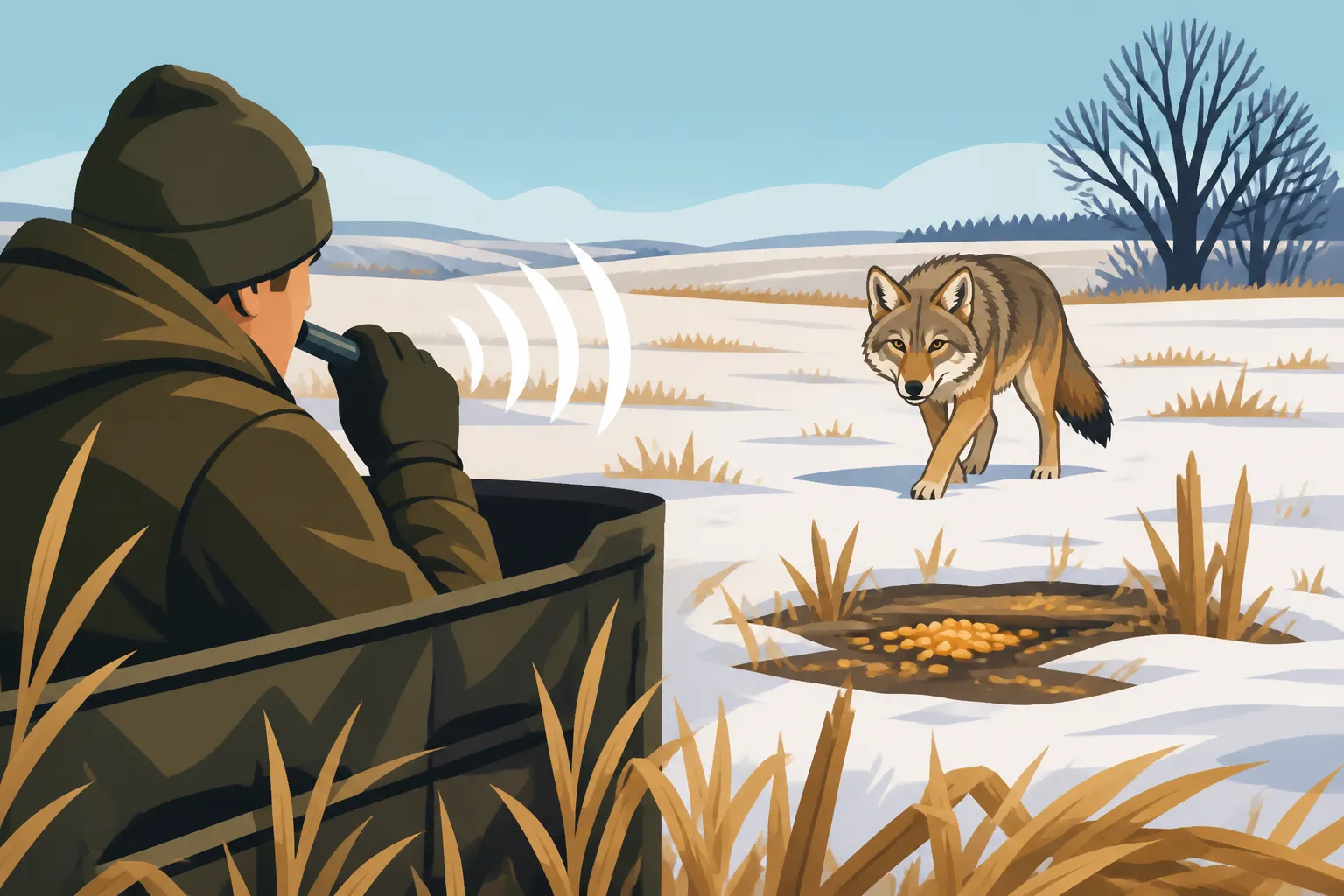
Once you’re in position, remain absolutely motionless. Any fidgeting, adjusting, or sudden movements can blow your cover. If using an e-call, place it 30-50 yards away, slightly to one side of your intended shooting lane. This draws the coyote's focus away from your hidden position. Ensure you have clear shooting lanes out to about 200-300 yards, as coyotes can cover ground quickly and might not commit fully to the call. Pay close attention to the wind, as it dictates how your scent will travel and how the coyotes will likely circle to get downwind of the sound. Often, a coyote will circle widely, trying to catch a whiff of what's making the noise. Knowing this helps you anticipate their approach and position yourself for a shot.
Call Sequences and Sounds
The sounds you choose and the sequence in which you deploy them are critical, particularly around a feed site. Coyotes here are hungry and opportunistic. Start with a soft, pleading distress call, like a lost pup or a weak rabbit. This can pique their curiosity without immediately alarming them. After a few minutes of no response, gradually increase the volume and intensity. The key is to sound like an easy meal or a vulnerable competitor. Popular sounds for winter include:
- Rabbit Distress: The classic. A dying or injured rabbit is an irresistible meal for a hungry coyote. Vary the pitch and duration to sound realistic.
- Pup Distress: This can be incredibly effective, especially if you're targeting older, territorial coyotes. They might respond to investigate a lost pup or eliminate a potential competitor.
- Bird Distress: While less common than rabbit, a hawk or crow in distress can signify an easy, unexpected meal.
- Coyote Howls/Barks: These are great for eliciting a territorial response. Start with a lone howl, wait for a response, then switch to barks or challenges. This can trick a dominant coyote into believing another is encroaching on its valuable winter feeding grounds.
A typical sequence might look like this: Start with 60 seconds of low-volume rabbit or pup distress. Wait 2-3 minutes. Repeat, slightly increasing volume. Wait longer, maybe 5 minutes. If no response, throw in a lone howl or a short series of barks, then immediately switch back to distress calls. The goal is to create a sense of urgency and opportunity. Don't be afraid to sit on a stand for 20-30 minutes, especially on cold, still days. Coyotes can take their time responding, often circling from far distances. Using the "distress-then-howl" combo can mimic a coyote that has just found an injured animal and is calling its pack, or a single coyote defending its find.
Reading Coyote Responses
This is where the psychological game truly kicks in. Coyotes rarely charge straight in. They’re intelligent, and their survival depends on caution. Learn to read their body language.
- The Hang-Up: This is common. A coyote approaches, often to about 200-300 yards, then stops, trying to pinpoint the sound and get downwind. This is a critical moment. Resist the urge to call aggressively. Sometimes, a soft whimper or a simple mouse squeak can be enough to draw them the rest of the way. If they appear to be leaving, a single, sharp bark can sometimes stop them momentarily, giving you a shot.
- Circling: As mentioned, coyotes often try to get downwind. Watch their direction of travel. If they're moving horizontally to your position, they're likely attempting to scent-check. Adjust your focus to anticipate where they'll emerge.
- Hesitation: A coyote may walk in slowly, stop, look, and listen. Maintain absolute stillness. They’re trying to catch movement or scent. A slight shift in your call (e.g., from a frantic rabbit to a softer, more mournful pup distress) can sometimes alleviate their suspicion.
- Aggressive Approach: Less common, but sometimes a dominant or very hungry coyote will charge in with purpose. Be ready.
The moment you see a coyote, stop calling and get ready to shoot. Any further calling or movement can cause them to bolt. Knowing when to quit calling and simply remain still, letting their curiosity or hunger bring them the rest of the way, is a skill honed over many hours in the field. Even if you're well-versed in Coyote Calling at First Light, adjusting to their heightened caution around feed sites is key.
Post-Call Considerations and Safety
Once the call is over, whether successful or not, there are still important steps to consider. From ethical shot placement to personal safety in the harsh North Dakota winter, these details ensure a responsible and enjoyable hunt.
Ethical Considerations and Shot Placement
As with any hunting, ethical considerations are paramount when calling coyotes. Your goal should always be a clean, humane kill. This means knowing your rifle and its capabilities, practicing your shooting, and understanding shot placement. A coyote's vital zone is relatively small, so aim for the shoulder-chest area. Ensure you have a clear, unobstructed shot and, critically, know your backdrop. Never take a shot if you’re unsure of what’s beyond your target, especially in open country where a bullet can travel for miles. In rural North Dakota, this often means being mindful of farmsteads, livestock, or roads that might be out of sight.
Beyond the shot, respect for the land and landowners is essential. If you're hunting on private land, ensure you have explicit permission. If on public land, adhere to all regulations. If you harvest a coyote, decide beforehand what you intend to do with it. Many hunters value the fur, especially a prime winter pelt, which can be quite beautiful. Others hunt purely for predator control, which is a valuable service to local deer and pheasant populations. Always retrieve any downed animals promptly. If you're Hunting a North Dakota Prairie Pothole Slough Edge, retrieving a coyote from icy water or deep snow requires careful planning.
Retrieving Coyotes and What to Do With Them
Retrieving a downed coyote in deep snow can be a chore, but it's important to do so quickly. If you're interested in the fur, getting the animal skinned promptly helps preserve its quality. Prime winter pelts can fetch a decent price, offering a small return on your hunting investment. Many local trappers or fur buyers can give you guidance on skinning or might even buy raw furs. If you don't intend to use the fur, disposing of the carcass respectfully is still important. Many landowners appreciate coyotes being removed from their property, especially around feed sites where they can be a nuisance or threat to livestock. Always check local regulations for carcass disposal. Leaving a carcass visible near a road or public area can create a negative impression of hunters, so exercise good judgment.
Safety Reminders in Cold Conditions
Hunting in North Dakota's winter environment carries inherent risks that extend beyond proper firearm handling. Hypothermia and frostbite are genuine dangers. Always inform someone of your hunting plans, including your location and expected return time. Carry a fully charged cell phone (though service can be spotty in remote areas), a map, and a compass or GPS. Pack emergency supplies: extra warm clothing, a fire-starting kit, high-energy snacks, and plenty of water (stored in an insulated container to prevent freezing).
Movement can be treacherous on icy surfaces or through deep, uneven snow. Be mindful of your footing, especially when traversing coulees or climbing over fences. If you're driving an ATV or snowmobile, ensure it's well-maintained and you're familiar with its operation in snowy conditions. Always practice safe firearm handling, keeping the muzzle pointed in a safe direction, especially when moving through brush or around other hunters. The thrill of a successful call can be exhilarating, but it's never worth compromising your safety or the safety of others. When facing conditions like Hunting Into a December Cold Snap, preparedness is not just recommended, it's absolutely vital.
Disclaimer
Always consult the latest North Dakota Game and Fish Department regulations before planning any hunting trip, as rules and seasons can change. This guide is for informational purposes only and should not replace official state hunting guidelines.