Drop Camp Options in North Dakota’s Badlands
The majestic, rugged expanse of North Dakota's Badlands calls to a certain kind of hunter—one who craves solitude, challenge, and the raw experience of the wild. But for many, the idea of a fully guided hunt feels a bit too polished, while a completely self-supported backcountry trip seems daunting, especially if you're not intimately familiar with the terrain or lack specialized gear. This guide will explore drop camp options, offering that perfect middle ground for hunters seeking an authentic Badlands adventure without having to manage every single logistical detail themselves.
What Exactly is a Drop Camp for North Dakota Hunting?
Imagine being deposited deep within the Badlands, far from roads and other hunters, with a comfortable camp already set up, and the peace of mind that transportation will be waiting to pick you up at the end of your adventure. That, in essence, is the magic of a drop camp. It's a fantastic option for those who want to immerse themselves in a challenging hunt without the full cost and structured schedule of a guided experience, nor the immense logistical burden of hauling in every piece of equipment yourself.
The Philosophy Behind a Drop Camp Experience
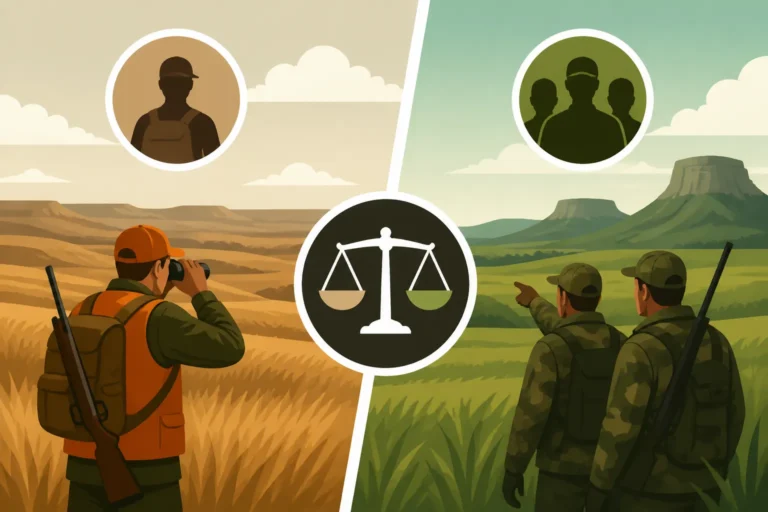
A drop camp is all about independence within a supported framework. It’s for the hunter who thrives on making their own decisions—where to hunt, when to hunt, what to stalk, and how to execute the shot—but appreciates a helping hand with the heavy lifting of getting to and from a remote location and having a basic, established base camp. Think of it as a wilderness taxi service that also sets up your temporary home. You’re still the architect of your hunt, relying on your scouting, hunting skills, and self-reliance, which is incredibly appealing in a place like the Badlands where every success feels hard-earned.
This option truly shines for those drawn to the rugged beauty of the Badlands, offering a chance to disconnect and truly engage with the environment. It strips away some of the comforts of modern life, but in return, it amplifies the sense of accomplishment. It’s a step up from backpacking in and carrying absolutely everything on your back, yet a step removed from having a guide lead you to every animal. This balance is often exactly what hunters are searching for when they consider venturing into more challenging, less-pressured areas.
Key Components of a Typical Drop Camp Service
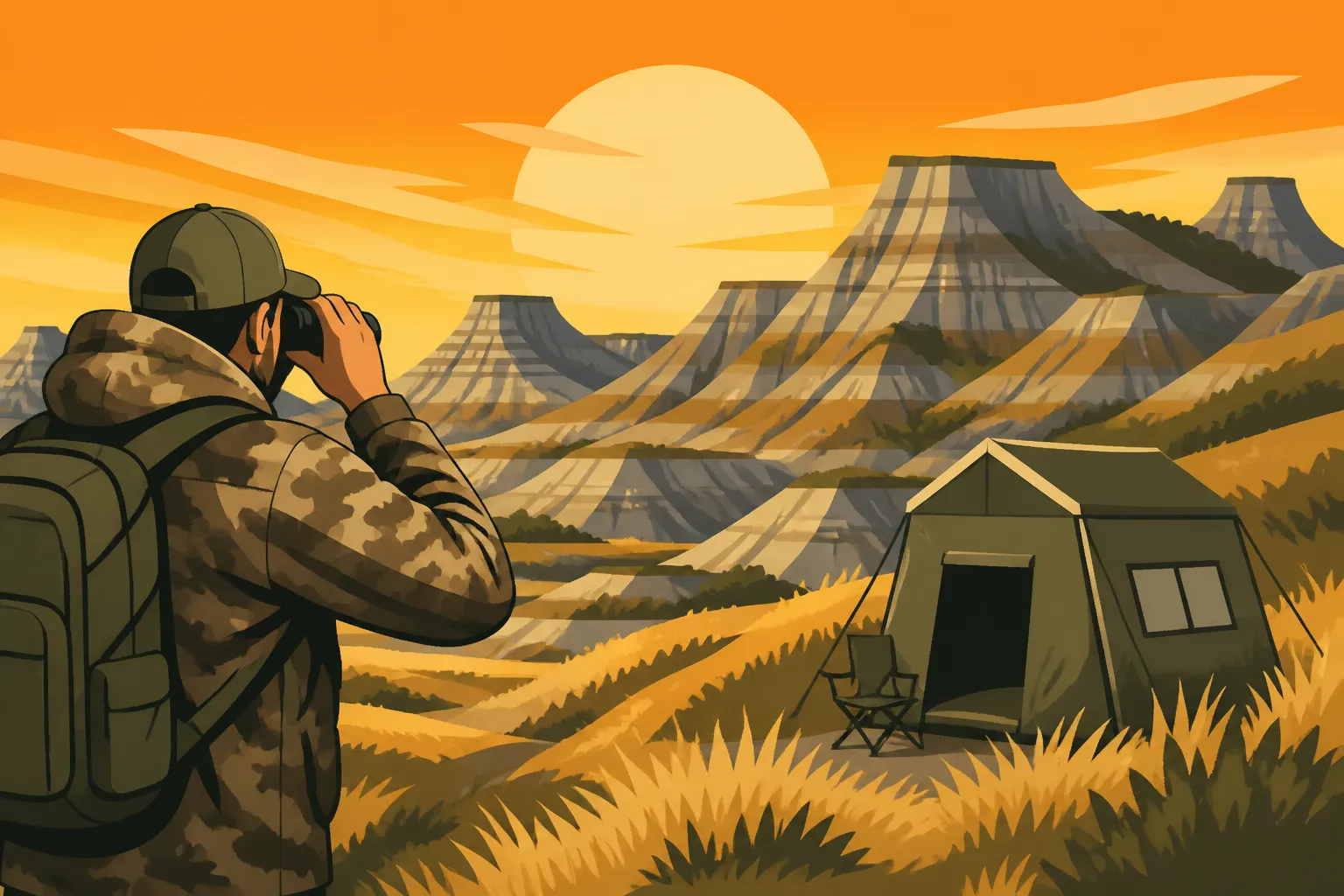
When you book a drop camp, you're primarily paying for access and basic infrastructure. Generally, the outfitter will provide transportation to a pre-arranged, remote campsite, often using specialized vehicles like ATVs, side-by-sides, or even horses to navigate the rough Badlands terrain. Once you arrive, a basic camp will typically be set up for you. This often includes a sturdy wall tent or larger dome tent, cots for sleeping, and perhaps a wood stove for warmth, which is absolutely crucial during those chilly North Dakota fall nights.
Beyond the shelter and sleeping arrangements, expect some basic amenities like a water supply (though you'll likely need to filter or treat it further), and a rudimentary cooking area with a table or a small propane stove. Some outfitters might even provide a cooler for your food or game. What you won't typically get is food, personal hunting gear, optics, weapons, or any actual hunting guidance. You are responsible for all your consumables and personal equipment, as well as all the hunting strategy, tracking, field dressing, and initial game retrieval to camp. The outfitter’s role usually ends at ensuring your safe transport and providing the basic camp setup, with a pre-scheduled pickup when your hunt concludes.
Why Choose a Drop Camp in the North Dakota Badlands?
The decision to opt for a drop camp in the Badlands isn't just about saving a few bucks; it's about curating a specific type of hunting experience. This region, with its dramatic landscapes, deep coulees, and challenging topography, truly lends itself to a blend of self-reliance and strategic support.
Balancing Cost and Independence for Your Hunt
Let's be honest, fully guided hunts can be a significant investment. While they offer unparalleled convenience and expert knowledge, not every hunter needs or wants that level of service. Drop camps provide a compelling alternative. You still get the benefit of an outfitter's logistical capabilities—their vehicles, their knowledge of remote access points, and sometimes even their established camps—but at a fraction of the cost. This allows you to allocate more of your budget to quality gear, travel, or even extending the length of your stay.
The independence aspect is equally important. Many hunters feel a deep satisfaction from earning their animal through their own grit and skill. A drop camp ensures that while you have a comfortable base, the hunt itself is entirely yours. You're responsible for your own scouting, your own tracking, and your own decision-making in the field. This freedom fosters a profound connection to the landscape and the hunt itself, making the experience incredibly rewarding. You're not following a guide; you're leading your own adventure, which for many is the true essence of hunting in a wild place.
Accessing Remote, Untouched Badlands Terrain
The North Dakota Badlands are beautiful but unforgiving. Vast tracts of public land, including the Hunting North Dakota's Little Missouri National Grassland, can be incredibly difficult to access. Many of the most promising hunting areas—where game might be less pressured due to their remote nature—are miles from any paved or even gravel roads, often requiring high-clearance 4×4 vehicles, ATVs, or even horses to reach. This is where a drop camp outfitter truly earns their keep. They possess the specialized equipment and expertise to get you and your gear into these deep, wild corners.
Without a drop camp service, reaching these isolated spots would require significant personal investment in off-road vehicles, a deep understanding of the local terrain, and the time to establish your own camp. An outfitter can transport you through challenging river crossings, up steep draws, or across miles of rugged prairie to locations that would otherwise be beyond the reach of most DIY hunters. This ability to penetrate deep into the Badlands means you're hunting areas that see far less human pressure, increasing your odds of encountering mature animals and experiencing true wilderness solitude. You might be able to access those secluded draws Where Badlands Bucks Bed in peace.
The Challenges and Skills Required for a Drop Camp Hunt
While drop camps offer support, they are far from a walk in the park. This isn't a pampered experience; it's a test of your hunting acumen and wilderness skills. You are ultimately responsible for your own safety and success once dropped off. This means you need to be proficient in navigation, often relying on GPS units, maps, and compass in areas with no cell service. Basic first-aid skills are non-negotiable, as help can be hours away in remote Badlands locations. You'll need to be self-sufficient in camp, managing cooking, water purification, and fire if your outfitter provides a wood stove.
Furthermore, hunting the Badlands requires excellent physical conditioning. The terrain is a constant series of steep draws, rolling hills, and deep coulees, often covered in loose rock and slippery clay. You’ll be doing a lot of hiking, often with elevation changes, and potentially packing out heavy game for miles. Physical Prep for Badlands Elk Terrain provides excellent insight into the kind of conditioning needed for this type of hunting. Mentally, you need to be prepared for solitude, potential harsh weather—North Dakota weather can change on a dime—and the possibility of a challenging hunt where success isn't guaranteed. This isn't a hunt for the faint of heart, but for those who embrace the challenge, it's incredibly rewarding.
Finding and Vetting Drop Camp Outfitters in the Badlands
Once you've decided a drop camp is right for you, the next crucial step is finding a reputable outfitter. This isn't a decision to take lightly, as your safety and the quality of your hunt largely depend on their reliability and professionalism.
Researching Reputable Outfitters
Start your search online, using keywords like "North Dakota Badlands drop camp," "Badlands elk drop camp," or "mule deer drop camp North Dakota." You'll find a variety of outfitters specializing in different species and levels of service. Websites like BookYourHunt can be a good starting point, as they often list outfitters with reviews and detailed package descriptions. Another excellent resource is GoHunt, which often has articles and forums where hunters discuss experiences and recommend services. Don't limit your research to just these; explore general hunting forums specific to North Dakota, where fellow hunters might share personal experiences and recommendations (or warnings).
Once you've identified a few potential outfitters, dive deeper. Check their official websites for more information, photos, and any listed affiliations. Look for testimonials and reviews beyond their own site—independent forums or review sites can offer a more candid perspective. A truly reputable outfitter will have a history of satisfied clients and be transparent about their services. Also, consider reaching out to the North Dakota Game and Fish Department; while they won't endorse specific businesses, they can often confirm if an outfitter is properly licensed and operating legally within the state.
Key Questions to Ask Before Booking
Before you put down a deposit, prepare a comprehensive list of questions for each outfitter. Clarity is paramount to avoid misunderstandings later. Here's a table to help you compare:
| Category | Drop Camp Inquiry | Fully Guided Inquiry | DIY (Self-Guided) Implication |
|---|---|---|---|
| Included/Excluded | What exact camp gear is provided (tent, cots, stove, water)? What about cooking utensils? Are fuel and water replenishment included? | What is included beyond hunting (food, lodging, game care, licenses, tips)? | You are responsible for everything from food to shelter to water. |
| Transportation | What vehicle types are used (ATV, horse, truck)? How far is the hike from drop-off point to camp? What is the pickup schedule? | How do we get to and from hunting areas daily? Is transport to/from airport included? | You are responsible for all transport to/from and within hunting areas. |
| Emergency Protocols | What communication methods are available in an emergency (satellite phone, radio)? What's the plan for medical emergencies? | What are the guide's emergency communication and first-aid capabilities? | You are solely responsible for all personal emergency preparedness. |
| Game Retrieval | What is the outfitter's policy for retrieving a harvested animal from the field to camp, and from camp to the truck? | How does the guide handle field dressing, quartering, and packing out game? | You are responsible for all aspects of game retrieval and processing. |
| Cancellations | What is the refund or rebooking policy for weather delays or personal cancellations? | What are the cancellation and refund policies for the entire package? | You bear all risks of cancellation or weather delays, with no recourse. |
| Land Access | Is the drop camp on public land or private land? Does the outfitter have proper permits/permission? | Is the hunting on private land, leased land, or public? | You must verify all public/private land boundaries and access laws yourself. |
Make sure to ask about their game retrieval policy. Some outfitters will help get a quartered animal from your camp to their truck, but very few will assist in packing it out from where it drops in a deep coulee. Understand these limitations upfront. Also, inquire about their experience specifically in the Badlands and with the species you are pursuing.
Understanding Permits and Land Access
It’s absolutely critical to understand where your drop camp will be located and what permits your outfitter holds. Many drop camps operate on public lands, such as the Little Missouri National Grassland. While these lands are open to the public, outfitters themselves must often hold special use permits to conduct commercial operations within them. Don't hesitate to ask for proof of these permits. If the outfitter claims access to private land, ask how they secure that access—is it leased, or do they have explicit permission from the landowner? You don't want to find yourself inadvertently trespassing.
Additionally, as the hunter, you are responsible for securing your own North Dakota Hunting Licenses and What They Cost, including any specific tags for deer, elk, or other species you plan to pursue. North Dakota has specific regulations, and it's your job to know and follow them. This also includes understanding local unit restrictions, season dates, and reporting requirements. For Badlands hunting, especially for mule deer or elk, tags are often lottery-based and can be difficult to draw, so plan your application strategy well in advance. Remember, a drop camp service provides logistics, not your hunting license.
Essential Gear and Preparation for Your Badlands Drop Camp
A successful Badlands drop camp hunt hinges heavily on what you bring and how you prepare. Unlike a fully guided trip where much is provided, a drop camp requires you to be self-sufficient with your personal and hunting gear.
Personal Gear and Survival Essentials
Your packing list for a Badlands drop camp needs to be robust, anticipating rapid weather changes and rugged conditions. Beyond your basic clothing (think layers, as mornings can be freezing and afternoons surprisingly warm), focus on survival essentials. A high-quality sleeping bag rated for well below freezing is a must, even in early fall. A comfortable sleeping pad will make a huge difference after long days hiking. For navigation, always carry a reliable GPS unit with extra batteries, a detailed paper map of the area (like a USGS topo map), and a compass. Don't rely solely on your phone; cell service is extremely spotty or nonexistent in many Badlands draws.
Water is another critical consideration. While an outfitter might provide a base supply, you'll need to carry water with you daily and have a reliable way to purify additional water from natural sources. A quality water filter or purification tablets are essential. A comprehensive first-aid kit, a headlamp with extra batteries, fire-starting materials, and a multi-tool or knife are non-negotiable. Sturdy, broken-in hunting boots with good ankle support are absolutely crucial for navigating the steep, unstable Badlands terrain. Even if your tent is provided, a small emergency bivy or tarp can be a lifesaver in an unexpected overnight situation away from camp.
Hunting-Specific Equipment and Logistics
Your hunting gear needs to be up to the task of Badlands challenges. For deer or elk, a reliable rifle with sufficient stopping power for the species you're pursuing is key. Consider a lighter rifle if you'll be doing extensive hiking. Optics are paramount in the wide-open Badlands; invest in high-quality binoculars (10x-12x) and a spotting scope on a sturdy tripod. This will be your primary tool for Glassing Badlands Coulees for Elk and identifying game at long distances. You'll spend hours glassing, so good glass reduces eye fatigue.
Game processing and packing equipment are also vital. Bring sharp knives, a bone saw, and plenty of durable game bags to protect your meat from flies and dirt. A sturdy backpacking frame or meat hauling pack will be your best friend when it comes time to pack out an animal, potentially for miles, over difficult ground. If you're hunting during archery season, broadheads should be sharp, and practice your long-range shooting, as shots can sometimes be extended in open country. For those pursuing elk, make sure your gear choices align with the challenges outlined in Packing for an Eight-Day North Dakota Elk Hunt.
Physical and Mental Conditioning
Underestimating the physical demands of a Badlands hunt is a common mistake. This isn't flat prairie hunting. The constant ups and downs, often with a pack, can quickly wear down even fit individuals. Begin a rigorous physical training regimen months before your hunt. Focus on cardiovascular endurance (hiking, running, stair climbing) and strength training, particularly for your legs and core. Practice hiking with a loaded backpack—mimicking the weight you'll carry when packing out an animal—over uneven terrain. This will help condition your body and break in your boots.
Mental conditioning is equally important. You'll be spending long hours in sometimes harsh conditions, often alone, with no guarantees of success. The Badlands can feel immense and isolating. Cultivate a resilient mindset, practice patience, and be prepared to push through discomfort. Understanding the realities of Wind and Thermals in Badlands Terrain will not only help you hunt more effectively but also prepare you for the often-blustery conditions that can test your resolve. Embrace the challenge, and recognize that the struggle is part of the reward.
On the Ground: Maximizing Your Badlands Drop Camp Hunt
Once you're in your drop camp, the real work—and fun—begins. Maximizing your success in the North Dakota Badlands requires smart strategy, efficient game handling, and unwavering commitment to safety.
Scouting and Strategy in Remote Areas
Even with a drop camp, effective scouting is your responsibility. Start long before your boots hit the ground with digital scouting. Utilize satellite imagery, topographic maps, and public land apps to identify key features like water sources, potential bedding areas, travel corridors, and escape routes. Look for fingers, saddles, and draws that funnel game movement. Identifying areas with minimal human disturbance will give you an edge. Reading Aerial Photos for Badlands Deer can be a game-changer here, helping you pinpoint potential hotspots from the comfort of your home.
Once on the ground, dedicate your first day, or at least a significant portion of it, to on-site scouting. Familiarize yourself with the immediate vicinity of your camp and push out to observe key areas identified during your digital scouting. Look for fresh sign: tracks, rubs, scrapes, and feeding areas. Pay close attention to wind direction and thermals, which shift throughout the day in the undulating Badlands. Hunting North Dakota's Badlands Mule Deer Country often involves extensive glassing from high vantage points, so find those glassing knobs that allow you to overlook vast expanses of terrain. Adapt your strategy daily based on game movement, weather, and pressure. Remember, you're hunting for North Dakota's Mule Deer Range, and understanding their habits in this unique environment is key.
Dealing with Game Retrieval in Challenging Terrain
This is arguably the most critical and physically demanding aspect of a Badlands drop camp hunt. If you're fortunate enough to harvest an animal, the real work of retrieval begins. The Badlands terrain makes it incredibly difficult, if not impossible, to drag a whole deer or elk. You will almost certainly need to field dress and quarter your animal where it falls. This is where your sharp knives, game bags, and bone saw become invaluable. Work quickly and efficiently to get the meat cooled, especially if temperatures are mild.
Once quartered, you'll pack the meat out to your camp, piece by piece, using your strong backpack frame. This can involve multiple trips over incredibly steep and broken terrain. If your outfitter offers assistance in getting the quartered meat from your camp to their truck, clarify the exact details of that service. Do they charge extra? What's the weight limit? For solo hunters, consider how you might manage a larger animal like an elk. Understanding techniques like those discussed in Recovering a Deer From a Coulee could prove invaluable if your animal goes down in a difficult spot. Proper planning for retrieval is not just about efficiency; it's about preserving the meat and ensuring your safety.
Safety and Emergency Planning
Given the remote nature of drop camps, safety and emergency preparedness cannot be overstated. Before you even leave home, share a detailed float plan or hunting itinerary with a trusted contact who knows your exact location, your planned routes, and when to expect to hear from you. This includes specific GPS coordinates of your drop camp and any planned daily excursions.
Carry a satellite communication device, such as a Garmin inReach or a Spot device. These allow for two-way text communication even without cell service, and more importantly, have an SOS button that can summon emergency services in a dire situation. Ensure everyone in your party knows how to use it. Beyond communication, carry an emergency shelter (like a space blanket or lightweight bivy), extra fire-starting material, and enough water/purification to last for several days beyond your planned stay, just in case weather or other unforeseen circumstances delay your pickup. Be aware of local hazards, including rattlesnakes (especially in warmer weather) and the extremely unpredictable nature of Badlands weather. Always carry enough gear to spend an unexpected night out if you get turned around or an animal takes you farther than planned. Stay vigilant, stay prepared, and respect the power of the Badlands.
Disclaimer
This article is for general informational purposes only and does not constitute professional advice. Laws, prices and regulations vary by location and change over time. Consult a qualified professional for guidance on your specific situation.