Hunting a Dam Spillway for Geese
Many waterfowl hunters in North Dakota know the frustration of finding fields pounded by pressure, or sloughs that seem to hold ducks one day and nothing the next. But one overlooked gem that can consistently hold geese, especially when other spots are getting shy, is a dam spillway. These areas, often dismissed as too small or too open, actually offer unique advantages for hunters willing to understand their dynamics, and this guide will walk you through everything you need to know to hunt them successfully.
Understanding Dam Spillway Dynamics for Geese
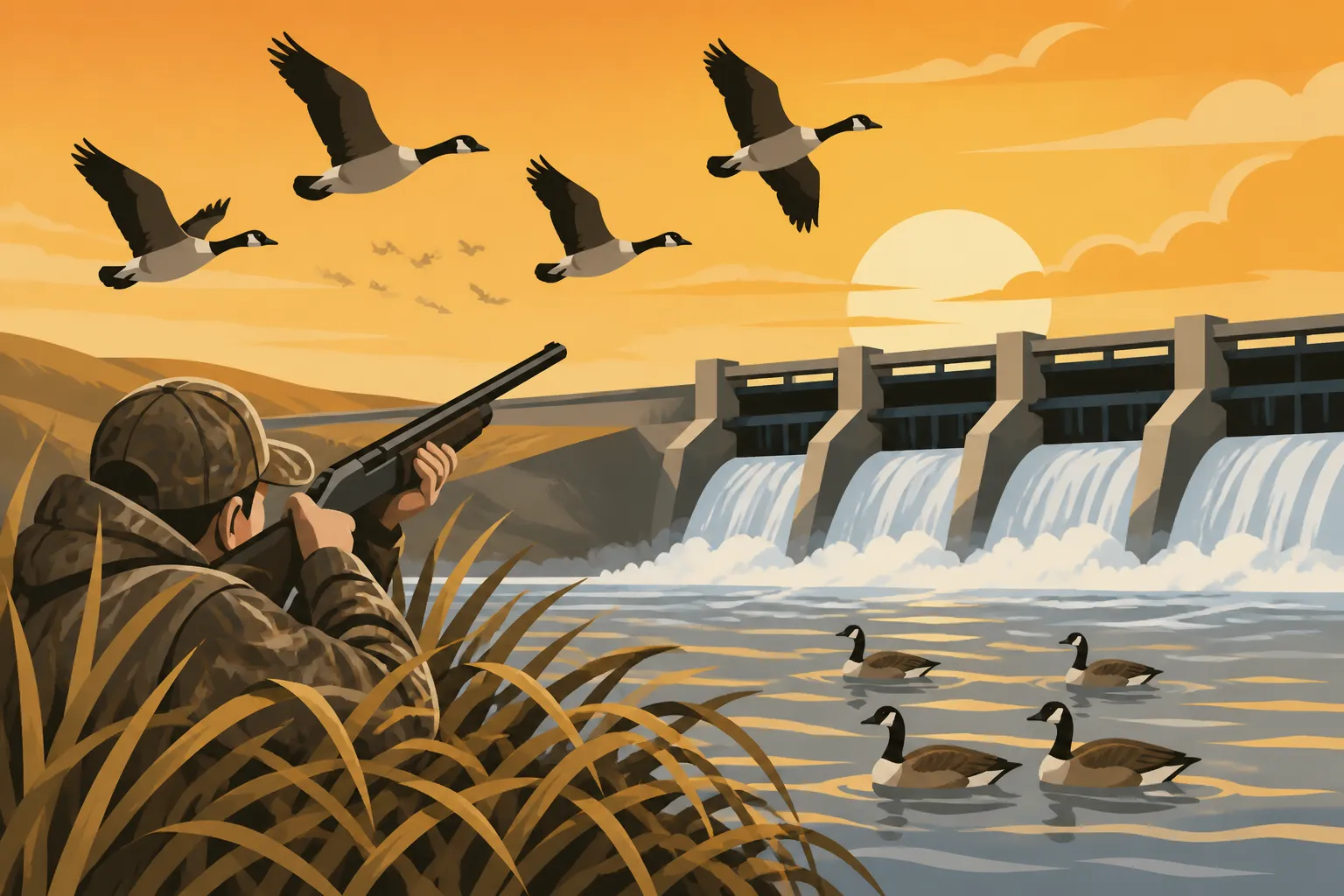
Dam spillways, whether they're the concrete structures or natural overflow channels of prairie impoundments, create unique microhabitats that can be incredibly attractive to geese. It’s not just about the water itself; it’s about the combination of safety, loafing opportunities, and often, nearby food sources that these areas provide. Ignoring them means missing out on some prime opportunities, especially later in the season.
Why Geese are Drawn to Spillways
Geese are creatures of habit and security, and spillways often fulfill both those needs in spades. For one, these areas provide open water access, which is crucial for geese to drink, bathe, and feel safe from predators. The water itself acts as a barrier, and the open sightlines around many spillways mean they can spot trouble from a long distance. Think about it: a big flock of Canada geese isn't going to settle down in a tight, timbered creek bed where a coyote or a fox could sneak up on them. They prefer expansive views, and often, dam spillways offer just that.
Beyond safety, spillways offer excellent loafing areas. Geese spend a considerable amount of their day just resting, preening, and socializing, particularly after feeding. The banks surrounding a spillway, especially if they're gently sloped or have low-lying vegetation, provide perfect spots for them to get out of the water and relax. These can become consistent staging areas before they fly out to feed in the mornings or return for the evening roost. The sheer predictability of their behavior around these features is a huge advantage for hunters.
Seasonal Considerations for Spillway Hunting
The attractiveness of a dam spillway to geese can change subtly throughout the hunting season, largely influenced by weather patterns and available food. In the early season, when temperatures are mild and natural wetlands are abundant, spillways might be just one of many options for geese. However, as the season progresses, things shift dramatically. Waterfowl, including geese, become more reliant on stable, ice-free water sources, and spillways, with their often deeper and more flowing water, are among the last to freeze up.
As snow blankets the fields and other shallow water bodies turn to ice, a dam spillway can become a major hub for thousands of birds. This is especially true if there are still accessible crop fields nearby, like standing corn or wheat stubble that hasn't been completely covered. During these late-season cold snaps, the open water of a spillway can be an absolute magnet. Understanding these seasonal nuances is key to timing your hunt effectively. You might not focus on them in September, but come November or December, they could be your best bet for Hunting Into a December Cold Snap.
Scouting and Reading the Spillway Landscape
Success in any type of hunting, but especially waterfowl, boils down to good scouting. You can have the best gear and the most expensive decoys, but if you're not where the birds want to be, it's all for naught. Dam spillways, with their distinct features, require a specific scouting approach to maximize your chances. This isn't just about finding water; it's about understanding how the geese are using that water and the surrounding landscape.
Identifying Key Access and Property Lines
Before you even set foot on the ground, you need to understand the lay of the land, particularly in terms of public and private ownership. Many dam spillways in North Dakota are found on or adjacent to public lands, such as Wildlife Management Areas or federal Waterfowl Production Areas. However, plenty of impoundments are on private property, or their spillways might run through a mix of both. This is where tools like onX Hunt become invaluable. You can overlay property lines onto satellite imagery, allowing you to identify public access points, determine if a spillway crosses private land, and plan your approach route. There's nothing worse than setting up a perfect spread only to realize you've inadvertently trespassed.
Beyond property lines, scouting involves identifying legal access points for vehicles or foot traffic. Some spillways might be accessible directly from a gravel road, while others require a significant hike across Public Land Open To Sportsmen (PLOTS) acres. Always check signs carefully and understand specific land use rules. You'll also want to look for potential areas to conceal yourself and your gear. Are there natural depressions, tall cattails, or a slight rise in the terrain that could hide a layout blind? This upfront work prevents frustrating surprises on hunt day and ensures you're hunting legally and safely. For more on navigating public lands, check out Scouting PLOTS Land Before Season.
Reading Goose Sign and Behavior
Once you've confirmed access, it’s time to read the actual goose sign. This means observing what the birds are doing and where they're doing it. Geese are masters of leaving clues. Look for droppings along the banks of the spillway – fresh droppings indicate recent use. Are there feather piles? This could point to a preferred loafing spot where they preen. Muddy tracks leading from the water's edge up onto a bank also tell a story of their travel and preferred exit/entry points. Pay close attention to these details; they're the breadcrumbs geese leave for you.
More importantly, observe their flight patterns. How are they approaching the spillway? Are they coming in from a particular direction, perhaps from a nearby feeding field or a larger body of water where they roost overnight? Where are they landing relative to the spillway structure? Are they favoring the main pool, or are they landing in the shallower, flowing water of the spillway itself? Watching this for a few mornings or evenings will give you critical insight into where to set up your decoys and blinds. Are they landing consistently in a small back eddy, or are they sliding into the main flow? These observations will dictate your entire setup strategy and are far more important than any specific decoy brand.
Essential Gear and Setup for Spillway Goose Hunting
Hunting a dam spillway for geese isn't terribly complicated, but it does require some thought about your gear and how you're going to use it effectively in this unique environment. You're often dealing with open spaces, potentially muddy or uneven terrain, and the specific dynamics of moving water. Having the right tools for the job can make the difference between a frustrating day and a successful one.
Decoy Spreads for Spillway Settings
Decoy spreads around a dam spillway often benefit from being a bit more concentrated and realistic than a wide-open field spread. Geese are often looking for safety in numbers in these smaller, more confined water areas. A mix of full-body field decoys on the banks and floating decoys in the water directly below the spillway can be highly effective. The goal is to mimic a flock that is actively loafing and resting, feeling secure in this specific spot.
Consider placing a small cluster of full-body decoys on a prominent bank where you've seen geese loafing during scouting. These should look relaxed, some preening, some resting their heads. In the water, floaters should be positioned to suggest feeding or comfortable birds, perhaps even creating a "landing zone" upwind from your blind. Don't be afraid to experiment with smaller, more natural spreads rather than a massive spread you might use in a huge field. Sometimes, 1-2 dozen well-placed decoys that perfectly emulate a small, content flock are far more effective than 50 scattered haphazardly. For ideas on floating spreads, look at Decoy Spreads for Prairie Pothole Mallards.
| Decoy Type | Placement | Purpose | Notes |
|---|---|---|---|
| Full-Body Field Decoys | Spillway banks, grassy edges | Loafing, resting, security | Use feeders and sentries; mimic natural flock behavior. |
| Floating Decoys | Water directly below spillway | Feeding, drinking, preening | Anchor securely, consider current; create a "hole" for landing. |
| Shell Decoys | Further back on flat ground | Adds numbers, visibility from a distance | Good for indicating larger flock size without bulk. |
| Motion Decoys (Flags) | Near blind or landing zone | Attract attention, signal safety to approaching birds | Use sparingly, mimic a flapping wing, especially on calm days. |
Concealment and Comfort
Because dam spillways are often quite open, concealment is paramount. This isn't like hunting a Shelterbelt Edge for Deer where natural cover is abundant. You'll likely be relying on some form of blind. Layout blinds are an excellent choice here, as they allow you to blend seamlessly into low-lying vegetation or bare ground. If there's a ditch or a slight depression near the spillway, that's often the perfect spot to tuck a layout blind. Brush it in heavily with natural vegetation from the immediate area – cattails, dry grass, whatever is available. The goal is to disappear into the landscape.
If layout blinds aren't an option, or if the terrain doesn't allow for them, a small A-frame blind or even a simple camouflage net draped over a low structure can work. The key is to break up your human outline. Remember, geese have incredible eyesight, and they've been hunted before. They're looking for anything out of place. Also, don't forget comfort. Hunting a spillway often means sitting still for extended periods in potentially damp or muddy conditions. Waterproof outerwear, warm layers, and perhaps a small, collapsible stool if you're not in a layout blind will make your hunt much more enjoyable and keep you focused.
Tactics for Successful Spillway Goose Decoying and Calling
Once you've scouted your location, understood the goose behavior, and have your gear ready, it’s time to focus on the active hunting tactics. Decoying and calling for geese around a dam spillway require a nuanced approach, combining realism with strategic placement to convince wary birds that your spot is the safest, most attractive place to be.
Strategic Decoy Placement for Landing Zones
The goal of your decoy spread is to create an illusion of safety and contentment, drawing incoming geese to a specific landing zone within shooting range. Around a spillway, this often means focusing your primary landing zone just downwind of the water, where the geese can easily coast in and land without having to fight a strong current or awkward angles. Watch during scouting where the birds naturally want to set down; sometimes it's directly into the shallow water, other times it's on a mud flat or grassy bank.
Consider placing your full-body decoys in small, natural-looking groups on the banks, with open space between them leading directly to your desired landing zone. Your floating decoys should also be arranged to funnel birds into this area. Think about creating a "hook" or a "J" shape with your decoys, leaving a wide-open pocket for the incoming birds. This tells them, "Hey, there's plenty of room here, come on in!" Avoid placing decoys too close to your blind; geese will often focus on the nearest decoys, potentially flaring if they see your concealment. Give them plenty of space to commit.
Effective Calling Techniques for Spillways
Calling geese on a spillway is less about ear-splitting volleys and more about realism and subtle invitation. While big, loud hails can get distant birds' attention, once they're focused on your spread, scale back to softer, more contented calls. Mimic the sounds of a happy, relaxed flock: soft clucks, murmurs, and occasional contented honks. This reinforces the idea that your setup is a safe haven.
Pay attention to how the geese respond. If they're cupping their wings and committing, ease off the call or go silent. If they seem hesitant or start to drift, a few soft clucks or a quiet pleading moan might be enough to pull them back. The wind plays a big role here, too. Geese will almost always land into the wind, so position yourself and your decoys to give them a natural flight path that brings them over your shooting zone. Practicing calling throughout the off-season will really hone your ear and your technique, and a good call in the hands of an experienced caller can be incredibly effective, especially when birds are being shy on public land. Rattling Volume on the Open Prairie for deer applies similarly to the nuance needed for waterfowl calling.
Weather and Environmental Adaptations
Hunting geese on a dam spillway means constantly adapting to North Dakota's notoriously unpredictable weather. From bluebird days to blizzards, the environment around these water features can change quickly, and your success often hinges on how well you adjust your strategy. It’s not just about staying warm, but about understanding how these elements influence goose behavior and your hunting approach.
Hunting in Varying Wind and Water Conditions
Wind is arguably the most crucial weather factor when goose hunting, and it's amplified around open spillways. Geese always land and take off into the wind, so your setup must account for this. On a calm day, birds might circle endlessly, struggling to commit because there's no clear wind direction to guide their approach. In these situations, using a subtle flag or adding a motion decoy can create just enough "movement" to entice them.
On windy days, which are common in North Dakota, geese will approach from a predictable direction. This makes your decoy spread placement even more critical. Ensure your landing zone is directly upwind of your blind. Strong winds can also create choppy water, making your floating decoys move more naturally, but they can also push birds off course or make them fly higher. Adjust your calling volume with the wind; loud hails might be necessary to cut through a strong breeze, while lighter calls work better on calmer days. Also, be mindful of currents in the spillway itself; securely anchor your floating decoys so they don't drift downstream.
Navigating Cold Fronts and Ice
North Dakota's late season often brings brutal cold fronts and ice, transforming the landscape and concentrating geese on the few remaining open water sources. Dam spillways, with their often deeper and sometimes moving water, are frequently the last places to freeze. This makes them prime hunting spots during hard freezes. However, hunting around ice requires special considerations. Ice can limit your access to water for floating decoys, or it can create treacherous footing along the banks.
When ice starts to form, look for open pockets of water where geese are concentrating. Sometimes, you can even break up a small section of ice near the edge to create an open hole for your decoys and a landing zone. Be extremely cautious walking on any ice; always assume it's unsafe unless you can absolutely verify its thickness. During these cold snaps, geese will be looking for accessible food sources, so if the spillway is near standing corn or stubble that's still exposed, it becomes an even stronger magnet. Prepare for extreme cold with proper layering and hand warmers, because patience in freezing conditions can pay off handsomely. Consider how Hunting After a Hard Prairie Winter impacts game movement when planning.
Respecting Regulations and Ethics on Spillways
No matter how good your scouting or how perfect your setup, ethical hunting and adherence to regulations are paramount. Dam spillways, like all hunting areas, have rules that ensure safety, sustainability, and respect for the environment and other users. Understanding these rules is not just about avoiding fines; it’s about upholding the integrity of the sport.
Waterfowl Hunting Regulations Specifics
North Dakota has clear regulations for waterfowl hunting, and these apply to dam spillways just as they do to any other wetland or field. Always check the current year's hunting proclamation for specific season dates, legal shooting hours, and bag limits. Bag limits for ducks and geese can vary, and there are often specific limits for certain species within the overall bag. For instance, there might be a daily bag limit for Canada geese, and separate limits for light geese or white-fronted geese. Familiarize yourself with these details, as well as identification, so you can correctly identify birds on the wing. You can find general information on North Dakota Duck and Goose Bag Limits.
Beyond bag limits, be aware of legal methods of take. Are you allowed to use electronic calls? What are the regulations on magazine capacity for your shotgun? Are there any specific baiting restrictions that apply to the area around the spillway? While some of these might seem minor, ignorance of the law is not an excuse. A quick check with the North Dakota Game and Fish Department's website or app, or a call to a local game warden, can clarify any uncertainties you might have. Platforms like GoHunt can sometimes provide aggregated regulatory information, but always cross-reference with the official source.
Ethical Practices and Public Land Etiquette
Hunting a dam spillway, especially if it's on public land or accessible to other recreationists, requires a strong commitment to ethical practices and good etiquette. This means being mindful of other hunters, anglers, or even hikers who might be using the area. Arrive early to set up well before legal shooting light, and respect established hunting spots if another group is already there. Often, the early bird truly gets the worm, or in this case, the best spot on the spillway. Pay attention to North Dakota Public Land Hunting Hours to avoid any confusion.
Always pick up all your spent shell casings, decoy anchors, and any trash you bring in. Leave the area cleaner than you found it. If you retrieve a downed goose and it drifts onto private land, make sure you have permission to retrieve it before crossing any property lines. Retrieving Game From Private Land in North Dakota covers these important considerations. Practicing ethical hunting not only enhances your own experience but also ensures that these valuable hunting areas remain open and accessible for future generations of hunters. It's about being a good steward of the land and the resource.
Disclaimer
This article is for general informational purposes only and does not constitute professional advice. Laws, prices and regulations vary by location and change over time. Consult a qualified professional for guidance on your specific situation.