Hunting a Coulee on Little Missouri Grassland
Hunting the rugged, broken country of the Little Missouri National Grassland can feel like an entirely different world than the open prairies. Specifically, those deep, winding coulees present a unique challenge, often hiding mature bucks that seem to vanish into thin air. If you’ve ever found yourself staring down into a maze of draws and steep cuts, wondering how on earth you're going to approach a deer in that cover, this guide is for you. We're going to dive deep into understanding these remarkable features, scouting them effectively, and implementing tactics that put you within range of North Dakota's elusive coulee whitetails and mule deer.
Understanding Little Missouri Grassland Coulees
The coulees of the Little Missouri National Grassland are truly something to behold – and to contend with. These aren't just gentle dips in the landscape; they are intricate systems of steep-sided ravines, carved out over millennia by water and wind. For hunters, they represent both a formidable barrier and an incredible opportunity.
What Makes Coulees Prime Hunting Habitat?
Think of a coulee as a natural fortress for wildlife. Its geological formation creates dramatic elevation changes, offering unparalleled protection from the harsh elements, especially the brutal North Dakota winds. On a blustery day, a deer can bed down on a south-facing slope within a coulee and be almost completely sheltered, conserving energy. These deep cuts also funnel whatever precious moisture falls, often supporting denser pockets of vegetation than the surrounding rangeland. You'll find chokecherry bushes, buffaloberry, serviceberry, and various shrubs that provide both browse and critical cover. This mosaic of shelter, food, and water sources makes coulees irresistible to deer, elk, and even pronghorn seeking refuge. They become natural travel corridors, bedding grounds, and feeding areas, especially during hunting season when pressure from humans pushes animals into the most remote and difficult-to-access spots. It's a refuge that can hold mature animals you might never see on the open prairie.
Deer, particularly older bucks, instinctively seek out these areas. They know the terrain provides excellent visibility from certain perches, allowing them to spot danger approaching from below or across a draw. At the same time, the broken topography helps them disappear quickly. Where Badlands Bucks Bed often involves a steep coulee side that offers both cover and a thermal advantage. Water can sometimes be found in the bottom of deeper coulees, either as a spring-fed seep or a collection point after rain or snowmelt, further enhancing their appeal to wildlife.
Navigating the Unique Terrain
Let's be honest: coulee country is tough on the body. This isn't your flat farm field walk. The terrain is characterized by steep, often crumbly slopes, sharp drainages, and deep cuts that can make a straight-line approach impossible. Every ridge you climb reveals another, deeper coulee beyond. This broken country impacts everything from how you access an area to how you track a deer once you've shot it. The physical demands are significant, requiring good conditioning, sturdy boots, and careful attention to foot placement. It's easy to turn an ankle or take a tumble if you're not constantly aware of your surroundings.
Safety is paramount. Always let someone know your general hunting area and expected return time. Carrying a reliable GPS device or a mapping app like onX Hunt is non-negotiable. Cell service is spotty at best in many of these draws, so downloadable maps are essential. Understanding how to read a topographic map, both digitally and on paper, will give you a crucial advantage in planning your routes, identifying potential escape routes for game, and knowing how to get yourself out of a tight spot. Physical Prep for Badlands Elk Terrain offers some great insights into getting ready for this kind of physical challenge, even if you're primarily after deer.
Scouting Strategies for Coulee Hunting
Before you ever set foot in a coulee with a weapon, you need to know it like the back of your hand. Effective scouting, both from your computer and on the ground, is the foundation of a successful coulee hunt.
Pre-Season Digital Scouting
Your couch can be your first and most effective scouting tool. Utilizing satellite imagery and topographic maps from platforms like onX Hunt or GoHunt allows you to meticulously dissect coulee systems from the comfort of your home. Start by identifying the main draws and how they connect. Look for key features that stand out:
- Pinch Points: Areas where a wide coulee narrows, forcing animal movement into a smaller corridor. These are prime ambush sites.
- Benches: Flat, often vegetated shelves along the coulee sides. These are classic bedding areas, offering deer a place to rest with a good vantage point.
- Water Sources: Any indication of water, whether a stock pond, a seasonal seep, or a spring, will draw animals.
- Travel Corridors: Look for subtle paths connecting different coulees or leading from coulee bottoms up to the surrounding rangeland.
- Vegetation Changes: Denser, darker green areas often indicate more cover or richer forage within a coulee.
Overlaying public land boundaries, which onX Hunt excels at, is also crucial, especially on the Little Missouri National Grassland, where private parcels can be interspersed. Identify all possible access points and plan multiple entry and exit strategies. Pay attention to how different coulees align with prevailing winds, as this will inform your approach during the hunt. Reading Aerial Photos for Badlands Deer provides more detailed tips on this important digital scouting phase. Mark potential bedding areas, travel routes, and glassing knobs as waypoints on your GPS or mapping app.
Boots-on-the-Ground Reconnaissance
Digital scouting gives you a great starting point, but nothing replaces boots-on-the-ground reconnaissance. Walking those coulees before the season opens (or during an early season hunt if conditions allow) is absolutely essential. This is where you verify your digital observations and discover the nuances only visible in person. Look for fresh sign:
- Tracks: Recent deer tracks, especially larger ones, indicate current movement. Pay attention to where they lead in and out of coulees.
- Rubs and Scrapes: These are clear indicators of buck activity. A line of rubs might mark a travel route, while a fresh scrape could be near a bedding area or feeding spot.
- Droppings: The freshness of droppings tells you how recently deer have been using an area.
- Bedding Areas: Look for matted-down grass or flattened areas, often on south-facing slopes within thick cover, protected from the wind.
While scouting, pay close attention to the wind and thermals. Walk a coulee system and feel how the air currents shift. In the mornings, air often flows downhill (down-drafts), while in the evenings, it tends to rise (up-drafts). This phenomenon, especially pronounced in broken country, will dictate your approach routes and stand/blind placement. Understanding Wind and Thermals in Badlands Terrain is not just academic; it's critical to avoid being "winded" by a wary buck. Mark any unexpected features, like hidden water sources or particularly dense cover, on your map.
Effective Hunting Tactics in Coulees
Hunting coulees demands patience, physical stamina, and a keen understanding of deer behavior in broken country. Adaptability is key, as conditions can change rapidly.
Still-Hunting and Spot-and-Stalk
These two methods are arguably the most effective for coulee hunting, particularly for mule deer and wary whitetails.
- Still-Hunting: This involves moving incredibly slowly and deliberately through the coulee system, often against the wind or with a crosswind. Take a few steps, then stop and glass meticulously. Scan every shadow, every cluster of brush, every bench. Use your binoculars more than your naked eye. The goal is to spot the deer before it spots you, often catching it bedded or moving slowly through cover. You're using the terrain to your advantage, moving from cover to cover. Think of it as stalking in slow motion. Focus on Hunting a Coulee Rim at Last Light or first light, when deer are most active.
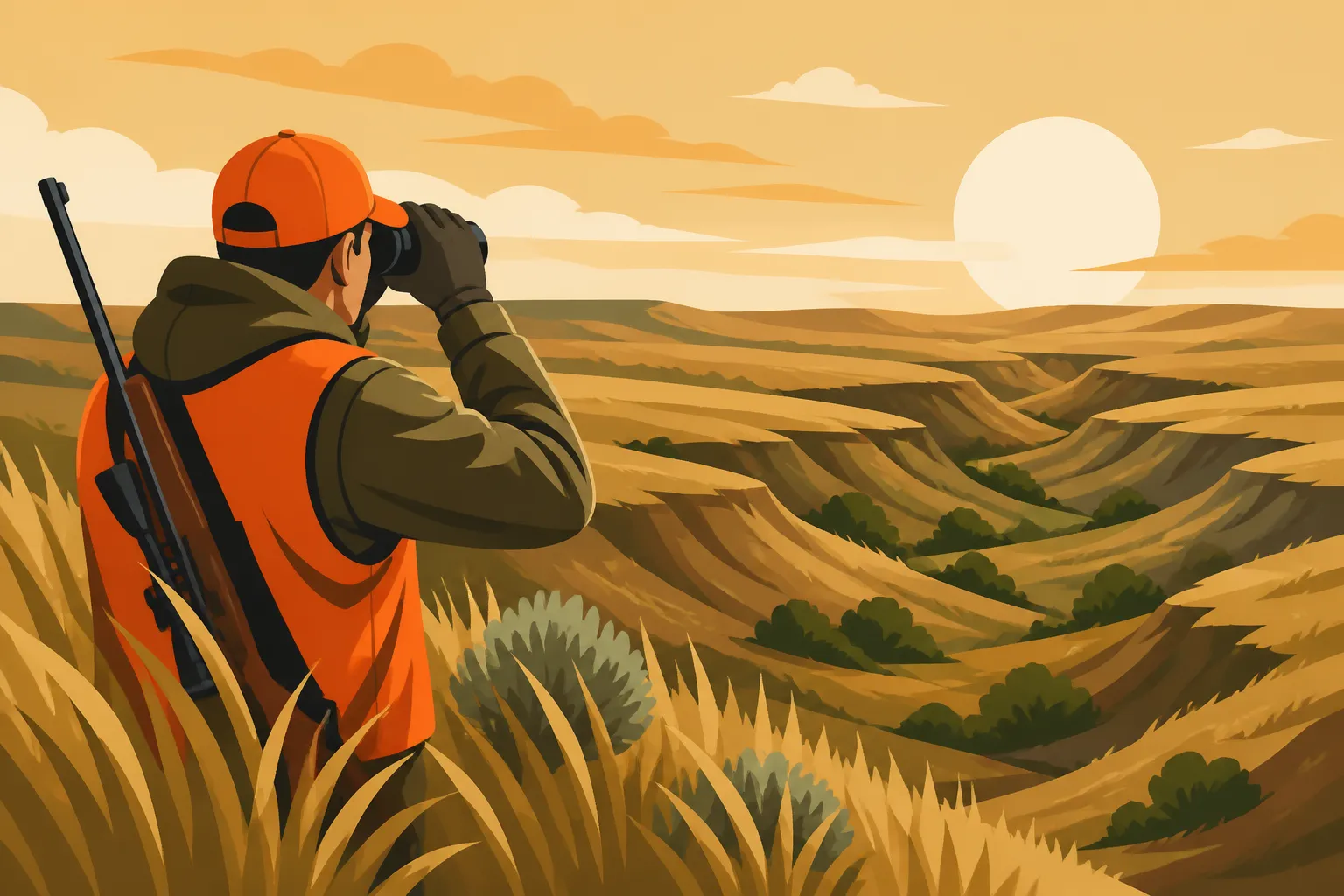
- Spot-and-Stalk: This tactic works beautifully in the open, expansive nature of the Little Missouri Grassland. Find a high vantage point – a coulee rim, a high knob – and spend hours glassing. A quality spotting scope is invaluable here. Look for subtle signs: a flicker of an ear, a patch of deer hide, the tine of an antler. Once you've spotted a deer, especially a bedded buck, meticulously plan your approach. Use the coulees, drainages, and natural contours of the land to hide your movement. Pay absolute attention to the wind. This often means long, circuitous routes that might take hours. It's a chess match, and every move counts. Glassing Badlands Coulees for Elk offers excellent advice that translates directly to deer hunting in this environment.
Here's a comparison of these two effective methods:
| Feature | Still-Hunting in Coulees | Spot-and-Stalk in Coulees |
|---|---|---|
| Approach | Slow, deliberate movement through habitat | Glass from vantage, then planned approach to target |
| Primary Use | Moving deer, finding bedded deer in thick cover | Bedded deer in open or semi-open areas, long distances |
| Wind Reliance | Critical to move into/across wind | Absolutely critical for approach, dictates route |
| Physical Demand | Moderate to High (constant movement, varied terrain) | High (long distances, steep ascents/descents, stealth) |
| Gear Focus | Binoculars, comfortable pack, quiet clothing | High-quality optics (spotting scope, binos), quiet gear |
| Patience Level | High (constant observation, slow pace) | Very High (hours of glassing, slow, deliberate stalk) |
| Visibility | Limited by immediate terrain/vegetation | Excellent initially from vantage, then limited by cover |
Using Ground Blinds and Stands
While less common than active hunting, ground blinds and stands certainly have their place in coulee country, especially when targeting whitetails.
- Ground Blinds: These can be very effective if placed strategically near known travel corridors, water sources at the bottom of a coulee, or feeding areas (if legal and applicable). Brushing in a blind along a natural funnel or at a pinch point can offer an excellent ambush opportunity. The key is to set it up well in advance to allow deer to get used to its presence. Pay close attention to wind direction for your chosen setup. Using a Ground Blind on PLOTS Land offers relevant insights into proper setup.
- Stands: Hanging a treestand in a coulee presents unique challenges. Large, mature trees suitable for stands can be scarce in some coulee systems. If you find one, position it to overlook a natural travel route, a rub line, or a feeding area. Again, wind and thermals are paramount. A portable climbing stick and stand combo might be your best bet, allowing you to adapt to new sign or changing conditions. Ensure your stand placement accounts for the thermal shifts we discussed earlier.
Managing Wind and Thermals
This cannot be stressed enough: wind and thermals are your master in coulee country. Disregard them at your peril. In broken terrain, air currents behave unpredictably. Beyond the general rule of "wind downhill in the morning, uphill in the evening," micro-thermals can exist within specific draws, swirling and changing direction with subtle shifts in terrain or sunlight.
- Morning Approach: Plan your entry to approach a coulee from above if possible, with a down-draft carrying your scent away from potential bedding areas in the bottom.
- Evening Approach: When deer are moving up to feed, approach from below, allowing the rising evening thermals to carry your scent upward and away.
- Prevailing Winds: Always consider the larger prevailing wind direction. If it's blowing strongly from the west, even thermals within a coulee will be influenced by that dominant flow. Use mapping apps like onX Hunt to check current wind conditions and plan accordingly. Never assume the wind is consistent; frequently check a wind indicator powder to monitor swirling currents.
Ignoring these atmospheric dynamics is the quickest way to alert every deer in the drainage to your presence. A savvy coulee hunter knows how to use the terrain to channel their scent in harmless directions, or to predict where a deer might scent them from, and plan around it.
Gear and Safety Considerations for Coulee Country
Hunting coulees is not for the faint of heart or the ill-prepared. The challenging terrain demands specific gear and a steadfast commitment to safety.
Essential Gear for Tough Terrain
Your gear list for coulee hunting should prioritize durability, functionality, and lightweight efficiency. Every ounce matters when you're climbing in and out of those draws.
- Footwear: Invest in high-quality, ankle-supporting hiking boots with excellent traction. Waterproofing is a plus, as coulee bottoms can be damp. Break them in well before your hunt.
- Optics: Top-tier binoculars (10×42 or 12×50) are essential for picking apart distant hillsides and shaded coulee bottoms. A spotting scope (15-45x or 20-60x) is invaluable for long-range glassing from a vantage point, allowing you to pick out a bedded deer hundreds or even a thousand yards away without disturbing it.
- Navigation: A reliable GPS unit or a fully charged smartphone with offline maps (onX Hunt or GoHunt are excellent for this) is non-negotiable. Carry a portable power bank to recharge your devices.
- Hydration: Always carry more water than you think you'll need. The physical exertion and dry air can quickly lead to dehydration. A hydration bladder in your pack is often more convenient than bottles.
- First-Aid Kit: A basic kit for cuts, blisters, and sprains is crucial. You'll be far from immediate help.
- Layered Clothing: North Dakota weather is famously unpredictable. Dress in layers that you can easily add or shed to adapt to changing temperatures and exertion levels. Quality rain gear is also a must.
- Hunting Pack: A comfortable pack that can carry your essentials, optics, and potentially a boned-out animal quarter is vital. Look for one with good suspension and waist support.
- Wind Indicator: A small bottle of scent-free powder is cheap insurance to check wind direction and swirling thermals.
Remember, the goal is to carry what you need without being overloaded. A heavy pack will sap your energy quickly in this terrain. Packing for an Eight-Day North Dakota Elk Hunt provides an excellent foundation for packing efficiently for a strenuous hunt.
Safety on the Little Missouri Grassland
The remote and rugged nature of coulee hunting means that self-reliance and preparedness are your best friends.
- Communicate Your Plans: Always inform a non-hunting friend or family member of your exact hunting area, your planned routes, and your expected return time. This is perhaps the most critical safety step.
- Stay Hydrated and Fed: Don't skip meals or neglect hydration. Fatigue can lead to poor decision-making and accidents.
- Terrain Hazards: Be constantly aware of steep drops, loose shale, hidden holes, and slippery grass. Use trekking poles for stability if needed.
- Weather Awareness: North Dakota weather can turn quickly. A sunny morning can become a blizzard by afternoon, even outside of winter. Check forecasts religiously and be prepared for sudden changes. Carry extra layers, a survival blanket, and a way to start a fire.
- Wildlife Encounters: While rare, be aware of the potential for encountering rattlesnakes (especially in warmer months), coyotes, or even a startled bison or elk. Know how to react appropriately.
- Getting Lost: This is a real possibility in a complex coulee system, especially when focused on tracking an animal or when visibility drops due to weather. Trust your GPS and marked waypoints. If you realize you're truly disoriented, stay calm, consult your map, and if necessary, stay put and signal for help.
Hunting a coulee on the Little Missouri Grassland offers an incredible, challenging, and deeply rewarding experience. By understanding the terrain, scouting thoroughly, employing smart tactics, and prioritizing safety, you can greatly increase your chances of success and, more importantly, enjoy the rugged beauty of North Dakota's Badlands.
Disclaimer
This article is for general informational purposes only and does not constitute professional advice. Laws, prices and regulations vary by location and change over time. Consult a qualified professional for guidance on your specific situation.