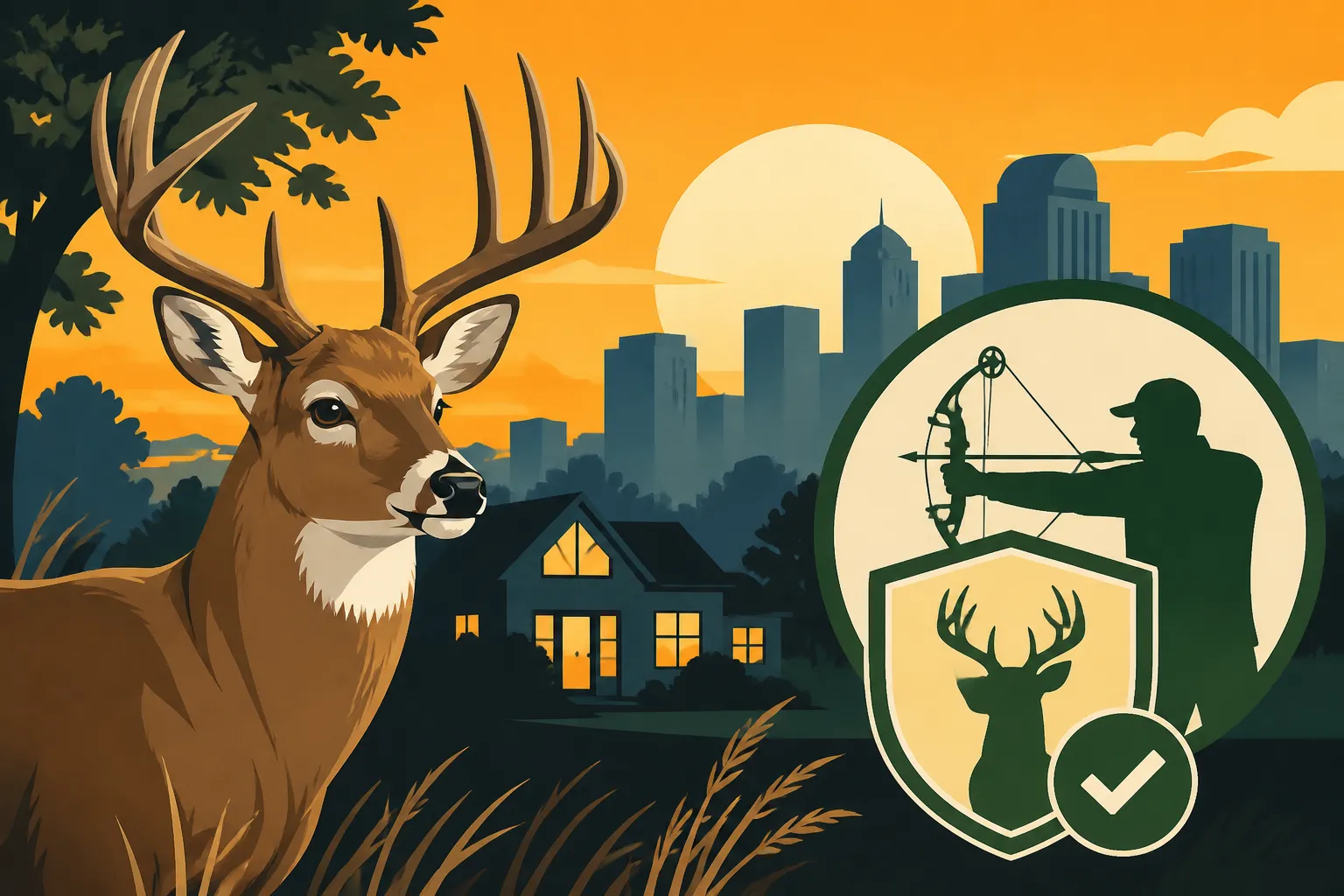
North Dakota Urban Deer Management Permits
It’s a familiar sight for many North Dakotans: a beautiful whitetail deer, not in a sprawling field or dense river bottom, but munching on roses in a backyard, darting across a busy street, or even bedding down in a city park. While seeing wildlife close-up can be charming, the reality of urban deer populations often brings significant challenges, from widespread landscape damage to alarming increases in vehicle collisions. This guide will delve deep into North Dakota's Urban Deer Management Permits, exploring why they exist, how they function, and what they mean for communities and hunters alike.
Understanding the Problem: Why Urban Deer Management is Necessary
The picturesque image of deer grazing near homes belies a complex issue that many communities across North Dakota grapple with. As human development expands, it often encroaches upon or fragments natural deer habitat. However, deer are incredibly adaptable creatures, and urban environments, with their manicured lawns, abundant garden plants, and reduced predator presence, can become veritable deer buffets. This leads to a concentration of deer in areas ill-equipped to handle them, creating a cascade of problems.
The Challenges of Urban Deer Overpopulation
When deer numbers swell beyond what an urban or suburban area can sustainably support, the ecosystem balance shifts dramatically. For instance, in cities like Bismarck or Fargo, homeowners often report significant damage to their landscaping, gardens, and even small trees. These aren’t just minor nuisances; the cost of replacing cherished plants or repairing deer-damaged shrubs can run into hundreds or even thousands of dollars annually for affected residents. Beyond property, an overabundance of deer can also negatively impact native urban flora, leading to overbrowsing of natural understory vegetation in parks and green spaces, which in turn can affect other wildlife species that rely on those plant communities. Furthermore, high deer densities can contribute to the spread of diseases, though less common in urban settings, concerns about illnesses like Chronic Wasting Disease (CWD) are always present, especially in North Dakota's Fourteen-Unit CWD Zone.
Safety Concerns and Property Damage
Perhaps the most critical concern stemming from urban deer populations is public safety. Deer-vehicle collisions are a persistent and dangerous issue across the state, and urban areas are no exception. Imagine driving home after a long day, only for a deer to suddenly leap out from a shelterbelt edge or a park's tree line directly into your path. These incidents not only cause substantial property damage to vehicles but also result in serious injuries, and sometimes even fatalities, for drivers and passengers. The North Dakota Game and Fish Department (NDGFD) consistently monitors these statistics, which unfortunately tend to rise in areas with high deer densities, especially during migration periods or the rut in early-to-mid November. This is why tools like the Urban Deer Management Permits become essential—they offer a way to proactively reduce these risks, making roads safer for everyone.
How Urban Deer Management Permits Work in North Dakota
North Dakota’s Urban Deer Management Permits aren't a free-for-all hunting opportunity within city limits. Instead, they are a carefully structured, often multi-phase program designed and implemented by the North Dakota Game and Fish Department in cooperation with participating cities. The primary goal is precise, targeted population control, utilizing hunters as a safe and effective management tool where traditional hunting seasons aren't viable due to population density and safety concerns.
Program Goals and Participating Communities
The core objective of the Urban Deer Management Permit program is to reduce deer populations in specific urban zones to alleviate conflicts with humans, decrease vehicle accidents, and mitigate property damage. This isn't a statewide initiative but rather a localized effort, meaning only certain cities that formally apply and meet NDGFD criteria can participate. For example, communities like Grand Forks, Bismarck, and Minot have utilized these permits in the past, each with their own unique program structure tailored to local needs. The NDGFD works closely with city officials to establish specific boundaries, safe zones, and the number of permits issued, ensuring the program addresses the problem without compromising public safety or the quality of life for residents. These programs often focus heavily on antlerless deer harvest to effectively curb population growth.
Permit Types and Season Structure
Unlike a regular North Dakota Hunting Licenses and What They Cost, these urban permits typically operate under highly specific rules. The seasons for urban deer management are usually separate from the general statewide seasons and can vary by city. Often, these programs will incorporate an archery-only phase, followed by, or sometimes concurrent with, a firearms phase, with strict limitations on weapon types. For instance, archery equipment might be allowed for a longer duration due to its quieter nature and shorter effective range, making it safer in developed areas. When firearms are permitted, they are generally limited to specific types, such as shotguns with slugs or muzzleloaders, and often require elevated stands to ensure downward trajectory of projectiles. This strategic approach minimizes risk while maximizing effectiveness. Hunters interested in these specialized opportunities often use resources like GoHunt to track application deadlines or program details, though direct communication with the NDGFD and participating city offices is always paramount.
Legal Framework and Regulations
The legal framework governing Urban Deer Management Permits is robust and designed for safety and control. Permits are issued directly by the NDGFD after careful consultation with local municipalities. Hunters must adhere to strict guidelines that go beyond standard hunting regulations. This includes specific boundaries where hunting is permitted, designated safe zones where no hunting is allowed, and often mandatory attendance at a program orientation or safety briefing. There are also precise rules regarding shot angles, proximity to dwellings, and retrieval of harvested animals. For example, retrieval of a downed deer from private property almost always requires explicit landowner permission, a rule that often applies to Retrieving Game From Private Land in North Dakota even outside urban zones. These stringent regulations ensure that the program achieves its goals responsibly and ethically, protecting both the public and the hunters involved.
Applying for and Utilizing an Urban Deer Management Permit
Securing and utilizing an Urban Deer Management Permit in North Dakota requires a hunter to be diligent, responsible, and fully aware of the stringent rules. This isn't a casual hunting opportunity; it's a commitment to community safety and effective wildlife management.
Eligibility and Application Process
Typically, to be eligible for an Urban Deer Management Permit, an applicant must be a resident of North Dakota and possess a valid hunting license. In many cases, participating cities or the NDGFD may require hunters to demonstrate a certain level of proficiency, such as having extensive archery experience or passing a qualification course. Some programs might even give preference to those who have drawn specific deer tags for the unit, or hunters willing to specifically target antlerless deer.
The application process usually involves submitting an application directly to the participating city or the NDGFD, often by a specific deadline. For example, a city might open applications in late summer or early fall, leading up to a management season that runs through the colder months. It’s crucial to watch the NDGFD announcements and local city government websites for these opportunities, as they are not widely publicized like general season draws. While tools like GoHunt can help stay informed about general hunting seasons, the hyper-local nature of these urban permits means you'll need to dig a little deeper. Background checks and proof of insurance might also be part of the requirement, ensuring that only qualified, responsible individuals are entrusted with these permits.
Approved Methods and Locations
Once a permit is acquired, understanding the approved methods and specific hunting locations is paramount. As mentioned, most urban programs lean heavily on archery equipment due to its safety profile in populated areas. Some programs, however, may allow for the use of shotguns with slugs or muzzleloaders, but these are often limited to elevated stands to ensure downward trajectory and minimize risk. The specific areas where permit holders can hunt are meticulously defined. These aren't just "anywhere within city limits." They are often parcels of land within city parks, green spaces, or private properties where landowners have explicitly granted permission.
A hunter utilizing such a permit must also be acutely aware of North Dakota Public Land Hunting Hours and any specific city ordinances that might further restrict shooting times or locations. Imagine being granted access to a large tract of private land on the edge of a Bismarck neighborhood; you’d need to meticulously review the map provided by the city or NDGFD to ensure your stand placement and shot opportunities are well within the designated safe zones and far from any residences.
Here's a generalized table illustrating common elements of urban deer management programs:
| Feature | Archery Phase (Common) | Firearm Phase (Less Common/Restricted) |
|---|---|---|
| Weapon Type | Compound bow, Recurve bow, Crossbow | Shotgun with slugs, Muzzleloader |
| Stand Requirement | Often encouraged or required (elevated) | Almost always required (elevated) |
| Season Length | Longer, typically fall through winter | Shorter, specific windows |
| Location | Designated urban zones, private land w/ permission | Highly restricted, specific areas |
| Target | Primarily antlerless deer | Primarily antlerless deer |
| Safety Zone | Strict distances from dwellings/roads | More stringent distances required |
| Reporting | Mandatory for all harvested deer | Mandatory for all harvested deer |
| Permit Acquisition | NDGFD/City Application, may require proficiency test | NDGFD/City Application, may require proficiency test |
Reporting Requirements and Ethical Considerations
Harvesting a deer under an Urban Deer Management Permit comes with strict North Dakota Deer Reporting Requirements. Just like with any general deer tag, hunters must report their harvest to the NDGFD, typically online or through the official NDGFD app. This data is critical for the NDGFD to assess the program's effectiveness and make informed decisions for future management efforts. Failure to report can result in penalties and jeopardize future participation.
Beyond the legal requirements, ethical considerations are paramount. This is a management program, not simply a hunting expedition. Hunters are expected to conduct themselves with the utmost professionalism, respecting landowners, other residents, and the public's perception of hunting. This includes discreet access and egress from hunting locations, proper field dressing away from public view, and immediate retrieval of downed animals. Understanding the unique challenges of Hunting a Shelterbelt Edge for Deer within or near urban areas requires extra vigilance to ensure safety and ethical conduct. Hunters should always wear proper North Dakota Blaze Orange Requirements if mandated, and always carry proof of their permit and license.
Impact and Importance of Urban Deer Management
The implementation of Urban Deer Management Permits in North Dakota has far-reaching effects, directly benefiting both human communities and the deer populations themselves. These programs are a testament to adaptive wildlife management, addressing issues that arise when wildlife and human development intersect.
Benefits to Communities and Deer Herds
For communities, the most immediate and tangible benefit is a reduction in deer-related conflicts. Fewer deer means less damage to personal property, gardens, and landscaping, saving homeowners considerable time, effort, and money. More importantly, a managed urban deer population directly translates to enhanced public safety through a significant decrease in deer-vehicle collisions. This not only prevents accidents but also reduces the associated economic costs of vehicle repairs, medical bills, and insurance claims. It’s a collective sigh of relief for residents tired of constant vigilance on their morning commute.
From a wildlife perspective, these programs contribute to healthier deer herds in the long run. Overpopulation, even with abundant food sources, can lead to increased stress on individual animals, making them more susceptible to disease and potentially reducing overall herd health. By controlling numbers, urban deer management helps maintain a population that is more in tune with the available habitat, reducing the likelihood of widespread disease outbreaks or starvation during harsh winters, especially after a Hunting After a Hard Prairie Winter. It’s about ensuring a sustainable balance rather than allowing unmanaged growth that ultimately harms the animals themselves.
Community Involvement and Future Outlook
The success of any urban deer management program hinges heavily on community involvement and support. This extends beyond just the hunters holding permits. Landowners granting access, local law enforcement coordinating safety, and general residents understanding the rationale behind the program are all crucial. Public meetings and informational campaigns, often facilitated by the NDGFD, play a vital role in educating citizens about the challenges of urban deer and the need for management strategies. This dialogue helps dispel misconceptions and garners broader acceptance for what can sometimes be a sensitive topic.
Looking ahead, as North Dakota's population centers continue to grow, the need for adaptive wildlife management tools like Urban Deer Management Permits will likely only increase. The NDGFD continually evaluates these programs, learning from each year's data and community feedback. This iterative process allows for adjustments in permit numbers, season structures, and approved methods, ensuring the programs remain effective and relevant. Hunters who wish to contribute to these vital conservation efforts should actively seek information from the NDGFD website or local city offices and consider participating responsibly. It's a unique way to put your hunting skills to good use for the benefit of both wildlife and human communities.
Disclaimer
Please note that hunting regulations, permit availability, and specific program details for North Dakota's Urban Deer Management Permits can change annually. This article provides general information and should not be considered a substitute for consulting the most current North Dakota Game and Fish Department regulations and specific city ordinances before planning any hunting or management activities. Always verify all rules and dates directly with the official sources.