North Dakota Ferruginous Hawk Nesting Sites
Many of us spend countless hours traversing North Dakota's vast landscapes, eyes peeled for deer, pheasants, or ducks. But sometimes, when you lift your gaze to the vast sky or scour the distant buttes, you might spot one of our most magnificent, yet often overlooked, aerial predators: the Ferruginous Hawk. These incredible raptors, with their striking size and powerful presence, choose very specific and often subtle spots to raise their young. Finding and understanding North Dakota Ferruginous Hawk nesting sites isn't just a fascinating wildlife pursuit; it's a step toward appreciating and protecting these vital components of our prairie ecosystem, and this guide will help you understand where to look and what to consider.
The Ferruginous Hawk: A North Dakota Icon of the Open Prairie
It's easy to dismiss a distant hawk as "just another bird," but the Ferruginous Hawk is truly special, a flagship species of our western and central North Dakota grasslands. These are not your common Red-tailed Hawks, though they're often confused. Ferruginous Hawks are the largest North American hawks, boasting a wingspan that can reach five feet. Their name, "ferruginous," refers to the rusty, reddish-brown coloration on their backs and legs, which often creates a striking "V" pattern when seen from below against their bright white underparts. They prefer wide-open spaces, making them perfectly at home in the expansive prairie, badlands, and mixed-grass regions of our state.
The presence of Ferruginous Hawks speaks volumes about the health of the prairie ecosystem. They are top-tier predators, primarily feasting on ground squirrels, prairie dogs, and other small mammals that thrive in intact grasslands. A thriving population of these hawks indicates a healthy prey base and undisturbed nesting habitat, something increasingly vital to monitor and protect. Unfortunately, habitat loss and fragmentation have impacted their numbers in some areas, making every nesting site a critical point for their long-term survival here in North Dakota. Understanding their needs helps us all be better stewards of the land, whether we're hunting or just enjoying the scenery.
Think about it: when you're glassing a distant hillside for a mule deer buck, or scanning a CRP field for a rooster pheasant, you're in the same general habitat these hawks rely on. Their nests are an indicator of high-quality, undisturbed habitat, areas that are often prime for other wildlife too. This interconnectedness is what makes North Dakota's wild spaces so special. North Dakota Sharptail Grouse Population also thrives in similar prairie environments, demonstrating the shared needs of many species. Just like a strong deer herd depends on good cover and food, these magnificent raptors rely on an abundance of small prey and secure nesting structures.
Identifying Prime Ferruginous Hawk Nesting Habitat
Finding a Ferruginous Hawk nesting site can feel like finding a needle in a haystack across North Dakota's vastness, but knowing what they prefer drastically improves your odds. These intelligent birds are very particular about where they choose to raise their young, prioritizing security, visibility, and proximity to food sources. Generally, they are looking for elevated structures or prominent landscape features that offer a commanding view of their hunting grounds.
Preferred Geographical Areas
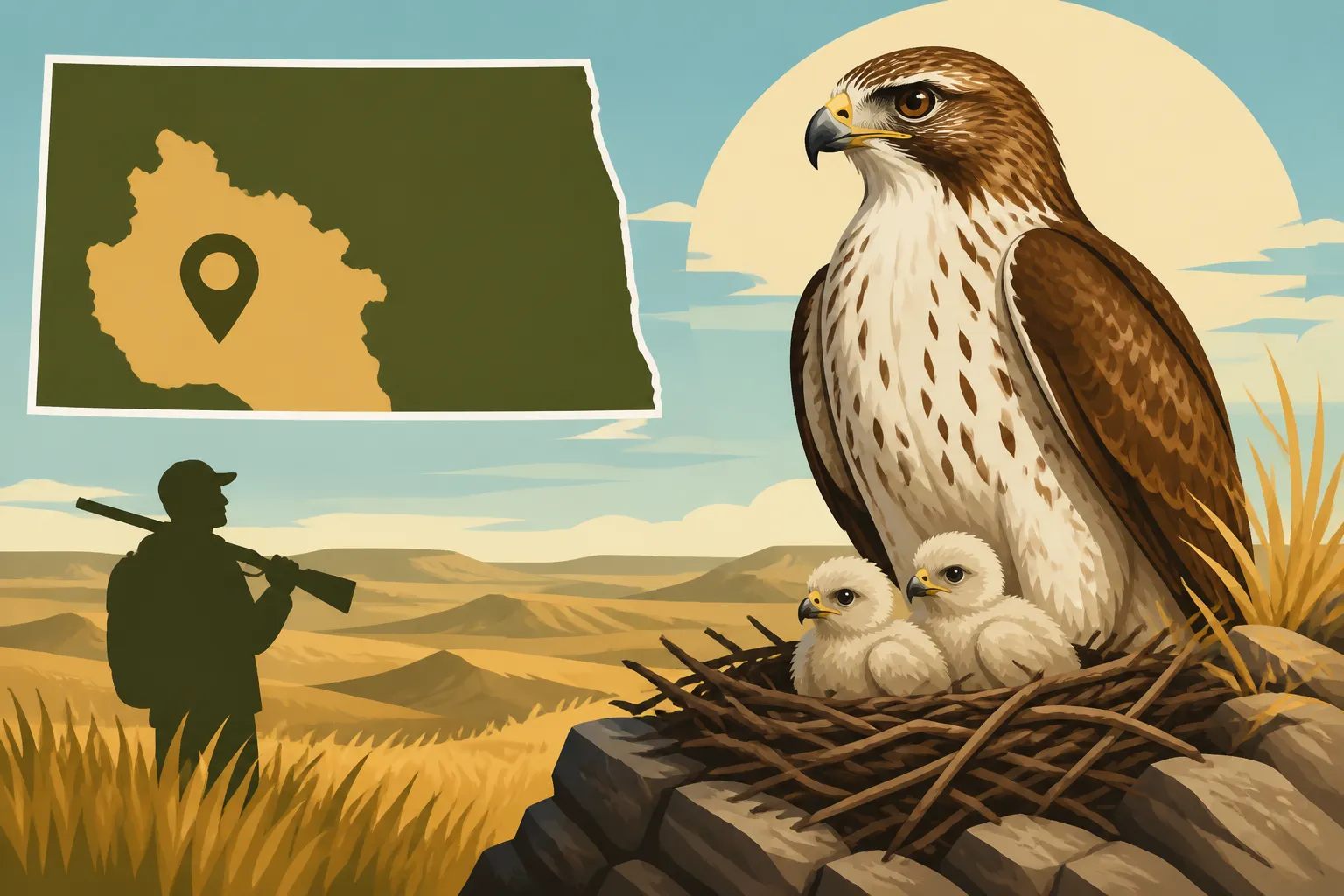
In North Dakota, you'll most consistently find Ferruginous Hawks in the western and central parts of the state. This includes the rugged terrain of the Badlands, the vast stretches of mixed-grass prairie, and areas where prairie dog towns are prevalent. Think about counties like McKenzie, Billings, Golden Valley, and Slope in the west, and extending into central counties like Kidder, Burleigh, and McLean where suitable, less disturbed prairie still exists. They tend to avoid heavily forested areas or densely populated agricultural zones, although isolated groves of trees or shelterbelts in agricultural mosaics can sometimes host a nest if other conditions are met. Hunting North Dakota's Badlands often puts you squarely in prime Ferruginous Hawk territory. These same areas, with their breaks, coulees, and expansive views, provide the perfect combination of hunting grounds and elevated nesting sites.
The North Dakota Prairie Pothole Region Explained also touches upon areas that, while known for waterfowl, still contain sufficient grassland uplands to support these hawks, especially on the fringes where the landscape transitions from wetlands to drier prairie. They need large, contiguous blocks of native or restored grasslands to thrive, areas where their primary prey species like Richardson's ground squirrels and various types of voles are abundant.
Key Landscape Features to Scout
When you're out scouting, either with binoculars or using a mapping tool like GoHunt, keep an eye out for these specific features:
- Buttes and Badlands Formations: In the Badlands, they often choose the tops or steep sides of isolated buttes, clay outcrops, or other prominent geological features. These offer excellent vantage points for both hunting and spotting potential threats. The sheer size and inaccessibility of many badlands formations provide a natural fortress for their nests. Hunting Little Missouri's Backcountry Draws often brings you into close proximity with these natural structures.
- Isolated Trees or Tree Groves: On the open prairie, a single, sturdy cottonwood tree, a small grove of elm, or even a robust shelterbelt can be a prime nesting location. They prefer trees with strong, wide branches that can support their large nests, often choosing the tallest tree in an otherwise treeless expanse. Imagine a lone sentinel tree standing tall against the vast sky; that's exactly the kind of spot a Ferruginous Hawk might choose. Hunting a Shelterbelt Edge for Deer might reveal more than just deer sign, as these dense tree lines provide crucial cover and nesting opportunities for raptors as well.
- Power Poles and Man-made Structures: Unfortunately, in areas lacking natural elevated sites, these resourceful birds will sometimes build nests on utility poles, haystacks, or even abandoned farm equipment. While adaptable, these sites can pose risks if not properly managed, such as electrocution or disturbance from human activity. It's a testament to their resilience, but also highlights the scarcity of natural nesting options in some altered landscapes.
- Large Rock Outcroppings: Less common, but sometimes found in rocky areas where other elevated sites are scarce, providing a sturdy, elevated base for a nest.
When using a tool like GoHunt, you can often pinpoint areas with high concentrations of these features. Look for sections of undisturbed prairie, national grasslands, or specific North Dakota Wildlife Management Areas that are managed for raptor habitat. The satellite imagery and topographical layers can help you identify isolated trees, buttes, and other prominent structures that stand out from the surrounding flatlands. Don't forget that many mapping apps also allow you to download maps for offline use, which is incredibly useful when you're Using the PLOTS App Without Cell Service in remote parts of the state.
Identifying an Active Nest and Practicing Ethical Observation
Spotting a large, stick nest high up is one thing, but confirming it's an active Ferruginous Hawk nest and then observing it ethically requires a keen eye and respectful distance. These birds are sensitive to disturbance, especially during nesting.
What to Look For: Nest Structure and Bird Behavior
Ferruginous Hawk nests are substantial, often measuring 3-4 feet in diameter and sometimes up to 6 feet tall, accumulating material over years of use. They are primarily constructed of large sticks, sometimes interwoven with buffalo bones, cow dung, or even old farm wire, and lined with softer materials like grass, bark, or even shed animal fur. The nest cup is usually shallow and well-protected within the larger structure.
When observing from a distance, here are some clues that indicate an active Ferruginous Hawk nest:
- Presence of Adults: The most obvious sign is seeing one or both adult hawks on or near the nest. They'll often be perched on a nearby branch, rock, or utility pole, surveying their territory. Their watchful eyes are constantly scanning for prey or potential threats.
- Nestling Activity: As the season progresses, you might see fuzzy white nestlings peeking over the edge of the nest, especially closer to fledging. They grow quickly, and their demanding calls for food become more noticeable.
- Food Deliveries: Watch for adults flying in with prey, typically ground squirrels or prairie dogs, for the young. This is a clear indicator of an active feeding cycle. They are efficient hunters, and you'll often see them carrying their quarry back to the nest.
- Whitewash: The area directly beneath an active nest will often have a noticeable amount of white droppings, known as "whitewash." This can be a tell-tale sign from a distance.
- Vocalizations: While generally quiet, adults might vocalize with a harsh "kree-a" or "ka-a" call, especially if they perceive a threat to the nest. Listen for these alarm calls, as they often indicate you are too close.
It's important to differentiate them from Red-tailed Hawks, which are more common and also build large stick nests. Ferruginous Hawks tend to have more "rusty" plumage, especially on their legs and flanks, and a white tail with no distinct red band on top when soaring. Their flight pattern is also distinct; they often hold their wings in a slight dihedral (a shallow "V") when gliding, similar to a turkey vulture, but with more powerful, slower wingbeats. Glassing a Section of CRP Grass for deer or upland birds can sometimes yield a sighting of these magnificent raptors soaring overhead.
Maintaining Respectful Distance
The absolute golden rule when observing any nesting raptor is to maintain a respectful and safe distance. Disturbing nesting birds, especially during the critical incubation and early nestling stages, can cause adults to abandon the nest, exposing eggs or young to predators and the elements. This is particularly true for Ferruginous Hawks, who are known to be quite sensitive to human presence during this vulnerable period.
- Binoculars and Spotting Scopes are Your Friends: These tools allow you to observe in detail without approaching the nest. A good spotting scope can let you see individual feathers from hundreds of yards away, providing an intimate view without any disturbance.
- Avoid Direct Approach: Never walk directly towards a nest tree or structure. If the adults start circling overhead, vocalizing agitatedly, or flushing from the nest, you are too close. Back away slowly and quietly. Their behavior is a clear indicator of their comfort level.
- Minimize Time at the Site: While it's tempting to watch for extended periods, limit your observation time to reduce any potential stress on the birds. A few minutes of quiet observation is often enough to appreciate the scene.
- No Calls or Lures: Never use bird calls, predator calls, or any form of lure to try and draw the hawks closer. This can disrupt their natural behavior and cause undue stress, potentially affecting their hunting or nesting success.
- Mind Your Footprint: If you're on public land, be mindful of your tracks and any potential disturbance to surrounding habitat. The PLOTS Program Explained highlights the importance of respecting these private lands enrolled for public access. Always follow specific rules for any given parcel, as disturbance can affect not just the hawks but also the landowner's willingness to keep their land in the program.
By being a quiet, distant observer, you can enjoy the privilege of witnessing these magnificent birds without causing them harm. It's a profound experience to watch them raise their young, knowing you're doing your part to keep them safe.
| Feature | Ferruginous Hawk | Red-tailed Hawk |
|---|---|---|
| Size | Largest North American hawk (wingspan up to 5 ft) | Large, but smaller than Ferruginous (wingspan up to 4.5 ft) |
| Underside Color | Bright white with rusty "V" on legs/flanks | White with dark belly band |
| Tail Color | White, often with rusty wash, no distinct band | Red-brown on top (adults), banded brown on juveniles |
| Flight Profile | Often holds wings in shallow dihedral (V-shape) | Wings held flatter, slight dihedral |
| Primary Prey | Prairie dogs, ground squirrels, rabbits | Rodents, rabbits, snakes, small birds |
| Habitat Preference | Open, arid grasslands, badlands | Highly adaptable, woodlands, fields, urban areas |
Conservation Efforts and Hunter Responsibility
Ferruginous Hawks are listed as a Species of Conservation Priority in North Dakota, reflecting concerns about their population trends and habitat availability. This status means they receive special attention in wildlife management and conservation planning. For hunters, landowners, and all outdoor enthusiasts, understanding this status and contributing to their well-being is a shared responsibility. We all have a role to play in ensuring these magnificent birds continue to grace our skies.
Threats to Ferruginous Hawks
Several factors contribute to the challenges faced by Ferruginous Hawks:
- Habitat Loss and Fragmentation: The conversion of native prairie to cropland, urban development, and energy infrastructure directly reduces their nesting and hunting grounds. The expansive, undisturbed prairie that these birds need is shrinking, making it harder for them to find suitable places to live and raise young. This loss of habitat is perhaps the single biggest threat.
- Prey Base Decline: As prairie dog towns are sometimes eradicated, or ground squirrel populations are impacted by habitat changes, the hawks' primary food source diminishes, directly affecting their reproductive success. Fewer ground squirrels mean fewer meals for hungry nestlings, which can lead to lower survival rates.
- Disturbance at Nest Sites: As discussed, human disturbance during nesting can lead to nest abandonment. This is why respectful observation is so crucial; even well-meaning visitors can inadvertently cause harm.
- Pesticides and Contaminants: Indirect exposure to pesticides through their prey can also impact their health and reproductive capacity. Raptors are particularly susceptible to bioaccumulation of toxins higher up the food chain.
- Collisions: Power line collisions and vehicle strikes can also take a toll, especially for younger birds still learning to navigate their world. Power lines, while providing convenient perches, also pose a significant risk.
These birds are crucial to the natural balance of our prairie. They help control rodent populations, which in turn can mitigate agricultural damage and reduce the spread of certain diseases. Their decline is a warning sign for the health of the entire ecosystem. Just as North Dakota Mule Deer Migration Corridors are vital for big game, undisturbed stretches of prairie are essential for these raptors.
What Hunters and Landowners Can Do
Those of us who love and utilize North Dakota's outdoor spaces are uniquely positioned to help:
- Report Nest Sightings (Discreetly): If you find a potential nest on public land, consider reporting it to the North Dakota Game and Fish Department. However, be vague about location publicly to prevent disturbance. Provide precise GPS coordinates only to wildlife officials, who can ensure appropriate protection without drawing crowds. This is a critical balance: sharing information with experts while protecting the birds from excessive human curiosity.
- Respect Nesting Periods: If you identify a nesting site, avoid that immediate area during the breeding season (roughly March through July). This is especially important if you're Scouting PLOTS Land Before Season or accessing other public lands. Give them the space they need to successfully fledge their young.
- Support Habitat Conservation: Advocate for programs that protect and restore native prairie. Landowners can explore options for enrolling land in conservation programs that promote grassland health, which benefits everything from North Dakota Pheasant and Upland Season Rules to our resident raptors. Using mapping apps like GoHunt can help you understand land ownership and identify potential areas to support.
- Minimize Disturbances: Whether you're hunting coyotes, looking for shed antlers, or just hiking, be mindful of your presence in prime hawk habitat. Off-road vehicle use should be limited to designated trails, especially during nesting season. Excessive noise or activity can stress nesting birds.
- Support Responsible Wildlife Management: Stay informed about wildlife management policies and participate in public comment periods when they arise. The health of our raptor populations is interwoven with all other species, including big game. How Game and Fish Counts the Deer Herd is just one example of the intricate work done to manage our state's wildlife resources, and these efforts extend to protecting species like the Ferruginous Hawk.
- Learn More: Educate yourself and others about the importance of these birds. The more people understand, the more support there will be for their conservation. If you come across an injured bird, contact North Dakota Wildlife Rehabilitation for Injured Game immediately, as they are equipped to handle such delicate situations.
By being vigilant, respectful, and proactive, we can all play a part in ensuring that the majestic Ferruginous Hawk continues to soar over North Dakota's prairies for generations to come. Their unique presence is a testament to the wild heart of our state, and protecting their nesting sites is a small but critical act in safeguarding that legacy.
Disclaimer
This article is for general informational purposes only and does not constitute professional advice. Laws, prices and regulations vary by location and change over time. Consult a qualified professional for guidance on your specific situation.