Little Missouri Grassland Ridgeline Access
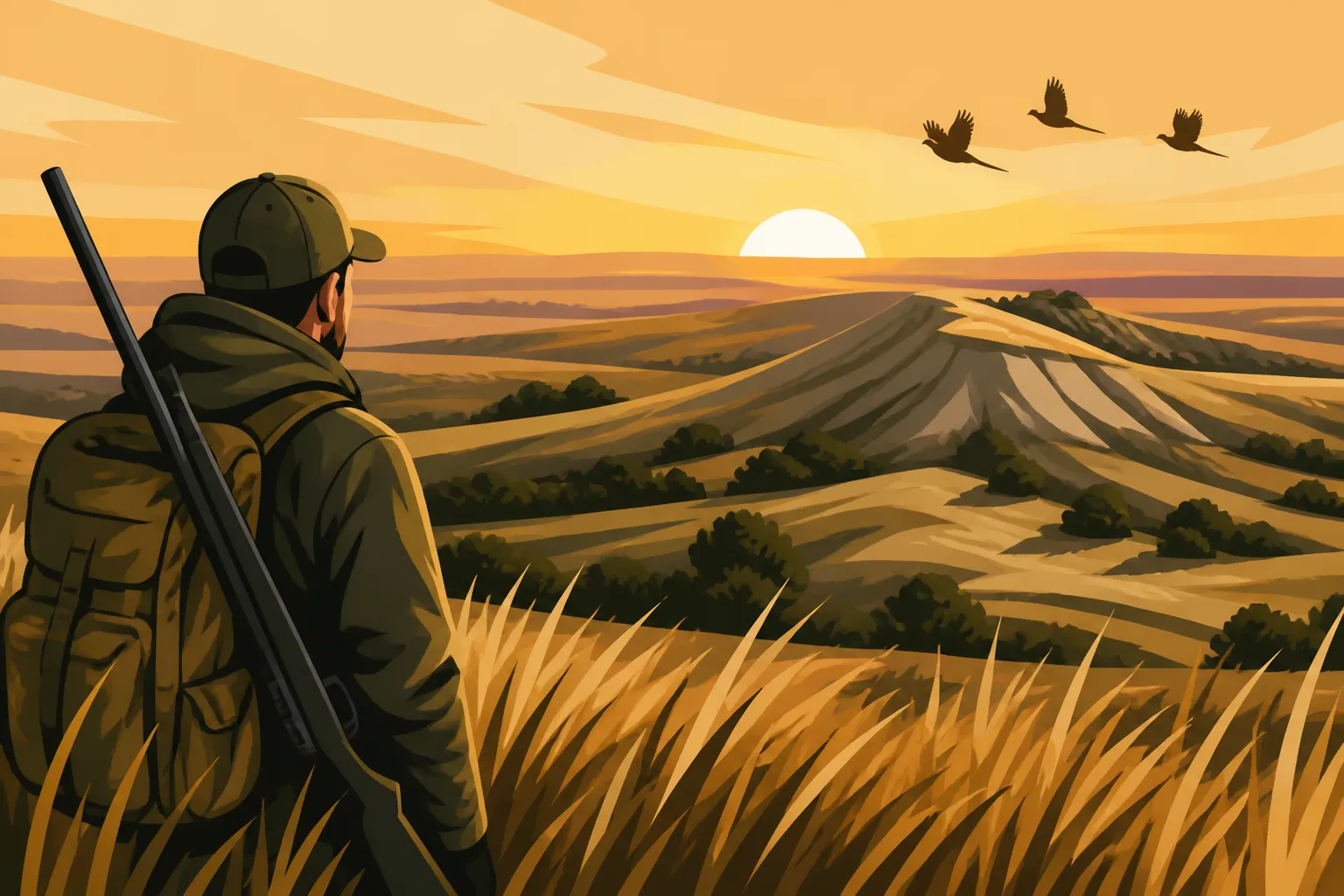
Many hunters dream of overlooking the vast, rugged expanses of North Dakota's Little Missouri National Grassland from a high vantage point, picturing mule deer silhouetted against a sunrise. But actually reaching those strategic ridgelines, often shrouded in a maze of coulees and breaks, can feel like an overwhelming challenge. This guide will help you decode the complexities of ridgeline access in this stunning terrain, equipping you with the knowledge to safely and effectively navigate to prime hunting locations.
Understanding the Little Missouri Grassland Terrain
The Little Missouri National Grassland, nestled within North Dakota's iconic Badlands, is a landscape unlike any other. It's a place of dramatic beauty and formidable challenges for the unprepared hunter. Before you can even think about scaling a ridgeline, you need a solid grasp of what makes this terrain so unique.
Geographical Features of the Badlands
Imagine a wild, eroded landscape, carved over millennia by wind and water. That's the Badlands. It's characterized by steep buttes, winding draws, deep coulees, and, of course, the prominent ridgelines that connect them all. These ridgelines aren't like mountain spines; they often undulate, twist, and drop into hidden pockets, creating complex topography. The sheer number of undulations means that while you might be on a high point, your visibility can still be limited by the next rise. Understanding these features is key to anticipating travel routes for both you and the game. The breaks and cuts provide crucial cover and bedding areas for deer, especially Mule Deer in North Dakota's Badlands, making the adjacent ridgelines critical travel corridors and vantage points.
What often surprises first-time visitors is the scale. From a distance, the Badlands might look traversable, but once you're on the ground, the steepness of the grades and the density of the sagebrush and juniper can be truly demanding. Each step requires conscious effort, and what looks like a short distance on a map can easily turn into an hour-long trek up and down multiple drainages. This physical reality dictates how you plan your approach and exit, especially when considering remote ridgelines that offer minimal human disturbance.
Many of these ridgelines serve as natural highways for wildlife moving between bedding areas in the deeper draws and feeding areas on the more open, grassy plateaus. They also often feature crucial water sources in the form of small seeps or intermittent springs, particularly during drier periods. Learning to read the subtle changes in elevation, the direction of the breaks, and where these natural travel routes converge is fundamental. This intricate system is what makes Hunting the North Dakota Badlands so engaging, yet so demanding.
Vegetation and Cover on Ridgelines
The vegetation on Little Missouri Grassland ridgelines plays a huge role in both game movement and hunter access. You'll primarily encounter shortgrass prairie on the open tops, but as you move down the slopes or into more protected pockets, you'll find thicker stands of juniper, sagebrush, and scattered patches of Ponderosa pine, especially on north-facing slopes. This dense cover provides thermal protection and security for deer, making it prime bedding habitat. The junipers, in particular, can be incredibly thick and difficult to move through silently.
Hunting these ridgelines means understanding how deer use this cover. Often, bucks will bed just below a ridgeline crest, allowing them to watch their backtrail while the wind carries scents from below. They can quickly slip over the top if they feel pressured. You'll want to pay close attention to the transitions between open grass and denser woody cover, as these are often where game trails are most prominent. Identifying fresh sign in these areas is crucial for success. Where Badlands Bucks Bed often directly correlates with these diverse vegetation types.
Navigating through these varied vegetation zones requires adaptability. One moment you might be walking on relatively open, short grass, and the next you're pushing through a thick tangle of chest-high sage or a dense stand of juniper. This can make quiet movement challenging, so choosing your path carefully, sometimes even opting for a slightly longer route that offers easier going, can be worth the extra effort. Think about how your chosen path might make noise or expose your silhouette, especially when moving along open ridgelines during daylight hours.
Identifying Ridgeline Access Points
Successfully accessing these Badlands ridgelines begins long before you set foot in the field. It requires meticulous planning and leveraging the right tools to scout potential routes and understand the terrain from a bird's-eye view.
Using Topographical Maps and Apps
In today's hunting world, digital mapping tools are an absolute game-changer, especially in complex terrain like the Little Missouri Grassland. Applications like onX Hunt are incredibly valuable for identifying ridgeline access points. You can use satellite imagery and topographic maps to pinpoint subtle benches, saddles, and gradual slopes that might offer easier ascent and descent than sheer cliff faces or deeply cut coulees. Look for areas where contour lines spread out, indicating a gentler grade, rather than tightly packed lines that signify steep climbs.
Before you even pack your boots, spend hours digitally "walking" the landscape. Zoom in on potential ridgelines and identify key features such as prominent game trails, scattered trees that might offer cover, or small openings that could serve as glassing points. Use the 3D terrain features offered by these apps to get a realistic sense of the elevation changes. This virtual scouting allows you to eliminate dozens of impossible routes and narrow down your focus to a few promising access points, saving you immense time and energy in the field. Some hunters even leverage tools like GoHunt for advanced filtering and overlaying public land boundaries, ensuring they stay legal.
Remember to pay close attention to land ownership overlays on your mapping app. The Little Missouri Grassland is a patchwork of public land, private inholdings, and state school lands. Ensure your planned access routes and hunting areas are on public ground, or that you have secured proper permission for private land. There's nothing worse than hiking for miles only to discover you've inadvertently crossed a private boundary. This is also where knowing Finding North Dakota Property Lines becomes absolutely vital.
Scouting from a Distance
Even with the best mapping apps, there's no substitute for eyes-on scouting from a distance. Before committing to a long hike, drive accessible roads or two-tracks around the Badlands and use good optics to glass the ridgelines you've identified on your maps. A high-powered spotting scope or quality binoculars will allow you to pick apart the terrain, confirm potential access points, and even spot game trails that weren't visible on satellite imagery. This also allows you to observe deer patterns without disturbing the area.
Look for natural breaks in the terrain, less steep saddles between buttes, or areas where the juniper and sagebrush aren't quite as dense. These often indicate areas of easier passage for both animals and humans. Also, observe how deer are currently using the ridgelines. Are they cresting at certain points, or dropping into specific draws? This information is gold for planning your approach. Pay attention to how deer move based on the time of day and prevailing winds.
Scouting from a distance also allows you to assess the current conditions, which can change dramatically with weather. Is the ground muddy and slick from recent rain, making steep climbs treacherous? Are certain draws holding snow that might provide easier travel or concentrate game? Being flexible with your plans based on real-time observations is crucial. This pre-hunt reconnaissance is an art form, giving you valuable insights without burning out potential hunting spots.
Locating Game Trails and Natural Funnels
Once you're on the ground, the most reliable indicators of good ridgeline access are often the very paths the animals themselves create: game trails. Deer, elk, and pronghorn are masters of efficient travel, and their trails often follow the paths of least resistance, making them ideal for hunters. Look for well-worn paths along the contours of the hills, especially those that lead up into saddles or connect different levels of the ridgeline. These trails often provide a more gradual ascent than attempting to bushwhack straight up a steep slope.
Natural funnels are also critical access points. These are areas where the terrain naturally constricts animal movement into a narrower corridor. This could be a tight saddle between two buttes, a pinch point where a ridgeline abruptly narrows, or the head of a draw where several smaller coulees converge before spilling onto a more open plateau. Identifying these funnels, both on your map and in person, can reveal high-traffic areas and optimal ambush points or glassing locations. Hunting a Coulee on Little Missouri Grassland often means finding where these trails emerge onto higher ground.
When scouting for these trails and funnels, look for obvious signs of recent deer activity: fresh tracks, droppings, rubs on small trees or shrubs, and disturbed vegetation. The presence of these signs confirms that animals are actively using these pathways. Remember that deer will often move up ridgelines to get to higher ground for bedding or to cross from one major drainage to another, making these corridors productive hunting grounds, especially during the early morning and late evening hours.
Navigating the Ridgelines
Actually traversing the Badlands ridgelines is where rubber meets the road. It demands a thoughtful approach, an understanding of natural forces, and a commitment to stealth.
Foot Travel Strategies
Moving silently and efficiently on Badlands ridgelines is paramount. The terrain is often loose and rocky, making quiet foot placement a challenge. Focus on a deliberate, heel-to-toe gait, placing your feet softly and testing the ground before committing your full weight. Avoid kicking rocks or scuffing through dry leaves and grass, which can easily alert distant animals. In areas with dense sagebrush or juniper, try to pick routes that minimize contact with branches that can snap or rustle loudly.
When ascending a steep ridgeline, consider traversing or switch-backing your route rather than going straight up. This conserves energy, reduces noise, and often provides a less demanding climb. Utilize any natural cover available—large rocks, clumps of juniper, or depressions—to break up your silhouette, especially when moving across exposed sections. Frequently stop to glass ahead and around you, not just for game, but also to plan your next segment of travel. This "stop, look, listen, and move" rhythm is essential for hunting effectively in such open country.
Always be aware of your surroundings, both above and below you. Deer often bed just below the crest of a ridge or in the first bit of cover on a leeward slope. Approaching from above, especially with the wind in your favor, can give you a significant advantage. However, watch your skyline and avoid silhouetting yourself against the sky, as this makes you incredibly visible to anything below. When moving along a ridgeline, try to stay just below the actual crest, peeking over only when necessary to scan the opposing slope or drainage.
Wind and Thermal Considerations
Understanding Wind and Thermals in Badlands Terrain is perhaps the single most critical factor for successful ridgeline hunting. The Badlands are notorious for their tricky air currents, which can swirl and shift unexpectedly, especially in broken topography. During the day, as the sun heats the slopes, thermals tend to rise, carrying your scent upwards. In the evening, as the air cools, thermals reverse and drop, pulling scent down into the coulees and draws. These patterns are generally reliable but can be greatly influenced by the overall prevailing wind.
When planning your approach to a ridgeline, always consider the wind direction relative to your target area. If you're trying to reach a ridgeline to glass a bedding area below, you want rising thermals (morning) to carry your scent away from the deer, or a strong crosswind that keeps your scent out of the basin. Similarly, if you're stalking along a ridgeline towards a buck, you want the wind directly in your face or quartering. Never, ever approach a known bedding area or travel corridor with the wind at your back, pushing your scent directly into the deer's nose.
The interaction between thermals and prevailing winds creates complex microclimates. A consistent westerly wind might be blowing across the top of a ridgeline, but down in a deep coulee, the air could be stagnant or even swirling due to thermal effect. Always double-check the wind, perhaps by using a small puff bottle, as you change elevation or move around a point. A slight shift in your position can sometimes be enough to get your scent line where you need it to be, or conversely, blow your cover.
Stealth and Observation Techniques
Ridgeline hunting in the Little Missouri Grassland demands a high level of stealth and patience. Once you've reached a vantage point, the next step is observation. This means settling into a comfortable position that offers good visibility while keeping you concealed. Use natural features like juniper bushes, large rocks, or the crest of the ridge itself to break up your outline. Avoid sitting directly on the skyline. Take your time. Don't rush into glassing; let the area "settle" around you for a few minutes.
When glassing, methodical scanning is key. Don't just glance around. Divide the opposing slopes and draws into smaller sections and thoroughly scan each one with your binoculars. Pay attention to subtle details: a flicker of an ear, a patch of hide that doesn't quite match the surrounding vegetation, or the horizontal line of a deer's back in a vertical world. Often, you'll spot part of an animal before you see the whole thing. Good optics are non-negotiable here; quality binoculars and a spotting scope are your best friends for picking apart the distant terrain. Glassing Badlands Coulees for Elk is a skill directly transferable to deer hunting from a ridgeline.
Moving stealthily also means managing your sound. Even the smallest clink of gear or rustle of clothing can carry a surprising distance in the still Badlands air. Ensure all your equipment is quieted, with zippers taped down and loose items secured. Walk slowly, deliberately, and with constant awareness of what's underfoot. Remember, the goal isn't just to get to a ridgeline; it's to get there undetected, establish a solid observation point, and capitalize on the unique perspective these high points offer.
Challenges and Considerations for Ridgeline Hunting
While incredibly rewarding, hunting the ridgelines of the Little Missouri Grassland comes with its own set of unique challenges that demand respect and preparedness.
Physical Demands and Gear
Let's be blunt: ridgeline hunting in the Badlands is physically demanding. You'll be doing a lot of climbing, descending, and traversing uneven, often steep terrain, often miles from your vehicle. Good physical conditioning is not just recommended; it's essential for safety and enjoyment. Carrying a heavy pack over this kind of ground can quickly exhaust you, making sound decisions harder. Focus on cardio, leg strength, and endurance training in the months leading up to your hunt. Physical Prep for Badlands Elk Terrain offers excellent advice that applies just as well to deer hunting in this rugged area.
Your gear needs to be up to the task as well. High-quality hiking boots with excellent ankle support and grip are non-negotiable. Layers of clothing are crucial for adapting to the rapidly changing prairie weather, which can swing from warm sunshine to biting cold winds in a matter of hours. A lightweight yet durable pack, trekking poles for stability on steep slopes, plenty of water, and high-energy snacks are also vital. Don't skimp on optics; a good pair of binoculars and a spotting scope will extend your effective scouting and hunting range dramatically.
Additionally, consider an emergency kit with a first-aid supply, fire starter, headlamp, and a reliable communication device. Cell service can be spotty to non-existent in many Badlands drainages, so a satellite messenger or GPS device with emergency capabilities can be a lifesaver. Being self-sufficient and prepared for unexpected turns is part of the Badlands hunting ethos.
Weather and Safety
The weather in North Dakota, particularly in the exposed Badlands, is notoriously unpredictable and can turn dangerous quickly. Sunny, calm mornings can give way to high winds, thunderstorms, or even sudden snow squalls, especially during the fall. Ridgelines, by their very nature, are exposed to these elements. Wind can make standing difficult and intensify cold dramatically. Rain or snow can turn steep slopes into treacherous, muddy slides. Always check the forecast meticulously before heading out, but be prepared for anything. Hunting Into a December Cold Snap details some of the severe conditions you might encounter.
Safety on these ridgelines also involves being acutely aware of your footing. Loose rocks, crumbling shale, and slippery mud are common hazards. A twisted ankle or a fall in remote terrain can quickly become a serious emergency. Walk deliberately, watch your step, and use trekking poles for added stability, especially on descents. Inform someone of your hunting plans, including your general route and expected return time. It's also wise to carry a compass and a physical map as a backup to your digital devices, in case of battery failure or signal loss.
Another safety consideration, particularly if hunting alone, is game retrieval. If you harvest an animal far up a ridgeline or down in a deep coulee, getting it out can be an monumental task. Have a plan for how you'll field dress, quarter, and pack out your game. Sometimes, making multiple trips or calling in a partner is the only realistic option. Underestimating the difficulty of game retrieval in this terrain is a common mistake that can lead to exhaustion, injury, or even spoilage.
Respecting Public and Private Boundaries
As mentioned earlier, the Little Missouri National Grassland is a mosaic of public and private lands, and respecting these boundaries is not just good etiquette, it's the law. Trespassing can result in fines, loss of hunting privileges, and damage to the public image of hunters. Always carry your land ownership map, whether digital or paper, and know exactly where you are at all times. This is especially important when traversing ridgelines, where property lines might not be obvious on the ground.
Posted signs are sometimes present, but reliance solely on them is risky. It's your responsibility to know where you stand. If a boundary isn't clear, err on the side of caution and assume it's private until you can confirm otherwise. When in doubt about whether a ridgeline or an adjacent coulee is public or private, consult your onX Hunt app or your physical North Dakota PLOTS Guide Booklet Release Date to avoid any issues. Building good relationships with landowners is crucial for maintaining hunting access in North Dakota, and respecting boundaries is the first step.
| Aspect of Ridgeline Access | Considerations for Success | Potential Challenges | Key Tools / Strategies |
|---|---|---|---|
| Terrain Understanding | Identify saddles, benches, gradual slopes. Read erosion patterns. | Steep, broken, eroded ground. False summits. | Topographic maps, 3D satellite imagery (onX Hunt, GoHunt). |
| Route Planning | Prioritize game trails, natural funnels. Plan for low noise. | Thick vegetation (juniper, sage). Loose rock. | Pre-scouting with optics. Digital mapping. |
| Wind/Thermal Strategy | Match approach to thermals (up in AM, down in PM). | Swirling winds, unpredictable microclimates. | Wind checker/puff bottle. Constant vigilance. |
| Physical Demands | High cardio fitness, strong legs, endurance. | Exhaustion, injury risk, slow progress. | Trekking poles, lightweight pack, proper boots. |
| Concealment/Stealth | Stay below skyline, use natural cover. Quiet movement. | Open ground exposure, noise from gear/footing. | Camouflage, silenced gear, slow deliberate steps. |
| Observation | Methodical glassing, patience. | Limited visibility from ground level. | High-quality binoculars, spotting scope. |
| Boundary Awareness | Know public vs. private land. | Unmarked boundaries, confusing land parcels. | GPS with land ownership layer (onX Hunt), physical maps. |
Navigating the ridgelines of the Little Missouri National Grassland offers an unparalleled opportunity for adventure and a unique perspective on North Dakota's wild places. With careful planning, the right gear, and a deep respect for this incredible landscape, you can unlock some truly memorable hunting experiences. Just remember, the Badlands demand effort and preparation, but they certainly pay off for those willing to earn it.
Disclaimer
This article is for general informational purposes only and does not constitute professional advice. Laws, prices and regulations vary by location and change over time. Consult a qualified professional for guidance on your specific situation.