Finding Access Near Fargo
Finding quality hunting ground near a major city like Fargo can feel like an impossible task sometimes. You look around, and all you see are endless fields of corn and soybeans, dotted with farmsteads, and you start to wonder if there’s any wild left at all. It’s a common frustration, especially when you’re used to seeing vast tracts of public land out west. But don't despair! While it might require a different approach than hunting the Badlands or the Turtle Mountains, there are absolutely opportunities to pursue deer, upland birds, and waterfowl in the greater Fargo area if you know where to look and how to approach it. This guide is going to walk you through exactly how to unlock those possibilities, making your hunts successful and enjoyable.
Understanding the Hunting Landscape Around Fargo
When you think of North Dakota hunting, images of rugged Badlands or the vast prairie pothole region often come to mind. Fargo, situated in the heart of the Red River Valley, presents a distinctly different picture. This isn't the broken country of the western part of the state, nor is it the dense timber of the Turtle Mountains. It's a land shaped by agriculture, with fertile soil stretching for miles in every direction. This unique geography dictates the type of hunting experiences you'll find and the strategies you'll need to employ.
Fargo's Unique Geographic Context
The Red River Valley is famously flat, a remnant of ancient Lake Agassiz. This flatness means fewer natural breaks in the landscape like coulees or large river systems that often concentrate wildlife. Instead, deer, pheasants, and waterfowl adapt to an environment dominated by human activity and agricultural cycles. Their cover often consists of shelterbelts, small woodlots, drainage ditches, and patches of cattails or unharvested crops. Water sources might be dugouts, small creeks, or the occasional oxbow lake from the meandering Red River itself. The very nature of the land here means game animals are often more dispersed or concentrated in smaller, more fragmented pockets of habitat.
This agricultural dominance profoundly impacts hunting. Fields are harvested, removing prime cover and food sources, pushing animals into remaining pockets. Knowing the local harvest schedule and which crops are still standing can be crucial. For instance, a standing corn field late in the season can be an absolute magnet for deer and even a key stop for migrating geese. Hunters often have to get creative, looking for those overlooked patches of cover or using aerial maps to identify habitat breaks that aren't obvious from the road. The distinct lack of dramatic terrain means wind direction and subtle cover changes become even more critical factors in your approach.
Primary Game Species in the Eastern Red River Valley
Despite the agricultural overlay, the Fargo area supports a surprisingly diverse array of game. White-tailed deer are the most prevalent big game species, thriving in the shelterbelt corridors and river bottoms. You might not find the huge, wide-racked bucks of the Badlands, but consistent hunting pressure and clever tactics can yield a nice whitetail. Hunting a Shelterbelt Edge for Deer is a classic tactic here, as these linear strips of trees provide critical bedding and travel corridors.
For upland birds, pheasants are the main draw, though their populations can fluctuate based on winter severity and nesting success. They often congregate in CRP fields, cattail sloughs, and along field edges where cover is thick. Hungarian partridge also inhabit the farmland, often found scurrying along Hunting Hungarian Partridge Field Edges. Waterfowl hunting, especially for ducks and geese, can be exceptional, particularly during migration. The area sits squarely in the prairie pothole region, and nearby water bodies like the Sheyenne River or smaller wetlands can hold good numbers of birds. Hunting a standing corn field for late-season geese is a prime example of capitalizing on agricultural resources for waterfowl.
Public Land Opportunities Near Fargo
While vast national forests are absent from this part of North Dakota, the state has done an admirable job creating public access through various programs. It’s not always huge blocks of land, but rather a patchwork of parcels that, when strung together with a good map, can provide excellent hunting opportunities. It takes a different mindset than hunting out West, but the rewards are there for the diligent hunter.
PLOTS Program: Your Best Bet for Public Access
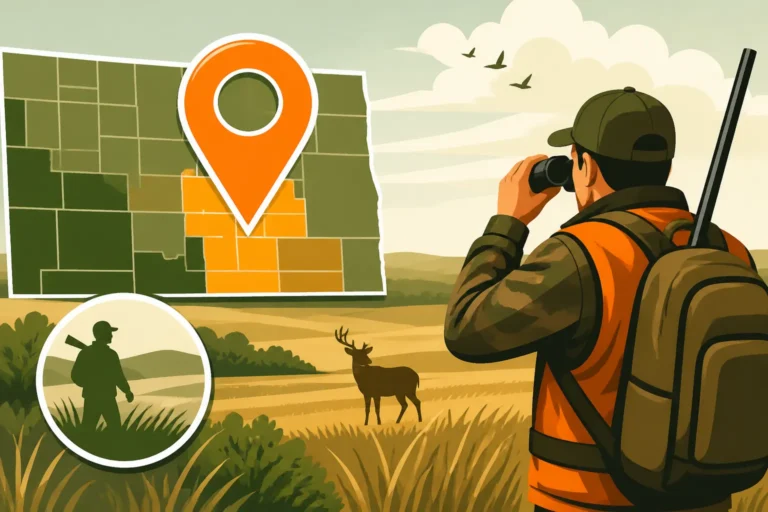
The Private Land Open To Sportsmen (PLOTS) program is North Dakota's flagship initiative for public hunting access, and it's absolutely essential for anyone looking to hunt near Fargo. These are private lands that landowners open to public hunting in exchange for an incentive payment. The beauty of PLOTS is that it’s often small, overlooked parcels that provide fantastic habitat right in the middle of agricultural country. These areas can include everything from CRP fields to small wetlands, wooded coulees, or river bottom fragments. You might find a 40-acre piece of prime pheasant cover just a few miles outside of town, or a secluded whitetail bedding area along a creek.
The key to successfully hunting PLOTS land is diligent scouting, often using mapping apps like onX Hunt. These apps are indispensable for identifying PLOTS boundaries, understanding the surrounding land, and planning your approach. The acreage can change from year to year as landowners enroll or remove parcels, so always check the most current PLOTS guide or app before heading out. Don't be discouraged by smaller tracts; sometimes the most productive PLOTS areas are those that other hunters overlook because they appear too small or too close to a road. Thinking creatively about how animals use these small pockets of cover can lead to surprising success. Finding PLOTS Ground Others Walk Past is a testament to this strategy, proving that hidden gems are out there if you're willing to look. For a deeper dive into the program, check out The PLOTS Program Explained.
Wildlife Management Areas and State School Lands
Beyond PLOTS, North Dakota also offers access to Wildlife Management Areas (WMAs) and State School Lands. WMAs are typically larger tracts of land specifically managed by the North Dakota Game and Fish Department for wildlife habitat and public recreation, including hunting. While less common immediately surrounding Fargo due to the intense agricultural development, you'll find some WMAs within an hour or two drive that can offer excellent opportunities. These areas are often managed for specific species, such as waterfowl, pheasants, or deer, and usually have more extensive habitat like dense cattail marshes, larger timber blocks, or extensive native prairie grasses. They tend to be more popular and see more hunting pressure, especially on opening weekends.
State School Lands, identifiable by signs or on mapping apps, are another public access option. These lands were granted to the state for the benefit of public education and are generally open to public hunting unless specifically posted otherwise. They can be found interspersed throughout the landscape, often as quarter-sections of prairie, wetland, or even agricultural land. While not always providing prime habitat, a careful review of these parcels on a mapping application like onX Hunt can reveal hidden gems, especially if they border other public or private land with good cover. It’s important to understand the specific regulations for hunting State School Lands, as they can sometimes differ from other public access areas, and remember that habitat quality varies wildly.
Waterfowl Production Areas and Refuges
For the bird hunter, Waterfowl Production Areas (WPAs) are invaluable resources in the Fargo area and throughout eastern North Dakota. These are federal lands managed by the U.S. Fish and Wildlife Service, primarily for waterfowl nesting and production, but also open to public hunting. WPAs often feature a mix of prairie potholes, grasslands, and some upland cover, making them excellent for ducks, geese, and often pheasants and sharptails too. They range in size from small, isolated potholes to larger complexes. These are particularly important along the flyways that crisscross North Dakota.
Similar to PLOTS, using a mapping application is crucial for locating WPAs and understanding their boundaries. Waterfowl Production Areas Explained delves into more detail on how these areas function. Many of these areas are part of the larger National Wildlife Refuge System, but hunters should be aware that some refuges have specific areas closed to hunting or restrict certain types of hunting. Always check the local refuge regulations before planning a hunt. These areas can be incredibly productive during the fall migration, especially for hunters willing to wade into cattails or set up decoys on a prairie pothole.
Navigating Private Land Access Near Fargo
Given the high percentage of private land in the Red River Valley, mastering the art of gaining private land access is arguably one of the most effective strategies for hunting near Fargo. This isn't always easy, and it requires politeness, persistence, and respect, but the rewards can be incredible: less hunting pressure and often access to prime, undisturbed habitat. It's a skill that pays dividends, not just for a single season, but for years to come.
The Art of Knocking on Doors
The most traditional and often most effective method for gaining private land access is simply asking for permission. This means knocking on doors, introducing yourself, and respectfully inquiring about hunting opportunities. It’s a face-to-face interaction that builds trust. Farmers and landowners are often more willing to grant permission to someone they’ve met and feel comfortable with, rather than a nameless phone call or an anonymous hunter they see driving by. Timing is key; avoid busy times like harvest or planting season. Early summer or late winter can be good times to make initial contact.
When you do make contact, be prepared, polite, and clear about what you're asking for. Have your license ready, offer references if possible, and be specific about the game you want to hunt and how you plan to hunt it. Emphasize safety, respect for their property, and your willingness to close gates, avoid driving on wet fields, and share some of your harvest. Many farmers appreciate hunters who offer to help with chores or predator control. It’s a relationship-building exercise, and a successful interaction can open doors for future seasons. Asking a North Dakota Farmer for Permission offers more specific advice on this valuable skill. Always remember that What North Dakota Trespass Law Requires means you need explicit permission, not just implied consent, to hunt private land.
Hunting Leases and Clubs Near Fargo
While "door knocking" is often successful for smaller, individual hunts, some hunters seek more consistent, long-term access, which can lead to exploring hunting leases or joining local clubs. Hunting leases involve paying a landowner for exclusive hunting rights to a specific parcel of land for a season or a set period. These can range from simple agreements for a few hundred dollars to more elaborate contracts for prime land. Near Fargo, leases might focus on excellent pheasant habitat, productive deer cover along a river, or even key waterfowl fields. The benefit is guaranteed, exclusive access, but the cost can be a significant factor.
Hunting clubs are another option, where a group of hunters pools resources to lease larger tracts of land or gain permission collectively. This can reduce individual costs and provide access to more diverse terrain. Clubs often have their own internal rules and management strategies, from habitat improvement to game harvest limits. For non-residents or those without local connections, these options can provide a structured way to gain access without the uncertainty of day-to-day asking. However, always thoroughly vet any club or lease agreement to ensure it aligns with your hunting goals and expectations, and understand all terms before committing.
Leveraging Technology for Access
In today's hunting world, technology isn't just a convenience; it's a critical tool for success, especially when navigating complex land ownership patterns around Fargo. Gone are the days of relying solely on paper maps or driving endlessly down section roads hoping to spot a "No Hunting" sign. Modern mapping applications and online resources have revolutionized how we scout, plan, and execute hunts.
Mapping Apps: Your Digital Scout
Mapping applications like onX Hunt have become indispensable for North Dakota hunters. For the Fargo area, where land ownership is fragmented and public land can be in small, scattered parcels, these apps are even more vital. They allow you to instantly see property boundaries, identify landowners, and differentiate between public land (PLOTS, WMAs, State School Lands) and private ground. You can overlay different layers to see aerial imagery, topography (even subtle changes in flat country), crop types, and recent satellite photos to understand current habitat conditions.
Imagine wanting to hunt a small woodlot near Fargo. With onX Hunt, you can zoom in, identify the landowner, find their contact information, and even visualize the best access points and potential deer trails before you ever leave your couch. This kind of pre-scouting saves countless hours and increases your chances of success. It's also invaluable for navigating PLOTS land, ensuring you stay within legal boundaries. The ability to drop waypoints, measure distances, and track your movements in real-time makes planning your stalk or pheasant drive much more effective. onX Layers for North Dakota Land Status are especially useful for this exact purpose, providing a comprehensive view of the land.
Online Resources and Community Forums
Beyond mapping, the internet provides a wealth of information for hunters in the Fargo area. The North Dakota Game and Fish Department website is a treasure trove of official regulations, season dates, harvest reports, and maps, including updated PLOTS guides. This is your first stop for any regulatory questions or to get a broad overview of hunting opportunities. You can often find detailed information on specific WMAs or local hunting units.
Additionally, online hunting forums and social media groups dedicated to North Dakota hunting can be excellent resources. While you might not get someone to give away their secret spot, you can glean valuable insights into general area conditions, common tactics, and even connect with local hunters who might be willing to share advice or even an occasional hunting spot. Websites like GoHunt often have community sections or forums where hunters discuss tactics, conditions, and experiences, which can be particularly helpful for understanding the nuances of hunting specific areas. These platforms also help you stay informed about conservation efforts and current issues affecting hunting in the state. Just remember to always verify information from unofficial sources with official channels.
Specific Game and Corresponding Habitat Near Fargo
Hunting near Fargo means understanding how each species interacts with the predominantly agricultural landscape. What works for deer often won't work for ducks, and pheasants require a different approach entirely. Tailoring your strategy to the specific game and its preferred habitat is paramount to a successful hunt in this region.
Deer Hunting Near Fargo
White-tailed deer are remarkably adaptable and thrive in the mosaic of agricultural fields, shelterbelts, and river corridors around Fargo. Unlike the open country further west, deer here often rely heavily on linear cover. Shelterbelts, those rows of trees planted to protect farmsteads and fields from wind, become crucial travel routes, bedding areas, and escape cover. The Red River and its tributaries, like the Sheyenne River, also offer significant wooded bottoms, oxbows, and brushy edges that concentrate deer, providing both cover and food. Hunting North Dakota's Missouri River Bottomland might be further west, but the principles of hunting river corridors apply to the smaller river systems near Fargo.
Successful deer hunting in this area often involves still-hunting along shelterbelts, setting up ground blinds or treestands on field edges, or ambushing deer near creek crossings. Understanding deer movement patterns between bedding cover and feeding areas (often crop fields) is key. Look for pinch points, funnels, and natural barriers that concentrate deer movement. Easing your way into a Hunting a Shelterbelt Corner at Dusk or identifying the subtle depressions in the land where deer prefer to cross open fields can be incredibly effective. Pay attention to changes in wind direction, as deer in more open terrain are highly sensitive to scent.
Upland Bird Opportunities
Pheasants are the kings of upland hunting in the Fargo region, with Hungarian partridge offering a complementary challenge. Their survival hinges on access to dense, persistent cover throughout the year, especially during harsh North Dakota winters. Look for CRP (Conservation Reserve Program) fields, which are tracts of private land retired from agricultural production and planted with native grasses and wildflowers, providing ideal nesting and wintering habitat. Cattail sloughs and wetland edges are also pheasant magnets, especially later in the season when snow pushes birds into the thickest cover. Walking a Pheasant Field at Midday can be productive, but understanding where the birds are likely to be at different times of day, such as feeding in field edges during early morning or evening, is crucial.
Hungarian partridge, often called Huns, are smaller, fast-flying birds that prefer more open, stubble-field environments. You'll often find them along field edges, fence lines, and in patches of weeds. They tend to hold tight, offering explosive flushes, and are known for their covey behavior. Running a pointing dog can be incredibly effective for both pheasants and Huns, allowing you to cover ground efficiently and pinpoint birds in dense cover. For self-guided hunters, systematic walking of key habitat types, especially areas where different cover types meet, is usually the best approach.
Waterfowl Hotspots
The Fargo area, being part of the Prairie Pothole Region, offers some fantastic waterfowl hunting, especially during the peak fall migration. Ducks and geese utilize a variety of water bodies and adjacent crop fields. Small prairie potholes, drainage ditches, and dugouts can hold surprising numbers of ducks, especially early in the season. As the season progresses, larger bodies of water like parts of the Sheyenne River, the Maple River, or even larger agricultural reservoirs become key staging areas. Geese, particularly Canada geese and snow geese, will feed heavily in harvested grain fields (corn, wheat, soybeans) and then return to large water bodies for roosting.
Successful waterfowl hunting near Fargo often involves scouting for active feeding fields, getting permission to set up decoys on private land, or finding less-pressured public water. Layout blinds are essential for field hunting geese, allowing you to blend seamlessly into the stubble. For ducks, jump-shooting smaller potholes or setting up a decoy spread on a larger slough are common tactics. Understanding North Dakota Duck and Goose Bag Limits and migratory patterns is vital for maximizing your success. The key is constant scouting to locate concentrations of birds, as their movements are heavily dictated by food availability and weather.
Challenges and Considerations for Hunting Near Fargo
While the Fargo area offers compelling hunting opportunities, it's not without its unique challenges. High hunting pressure, navigating complex regulations, and the importance of ethical behavior are all factors that hunters need to consider and proactively manage for a successful and responsible experience.
Dealing with High Hunting Pressure
Being close to a major population center means that hunting spots near Fargo can experience higher hunting pressure compared to more remote areas of North Dakota. PLOTS and WMAs, especially those easily accessible, often see a lot of activity, particularly during opening weekends of various seasons. This can make game more wary and harder to approach. It can also lead to competition for prime spots, which can be frustrating.
To mitigate this, consider hunting during weekdays, later in the season, or targeting areas that require a bit more effort to reach. Walking further from established roads or parking areas, even a half-mile, can often put you into less-pressured territory. Using mapping apps to identify less obvious access points or small, overlooked pockets of habitat can also help. Patience and adapting your tactics are crucial; pressured game might move later in the day or utilize thicker cover more consistently. Sometimes, just sitting quietly and letting other hunters push game to you can be an effective strategy.
Respecting Boundaries and Regulations
With a mix of public and private land, small parcels, and agricultural operations, respecting boundaries and understanding regulations is absolutely paramount when hunting near Fargo. Trespassing, even accidentally, can lead to serious consequences and erode the trust between landowners and hunters, jeopardizing future access for everyone. Always confirm property lines using a reliable mapping application like onX Hunt, and never assume land is public unless clearly marked or verified. If you have permission for private land, stick to the agreed-upon areas.
North Dakota has specific laws regarding posting land, what constitutes trespassing, and requirements for carrying proof of permission on private land. Being knowledgeable about these is your responsibility. Additionally, be aware of specific regulations for different types of public land. For instance, Waterfowl Production Areas have certain restrictions on permanent blinds or specific firearm types, while State School Lands might have different rules for vehicle access. Always check the current North Dakota Game and Fish Department regulations for the most up-to-date information on seasons, bag limits, licensing, and any unit-specific rules that might apply to the Fargo area. For general rules, check North Dakota Public Land Hunting Hours and North Dakota Firearms Discharge Setback Distance.
Table: Public Land Access Options Near Fargo
| Access Type | Typical Habitat/Game | Pros | Cons | Key Considerations |
|---|---|---|---|---|
| PLOTS (Private Land Open To Sportsmen) | CRP, wetlands, woodlots, field edges (Deer, Pheasant, Waterfowl) | Abundant, often close to Fargo, less pressure on smaller tracts | Acreage changes annually, highly fragmented | Use mapping app for boundaries, pre-scout. |
| Wildlife Management Areas (WMAs) | Managed for specific game, larger tracts (Deer, Pheasant, Waterfowl) | Quality habitat, clear boundaries | Can experience high pressure, fewer near Fargo | Check specific WMA rules, scout early. |
| State School Lands | Variable: native prairie, wetlands, some ag (Deer, Upland, Waterfowl) | Scattered throughout, some overlooked gems | Habitat quality inconsistent, often small | Verify boundaries precisely, understand usage rules. |
| Waterfowl Production Areas (WPAs) | Potholes, grasslands, wetland edges (Ducks, Geese, Pheasant) | Excellent waterfowl habitat, federal protection | Some areas may have specific usage restrictions | Essential for bird hunters, check refuge rules. |
Remember, hunting near Fargo is a different beast than hunting the wide-open spaces, but with the right tools, the right mindset, and a healthy dose of respect for the land and landowners, you can absolutely find rewarding experiences.
Disclaimer
This article is for general informational purposes only and does not constitute professional advice. Laws, prices and regulations vary by location and change over time. Consult a qualified professional for guidance on your specific situation.