Hunting a Standing Corn Field After a Snow
When the crisp North Dakota air turns frigid and a blanket of fresh snow covers the vast plains, many hunters might feel the season is winding down, making it harder to find those elusive deer. However, for those in the know, a standing corn field after a snowfall transforms from a simple agricultural landscape into a prime hunting ground, offering both sanctuary and sustenance for late-season game. This guide will meticulously walk you through the nuanced strategies for hunting these winter strongholds, focusing on scouting, approach, and execution to help you punch your tag.
Why Standing Corn Becomes a Late-Season Magnet After Snow
There’s something almost magical about how a fresh layer of snow can completely alter the hunting landscape. For deer, pheasants, and even geese, standing corn fields become irresistible havens, pulling them in like a magnet when other food and cover options vanish or become less appealing. Understanding this draw is the first step to a successful hunt.
Thermal Cover and Food Source Combined
Imagine you're a deer in late November or December, with temperatures plummeting and a biting north wind sweeping across the prairie. Where do you go for warmth and shelter? Sparse tree rows offer some protection, but nothing beats the dense, insulating canopy of a standing corn field. Each stalk, laden with remnants of the harvest, acts like a mini-heater, trapping warmth and creating a microclimate that’s often several degrees warmer than the exposed landscape outside.
The tall, thick rows break the wind, providing immediate relief from the elements. But it’s not just about comfort; it's about survival. That same standing corn holds a treasure trove of residual grain – dropped kernels, missed ears, and stalks still clinging to their bounty. When the snow covers natural browse and other food sources, these corn fields become critical cafeterias. Deer, especially, will seek out these energy-rich kernels to sustain themselves through the cold. You’ll find them bedding deep within the rows during the day, feeling secure, warm, and within easy reach of a meal. It's a perfect storm of survival needs met in one convenient location, making them prime spots for Late-Season Food Sources for North Dakota Whitetails.
Visual Contrast and Tracking Advantages
One of the most immediate benefits of a fresh snowfall, particularly when hunting standing corn, is the incredible advantage it provides for tracking and observation. Before the snow, deer sign can be subtle – a rubbed sapling here, a faint trail there. But after a fresh dusting, every movement is recorded. Fresh tracks stand out starkly against the white canvas, telling a clear story of recent activity. You can see exactly where a deer entered the field, where it paused, and where it exited.
Beyond tracking, the visual contrast of dark-bodied game against the snow-dusted corn stalks can be a game-changer. That slight flicker of a deer's ear, the dark patch of a pheasant's back, or the distinctive shape of a goose silhouette suddenly becomes much more noticeable. Instead of trying to pick out subtle movements in a monochrome field, the snow provides a natural highlight, helping you spot game that might otherwise blend in seamlessly. Furthermore, if you’re thinking about Hunting Standing Corn for Late-Season Geese, those big, dark birds stick out like a sore thumb against the white ground. This crisp, clear sign allows you to confirm current patterns and decide on the best approach without disturbing the area too much.
Scouting and Planning Your Hunt in Snowy Corn
Once you understand why deer, pheasants, and geese are drawn to standing corn after a snow, the next crucial step is effective scouting and meticulous planning. This isn't just about finding tracks; it's about interpreting the story the snow tells and formulating a strategy that capitalizes on it.
Reading the Snow and Field Edges
Before you even think about stepping into the corn, spend ample time glassing and walking the field edges. Fresh snow is a hunter’s blueprint, revealing exactly what animals have been doing. Look for tracks that are crisp and clear, without a crust of ice or a dusting of new snow on top, indicating recent movement. Pay attention to the size and depth of the tracks – larger, deeper tracks often point to mature deer. Follow these tracks a short distance to see if they lead into the corn for bedding or feeding.
Beyond just tracks, keep an eye out for other signs. Droppings, disturbed corn stalks where animals have fed, and even faint depressions in the snow where an animal might have bedded down for a short while, all contribute to the narrative. Note any areas where multiple trails converge, as these could be favored entry or exit points. As you scout, constantly observe the wind direction and thermals. The wind will dictate how game enters and exits the field, and how your scent will travel. Using a mapping app like GoHunt can be incredibly helpful here. You can identify potential corn fields, verify property lines, and even mark areas of high activity or pinch points you discover while Scouting PLOTS Land With the ND Hunt App or other private parcels. This digital overlay helps you visualize the terrain and plan your approach long before you set foot in the field.
Identifying Key Entry and Exit Routes
Deer are creatures of habit, and even in deep snow, they often use the path of least resistance. Look for natural funnels and corridors adjacent to the standing corn. This could be a drainage ditch, a fenceline, a woodlot, or even a subtle dip in the terrain. These features provide cover for deer as they move from bedding to feeding areas, or simply when they are moving between different sections of the corn. A small shelterbelt running along one side of the corn field, for instance, offers both cover and a clear travel lane, making it a natural Entry Routes Through Standing Sunflowers into the corn itself.
Your goal is to identify these routes and determine where you can intercept deer without alerting them. If deer are using a specific corner of the field to enter, can you set up a ground blind downwind of that point? If they’re exiting into a thicket, can you position yourself to catch them before they reach its cover? Consider the time of day: deer often move out of thick cover like corn to feed in open fields at dawn and dusk, and back into it for bedding during midday. Your approach needs to be silent and strategic, leveraging any available cover – whether it's a small rise, a sparse brush line, or even other standing crops – to remain unseen and unheard.
Strategic Approaches to Hunting Standing Corn
Once you've done your homework and the snow has laid out the game's movements, it's time to choose your hunting strategy. Hunting standing corn after a snow isn't a one-size-fits-all endeavor; it requires adaptability and a clear understanding of your chosen method's strengths and weaknesses.
Still-Hunting the Rows
For the solo hunter or a pair looking for an intimate experience, still-hunting through standing corn after a snow can be incredibly effective. The key here is patience, stealth, and a keen eye. The snow underfoot, while providing tracking opportunities, can also be noisy, so every step must be deliberate and slow. Take three steps, stop, and scan. Then repeat.
Focus on moving directly into the wind, or with a slight crosswind, to keep your scent from blowing ahead of you. The rustle of dry corn leaves in the wind can help mask your sound, but don't rely on it too much. When you stop, don't just look for an entire deer; look for parts: a horizontal line of a back, the curve of an antler, the twitch of an ear, or the dark patch of a nose against the white ground. Deer will often bed down deep within the rows, feeling secure, so you need to be prepared for close-range encounters. This methodical approach is akin to Still-Hunting North Dakota's Missouri River Bottomland, where dense cover demands slow, careful movement and constant observation. Be ready to take a quick, ethical shot when an opportunity arises, as deer can burst from cover unexpectedly.
The Controlled Drive or Push
When hunting with a small group of friends (typically 2-4 hunters), a controlled drive can be a highly effective tactic, especially in larger corn fields. The beauty of a drive in snowy corn is that the snow can help funnel deer and make tracking much clearer. The primary goal is not to "push" deer wildly out of the field, but rather to gently move them towards waiting standers.
Here’s how it typically works: identify the likely escape routes or natural funnels at one end of the corn field. Position your most experienced shooters as "blockers" or "standers" at these points, ensuring they have clear lines of sight and are aware of safe shooting lanes. The remaining hunters, the "pushers," then enter the opposite end of the field, walking slowly and deliberately through the rows, making just enough noise to encourage deer to move. Communication is paramount – utilize radios or pre-arranged signals. Safety is also critical; ensure everyone is wearing adequate North Dakota Blaze Orange Requirements and knows where other hunters are at all times. The pushers should move slowly, checking cross-rows as they go, allowing deer to sneak ahead rather than bolt. This methodical approach is similar to executing Deer Drives With Three or Four Hunters, requiring coordination and discipline to be successful and safe.
Setting Up on Field Edges and Pinch Points
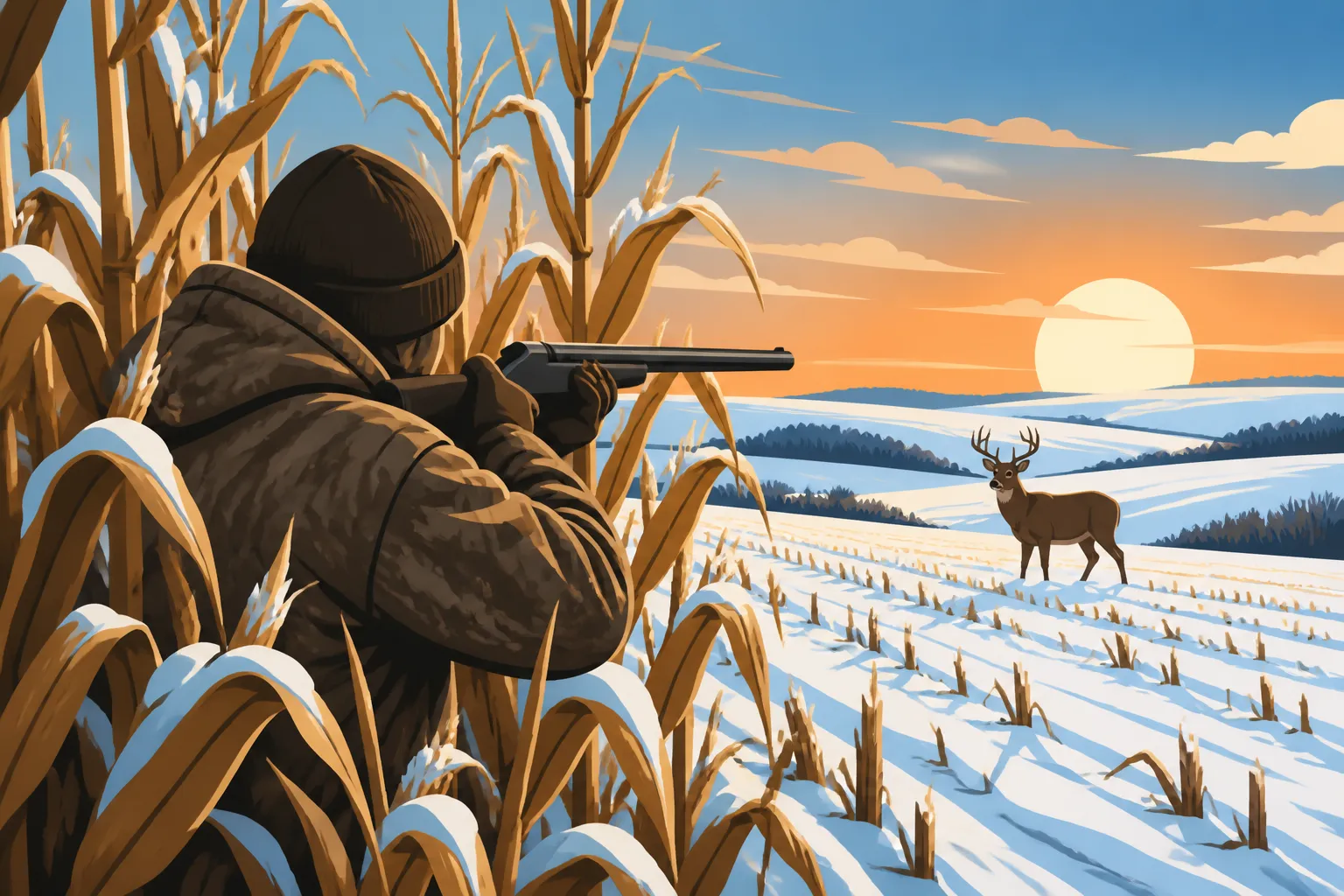
Sometimes the best way to hunt a standing corn field isn't to go into it, but to patiently wait outside it. Deer will eventually move out of the corn to feed in adjacent fields, visit water sources, or transition to different bedding areas. Setting up on a field edge or a natural pinch point can intercept these movements.
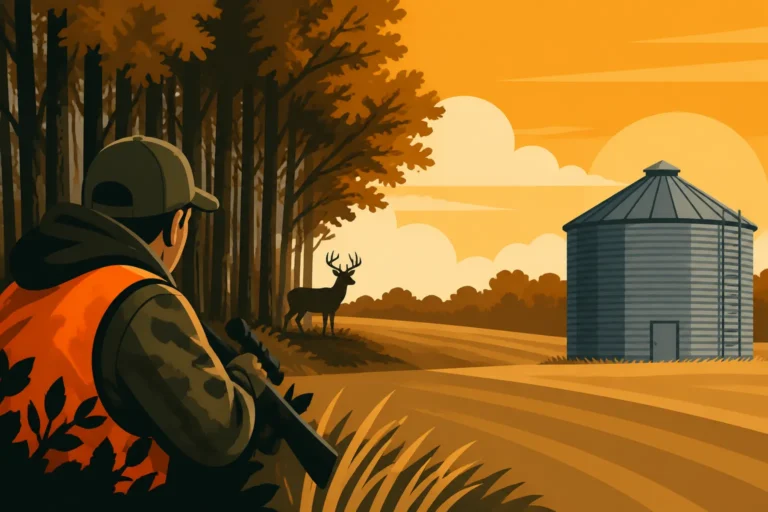
Identify corners where the corn meets a treeline, a waterway, or a fence row. These are often natural travel corridors. Look for fresh tracks in the snow leading in and out of the corn, which will confirm these as active routes. A ground blind brushed into a fenceline or a natural depression can offer excellent concealment. The GoHunt app can assist in identifying these crucial pinch points and property boundaries, helping you select the most advantageous setup. Your best bet for success here is typically at first light or last light, when deer are most likely to be moving. Be prepared for a long, cold sit, as deer movement can be sporadic. Just like when Using a Ground Blind on PLOTS Land, ensure your setup offers a good field of view, is downwind of the anticipated travel route, and provides maximum concealment against the snowy backdrop.
Equipment and Considerations for Snowy Corn Hunts
Hunting in North Dakota after a snow demands more than just skill; it requires the right gear and a keen awareness of safety. The cold can be unforgiving, and the vast, open landscape can quickly disorient an unprepared hunter.
Essential Gear for Cold, Snowy Conditions
When the mercury drops and snow is on the ground, your comfort and safety hinge on your gear. Layering is non-negotiable. Start with a moisture-wicking base layer, add insulating mid-layers like fleece or down, and top it off with a waterproof and windproof outer shell. Your hands and feet are particularly vulnerable to the cold, so invest in high-quality, insulated, waterproof boots (preferably taller ones to handle deeper snow), and multiple pairs of warm gloves or mittens, perhaps with hand warmer packets. Consider a good quality hat or balaclava that covers your ears and neck.
Optics are also crucial. Quality binoculars can help you spot subtle movements in the corn rows from a distance, or identify fresh tracks without having to walk directly into the area. While not for shooting, some hunters might use a thermal monocular for scouting at a distance to identify hotspots before committing. Don't forget the practical essentials: a reliable knife, a drag rope for recovery, and game bags if you're far from your vehicle. Remember that a long sit requires preparation, so pack plenty of water (in an insulated container to prevent freezing) and calorie-rich snacks. A thoughtful Cold-Weather Sitting Strategy on the Prairie involves not just clothing, but also proper hydration and fuel for your body.
Safety First: Navigation and Communication
North Dakota's landscape, particularly its vast agricultural fields, can be disorienting, especially when snow covers familiar landmarks. Always carry a reliable GPS device, whether it's a dedicated unit or a hunting app like GoHunt on your phone, with downloaded offline maps. Knowing your precise location, your entry point, and the direction back to your vehicle is paramount. A compass and a physical map are excellent backups in case electronics fail due to cold or battery drain.
Before you head out, always let someone know your exact hunting location and your expected return time. If you're hunting with a partner, establish clear communication methods, like two-way radios, and safety protocols for drives. Be aware of your surroundings, particularly when hunting near roads, farmsteads, or other fields where landowners might be working. While North Dakota offers vast public opportunities, it's vital to recognize potential for Hunting Pressure on North Dakota Public Land and respect other hunters' space. Stay vigilant for unexpected hazards like hidden fence wires, icy patches, or deep snow drifts that could lead to falls or other injuries. Finally, if you're successful, and you often are in standing corn, be prepared for Tracking a Deer in Fresh Prairie Snow efficiently and safely, knowing where you are in relation to boundaries and escape routes.
Comparing Hunting Tactics in Snowy Corn
To help you decide which approach might be best for your next hunt, here's a quick comparison of the two primary tactics we discussed for tackling snowy corn fields.
| Tactic | Best For | Pros | Cons | Key Considerations |
|---|---|---|---|---|
| Still-Hunting | Solo hunters or small, stealthy groups | Quiet, intimate experience; deep penetration into bedding areas; high chance of close-range shots. Tracking in snow is excellent. | Slow process; high physical demand in deep snow; risk of alerting game if not careful; can be difficult to recover game alone if it runs far into dense cover. | Focus on wind direction, slow movement, keen observation of subtle signs. Be prepared for sudden encounters. |
| Controlled Drive | Groups of 2-4 hunters | Efficiently covers large areas; pushes game towards waiting shooters; increased safety with multiple eyes; good for locating bedded game. | Requires coordination and communication; can push game out of the area if not controlled; risk of less ethical shots if game is moving fast; safety paramount with multiple hunters. | Designate roles (pushers/blockers), clear communication, strict safety rules (shooting lanes, blaze orange). Plan escape routes for game. |
| Field Edge/Pinch Point Sit | Patient hunters, especially at dawn/dusk | Low impact, minimal disturbance; capitalizes on natural travel routes; often easier access and setup. | Requires patience and long, cold sits; dependent on deer movement timing (dawn/dusk); deer might not use the anticipated route; limited to specific times. | Identify active entry/exit points (via tracks), set up downwind, ensure good concealment. Best for transition periods. |
Disclaimer
Hunting is an inherently dangerous activity. Always prioritize safety, understand and adhere to all North Dakota hunting regulations, and respect private property. The information provided in this guide is for educational purposes only and should not replace proper hunter education or professional guidance. Always hunt ethically and responsibly.