Spotting Pronghorn From a Section Road
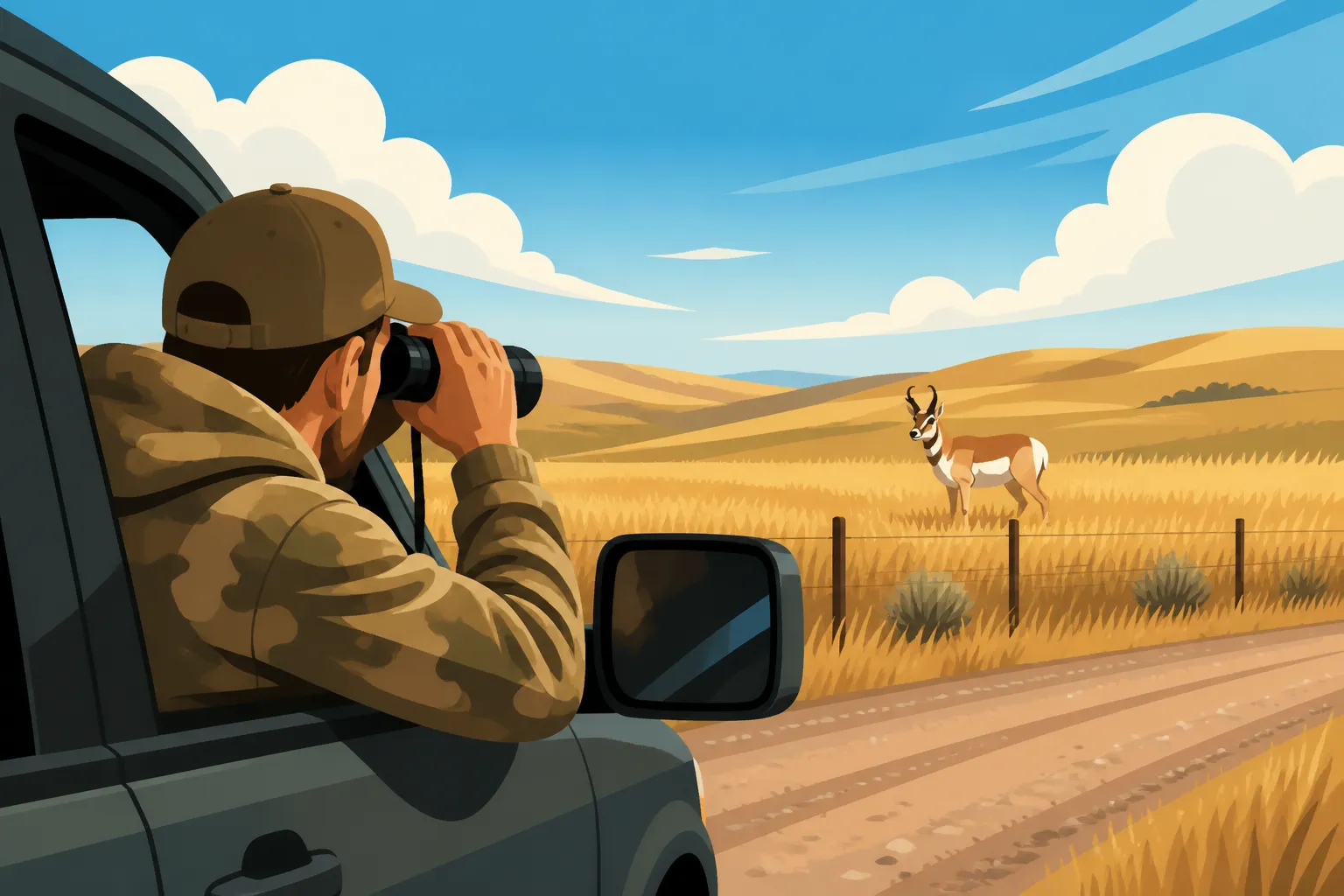
The vast, open landscapes of western North Dakota offer some incredible hunting opportunities, but sometimes, just finding the game can feel like an impossible task, especially when you're trying to locate a creature as elusive and wide-ranging as a pronghorn from the confines of your vehicle. It's a common frustration – you know they're out there, but they seem to vanish into the horizon. This guide is all about honing your skills to effectively spot pronghorn from the convenience of a section road, maximizing your scouting efficiency and turning those fleeting glimpses into actionable intel for your hunt.
Understanding Pronghorn Behavior from the Roadside
Spotting pronghorn from a section road isn't just about driving around and hoping for the best; it's about understanding where they're likely to be and why. These animals are creatures of habit, and knowing those habits can dramatically increase your odds of finding them.
Their Daily Routines and Preferred Terrain
Pronghorn are incredibly efficient animals, built for survival on the open prairie. They're often most active during the cooler parts of the day – early mornings and late evenings – when they're feeding. During the heat of midday, you might find them bedded down, often in an area with a slight rise or dip that offers a bit of a breeze and a vantage point. They love wide-open spaces, grasslands, and areas with low-growing forbs and shrubs. You'll rarely see them in thick timber or dense river bottoms; that's prime whitetail country, not theirs. They often favor areas where they can see danger from a distance, which is why section roads, running along the edges of vast pastures and CRP fields, can be excellent scouting vantage points. If you're on a road bordering a large expanse of uncultivated land, particularly in counties like Bowman, Slope, or Golden Valley, you're in the right neighborhood.
Another key aspect is their water source. While pronghorn can go long periods without direct water, relying on the moisture from their forage, they will still visit water holes, especially during dry spells or warm weather. Keep an eye on any stock ponds, dugouts, or even creeks that might be present in the otherwise arid landscape. These can be natural congregation points, and spotting them heading to or from such a source can reveal their travel patterns. Knowing these patterns can be invaluable when you're preparing to go Stalking Pronghorn on Open Grassland.
Common Mistakes When Identifying Pronghorn
It's easy to get excited when you see movement on the prairie, but taking a moment to confirm what you're actually looking at is crucial. A common mistake is misidentifying mule deer, especially young bucks or does, for pronghorn at a distance. Both species inhabit parts of western North Dakota, and while their primary habitats differ, there can be overlap. Mule deer, particularly the does and fawns, will often utilize similar open edges and coulees. However, pronghorn have a very distinct coloration – that striking black, white, and tan pattern – and their unique horn structure is unmistakable once you get a clear view. They also move differently, with a more open, loping gait compared to a mule deer's bounding or high-stepping walk.
Another mistake is dismissing what might initially look like a distant fence post or a small clump of brush. Pronghorn can blend surprisingly well, especially when bedded down in sparse grass. Their light undersides and tan backs can disappear against the dry prairie. What looks like an anomaly on the horizon through your naked eye might resolve into a pronghorn’s white rump patch or distinct head profile with a good set of binoculars or a spotting scope. It's worth taking a closer look at anything that seems "out of place" or has an unusual silhouette, especially if you're targeting areas known for high North Dakota Pronghorn Herd Size.
Optimizing Your Roadside Glassing Strategy
Successful roadside scouting for pronghorn is an art form, a blend of patience, technique, and the right tools. It’s not just about stopping and looking; it’s about looking effectively.
The Best Times of Day and Ideal Conditions
As mentioned, early morning and late evening are prime times. The low angle of the sun at dawn and dusk creates longer shadows that can highlight animals moving across the landscape. The cooler temperatures also mean pronghorn are more likely to be up and feeding, rather than bedded down to escape the midday heat. Moreover, the lack of mirage during these cooler hours makes distant objects much clearer. Midday, especially during the summer and early fall, can be frustrating due to heat waves distorting your view, making it nearly impossible to judge distance or even discern an animal from a rock.
Ideal conditions often involve a clear sky and minimal wind. A strong prairie wind can make it difficult to hold your optics steady, and it can also make animals less visible as they hunker down or seek shelter. Overcast days can also be surprisingly good, as the diffused light reduces harsh shadows and glare, providing a more consistent, softer image through your glass. However, be wary of heavy fog or rain, which obviously makes spotting anything beyond a few yards impossible. A calm, cool morning after a light rain can be particularly productive, as the air is clean and the ground might be damp, highlighting fresh tracks and making animals stand out. This is a great time to implement your scouting plan, especially after understanding Why a Hard Winter Hurts Pronghorn Numbers and how they might recover and move in subsequent seasons.
The Right Optics and Scanning Techniques
Your optics are your best friend when spotting pronghorn from a section road. A good pair of 10x binoculars is essential for general scanning and picking up initial movement. However, for serious long-range identification and evaluation, a high-quality spotting scope (20-60x or even 80x magnification) mounted on a sturdy tripod is indispensable. You’ll be able to confirm horn length, mass, and overall size, which is critical if you're looking for a specific caliber of animal. Don't skimp on the tripod; a flimsy one will frustrate you to no end in the persistent North Dakota winds.
When scanning, don't just sweep aimlessly. Divide the landscape into sections, working methodically from left to right, then dropping down and working right to left. Pay close attention to changes in elevation, fence lines, and any brushy draws or coulees. Pronghorn often follow natural contours or use linear features like fences for travel, or they might bed on a slight rise where they have a commanding view. Take your time. Don't rush. Spend at least 5-10 minutes methodically glassing an area before moving on. Sometimes, a pronghorn that was bedded down will stand up, or one that was obscured by a slight rise will become visible as it moves. Using a vehicle as a natural blind can also be beneficial, as animals are often accustomed to vehicles on the road, making them less likely to spook instantly.
Navigating the Challenges of Mirage and Heat Haze
One of the most maddening frustrations of hunting the open plains is dealing with mirage and heat haze. As the sun climbs and heats the ground, warm air rises, creating shimmering distortions that make distant objects appear wavy and indistinct. This is why midday glassing can be so unproductive and why focusing on those early morning and late evening windows is paramount.
When you have to glass during less-than-ideal conditions, there are a few tricks. First, try to glass across dips or low areas rather than directly over vast, flat, hot expanses. The ground closer to you will often produce less mirage. Second, try to find a slightly elevated position for yourself; even a foot or two can make a difference by getting you above the most intense ground-level heat waves. Third, adjust your focus constantly. Sometimes a slight adjustment can cut through some of the haze to reveal a clearer image for a brief moment. And finally, patience is key. You might need to watch a distant area for a while, waiting for a momentary lull in the mirage to get a clear enough view to identify what you're seeing. Remember, if you’re seeing significant mirage, the pronghorn are likely also experiencing it, making them less likely to be moving far or fast.
Leveraging Technology for Section Road Scouting
In today's hunting world, technology is no longer an optional luxury but a powerful tool that can significantly enhance your roadside scouting efforts, especially in vast states like North Dakota.
Mapping Apps and Aerial Imagery
Modern mapping applications are absolute game-changers for any hunter, and particularly for those scouting pronghorn from a vehicle. Apps like GoHunt offer detailed satellite imagery that allows you to virtually scout an area before you even set foot (or tire) on the ground. You can identify potential bedding areas, feeding zones, water sources, and travel corridors from an aerial perspective. Look for changes in vegetation, subtle rises, depressions, and areas where fences might funnel animals. You can pre-plan your section road routes, marking promising glassing spots, and noting potential access points (if on public land or with permission for private).
Using these apps, you can also overlay different layers to see land ownership, which is crucial for ethical and legal hunting. Knowing where public land, like Bureau of Land Management (BLM) land or State School Land, abuts private property is vital. Many section roads serve as the boundaries for these different land types. This allows you to focus your efforts legally and respectfully. While you're often Scouting PLOTS Land With the ND Hunt App for other species, GoHunt's detailed maps provide a broader, more integrated view of the entire landscape, making it easier to identify the vast, open tracts where pronghorn thrive.
GoHunt for Enhanced Planning and Data
GoHunt, in particular, goes beyond just basic mapping. It integrates a wealth of data that can be invaluable for pronghorn hunters. You can often access historical harvest data, unit-specific regulations, and even weather patterns directly within the app. This kind of information helps you understand the historical productivity of an area, which units have higher densities of pronghorn, and what the success rates have been like. This allows for a more strategic approach to your roadside scouting, rather than just randomly driving.
For example, if you see an area on GoHunt with excellent habitat features – open grasslands, a nearby water source, and minimal human disturbance – and the historical data suggests good pronghorn numbers, that's a prime candidate for focused roadside glassing. You can mark these areas aswaypoints, then drive to them and spend dedicated time with your optics. GoHunt's ability to sync data across devices also means you can plan extensively on your computer at home, then have all that information seamlessly available on your phone or tablet in the field, even if you lose cell service in remote areas. This is a huge advantage, as cell service can be spotty in the truly wild parts of western North Dakota. For these situations, understanding Using the PLOTS App Without Cell Service can still provide a useful backup for public land.
Weather Apps and Wind Considerations
Integrating a reliable weather app into your scouting routine is a must. Pronghorn, like all wildlife, are influenced by weather. Tracking wind direction and speed is paramount. Pronghorn have incredible eyesight, but their sense of smell is also very keen. When planning a potential stalk, you absolutely need to know the wind direction to avoid being scented. From a scouting perspective, a strong wind might mean pronghorn are tucked into a draw or behind a subtle rise for shelter, rather than out in the open.
Beyond wind, keep an eye on temperature fluctuations. A sudden cold snap might encourage more feeding activity during the day, while a heat wave will push them to bed down more often. Precipitation, even a light rain, can temporarily clear the air, reducing mirage and making glassing more effective. Knowing these patterns allows you to schedule your roadside scouting for the most productive windows. GoHunt and other weather-integrated apps can help predict these conditions, giving you a distinct advantage.
Beyond the Road: What to Do Once You've Spotted Them
Spotting a pronghorn from the road is just the first step. The real challenge, and the real fun, begins afterward. You've found them – now what?
Planning a Stalk from Your Vehicle
Once you've spotted a promising buck (or doe, if that's your tag), the first thing you need to do is assess the situation thoroughly from your current vantage point. Resist the urge to jump out of the truck immediately. Use your spotting scope to analyze the terrain between you and the animal. Look for any cover – even subtle dips, rolling hills, or large clumps of sagebrush – that might offer concealment for a stalk. Note the wind direction meticulously, as this will dictate your approach. Remember, you can't just walk straight at them. Pronghorn eyes are legendary.
Next, discreetly move your vehicle to a more advantageous position if possible, perhaps using a turn in the road or a slight hill to break your silhouette. Park your truck well off the road and out of sight if you plan to get out. Before you even open the door, have a plan for how you'll move and where you'll get out of sight. Will you need to crawl immediately? Is there a fence to cross? Remember to consider the distance. Pronghorn can be incredibly far off, and what looks like a short walk from the road can turn into a mile-long odyssey across the prairie. This initial assessment and planning are critical for a successful Stalking Pronghorn on Open Grassland.
Respecting Private Land and Posted Boundaries
North Dakota is predominantly private land, and respecting those boundaries is non-negotiable. Many section roads run between private properties, and it’s critical to understand What Counts as Posted Land in North Dakota before you even think about leaving the road. Even if you spot a magnificent buck on private property, do not trespass. The consequences can be severe, not just legally but also in terms of damaging hunter-landowner relations for everyone.
Always carry a current land ownership map, whether it’s a physical map or an app like GoHunt with detailed property lines. If the pronghorn is on private land, you have two options: either try to secure permission from the landowner (which is often difficult on the spot) or continue scouting for an animal on adjacent public land. Sometimes, animals will move from private to public land, so keeping an eye on them from a legal vantage point is still a valuable strategy. Never assume that just because you can see an animal from the road, you have the right to pursue it.
Ethical Considerations and Shot Placement
Once you've closed the distance, the ethical considerations of the shot come into play. Pronghorn are not large animals, and their vitals are relatively small compared to a deer. Practice your shooting at various distances and angles, especially in windy conditions, before your hunt. A clean kill is always the goal.
Always ensure you have a clear shot, free of obstructions, and that you have a safe backdrop. The open prairie means your bullet can travel a long way, so be absolutely certain of your target and what's beyond it. Taking the shot from a stable rest, whether prone, kneeling, or using shooting sticks, is paramount. Rushing the shot can lead to a wounded animal and a difficult, if not impossible, recovery. A responsible hunter understands their limitations and only takes ethical shots.
Here's a quick checklist to help you stay organized during your roadside scouting efforts:
| Item | Purpose | Check |
|---|---|---|
| High-Quality Binoculars | General scanning and initial spotting (e.g., 10×42) | [ ] |
| Spotting Scope & Tripod | Long-range identification and detailed assessment (e.g., 20-60x) | [ ] |
| GoHunt or other Mapping App | Land ownership, aerial imagery, waypoint marking, historical data | [ ] |
| Physical Map (Backup) | Essential for areas without cell service | [ ] |
| Wind Checker/Anemometer | Crucial for planning stalks and understanding animal behavior | [ ] |
| Notebook & Pen | Record sightings, locations, time, and animal details | [ ] |
| Digital Camera | Document sightings, particularly for identifying specific animals later | [ ] |
| Hydration & Snacks | Stay comfortable and focused during long glassing sessions | [ ] |
| Quality Vehicle | Reliable transport, good tires for gravel roads | [ ] |
| Shooting Sticks/Rest | For practice and ensuring a stable shooting platform if hunting | [ ] |
Following these guidelines will not only increase your chances of spotting a North Dakota pronghorn from a section road but also ensure you're doing so efficiently, ethically, and safely. The prairie offers an incredible hunting experience; make sure you're prepared for it.
Disclaimer
Hunting is an inherently risky activity. This guide provides general information for educational purposes only and is not a substitute for professional advice, local regulations, or proper safety training. Always consult the most current North Dakota Game and Fish Department regulations, obtain all necessary licenses and permits, and prioritize safety above all else. The author and publisher are not responsible for any incidents or accidents that may occur as a result of using this information.