Stalking Pronghorn on Open Grassland
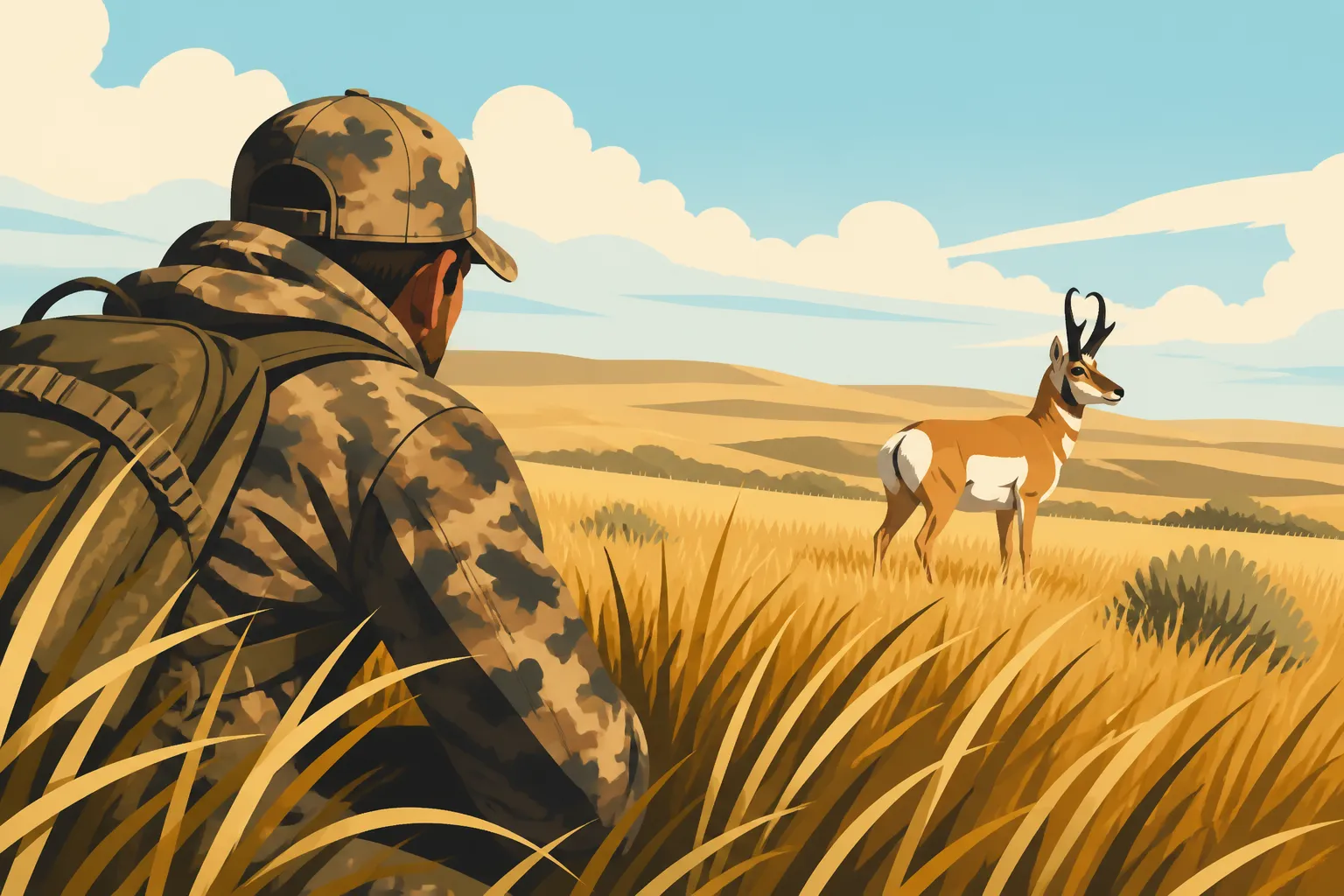
Trying to close the distance on a pronghorn in North Dakota's wide-open grasslands can feel like an impossible magic trick. Their incredible eyesight, paired with the flat, unforgiving terrain, often leads to busted stalks and frustratingly long glances from animals that seem to materialize out of thin air. This guide will walk you through the nuanced art of stalking these wary creatures, offering practical strategies to help you get within range in their natural prairie habitat.
Understanding Pronghorn Senses and Behavior on the Prairie
Before you even think about crawling, you've got to respect what you're up against. Pronghorn are often called "prairie rockets" for a reason, but their speed is only half the battle. Their true defense lies in their phenomenal senses, finely tuned for survival on wide-open expanses where cover is a luxury. Ignoring these senses is the fastest way to blow a stalk.
First and foremost is their eyesight. Pronghorn have massive eyes, almost as large as a horse's, relative to their body size, set far back on their heads, giving them an almost 300-degree field of vision. They can spot movement at incredible distances – we're talking miles, not just hundreds of yards. It's not just motion; they pick up on contrasts, shapes, and anything that looks out of place in their environment. This means a hunter silhouetted on a ridge, or even a vehicle parked carelessly, is instantly flagged. Their eyesight is reportedly equivalent to 8x binoculars, allowing them to detect subtle threats far beyond what the human eye can discern. This hyper-awareness is why a careful, slow approach is paramount.
While their eyesight is legendary, don't underestimate their sense of smell. Though not as celebrated as their vision, pronghorn possess a keen olfactory sense that helps them detect predators downwind. The winds on the North Dakota prairie can be notoriously fickle, swirling and changing direction without much warning. A sudden shift can carry your scent right to their noses, even if you thought you had the perfect approach. They'll often pick up on human scent from hundreds of yards away, sometimes even before they see you. This means playing the wind is just as critical as staying out of sight. Their hearing is also sharp, though typically secondary to sight and smell in an open environment. A sudden, loud noise can put them on alert, but it's usually the visual or scent cues that send them bounding away.
Beyond their senses, understanding their behavior is key. Pronghorn are creatures of habit. They often follow the same routes to water, feed in particular areas, and bed down in specific, often slightly elevated, spots that offer good visibility. Observe them from a distance before making your move. Are they feeding calmly? Are they looking nervous, flicking their ears, or stomping a foot? Are there other animals around, like deer or cattle, whose alarm could also spook your target? Recognizing these subtle cues can inform your entire stalking strategy. For instance, a buck that's actively chasing does or defending his territory might be slightly less observant, but also more prone to unpredictable movement. This careful observation phase is your critical first step, perhaps even using a mapping tool like GoHunt to mark their current position and potential escape routes.
The Art of the Open Country Stalk: Utilizing Topography and Wind
Stalking pronghorn on North Dakota's open grassland demands an intimate understanding of the terrain, no matter how subtle, and a constant awareness of the wind. Forget about dense timber or thick brush; here, every little dip, swell, and even a patch of slightly taller grass becomes a potential piece of cover. This is where patience and meticulous planning truly pay off.
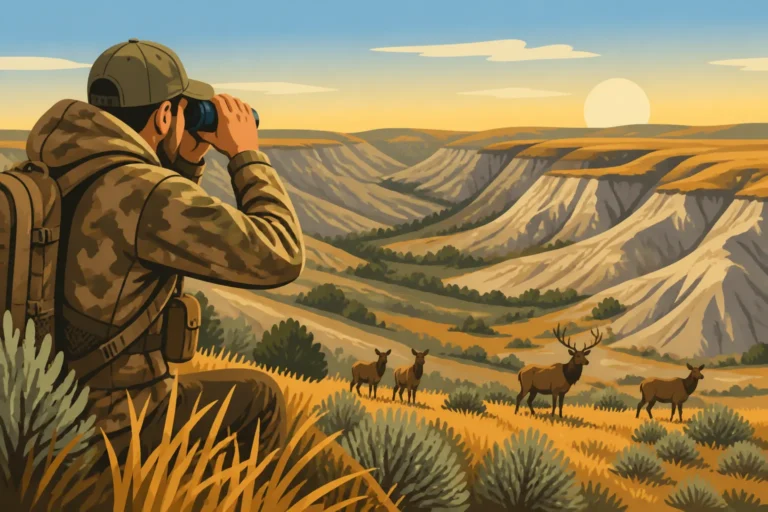
The most crucial element of any open-country stalk is reading the ground. While it might look flat from a distance, the prairie is full of subtle undulations, coulees, and drainages. These minor elevation changes can become your best friends. Start by using your binoculars from a distant vantage point, ideally well out of sight, to thoroughly glass the area. Identify the pronghorn's position, their travel direction, and their likely escape routes. Then, meticulously map out a path using any and all available cover. This could mean crawling along a fenceline, sneaking through a shallow wash, or even utilizing the low ground on the backside of a small knoll. You're looking for anything that breaks up your outline and keeps you below their line of sight. Sometimes, the only cover might be a small clump of sagebrush or a single, barely perceptible depression. You'll need to move from one piece of cover to the next, often pausing for long periods to re-evaluate and ensure the pronghorn haven't shifted. This often involves planning routes using detailed maps, similar to how one might approach Hunting a Badlands Draw for Mule Deer.
Wind direction is your second, equally critical, partner. Always, and I mean always, keep the wind in your face or quartering into it. A slight breeze carrying your scent can ruin an otherwise perfect stalk. This is where the unpredictability of North Dakota's winds becomes a challenge. You might start your stalk with a perfect crosswind, only for it to shift 90 degrees halfway through. You need to be prepared to adapt, sometimes even abandoning a stalk and circling around to approach from a new direction. Pay attention to how the wind behaves around terrain features. A draw that offers great visual cover might create a swirling wind tunnel that carries your scent in unexpected directions. Tossing a pinch of dust or using a small wind indicator often is not just recommended, it's mandatory. Understanding how Wind and Thermals in Badlands Terrain work, even if you're on flatter ground, can give you a significant edge.
The actual execution of the stalk is a slow, methodical crawl. This isn't a casual walk in the park. You'll often find yourself on your hands and knees, or even flat on your belly, for hundreds of yards. Move slowly and deliberately, avoiding sudden movements. Keep your profile as low as possible. When you need to peek, do so from behind cover, slowly raising your head just enough to get a visual. Use a pair of quality binoculars or a spotting scope to minimize how much you expose yourself. Before you commit to the final approach, identify a landmark at the desired shooting distance. This will help you know when to stop and prepare for a shot. Remember, the goal isn't just to get close, but to get close enough for a clean, ethical shot without spooking the animal. Tools like the onX Layers for North Dakota Land Status or even the GoHunt app can provide invaluable real-time topographic data to assist in planning these intricate movements, showing you every dip and rise.
| Stalking Technique | Terrain/Cover | Wind Direction | Pros | Cons |
|---|---|---|---|---|
| Low Crawl | Minimal cover (short grass, very subtle dips) | Direct into wind (headwind) | Extremely low profile, best for open ground | Slow, physically demanding, limited visibility |
| Kneeling/Walking in Draws | Shallow coulees, ditches, tall grass lines | Direct into wind or slight crosswind | Faster than crawling, uses natural depressions | Requires specific terrain, can have swirling winds |
| Ridge Line Sneak | Back side of gentle hills or ridges | Wind blowing up/over ridge, or into face | Good for covering distance, uses elevation | Requires careful cresting, risk of silhouetting |
| Vehicle Approach (Legal) | Section roads, using vehicle as temporary screen | Direct into wind for final approach | Can cover vast distances quickly | Limited to road access, easy to spook if careless |
Gear and Tactics for Successful Pronghorn Stalking
Successful pronghorn stalking isn't just about reading the land and wind; it's also about having the right gear and employing smart tactics to overcome their uncanny awareness. These animals push you to the limit of your equipment and your abilities, making preparation paramount.
First, let's talk optics. You absolutely need high-quality binoculars, 10×42 or 12×50 being common choices, and a good spotting scope on a sturdy tripod. Given that you'll be Spotting Pronghorn From a Section Road or from distant hills, being able to identify your target and assess its location from afar is non-negotiable. Spend more time glassing than walking. Every time you move, you increase your chances of being spotted. Use your spotting scope to confirm if that distant speck is indeed a shooter buck, and to plan your approach by identifying subtle terrain features that might not be visible with binoculars alone. Being able to resolve details at long range means fewer wasted stalks and a better understanding of the animal's behavior before you commit.
Your clothing also plays a critical role. Forget noisy fabrics; quiet, breathable layers are essential, especially when you're crawling through dry grass. Camouflage patterns should match the prairie environment – think tans, browns, and muted greens, not deep forest patterns. A good pair of knee pads will be your best friend during those long, low crawls; trust me, your knees will thank you. Footwear should be comfortable, supportive, and quiet, capable of handling long walks and occasional crawling. A hydration pack is also a smart choice, as North Dakota's sun and wind can quickly dehydrate you during an intense stalk. Moreover, having a reliable mapping app, such as GoHunt, on your phone or GPS device is invaluable for marking your position, the animal's location, and potential routes. This digital scouting can save you miles of walking and help ensure you're on accessible land, like a designated PLOTS area.
Finally, consider your shooting setup. Given the open country, shots on pronghorn can often be at extended ranges. Practice shooting from various positions – prone is ideal for stability in the open, but you might find yourself needing to shoot from a kneeling or sitting position if the terrain dictates. A bipod attached to your rifle or a shooting stick can provide much-needed stability. Zero your rifle accurately and know your ballistic drop for different distances. Laser rangefinders are indispensable for quickly and precisely determining the distance to your target, removing any guesswork in the moment of truth. Remember, a clean, ethical shot is the ultimate goal. Don't push your limits on distance if you're not confident. A solid understanding of your rifle's capabilities and your own shooting proficiency is far more important than attempting a Hail Mary shot. This kind of preparation echoes the discipline required for successful hunts in other North Dakota environments, such as during North Dakota's November Gun Deer Season, where precision and readiness are key.
Common Mistakes and How to Avoid Them on Pronghorn Stalks
Even experienced hunters can make mistakes when chasing pronghorn, especially given their unique challenges. Learning from common pitfalls can significantly increase your success rate and save you a lot of frustration and wasted effort on the North Dakota prairie.
One of the most frequent mistakes is underestimating their eyesight and moving too fast or exposing yourself too much. It's tempting, when you've finally spotted a nice buck, to want to close the distance quickly. But remember, a pronghorn's eyes are always scanning. Any sudden movement, a glint from your rifle scope, or even just being silhouetted against the sky, can send them bolting. To avoid this, force yourself to slow down. When you think you're moving slow enough, move even slower. Use natural pauses in your movement to glass the animals again, ensuring they haven't noticed you and are still in a relaxed state. If they're looking in your direction, freeze completely, sometimes for several minutes, until their attention shifts. Think of it like a game of "red light, green light" with the highest stakes. This takes immense patience, but it's far better than blowing a stalk at 800 yards because you rushed.
Another common error is misjudging the wind or failing to account for its unpredictable nature. North Dakota's prairie winds can be notoriously shifty. You might start your stalk with a perfect headwind, only for a thermal updraft or a shift in the weather to carry your scent sideways or even behind you. Hunters often forget to recheck the wind frequently throughout their stalk. Always carry a small bottle of powder or a few pieces of milkweed to test the wind every hundred yards or so, especially when you're nearing your target. If the wind shifts unfavorably, you have a tough decision to make: either abandon the stalk and try to circle around for a new approach, or wait it out, which isn't always feasible with changing animal behavior. Ignoring a bad wind almost guarantees a busted stalk. This constant vigilance is as important as any physical skill, much like the intricate planning involved in Hunting North Dakota's Badlands Mule Deer Country.
Lastly, many hunters fail to prepare adequately for the physical demands and mental grind of a pronghorn hunt. Stalking these animals often involves long distances, crawling on rough ground, and enduring sun, wind, and sometimes even unexpected rain. If you're not in decent physical shape, you'll quickly become fatigued, which leads to sloppy movements and poor decision-making. Dehydration is a real concern, so always carry more water than you think you'll need. Mentally, it can be draining to put in hours on a stalk only for it to fall apart at the last minute. Don't let frustration get the better of you. Embrace the challenge, learn from each failed attempt, and maintain a positive attitude. This tenacity is a hallmark of successful hunters, whether you're chasing pronghorn or engaging in something as physically demanding as Packing for an Eight-Day North Dakota Elk Hunt. Keep at it, and eventually, your persistence, combined with these tactics, will pay off.
Disclaimer
Hunting is a challenging and rewarding activity that carries inherent risks. The information provided in this guide is for informational purposes only and is not a substitute for official regulations, professional instruction, or personal judgment. Always consult the latest North Dakota Game and Fish Department regulations before heading afield, and prioritize safety above all else. Hunt ethically, responsibly, and legally.