North Dakota Turkey Population Trends
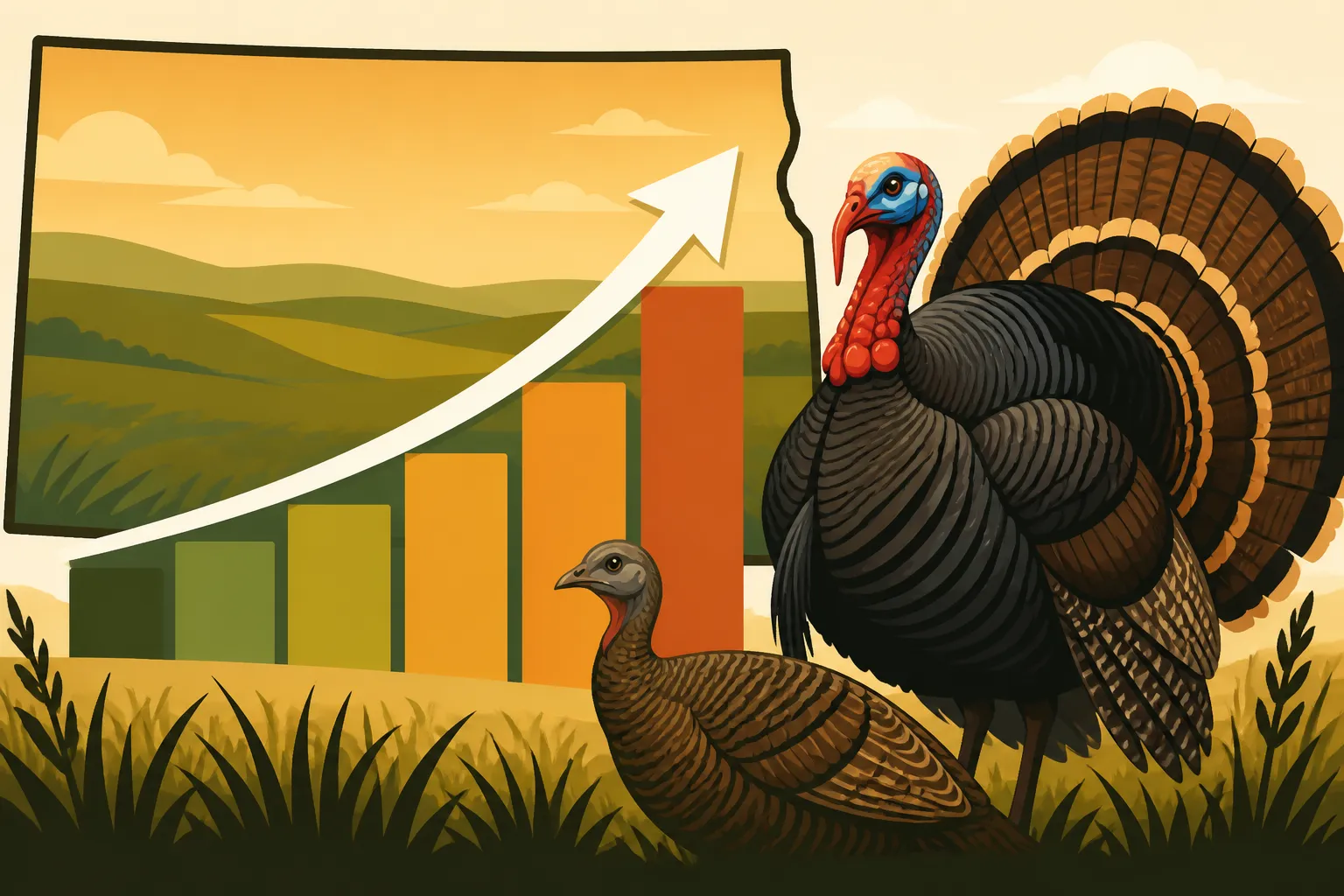
It can feel a bit like a mystery trying to understand where the wild turkeys are hiding in North Dakota, especially when you're planning your spring or fall hunts. One year they seem to be everywhere, and the next, you're scratching your head wondering if they packed up and moved south for good. This guide is here to shed some light on the wild turkey population trends across North Dakota, helping you understand the ebb and flow of these incredible birds so you can better plan your hunting adventures and appreciate the conservation efforts that keep them around.
The Wild Turkey's Journey Back to North Dakota
For many hunters, the thought of wild turkeys thriving on the North Dakota landscape is a relatively modern concept. It’s easy to forget that these adaptable birds weren't always a common sight, especially after some significant declines. Understanding their history here helps us appreciate the health of the flocks we see today.
Historical Presence and Near Extirpation
Believe it or not, wild turkeys were once native to North Dakota, specifically the Merriam's subspecies, roaming the timbered river bottoms and coulees of the western part of the state. Early accounts from pioneers and explorers often mention these birds, particularly around the Missouri River breaks. However, by the early 1900s, habitat destruction, unregulated hunting, and harsh winters took a severe toll. The native populations were essentially extirpated, vanishing from the North Dakota landscape for decades. It was a bleak time for many wildlife species across the country, and the wild turkey was certainly no exception. The absence of their distinct gobble was a quiet testament to a significant loss in the state's natural heritage.
For years, the thought of pursuing a wild turkey in North Dakota was just a dream, limited to stories from distant states. This historical void makes their current resurgence even more remarkable and a testament to dedicated conservation work. Hunters who were around during those lean years can truly appreciate the work that went into bringing them back.
Restoration Efforts and Early Success
The comeback story of the wild turkey in North Dakota really began in the 1950s. The North Dakota Game and Fish Department, along with passionate local groups, initiated significant restoration efforts. This involved trapping turkeys from established populations in other states, like South Dakota and Colorado, and carefully releasing them into suitable habitats across North Dakota. The primary species introduced were Merriam's and later Eastern wild turkeys, or hybrids of the two, selected for their adaptability to the varying North Dakota environments. These initial releases were meticulously planned, focusing on areas with good cover, food sources, and protection from human disturbance. You can dive deeper into the specifics of How Turkeys Were Restored to North Dakota to truly grasp the scale of this effort.
The early years were a mix of triumphs and challenges. Some releases took hold quickly, with flocks expanding into new territories, while others struggled. But gradually, with continued effort and a better understanding of turkey ecology, these introduced populations began to establish themselves. The sound of a gobbler echoing through a North Dakota river bottom was, once again, a reality, bringing immense satisfaction to conservationists and hunters alike. These foundational flocks became the building blocks for the populations we enjoy today, proving that with dedication, wildlife can make incredible comebacks.
Key Habitats for Resurgent Flocks
Today, wild turkeys in North Dakota are found in a variety of habitats, though they tend to concentrate in specific areas. The major river corridors, particularly the Missouri River system and its tributaries, remain prime turkey country. These areas offer a mix of mature timber for roosting, dense brush for cover, and agricultural fields for foraging – essentially, everything a turkey needs to thrive. The Pembina Hills and Turtle Mountains in the north also support robust populations, with their mixed deciduous forests providing excellent cover and food. These are often the first places hunters think of when considering where to find Where North Dakota Turkeys Are Densest.
Beyond these major strongholds, turkeys have also expanded into smaller wooded draws, shelterbelts, and coulees throughout the prairie. These smaller pockets of habitat are often connected to larger river systems, allowing for dispersal and genetic exchange. Even the rugged Badlands, with its scattered timber and cedar pockets, holds pockets of Merriam's turkeys, showcasing their incredible adaptability. Understanding these key habitats is crucial for any hunter hoping to connect with a gobbler or hen, whether you're using a tool like GoHunt to scout public land or knocking on doors for private access.
Understanding North Dakota's Turkey Population Dynamics
Wild turkey populations are far from static; they ebb and flow based on a complex interplay of environmental factors, human activity, and the inherent biology of the birds themselves. For hunters, grasping these dynamics is key to understanding why some years are better than others and what to expect when you hit the woods.
Factors Influencing Turkey Numbers
Several critical factors consistently shape North Dakota's turkey numbers. Habitat quality is always at the top of the list. A healthy mix of mature timber for roosting, dense undergrowth for nesting and brood-rearing, and open areas for foraging is essential. Changes in agricultural practices, urban development, or even timber harvest can significantly impact available habitat. Food availability, tied closely to habitat, is another major player. Hard mast crops like acorns, if present, are vital, but turkeys also rely heavily on seeds, insects, and waste grain in farm country. Severe winters can reduce food sources and make turkeys more vulnerable, leading to population dips.
Predation pressure, from coyotes, foxes, raccoons, and even raptors, can also impact turkey survival, especially for nests and young poults. While predation is a natural part of the ecosystem, abnormally high predator numbers can suppress turkey recovery. Finally, disease outbreaks, though less common, can occasionally cause localized declines. It’s a delicate balance, and any shift in these factors can lead to noticeable changes in the North Dakota Turkey Population Estimate.
The Role of Weather and Habitat Quality
Weather is undeniably one of the most powerful forces dictating turkey population trends in North Dakota. Mild winters are generally beneficial, allowing birds to conserve energy, find food more easily, and enter the breeding season in better condition. Conversely, severe winters with prolonged deep snow and extreme cold can lead to increased mortality, especially for younger birds and hens. However, it's the spring and early summer weather that often has the most profound impact on the next year's population.
Cool, wet springs during the nesting and brood-rearing period can decimate poult survival. Young turkeys are highly susceptible to hypothermia and pneumonia, and heavy rains can flood nests or make it difficult for poults to find insects, their primary food source early on. Dry, warm springs, on the other hand, typically result in excellent brood survival, leading to a strong cohort of young birds entering the fall and next spring seasons. This is why you'll often hear hunters talking about "good hatch years" – it directly correlates to the number of birds they'll be seeing a year or two down the road. High-quality habitat can help mitigate some of these weather impacts by providing better shelter and more diverse food options, but even the best habitat can't fully protect against a truly brutal spring.
Annual Surveys and Population Estimates
The North Dakota Game and Fish Department works tirelessly to monitor wild turkey populations, even though they can be notoriously difficult to count accurately. Unlike deer or pheasants, turkeys are more spread out and often inhabit dense cover, making aerial surveys less effective. Instead, biologists rely on several methods to gauge population health and trends. This includes spring gobbling surveys, where listening routes are conducted at dawn to count the number of distinct gobblers heard. This provides an index of the breeding male population.
Additionally, summer brood surveys are critical. These involve observing hens with poults and counting the number of young birds per hen, offering a direct measure of reproductive success. Hunter harvest data, collected through mandatory reporting, also provides valuable insights into population distribution and annual success rates. Combining these various data points allows the department to generate an informed North Dakota Turkey Population Estimate and make adjustments to season structures and license allocations. While not an exact count of every single bird, these estimates provide crucial trend information that helps manage the species sustainably. Using tools like GoHunt to see harvest data can also give you a hunter's perspective on these trends.
Regional Differences in Turkey Populations
North Dakota might seem like one big prairie, but it's actually a diverse landscape with distinct regions offering vastly different turkey habitats. Understanding these regional nuances is crucial for both conservation management and for hunters trying to decide where to focus their efforts. What works in one area might not be the best strategy in another.
River Bottoms and Woodlands
The major river systems are historically and currently the strongestholds for wild turkeys in North Dakota. The Missouri River corridor, including its vast system of tributaries, offers extensive blocks of mature cottonwood timber, dense understory, and adjacent agricultural fields. This mosaic provides ideal roosting sites, abundant food, and crucial thermal cover during harsh winters. Here, you'll often find higher turkey densities, and these areas tend to be more resilient to population fluctuations because of the sheer quality and quantity of habitat. This is where you'll find the most consistent opportunities, particularly for those looking to call in a spring gobbler.
Other significant river systems like the Yellowstone, Little Missouri, James, and Red Rivers also boast impressive turkey populations where sufficient timber exists. These areas often have better moisture retention, supporting richer vegetation and therefore more insects and seeds – vital for poult survival. Hunters exploring these areas can expect to encounter robust flocks, though access might require diligent scouting or securing private land permission. The challenge here is often not finding birds, but finding birds on accessible land.
Prairie Coteau and Farm Country Flocks
Moving away from the major rivers, turkeys still thrive in the scattered woodlands and shelterbelts of the state's rolling prairie and agricultural lands, often within regions like the Prairie Coteau. These areas might not have the continuous timber blocks of the river bottoms, but they offer critical pockets of habitat. Turkeys here often utilize farmsteads, abandoned homesteads, and extensive tree rows planted as windbreaks. These features provide roosting opportunities and protection, while the surrounding croplands offer abundant waste grain, especially after harvest.
Hunting in these farm country settings can be a unique experience. Birds might be more patterned to agricultural cycles, feeding in certain fields at specific times of day. While population densities might be lower than in prime river bottom habitat, these birds are often widely dispersed, making for a challenging but rewarding hunt. For fall hunters, understanding Late-Season Food Sources for North Dakota Whitetails is often transferable to turkeys, as both species seek out grain fields. Success often comes down to covering ground, spotting birds from a distance, and carefully planning your approach. The challenge here is often finding contiguous habitat and securing permission on private land, which can be done with careful planning and good relationships with landowners.
Badlands Pockets and Unique Challenges
The rugged, broken terrain of the North Dakota Badlands presents a unique habitat for Merriam's wild turkeys. Here, you won't find large, sprawling forests. Instead, turkeys rely on pockets of Ponderosa pine, juniper, and cedar in steep coulees and draws, combined with the occasional cottonwood stands along intermittent waterways. These areas offer extreme changes in elevation and diverse vegetation, providing both escape cover and foraging opportunities. The Badlands turkeys are known for their hardiness and often traverse significant distances across challenging terrain.
Hunting in the Badlands is an adventure in itself. Birds might be widely scattered, and success often hinges on covering lots of ground, glassing distant ridges, and understanding the topography. The remoteness of some Badlands areas can also mean less hunter pressure, but it also means a greater need for self-sufficiency and preparation. The population here, while not as dense as in the major river bottoms, is a testament to the wild turkey's ability to adapt to some of the most challenging environments North Dakota has to offer. Knowing Wind and Thermals in Badlands Terrain isn't just for deer hunters; turkey hunters can benefit greatly from this knowledge too.
Trends in Harvest and Hunter Opportunities
Monitoring harvest numbers and license trends is like taking the pulse of North Dakota's turkey hunting opportunities. These figures tell us not only how many birds are being taken but also reflect the overall health of the population and the experiences of hunters in the field.
Analyzing Fall and Spring Harvest Data
North Dakota offers both spring and fall turkey seasons, each with distinct characteristics and harvest trends. Spring seasons focus primarily on gobblers, drawing hunters eager to call in a strutting tom during the breeding season. Spring harvest numbers are often a good indicator of the previous year's poult survival – if many young birds survived, there will be more adult gobblers available the following spring. However, spring success can also be heavily influenced by calling conditions and hunter skill. The North Dakota Fall Turkey Harvest Numbers, on the other hand, include both hens and gobblers and often reflect overall population size more broadly, as birds are typically in larger flocks and less dispersed.
Over time, we've seen fluctuations in these numbers. Years with excellent brood production tend to lead to higher harvest numbers in subsequent seasons, while tough springs or severe winters can result in lower takes. These trends help the Game and Fish Department understand which areas are performing well and where populations might need more attention. Keeping an eye on these reports can inform your own hunting plans, giving you a better idea of what to expect in a given unit.
License Availability and Application Strategies
North Dakota's turkey licenses are typically managed through a lottery system, particularly for the more popular units and the spring season. For residents, there are generally more opportunities, but nonresidents may find options available, though perhaps with different rules, as detailed in North Dakota Fall Turkey License Availability. The number of licenses issued for each unit directly correlates to the estimated turkey population and management goals for that specific area. When populations are strong, more licenses are often made available, and vice-versa. Understanding the lottery application process, including deadlines and unit choices, is paramount for hunters.
For spring turkey, applying for the lottery often gives you the best chance at securing a tag for a desired unit. Non-residents, however, face stricter regulations, as North Dakota's Resident-Only Spring Turkey Season means no nonresident spring turkey tags. Fall seasons can sometimes be more flexible, with over-the-counter options or easier-to-draw units, depending on the year and regional population health. For serious turkey hunters, staying informed about these application windows and unit-specific success rates is essential. Using a platform like GoHunt can help you track application periods and odds, making your strategy more effective.
| Season | Typical Focus | Primary Goal | License Type (Common) | Population Indicator |
|---|---|---|---|---|
| Spring Turkey | Gobblers | Breeding activity | Lottery (resident-priority) | Adult male density |
| Fall Turkey | Any turkey (hen or gobbler) | Flock numbers | OTC or Lottery (more accessible) | Overall population health, brood success |
The Impact of Hunter Pressure
Hunter pressure is another factor that can influence harvest trends and the overall hunting experience. In readily accessible areas with robust turkey populations, especially public land, hunter numbers can be higher. This increased pressure can make birds warier, force them into thicker cover, or push them onto private land. While North Dakota has vast tracts of public and Walk-In Access (PLOTS) land, turkeys, being intelligent birds, can quickly learn to avoid areas with heavy human activity.
However, many areas, particularly in the more remote Badlands or less accessible river bottom stretches, still offer opportunities for solitude. Hunters willing to put in the effort to scout off the beaten path or secure private land permission can often find less pressured birds. Learning effective strategies for Calling a Fall Gobbler Flock or Hunting the Standing Rock Fall Turkey Option can help you adapt to various pressure levels. Responsible hunting practices, including respecting private property and spreading out, help ensure a quality experience for everyone and minimize the negative impact of pressure on the birds.
Challenges and Conservation Efforts for Turkeys
Despite their impressive comeback, North Dakota's wild turkeys still face challenges. Sustaining healthy populations requires ongoing effort, adaptability, and the continued support of hunters and conservationists. Understanding these hurdles and the work being done to overcome them is vital for the future of turkey hunting in the state.
Disease, Predation, and Habitat Loss
Like all wildlife, wild turkeys are susceptible to various threats that can impact their populations. Disease, such as avian influenza or blackhead disease, can cause localized die-offs, especially in areas with high turkey densities or where birds congregate. While widespread outbreaks are rare, they are a constant concern for wildlife managers. Predation is another natural, yet impactful, factor. While turkeys are equipped with keen senses, nests and young poults are vulnerable to predators like coyotes, foxes, raccoons, and even some avian predators. A particularly high predator population, especially when combined with poor nesting cover, can significantly reduce annual recruitment.
Perhaps the most significant long-term threat, however, is habitat loss and degradation. As agricultural practices change, woodlands are cleared, or development encroaches on wild spaces, critical roosting, nesting, and foraging areas can shrink or become fragmented. This fragmentation can isolate turkey populations, making them less resilient to other threats. The loss of older, mature timber along river bottoms, for instance, directly impacts the availability of suitable roost trees.
Conservation Programs and Future Outlook
Fortunately, dedicated conservation programs are continually working to safeguard and enhance North Dakota's wild turkey populations. The North Dakota Game and Fish Department leads many of these efforts, often in collaboration with organizations like the National Wild Turkey Federation (NWTF). These programs focus on habitat enhancement, which might involve planting trees and shrubs, establishing food plots, or improving nesting cover in various areas. Maintaining and expanding the PLOTS (Private Land Open To Sportsmen) program also provides crucial habitat and public access, often on lands that benefit turkeys and other wildlife.
Future outlook for turkeys in North Dakota remains cautiously optimistic. Continued monitoring, research, and adaptive management strategies are key. Biologists study turkey movements, survival rates, and genetic health to ensure sustainable populations. The goal is not just to maintain current numbers but to expand healthy turkey populations into suitable, underutilized habitats where possible. This proactive approach, coupled with the commitment of hunters who contribute to conservation through license fees, provides a strong foundation for the future of Wild Turkeys in North Dakota.
How Hunters Contribute to Turkey Management
Hunters are absolutely vital partners in wild turkey conservation in North Dakota, even if you don't always think of it that way while you're out chasing a gobbler. Every license purchased directly contributes funds to the North Dakota Game and Fish Department, which are then channeled into wildlife research, habitat improvement projects, law enforcement, and population management efforts. Without these financial contributions, many conservation initiatives simply wouldn't be possible.
Beyond finances, hunters provide critical data through mandatory harvest reporting, which helps biologists track population trends and make informed management decisions. Ethical hunting practices, adhering to bag limits, and respecting regulations ensure that harvest levels are sustainable and don't negatively impact the overall population. By participating in spring and fall seasons, hunters become direct stakeholders in the health of the turkey resource. Many hunters also volunteer their time for habitat projects or join conservation groups like the NWTF, actively participating in efforts to improve turkey habitat. This partnership between hunters and wildlife agencies is a cornerstone of successful wildlife management, ensuring that future generations will also have the opportunity to experience the thrill of a wild North Dakota turkey hunt.
Disclaimer
This article is for general informational purposes only and does not constitute professional advice. Laws, prices and regulations vary by location and change over time. Consult a qualified professional for guidance on your specific situation.