How Many Mule Deer Live in the Badlands
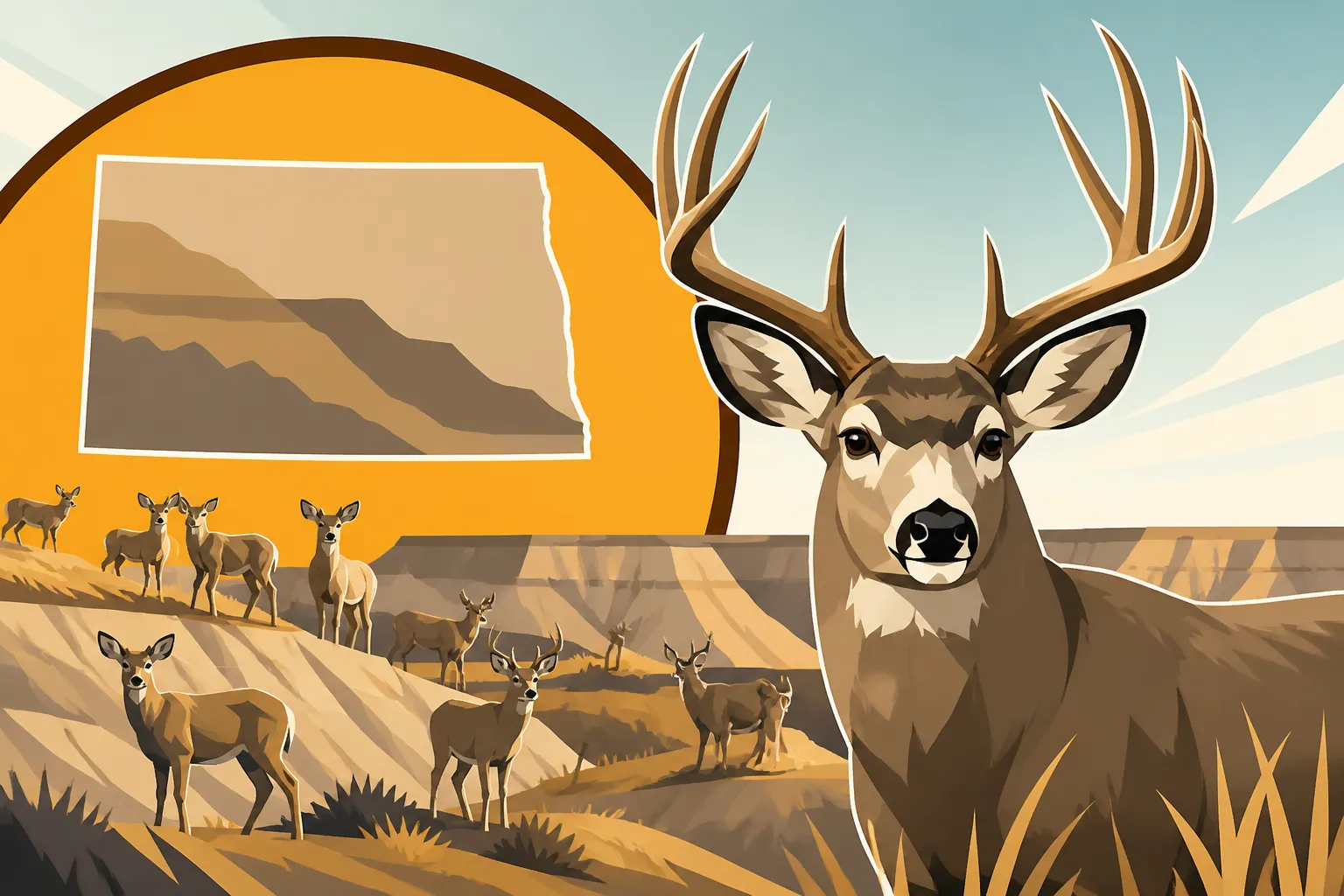
It can feel like finding a needle in a haystack trying to understand the exact numbers of mule deer roaming the vast and rugged North Dakota Badlands. You see them, you know they're there, but getting a firm grasp on how many truly call this breathtaking landscape home is a common challenge for hunters and wildlife enthusiasts alike. This guide aims to shed some light on the current understanding of mule deer populations in this iconic region, helping you better appreciate and plan for your next adventure.
The Elusive Nature of Mule Deer Counts in the Badlands
Pinpointing the exact number of mule deer that roam the rugged terrain of North Dakota's Badlands is far from an easy task. It's not like counting cattle in a pasture; these animals are masters of their environment, blending into the coulees, buttes, and draws with incredible skill. Wildlife agencies, like the North Dakota Game and Fish Department, dedicate significant resources to population monitoring, but even with modern technology, it remains an estimate rather than a precise headcount.
One of the primary tools used for assessing mule deer populations is aerial surveys. These are typically conducted in late fall or early winter when snow cover can make deer more visible against the stark landscape and when deciduous trees have dropped their leaves, reducing canopy obstruction. Helicopters or fixed-wing aircraft fly pre-determined transects, and observers count the deer they see. This method provides critical data points, but it's heavily influenced by factors like snow depth, visibility, and even the deer's behavior on any given day. A particularly mild winter with little snow, for instance, can make aerial surveys less effective, potentially leading to an undercount simply because the animals are harder to spot.
Ground observations also play a role, albeit a more localized one. Wildlife biologists and technicians spend countless hours on foot and in vehicles, looking for deer, observing herd composition, and noting signs of activity. These ground efforts are often concentrated in specific study areas to gather more detailed information on fawn recruitment, buck-to-doe ratios, and overall health. While invaluable for understanding localized dynamics, scaling these observations to the entire Badlands landscape presents a massive logistical challenge due to the sheer size and inaccessibility of much of the terrain. The ruggedness that makes the Badlands so appealing to mule deer hunters is precisely what makes counting the deer so incredibly difficult.
Historical Peaks and Valleys: A Look at Mule Deer Population Trends
The mule deer population in North Dakota's Badlands hasn't been a static number; it's seen its share of dramatic highs and devastating lows over the decades. Understanding these historical trends is crucial for appreciating where the population stands today and why conservation efforts are so vital. It’s a story largely written by Mother Nature herself, with significant influence from human activity, both intentional and unintentional.
One of the most impactful forces shaping mule deer numbers in the Badlands has been the unforgiving prairie winter. While mule deer are incredibly resilient creatures, a series of harsh winters, particularly those with deep snow and prolonged cold snaps, can take a heavy toll. Deep snow makes foraging extremely difficult, forcing deer to expend more energy to move and access limited food sources. This stress can lead to starvation, especially among fawns and older animals, and can severely impact fawn survival rates in the following spring. Historically, significant population crashes have been directly linked to back-to-back severe winters, from which it can take years for the herd to fully recover. We saw this play out in various periods, with numbers dipping sharply after particularly brutal cold seasons.
Beyond the weather, habitat changes have also played a role. While the Badlands themselves remain a relatively stable and unique ecosystem, surrounding land use changes, such as agricultural expansion or alterations in grazing practices, can influence deer movement and resource availability, particularly on the fringes of their core habitat. Disease outbreaks, like Epizootic Hemorrhagic Disease (EHD), although often more impactful on whitetails, can also occasionally affect mule deer, causing localized die-offs. Hunters who spend time in the Badlands will attest to seeing these shifts firsthand. Platforms like GoHunt can be useful for scouting and understanding how habitat features might be changing or impacting deer movement from year to year, helping to interpret the bigger picture of population trends.
The good news is that there have also been periods of robust recovery, often aided by favorable conditions and proactive management strategies. Wildlife agencies carefully monitor population dynamics and adjust hunting license allocations to help the herd rebound when numbers are low. These recovery efforts are a testament to the resilience of mule deer and the dedication of wildlife managers. Understanding these cycles of decline and recovery is key to appreciating the current health and status of the mule deer herd in western North Dakota. You can learn more about Mule Deer in North Dakota's Badlands in a related post.
Current Estimates: What the Numbers Tell Us Today
So, with all these challenges and historical fluctuations, what's the current picture for mule deer in the North Dakota Badlands? While a precise count is impossible, the North Dakota Game and Fish Department provides estimates based on their extensive aerial surveys and ground observations. These figures offer the best available insight into the health and size of the herd. Generally, the Badlands region supports the state's most significant mule deer population, making it the primary focus for these majestic animals.
Recent estimates suggest that the mule deer population hovers within a range that wildlife managers deem sustainable, though it's always subject to change based on environmental factors. These numbers aren't just arbitrary figures; they inform critical decisions about management, including setting hunting license quotas for deer gun season and archery. Factors that heavily influence these current estimates include the previous winter's severity, spring fawn recruitment rates, and the health of the habitat. A mild winter followed by a good spring for fawns can see numbers trend upwards, while a tough season can lead to a slight decline. It's a constant balancing act with nature.
When diving into these numbers, it's also important to consider regional density variations within the Badlands. The population isn't evenly distributed across the entire expansive landscape. Certain areas, often those with better forage, water sources, and more rugged, undisturbed cover, tend to hold higher concentrations of mule deer. For example, the more rugged portions of McKenzie, Billings, and Golden Valley counties are often considered strongholds. Understanding Badlands Deer Density can really help you focus your scouting efforts. While a general population estimate gives you the overall picture, knowing that deer aren't uniformly spread across the vast North Dakota's Mule Deer Range can be a game-changer for hunters. Tools and resources from outfitters or mapping software like GoHunt can help visualize these areas of higher density by showing terrain features that mule deer prefer, like steep coulees and isolated pockets of timber.
Why Understanding Mule Deer Numbers Matters for Hunters
For those of us who cherish the experience of Hunting the North Dakota Badlands, whether with a rifle or a bow, knowing the status of the mule deer population isn't just academic—it's incredibly practical. The estimated numbers directly influence the hunting opportunities available each year, shaping our strategy and even our anticipation for the season. It’s all interconnected, from herd health to the tags we apply for.
The most direct impact of population estimates on hunters is seen in license allocation. When mule deer numbers are healthy and stable, the Game and Fish Department is more likely to issue a robust number of antlered and antlerless tags. Conversely, if surveys indicate a decline due to harsh winters or other factors, the department might reduce the number of available licenses to allow the herd to recover. This approach is fundamental to sustainable wildlife management, ensuring there are deer for future generations. For hunters, this means keeping an eye on the annual license announcements and understanding the rationale behind them. A year with fewer tags might be frustrating, but it's a necessary step in protecting the resource.
Understanding the population trends also informs our hunting strategy. If you know that EHD Die-Offs in North Dakota Deer have affected a particular unit, or that fawn recruitment was low, you might adjust your expectations or even shift your focus to different areas within the Badlands. Knowing that mule deer numbers can fluctuate also encourages a more adaptable approach to scouting and hunting. You might use aerial photos and mapping apps, perhaps even leveraging features on GoHunt, to identify new potential Where Badlands Bucks Bed or travel corridors, rather than relying solely on past hotspots that might have changed. It encourages hunters to be more attuned to the current conditions, rather than just historical data.
Furthermore, being aware of the population status fosters a sense of responsibility and conservation. We're not just taking from the land; we're also stakeholders in its future. When hunters understand the challenges mule deer face, from habitat pressures to severe weather, they become stronger advocates for conservation efforts. This includes supporting initiatives for habitat improvement, understanding Wind and Thermals in Badlands Terrain for ethical hunting, and advocating for sound management policies. It elevates hunting from a pastime to an active role in wildlife stewardship. You can gain further insights into planning your hunt by Reading Aerial Photos for Badlands Deer before you even set foot on the ground.
| Factor | Impact on Mule Deer Population | Typical Trend After Impact |
|---|---|---|
| Severe Winter | Significant decline | Slow recovery (2-5 years) |
| Mild Winter | Population increase/stability | Continued growth/stability |
| Good Fawn Recruitment | Population increase | Stable growth |
| Poor Fawn Recruitment | Population decline | Slow recovery |
| Habitat Degradation | Decline | Varies, often slow decline |
| Disease Outbreaks | Localized to widespread decline | Varies, can be rapid recovery or slow decline |
| Sustainable Harvest | Stable to slight increase | Consistent numbers |
Disclaimer
This article is for general informational purposes only and does not constitute professional advice. Laws, prices and regulations vary by location and change over time. Consult a qualified professional for guidance on your specific situation.