North Dakota Snow Goose Migration Numbers
For North Dakota waterfowl hunters, few things ignite the spirit quite like the sight and sound of a massive snow goose migration. But let's be honest, trying to nail down exact "numbers" for these fleeting, sky-darkening spectacles can feel like chasing ghosts across the prairie. It's a common frustration: one day the fields are white with birds, the next, they're gone, leaving you wondering if you missed the peak or if the main push is still on its way. This guide is here to unravel the mysteries of the snow goose migration through North Dakota, helping you understand the immense scale, the factors that influence their presence, and how to best interpret the dynamic patterns of these incredible birds for your next hunt.
The Incredible Spectacle of the Snow Goose Migration
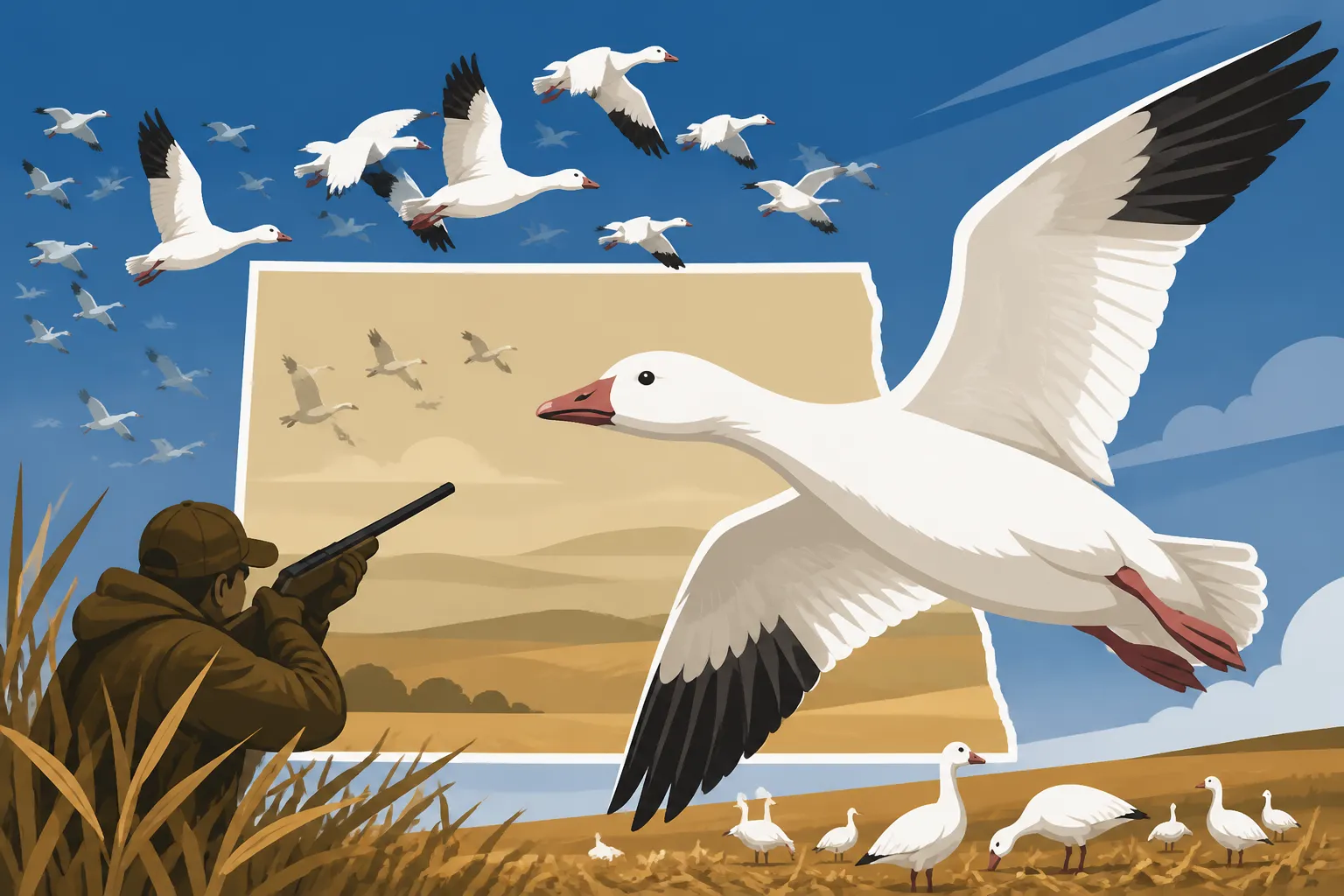
There’s nothing quite like standing in a vast North Dakota field as the sky above transforms into a living, breathing blizzard of white. The cacophony of thousands, sometimes hundreds of thousands, of snow geese descending upon the stubble fields or staging on a large water body is an experience that transcends mere hunting; it's a communion with one of nature's grandest spectacles. For many, just witnessing this immense movement is a highlight of the season.
Understanding the Scale of the Journey
Snow geese undertake one of the longest and most arduous migrations in the avian world, traveling thousands of miles from their Arctic breeding grounds to their wintering habitat in the southern United States. North Dakota, with its abundant agricultural fields and numerous shallow wetlands, lies directly in the path of the Central Flyway, making it a critical staging area. The sheer volume of birds moving through can be staggering, but it’s rarely a static number. Instead, it’s a fluid, ever-changing population as wave after wave of birds pass through, stopping to rest and refuel before continuing their journey south. It's not uncommon for hunters to see flocks stretching for miles, filling the horizon, and hearing their distinctive calls long before they appear. This impressive scale is why North Dakota is a prime destination for North Dakota Waterfowl on the Prairie Pothole Flyway.
Why North Dakota is a Key Stopover
North Dakota's unique geography and agricultural landscape make it an irresistible magnet for migrating snow geese. The state is dotted with countless prairie potholes, shallow wetlands that provide safe roosting sites, especially during the early and mid-migration periods. Beyond the water, vast expanses of harvested grain fields – corn, wheat, barley – offer a literal buffet for these hungry birds. They need to put on a tremendous amount of fat and energy to complete their migration, and North Dakota provides exactly that. Without these critical resources, the journey would be impossible for millions of birds. This vital role means that when conditions are right, our state can hold an incredible percentage of the continental snow goose population, making it a hotspot for those looking to experience the full force of the migration. The importance of these areas cannot be overstated, as they are truly the lifeblood of the flyway, especially within North Dakota's Prairie Pothole Region Explained.
Factors Influencing North Dakota's Snow Goose Numbers
Pinpointing exact migration numbers is a fool's errand because the birds are constantly on the move, but understanding the factors that dictate their presence in North Dakota is far more valuable. These aren't just random movements; they're driven by deep-seated instinctual responses to environmental cues.
Weather Patterns and Their Immediate Impact
Perhaps the most significant factor influencing when and how many snow geese arrive and depart North Dakota is the weather. A strong cold front pushing down from the north can trigger a massive push of birds, sometimes overnight. Conversely, prolonged mild weather might mean birds linger further north or pass through our state more quickly, finding enough food and open water to continue their journey. Wind direction and strength also play a huge role; strong north winds provide a tailwind, allowing birds to cover vast distances efficiently.
Consider a scenario where a brutal cold snap hits southern Manitoba. Suddenly, birds that were comfortable feeding and resting there are forced to move. That push will likely hit North Dakota within a day or two, bringing with it an explosion of birds. If that cold snap holds, they might be in our state for a week or more, but if it quickly moderates or warms up again, they'll just keep leapfrogging south. This dynamic interaction between weather and migration makes scouting and staying updated on forecasts absolutely essential for successful hunting and for understanding Duck Migration Timing Through North Dakota.
Habitat and Food Availability on the Prairie
Even with ideal weather, snow geese won't linger if there's no payoff. North Dakota's agricultural bounty is their primary draw. Fields of leftover grain, particularly corn, are prime feeding grounds. The timing of harvest, the amount of waste grain left behind, and even crop rotation can influence where birds concentrate. If one area has been heavily harvested and picked clean, birds will quickly move to greener pastures (or, in this case, grainier fields).
Water availability is equally crucial. Large, undisturbed water bodies like Lake Sakakawea, Devils Lake, or even major river systems serve as massive roosting sanctuaries where thousands of birds can safely spend the night. Smaller prairie potholes and dugouts also provide temporary respite. Changes in water levels, freezing events, or increased hunting pressure on specific bodies of water will cause birds to shift their roosting and feeding patterns, spreading them out or concentrating them in different areas. This constant search for ideal conditions keeps hunters on their toes, as the "hot spot" one day might be empty the next.
Breeding Success and Overall Population Health
While weather and local conditions dictate the timing and distribution of birds in a given year, the overall continental population numbers influence the potential for truly massive migrations. Snow geese have seen incredible breeding success in recent decades, leading to a booming population. This abundance means that even if a portion of the birds take a different route or linger longer elsewhere, there are still millions upon millions of snow geese ready to participate in the fall migration.
Wildlife agencies conduct surveys to estimate breeding populations, and while these aren't real-time counts, they provide a long-term outlook on the health and size of the overall snow goose population. These general trends are helpful for managing expectations, but they don't predict the day-to-day numbers you'll see in a specific North Dakota field. For example, while the continental population may be robust, a particularly poor breeding year due to severe Arctic weather could mean fewer juvenile birds joining the migration, leading to slightly smaller overall flocks, even if still numbering in the millions. Understanding these broader population dynamics is key to appreciating the North Dakota Duck and Goose Numbers you'll encounter.
Tracking and Interpreting Snow Goose Migration Data
Since there's no definitive daily count of snow geese moving through North Dakota, hunters and enthusiasts have developed their own ways of tracking the migration. It’s less about hard numbers and more about current intelligence and reading the subtle signs of the prairie.
Leveraging Hunter Reports and Community Insights
One of the most valuable resources for tracking snow geese is fellow hunters. Online forums, social media groups, and good old-fashioned phone calls with friends who are out scouting can provide invaluable real-time (or near real-time) information. Hunters often share updates on where birds are being seen, what fields they're working, and general observations about the size and direction of flocks. This community intelligence can save you hours of futile scouting.
However, it's important to take these reports with a grain of salt. "A lot of birds" to one person might be a few thousand, while another might only consider it "a lot" if the sky is black for an hour. Always try to verify information when possible, or look for consistent reports from multiple sources in a similar area. Even so, these anecdotal reports are often the best indicators you'll get for current movement, allowing you to react quickly to major pushes.
Reading the Landscape for Clues
Beyond what others tell you, developing your own eye for reading the landscape is crucial. Fresh snow goose droppings in a field, muddy tracks around a water body, or distinct "white-out" patches of feathers in a stubble field are all clear signs of recent activity. Paying attention to crop types and harvest progress in different areas can help predict where birds might move next. Are there still standing corn fields that haven't been picked? Those will be prime targets once they're harvested.
The sound of snow geese can carry for miles, so simply driving with your windows down or pulling over to listen can give you an indication of birds in the area. Look for large, distant white clouds on the horizon – often these are massive staging flocks on water or feeding birds in a distant field. Remember, these birds are smart and will change their patterns in response to hunting pressure, so continuously scouting and adapting to their current habits is the name of the game.
Tools and Resources for Tracking Migration
In this digital age, we have more tools than ever to help us interpret the snow goose migration. While no app can give you an exact count, many can offer powerful insights. Weather apps with radar features are essential for tracking those crucial cold fronts and wind shifts. Satellite imagery and mapping tools, like those found in GoHunt, allow you to scout remotely, identifying potential roosting lakes, major feeding fields, and even potential access points on public land or PLOTS Program Explained areas. Many hunters rely on digital mapping and scouting tools like GoHunt for their ground-level intel, helping them pinpoint exactly where to focus their efforts.
Some websites and even specialized apps track bird sightings reported by citizens, which can give you a broader sense of where the migration front is progressing. While these aren't always specific to hunting locations, they paint a useful picture of the general movement. Combining all these digital resources with direct observation and local knowledge gives you the best chance to anticipate the dynamic "numbers" of snow geese moving through. For instance, knowing where large water bodies are is essential when planning a hunt that involves Layout Blind Hunting Devils Lake Fields.
Here's a simplified look at how snow goose migration often plays out in North Dakota:
| Migration Phase | Typical Period (General) | Flock Size Characteristics | Behavior & Location Notes | Hunting Considerations |
|---|---|---|---|---|
| Early | Late September – Mid-October | Smaller, more scattered flocks | Often mixed with specklebellies; focused on smaller potholes and early-harvested fields. Less pressure. | More decoying over water; smaller spreads needed. Birds less wary. |
| Mid-Peak | Late October – Early November | Massive, continuous waves of birds; largest concentrations | Staging on major water bodies; feeding heavily in corn and bean fields. Intense pressure possible. | Large decoy spreads; field hunting predominates. Birds get pressured. |
| Late | Mid-November – Early December | Numbers gradually decline; often larger, consolidated groups of remaining birds | Tend to stick to major open water (if not frozen) and unharvested or recently harvested corn fields. | Birds can be very wary; focus on late food sources and persistent water. |
The Hunter's Perspective on Snow Goose Numbers
Ultimately, understanding snow goose numbers from a hunter's perspective isn't about getting a precise population estimate, but about anticipating their movements and behaviors to improve your chances of success. It's about knowing when they're likely to be here in force and how to react when they are.
Strategies for Hunting Peak Migration
When North Dakota is holding peak numbers of snow geese, the opportunities can be incredible. The sheer volume of birds means that even if a percentage is wary, there are always new birds arriving that haven't been hunted as hard. This is the time for big spreads, lots of calling, and being prepared for non-stop action. Hunters often target vast stubble fields where thousands of birds have been feeding, setting up large spreads of decoys to mimic a resting or feeding flock.
During these peak periods, the birds are primarily focused on feeding to fuel their onward journey. Setting up in a field they've been using is often the most effective strategy. This might involve Hunting Standing Corn for Late-Season Geese if a late harvest coincides with the migration, or focusing on heavily used stubble. However, competition from other hunters can also be high, so finding fields that aren't over-pressured is crucial. Early morning and late afternoon are prime times, as birds move from roosts to feed and back again.
Managing Expectations for Snow Goose Hunts
Despite the incredible potential, it’s vital to manage expectations. Even during peak migration, snow geese are notoriously challenging to hunt. They are intelligent, have exceptional eyesight, and quickly learn to avoid pressure. A field that was "on fire" yesterday might be completely empty today because a small plane buzzed it, or too many hunters moved in. The numbers are fluid, and so must be your approach.
There will be days when you do everything right – a perfect spread, great calling, ideal weather – and the birds simply fly high, giving your setup a wide berth. Other days, you might just stumble into a perfect situation, and the birds pour in. That's just the nature of hunting these incredible creatures. Rather than focusing on a quantitative "number" of birds, focus on the quality of your scouting, your setup, and your ability to adapt to what the birds are doing that day. Even though the migration is immense, individual hunts can still be a grind, demanding patience and persistence. Whether you're trying Pass-Shooting Geese on the James River or using a meticulous decoy spread, success often comes down to adapting to the specific conditions of the day.
Disclaimer
This article is for general informational purposes only and does not constitute professional advice. Laws, prices and regulations vary by location and change over time. Consult a qualified professional for guidance on your specific situation.