Where North Dakota Moose Concentrate
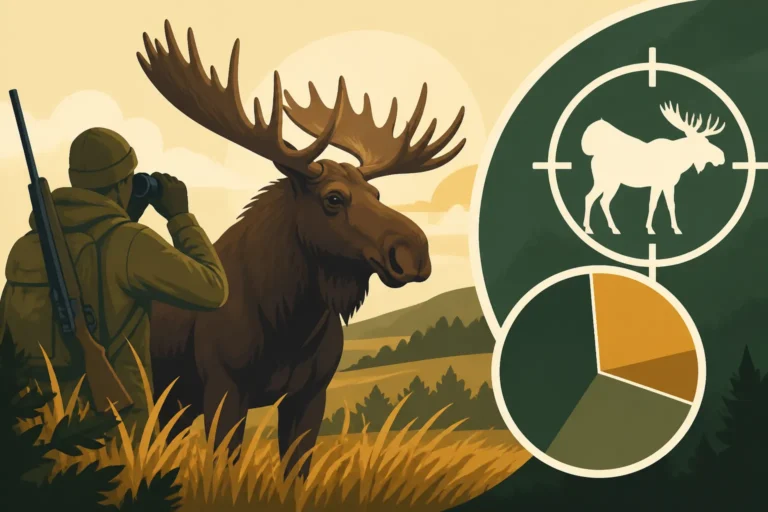
Finding a moose in North Dakota can feel like searching for a needle in a haystack, especially given their elusive nature and the relatively low population compared to other big game species. Many hunters wonder if these magnificent animals are truly present in huntable numbers, or where to even begin looking if they're lucky enough to draw one of those coveted once-in-a-lifetime tags. This guide will help demystify the prime moose habitats in North Dakota, pinpointing where these majestic creatures tend to concentrate and offering strategies to increase your chances of finding them.
Understanding North Dakota's Moose Habitat Preferences
Moose are creatures of specific tastes when it comes to their home range. Unlike deer that can adapt to a wider variety of landscapes, moose have evolved to thrive in areas with abundant browse, dense cover, and easy access to water, often with rich aquatic vegetation. North Dakota, surprisingly to some, offers several pockets of this ideal habitat.
River Bottoms and Willow Thickets
One of the most consistent places to find moose across North Dakota is in the dense river bottoms and extensive willow thickets that line many of the state's waterways. These areas provide a perfect trifecta: a reliable water source, an endless supply of nutritious woody browse like willows and dogwood, and the thick, protective cover moose need to feel secure and escape predators or harsh weather.
Imagine walking along a winding creek bed, the air thick with the smell of damp earth and decaying leaves. Here, where the ground is often soggy and the undergrowth is nearly impenetrable, you'll find signs of moose. They prefer to stay hidden, browsing on tender shoots and young saplings. These corridors act as natural highways for moose, allowing them to travel safely and access different feeding grounds. Areas along the Red River, the Souris River, and other smaller tributaries frequently hold moose. Look for broken branches, rubbed saplings, and large, distinct tracks in the mud. Hunting Missouri River Bluff Country is a good way to understand how river systems can concentrate game, even if it's not specifically about moose.
Northeastern Forests and Aspen Parkland
While North Dakota might be known as a prairie state, its northeastern corner boasts a unique landscape of forests and aspen parkland that is incredibly appealing to moose. The Turtle Mountains, for instance, are a patchwork of dense woodlands, small lakes, and marshes. This region, often described as an "island forest," provides ideal conditions: a mix of deciduous trees and evergreens for thermal cover, diverse browse, and numerous water bodies.
The Pembina Hills area further to the east is another prime example, offering deep ravines, forested slopes, and rich river valleys. These areas are quite distinct from the open prairie, providing a much more "traditional" moose habitat. Here, moose can find shelter from biting winter winds and scorching summer sun, all while having access to a consistent food supply. They are truly at home in these secluded, timbered havens. Hunting Turtle Mountain Timber Pockets covers this region for other species, but the principles of finding game in dense woods apply.
Wetland Complexes and Submerged Vegetation
Moose are semi-aquatic animals, and their love for water is a critical factor in understanding where they concentrate. Large wetland complexes, shallow lakes, and sloughs throughout North Dakota are not just water sources; they are vital feeding grounds. Moose spend a significant amount of time in and around these wetlands, particularly during warmer months.
Why the fascination with water? Aquatic vegetation like water lilies, pondweed, and horsetail are incredibly nutritious and a favorite food source. Moose will wade into surprisingly deep water, submerging their heads to pull up these succulent plants. These watery havens also offer relief from biting insects and a way to cool down during summer. Therefore, any extensive system of interconnected wetlands, especially those with dense aquatic plant life, is a potential moose hotspot. Jump-Shooting a North Dakota Prairie Pothole highlights the importance of these water features for waterfowl, but they're equally important for moose.
Key Regions for Moose Concentration in North Dakota
Knowing the general habitat types is one thing, but knowing the specific geographical areas where these habitats align is key for any moose hunter. North Dakota has a few standout regions where moose sightings and populations are consistently higher.
The Turtle Mountains Region
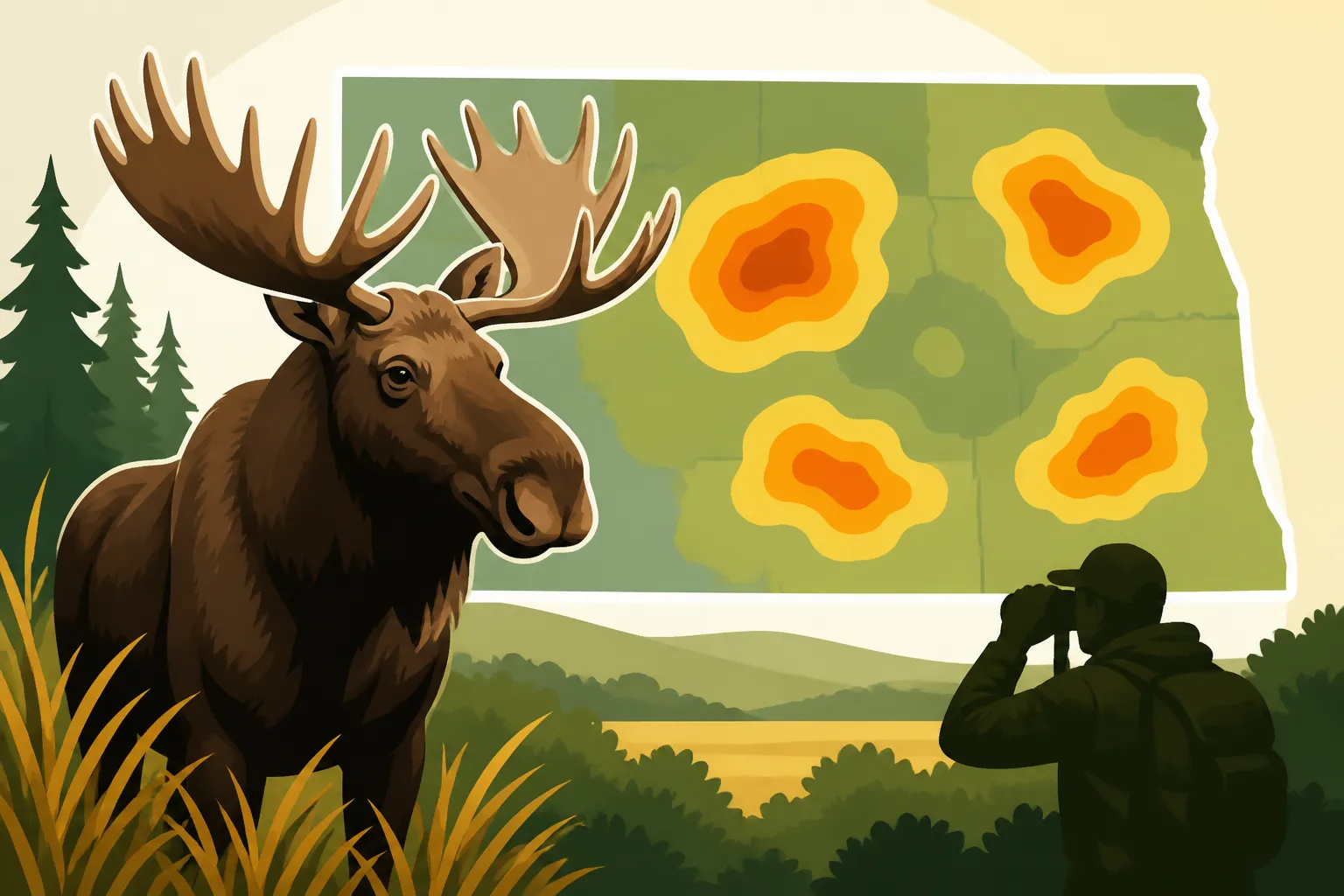
Without a doubt, the Turtle Mountains region in north-central North Dakota is often considered the state's moose capital. This distinctive geographical feature, straddling the U.S.-Canadian border, is an elevated plateau covered in a mix of aspen, oak, and birch forests, dotted with hundreds of small lakes and wetlands. It's a true anomaly on the otherwise flat prairie landscape, offering a unique mosaic of ideal moose habitat.
Moose here benefit from the dense cover, the varied browse, and the abundant water. The terrain can be quite challenging, with thick brush and boggy areas, which also provides moose a refuge from human disturbance. Hunters who draw a tag for this region often find themselves navigating challenging but incredibly rewarding territory. The numbers speak for themselves; this area consistently reports some of the highest moose densities and harvest rates in the state. Hunting Turtle Mountain Timber Pockets is a great resource if you draw a tag for this area.
Pembina Hills and Red River Valley Tributaries
Moving east from the Turtle Mountains, the Pembina Hills region, often called the "Northeast Corner," offers another significant concentration of moose. This area is characterized by dramatic escarpments, deep river valleys like the Pembina River, and extensive forested areas that stretch down into the Red River Valley. The rugged topography and heavy timber stand in stark contrast to the surrounding farmland, creating a secluded sanctuary for moose.
The numerous tributaries feeding into the Red River, such as the Pembina, Park, and Tongue Rivers, also provide linear stretches of ideal riparian habitat. These river systems, with their associated willow thickets and dense deciduous forests, act as crucial travel corridors and feeding grounds. Moose are frequently observed in these valleys, especially where agricultural fields meet the timbered river breaks. They utilize these dense cover pockets to move, feed, and escape detection. Scouting these river systems, perhaps with an app like GoHunt to understand land ownership and topographical features, is essential.
Northeastern Prairie Pothole Country
While moose are typically associated with dense forests and river bottoms, don't overlook the northeastern portion of North Dakota's vast prairie pothole region. While seemingly open, this landscape is a complex tapestry of wetlands, grasslands, and interspersed small woodlots or shelterbelts. Moose, being adaptable, will utilize these features when they provide adequate cover and forage.
In this region, moose concentrations will be tightly tied to larger sloughs, wetland complexes, and any significant stands of timber, no matter how small. They often use these isolated pockets of cover as bedding areas and will travel between them, especially under the cover of darkness. Don't expect to find them wandering aimlessly across open fields; instead, focus your efforts on the edges of large marsh systems, along drainage ditches with brush, and near any creek or river that cuts through the prairie. GoHunt's mapping capabilities can be invaluable for identifying these isolated cover pockets in what otherwise looks like vast open country.
Strategies for Locating Moose in North Dakota
Drawing a moose tag in North Dakota is a truly special opportunity, and once you have it, the real work begins. Locating these magnificent animals requires diligent effort, keen observation, and an understanding of their habits.
Scouting and Pre-Season Preparation
Successful moose hunting in North Dakota, perhaps more than any other species, hinges on extensive pre-season scouting. Because tags are so rare and the animals are so dispersed, you can't afford to just show up and hope for the best. Start by thoroughly studying maps – topographical maps, aerial imagery, and land ownership maps (such as those provided by GoHunt or the North Dakota Game and Fish Department's PLOTS guide). Look for the convergence of dense cover, water sources, and potential food plots.
Identify areas with heavy willow growth, aspen stands, and wetland edges. Drive or walk perimeter roads to look for access points and scan for visual clues. Once on the ground, search for moose sign: large, cloven tracks that are often elongated; cylindrical droppings that resemble large deer droppings but are much bigger; and rubs on saplings or smaller trees where bulls have polished their antlers. Look for browsed vegetation – moose are high browsers, often stripping leaves and twigs well above a deer's reach. Learning to Read North Dakota Mud for Fresh Deer Movement can be adapted to moose tracks.
Glassing Techniques and Observation
Moose, despite their size, can disappear incredibly well in dense cover. Effective glassing is a crucial skill, particularly in areas where the terrain offers elevation or breaks in the canopy. Find a vantage point that overlooks a river bottom, a large wetland edge, or a forested basin. Use high-quality binoculars or a spotting scope and systematically scan the edges of cover, clearings, and water sources, especially during the early morning and late evening hours.
Moose often move out of dense bedding areas to feed in more open, but still protected, spots during these times. Pay close attention to any movement, any flicker of dark hide, or the distinct shape of an ear or antler among the trees. Sometimes, the only thing you'll see is a dark blob that, upon closer inspection, reveals itself to be a moose. Patience is key, as is a systematic approach to scanning.
Understanding Moose Behavior and Movement Patterns
Moose behavior changes with the seasons and time of day, and understanding these patterns can significantly aid your search. In late summer and early fall, leading up to the rut, bulls become more active, moving more widely in search of cows. The rut typically peaks in late September and early October, during which time bulls can be very vocal, emitting grunts and cows calling out. This is a potential time for calling tactics, though they are less common for North Dakota moose than other species.
During the general hunting seasons, moose will often feed heavily in the morning and evening, retreating to dense cover for bedding during the middle of the day. They prefer cool, shaded areas, so north-facing slopes or thick timber near water are prime bedding locations. After a hard prairie winter, moose will be drawn to areas with early green-up. They are creatures of habit, often using the same travel routes and feeding areas, so once you find fresh sign, you're likely in a good spot. Understanding North Dakota Moose Winter Tick Impact can also shed light on herd health and behavior.
Challenges and Considerations for North Dakota Moose Hunters
While the pursuit of a North Dakota moose is incredibly exciting, it's also important to be realistic about the unique challenges involved.
The Elusiveness of North Dakota Moose
Despite knowing where they concentrate, moose are inherently elusive animals. They are experts at disappearing into the densest cover imaginable, making them incredibly difficult to spot, even from a short distance. Their dark coloration blends perfectly with shadows and timber. Even in prime habitats like the Turtle Mountains, you can spend days without a sighting if you're not in the right spot or if conditions aren't favorable.
This elusiveness is compounded by the fact that even in known concentration areas, moose populations are not as dense as deer. You won't find them around every corner. This means that a lot of walking, systematic searching, and patience are required. Don't get discouraged if initial efforts don't yield immediate results; persevere and stick to areas with fresh sign and ideal habitat.
Limited Tags and "Once-in-a-Lifetime" Status
One of the biggest realities for North Dakota moose hunters is the extreme scarcity of tags. Moose are considered a "once-in-a-lifetime" species in North Dakota, meaning if you draw a tag, you can never draw another one. This makes every tag precious and every hunting opportunity incredibly significant. The number of tags issued each year is very low, often in the double digits for the entire state, making the draw odds incredibly challenging.
This rarity emphasizes the need for meticulous planning, scouting, and execution once a tag is drawn. Many hunters spend years, even decades, applying for a moose tag, making the hunt a culmination of a lifelong dream. Resources like GoHunt can provide valuable insights into draw odds and unit breakdowns, helping applicants make informed choices, but ultimately, luck plays a significant role. North Dakota's Once-in-a-Lifetime Big Game Licenses offers more context on this unique system.
Respecting Private Land and Public Access
North Dakota is a state with a significant amount of private land, and moose habitat often overlaps with privately owned agricultural fields, pastures, and timber stands. While there are excellent public lands, like portions of the Turtle Mountains or various Wildlife Management Areas, many of the prime river bottoms and wooded draws are on private property.
Securing permission from landowners is often critical for a successful moose hunt, especially if you draw a tag in a unit with limited public access. Start early, approach landowners respectfully, and always abide by their rules. The North Dakota Game and Fish Department's PLOTS program (The PLOTS Program Explained) offers public access on private lands, and while primarily managed for upland birds and deer, some PLOTS tracts may contain suitable moose habitat. Always check the PLOTS guide and the ND Hunt App for current access information and boundaries.
Conclusion
Finding where North Dakota moose concentrate boils down to understanding their fundamental needs: dense cover, abundant browse, and readily available water, especially wetlands rich in aquatic vegetation. Focus your efforts on the Turtle Mountains, the Pembina Hills, and the dense river bottoms and willow thickets throughout the northeastern part of the state. While drawing a tag is a challenge, and finding a moose is an even greater one, diligent scouting, keen observation, and an understanding of their behavior will put you in the best position to succeed on this truly once-in-a-lifetime North Dakota hunting adventure.
Disclaimer
This article is for general informational purposes only and does not constitute professional advice. Laws, prices and regulations vary by location and change over time. Consult a qualified professional for guidance on your specific situation.