Hunting State School Land in North Dakota
For many North Dakota hunters, the thought of finding new hunting grounds can feel like an endless loop of frustration. You spend hours poring over maps, only to see endless swaths of private land or heavily trafficked public areas. But tucked into the landscape, often in smaller, less obvious parcels, lies North Dakota's state school land – a valuable public resource that, while sometimes overlooked, can offer fantastic hunting opportunities if you know how to find it and hunt it responsibly. This guide will walk you through everything you need to know to effectively locate, access, and hunt these unique tracts, helping you unlock more potential hunting spots across the prairie.
Understanding North Dakota's State School Land
State school land in North Dakota is a unique category of public property, distinct from the more commonly discussed PLOTS (Private Land Open To Sportsmen) areas or federally managed lands like National Grasslands and Waterfowl Production Areas. It's an important piece of the puzzle for any hunter looking to expand their opportunities beyond the well-trodden paths.
The Historical Context and Purpose
To truly appreciate state school lands, it helps to understand their origins. When North Dakota achieved statehood, Congress granted sections of land to the state specifically to support public education. The idea was that revenue generated from these lands – whether through agriculture, mineral leases, or grazing fees – would go directly into the state's education trust funds. These land grants typically consisted of specific sections within each township, often sections 16 and 36, though due to various land exchanges and sales over the decades, they can now be found scattered throughout the state.
This historical purpose is why these lands are managed differently than, say, a Wildlife Management Area (WMA). While WMAs are acquired and managed primarily for wildlife habitat and public recreation, school lands have a foundational mandate to generate revenue for schools. This dual purpose means that while hunting is generally allowed, the primary management might prioritize other uses, such as grazing cattle or agricultural production. For hunters, this translates into a landscape that might look different from what they expect on a typical WMA. You might find active cattle grazing, haying operations, or even crop fields, which are crucial considerations when planning your hunt.
What Makes School Land Different for Hunters?
The distinctions between school land and other public access opportunities are crucial for hunters to grasp. Unlike The PLOTS Program Explained, which relies on private landowners enrolling their land for public access, school lands are state-owned. This means the access rules are generally more consistent across the board, rather than varying by individual landowner agreements. However, they're also not managed by the North Dakota Game and Fish Department (NDG&F) specifically for hunting in the same way WMAs are. Instead, they fall under the purview of the North Dakota Department of Trust Lands.
For instance, on a WMA, you'll often find habitat enhancements specifically designed to benefit deer, pheasants, or waterfowl. On school land, while wildlife certainly uses these areas, their presence is more incidental to the primary land use. This can be a double-edged sword: sometimes, the agricultural or grazing practices on school lands can create excellent, unpressured habitat, especially if they border dense cover or productive private lands. Other times, extensive grazing might leave little cover, making them less attractive for certain species.
Understanding these differences helps set expectations. You might not find perfectly manicured food plots or dense cattail marshes on every parcel, but what you will find are often less-trafficked, genuinely public lands that can hold a surprising amount of game. The key is to approach them with the right mindset and the right tools.
Locating and Accessing State School Lands
Finding state school land isn't always as straightforward as spotting a large, official sign, but with modern technology and a little legwork, it's very manageable. Once you've identified these parcels, understanding the nuances of legal access is paramount.
Tools for Identification: Maps and Apps
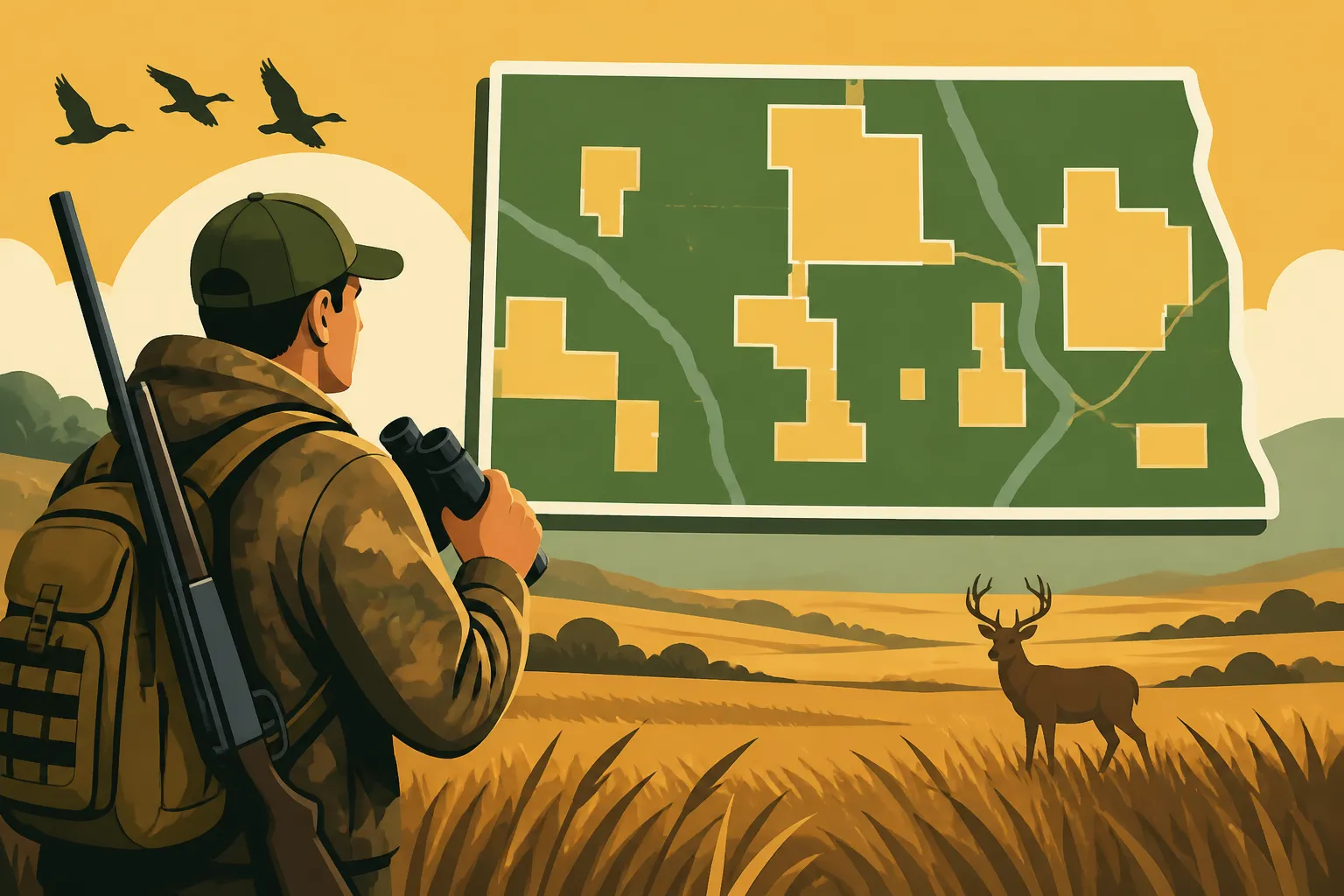
Gone are the days of relying solely on paper plat books, though they still hold a certain charm. Today, digital mapping applications are your best friend for identifying state school lands. Platforms like onX Hunt have revolutionized how hunters navigate public and private boundaries. With a subscription, you can overlay land ownership maps directly onto satellite imagery, clearly demarcating state school lands from private parcels, PLOTS acres, and other public ground like Hunting North Dakota's Little Missouri National Grassland. These apps often color-code different land types, making identification incredibly quick and intuitive. Another valuable resource is GoHunt, which also offers robust mapping features that can assist in identifying these tracts.
The North Dakota Department of Trust Lands also has an online mapping tool that can help verify parcels, though it's typically less user-friendly for field navigation than dedicated hunting apps. The NDG&F website sometimes offers general information, but for pinpointing exact boundaries, a dedicated mapping app is indispensable. Before you even leave your living room, you can scroll through counties, identify promising blocks of school land, and begin to understand their layout in relation to surrounding cover, agricultural fields, and water sources. This pre-scouting is crucial for developing a game plan.
Understanding Legal Access Points
Identifying state school land is one thing; figuring out how to legally access it is another. North Dakota has specific rules regarding public access, particularly along section lines and unmaintained trails. Generally, all section lines that have been dedicated as public roads (even if they're not maintained or even visibly trafficked) are open for public travel. This means if a block of state school land abuts a section line, you can typically use that section line to walk or, in some cases, drive in. However, the exact rules for Vehicle Rules on North Dakota Public Land vary. On school land, vehicles generally must remain on established roads or trails. Driving cross-country into a parcel, even if it's open school land, is almost always prohibited and can lead to issues.
Parking is another consideration. You must park your vehicle in a way that doesn't obstruct traffic, block private driveways, or interfere with agricultural operations. Often, this means pulling off onto the shoulder of a gravel road or finding a designated parking area if one exists. Always be mindful of gates and fences – if a gate is closed, assume it's there for a reason, likely to manage livestock, and either close it behind you or find an alternative access point. Never cut fences or damage property to gain access. When in doubt, it's always better to err on the side of caution and find a clearly legal and non-obstructive access point.
The Importance of Scouting and Verification
While digital maps are a game-changer, nothing replaces boots on the ground. Once you've identified potential school land parcels on your app, a physical scouting trip is essential. What looks like great cover on satellite imagery might be heavily grazed pasture with no hiding spots. A "section line road" on the map might be impassable mud or overgrown with thick brush.
A real-world scouting trip allows you to:
- Confirm boundaries: Walk the edges, verify fence lines, and ensure you're not inadvertently trespassing onto adjacent private land. Reading North Dakota Public Land Boundary Signs is a skill you'll hone.
- Assess habitat: Look for fresh deer tracks, pheasant roosting areas, or signs of waterfowl. Identify potential bedding areas, travel corridors, and food sources.
- Evaluate access: See if the section line truly offers reasonable walking access or if vehicular access is feasible. Check for parking options.
- Gauge pressure: Look for signs of other hunters, old shell casings, or well-worn footpaths. This can help you anticipate hunting pressure, especially during peak seasons.
Think of your digital maps as the blueprint and your scouting trip as the final inspection. Combine both, and you'll be much more prepared to hunt these valuable pieces of public ground. For more general tips, consider resources like Scouting PLOTS Land With the ND Hunt App, which offers principles applicable to all public lands.
Specific Hunting Regulations on North Dakota School Land
Hunting on state school land comes with its own set of rules, some of which are specific to these parcels, while others are general public land regulations. Being aware of these details is crucial to ensure a legal and ethical hunt.
Vehicle Use and Parking Limitations
As touched on earlier, vehicle use on state school land is generally restricted to established roads and trails. This isn't like some large federal tracts where off-roading might be permitted in designated areas. On North Dakota school land, expect to leave your vehicle on a county or township road that borders the property. This often means a bit of a walk, but that's precisely why some school land parcels see less pressure – they're not always roadside hunting spots. If you plan to use an ATV, know that ATVs are generally not allowed for off-road travel on state school lands. They are typically restricted to existing roads or trails, similar to a full-sized vehicle. Always check the current regulations, but assume you'll be hoofing it once you get off the main road.
When it comes to parking, avoid blocking gates, private driveways, or any access points to neighboring private land. A common courtesy, and often a legal requirement, is to ensure your vehicle is fully off the traveled portion of any road. Imagine a farmer needing to move equipment down that same road; your vehicle shouldn't be in the way. Always be mindful of potential agricultural activity, such as haying or cattle operations, that might be taking place on or near the school land.
Blaze Orange, Treestands, and Ground Blinds
Standard North Dakota hunting regulations apply to school lands, including requirements for North Dakota Blaze Orange Requirements during firearm seasons. Always wear the legally mandated amount of blaze orange, typically a hat and an outer garment above the waist, especially when hunting during deer gun season. This is for your safety and the safety of others.
When it comes to structures, the rules for Treestand Rules on North Dakota Public Land and ground blinds are important to follow. Generally, permanent treestands or ground blinds are prohibited on all North Dakota public lands, including school land. This means no screwing steps into trees, no building permanent structures, and no leaving blinds out indefinitely. You can typically use portable treestands and pop-up ground blinds, but they must be removed daily or within a short, specified period after the close of your hunt or the season. Always check the current NDG&F regulations for exact timelines, but a good rule of thumb is "pack it in, pack it out." The idea is to leave no trace and ensure the land remains wild and accessible for everyone.
Baiting and Other Restrictions
Baiting rules are another critical point. North Dakota has specific regulations regarding baiting deer, and these restrictions often extend to all public lands. In many areas, especially within Chronic Wasting Disease (CWD) hunting units, baiting deer is strictly prohibited. Even outside CWD zones, using bait to attract big game on public land is generally not allowed. Always consult the current hunting proclamation for the specific unit you intend to hunt. North Dakota's Expanding CWD Hunting Units means these regulations can change, so staying current is key.
Beyond baiting, remember that school lands are often working landscapes. Do not disturb livestock, damage fences, or interfere with ongoing agricultural operations. Respect the integrity of the land and its multiple uses. Littering is, of course, strictly prohibited. Leave the area cleaner than you found it, demonstrating respect for the resource and ensuring continued public access for future generations of hunters.
Strategies for Hunting Success on School Land
Hunting state school land often requires a slightly different approach than hunting a sprawling WMA or a well-managed private parcel. Success here hinges on smart scouting, understanding game behavior, and being willing to put in the effort to find unpressured pockets.
Targeting Different Game Species
State school lands can offer opportunities for a variety of species, depending on the specific parcel's habitat.
- White-tailed Deer and Mule Deer: Many school land parcels, especially those bordering river bottoms or areas with decent timber and brush, can hold good numbers of deer. Whitetails will seek out cover and food sources, often using the edges of agricultural fields on or adjacent to school land. Mule deer, common in the Badlands, might utilize school lands with rugged coulees, draws, and cedar pockets. Look for areas where the school land provides a travel corridor between private bedding and feeding areas, or where natural features offer sanctuary. For more on deer populations, check out North Dakota Deer Population Estimate and Mule Deer in North Dakota's Badlands.
- Upland Birds (Pheasants, Sharptails, Huns): If a school land parcel has good grassy cover, CRP-like stands, or diverse brushy edges, it can be a magnet for pheasants, sharptail grouse, and Hungarian partridge. Often, these birds will feed in surrounding private crop fields and then retreat to public cover for roosting and loafing. Focusing on the transition zones between different habitat types – where grass meets crop, or brush meets open prairie – can be particularly productive. North Dakota Pheasant Population Estimate is a good read to understand overall populations.
- Waterfowl: School lands with small sloughs, potholes, or adjacent to larger wetlands can be excellent for ducks and geese. The Prairie Pothole Region of North Dakota, home to a significant portion of North Dakota Waterfowl on the Prairie Pothole Flyway, means even a small depression on school land can hold birds. Look for emergent vegetation, open water, and proximity to feeding fields. Jump-shooting smaller ponds or setting up a decoy spread on larger ones can be effective tactics.
Minimizing Pressure and Finding Unpressured Spots
The biggest challenge, and opportunity, with state school land is hunter pressure. Because these lands are often smaller and more dispersed, they can get hit hard, especially on opening weekends. However, many hunters are "road hunters" or only venture a short distance from their vehicles.
The key to finding unpressured spots is often simple: walk further.
- Hike In: Identify parcels that are a half-mile or more from easy road access. These remote areas often see significantly less pressure. Use your onX Hunt app to identify distant corners or sections that require a longer hike.
- Hunt Mid-Week/Late Season: If your schedule allows, hunting during the week rather than on weekends can dramatically reduce pressure. Late in the season, after the initial rush, some of these parcels can become excellent spots as game retreats from surrounding private land.
- Focus on Overlooked Features: Don't just look for the obvious cover. A small, brushy draw running through a field, a subtle change in elevation, or a less-dense stand of cattails might be overlooked by other hunters but can hold game.
Reading the Land: Habitat and Sign
Successful hunting on school land, like any other public land, means becoming a student of the landscape.
- Identify Key Habitat: Look for areas that provide the "big three": food, water, and cover. This might be a standing cornfield adjacent to a brushy draw, a prairie pothole nestled among dense grass, or a timbered creek bottom.
- Scout for Sign: Fresh tracks, droppings, rubs, scrapes, and feeding activity are all indicators of game presence. Pay attention to how deer move through the terrain, looking for natural funnels, pinch points, and crossings. For upland birds, look for dusting areas, old feathers, and tracks.
- Use Aerial Imagery: Before you even step foot on the ground, use your mapping app to study the topography and cover. Identify potential bedding areas (dense cover on south-facing slopes in winter, or thick north-facing timber in summer), likely travel routes (drainages, fencelines, field edges), and feeding areas (crop fields, natural browse). This allows you to plan your approach and anticipate where game might be. Consider reviewing Reading Aerial Photos for Badlands Deer for specific techniques that can be applied to different terrains.
By combining these strategies, you can turn seemingly ordinary state school land into productive hunting grounds.
Challenges and Considerations for School Land Hunters
While state school lands offer excellent opportunities, they also present specific challenges that hunters must be prepared for. Navigating these issues with respect and preparedness is key to a positive and successful experience.
Navigating Adjoining Private Land and Posted Boundaries
One of the most frequent challenges on state school land, especially with smaller, interspersed parcels, is the proximity to private property. It's incredibly easy to inadvertently cross a boundary if you're not paying constant attention. This is where your digital mapping tools like onX Hunt or GoHunt become indispensable. Keep your phone or GPS device handy and frequently check your location relative to the property lines.
Imagine you're tracking a pheasant that just flew across a fence line. Before you step over, you need to know if that fence marks the edge of the public school land or if you're about to enter private property. If it's private and posted, you cannot legally retrieve your bird without explicit permission from the landowner. North Dakota Trespass and Permission Law is quite clear on this. Even if it's not posted, retrieving game from private land without permission is generally not allowed. This constant vigilance requires discipline and a commitment to respecting boundaries. Always carry proof of license, and if you're ever approached by a landowner, be polite, show your maps, and explain your understanding of the property lines. A courteous interaction can go a long way.
Dealing with High Hunter Pressure
As mentioned, some school land parcels, particularly those with easy road access or known good habitat, can experience significant hunter pressure. This is especially true during opening weekends for deer or pheasants. Arriving early, often well before first light, can help you get to your chosen spot ahead of others. However, even then, you might find other vehicles already parked.
When encountering other hunters:
- Be courteous: A friendly wave and a nod go a long way. Avoid yelling or aggressive behavior.
- Give space: If you see another hunter's vehicle or hear shots in the distance, consider moving to a different part of the parcel or finding an entirely different school land tract. There are typically many parcels available, so don't feel obligated to compete for space.
- Safety first: Always be aware of your surroundings and know your target and what's beyond it. During gun seasons, extra caution is paramount, and wearing sufficient North Dakota Blaze Orange Requirements is non-negotiable.
One way to mitigate pressure is to scout for and target school land parcels that require a longer walk-in or are less obvious on a map. These often become "sleeper" spots that hold good game simply because they aren't as easily accessible.
Respecting the Resource and Other Users
Hunting on public land is a privilege, and treating state school lands with respect ensures this privilege continues for all.
- Leave No Trace: Pack out everything you pack in, including spent shell casings, food wrappers, and any other trash. If you see litter left by others, consider packing it out if feasible.
- Minimize Impact: Stay on existing roads and trails where possible. Avoid driving or walking through planted crops, even if they're on school land. Do not damage fences, gates, or other infrastructure.
- Respect Other Activities: Remember that school lands are often multi-use. You might encounter cattle, other recreationists (hikers, birdwatchers), or even active farming operations. Be aware, be respectful, and yield the right-of-way. If you encounter cattle, give them a wide berth and do not harass them.
- Report Violations: If you witness illegal activity, such as poaching, trespassing, or significant littering, report it to the NDG&F. Preserving these resources is everyone's responsibility.
By adhering to these principles, hunters help maintain a positive image of their sport and ensure that North Dakota's state school lands remain a valuable and accessible resource for years to come.
Comparing School Land to Other Public Access
North Dakota offers a diverse array of public hunting opportunities, each with its own characteristics, rules, and benefits. Understanding how state school land fits into this mosaic can help you strategize your hunts and maximize your time afield.
State School Land vs. PLOTS Land
The primary difference between state school land and The PLOTS Program Explained is ownership and management. School land is state-owned and managed by the Department of Trust Lands, with a primary goal of revenue generation for education, while allowing hunting. PLOTS land, on the other hand, is privately owned land that landowners have enrolled in a program with NDG&F to provide public hunting access.
| Feature | State School Land | PLOTS Land |
|---|---|---|
| Ownership | State of North Dakota | Private Landowner |
| Management | Department of Trust Lands (revenue focus) | ND Game & Fish (habitat/access focus) |
| Access Signage | Often minimal, relies on mapping apps | Clearly marked with yellow PLOTS signs |
| Vehicle Access | Limited to established roads/section lines | Varies by PLOTS tract, often walk-in only |
| Primary Purpose | Generate revenue for schools (hunting allowed) | Provide public hunting access (wildlife focus) |
| Reliability | Stable, always public (but can be leased out) | Acreage can change year-to-year as contracts end |
While PLOTS land is often specifically chosen for its good habitat and is clearly marked, school land can be more hit-or-miss in terms of habitat quality, but it's a more permanent fixture on the landscape. A single hunting trip might involve checking both types of land, especially if you see good habitat on an unmarked school section adjacent to a known PLOTS tract.
State School Land vs. Wildlife Management Areas (WMAs)
Wildlife Management Areas (WMAs) are tracts of land specifically purchased or managed by the North Dakota Game and Fish Department primarily for wildlife habitat and public recreation. This often means more intensive habitat management, food plots, tree plantings, and specific regulations designed to enhance hunting opportunities. Hunting North Dakota Wildlife Management Areas will dive deeper into their specifics.
School lands, as we've discussed, are not managed with this primary focus. This can mean:
- Less "manicured" habitat: While WMAs might have areas specifically designed for pheasant winter cover or deer bedding, school lands' habitat is more a result of natural processes or agricultural leases.
- Fewer amenities: WMAs often have designated parking areas, informational kiosks, and sometimes even maintained trails. School lands typically offer a more raw, undeveloped experience.
- Potentially less pressure: Because WMAs are often well-known and advertised, they can see very heavy pressure. School lands, being less publicized, might offer a chance to find unmolested game if you're willing to do your homework and legwork.
Both WMAs and school lands are valuable, but they serve different roles. A WMA might be your go-to for a consistent experience, while school land offers an opportunity for discovery and a more rugged hunt.
State School Land vs. National Grasslands
National Grasslands, such as the Little Missouri National Grassland or the Sheyenne National Grassland, are federally managed lands under the U.S. Forest Service. These are typically vast, contiguous tracts, offering expansive hunting opportunities for a variety of species. Hunting North Dakota's Little Missouri National Grassland covers one of the largest.
Key distinctions:
- Scale: National Grasslands are immense, covering hundreds of thousands of acres. School lands are usually smaller, often quarter- or half-sections, scattered throughout the state.
- Habitat: While both have grazing, the sheer scale of the Grasslands means more diverse and extensive habitats, including vast expanses of prairie, rugged badlands, and significant timber pockets. School lands' habitat is often more defined by its immediate surroundings.
- Rules: While many general hunting rules apply, there can be specific federal regulations regarding vehicle use, camping, and even blaze orange requirements that differ slightly from state rules.
For hunters seeking a truly backcountry experience, National Grasslands are often the destination. For those looking for smaller, accessible parcels to fill gaps in their hunting plans, or to scout closer to home, state school lands are an excellent complement. By understanding the unique character of each public land type, you can build a comprehensive strategy for hunting North Dakota's diverse landscape.
Disclaimer
This article is for general informational purposes only and does not constitute professional advice. Laws, prices and regulations vary by location and change over time. Consult a qualified professional for guidance on your specific situation.