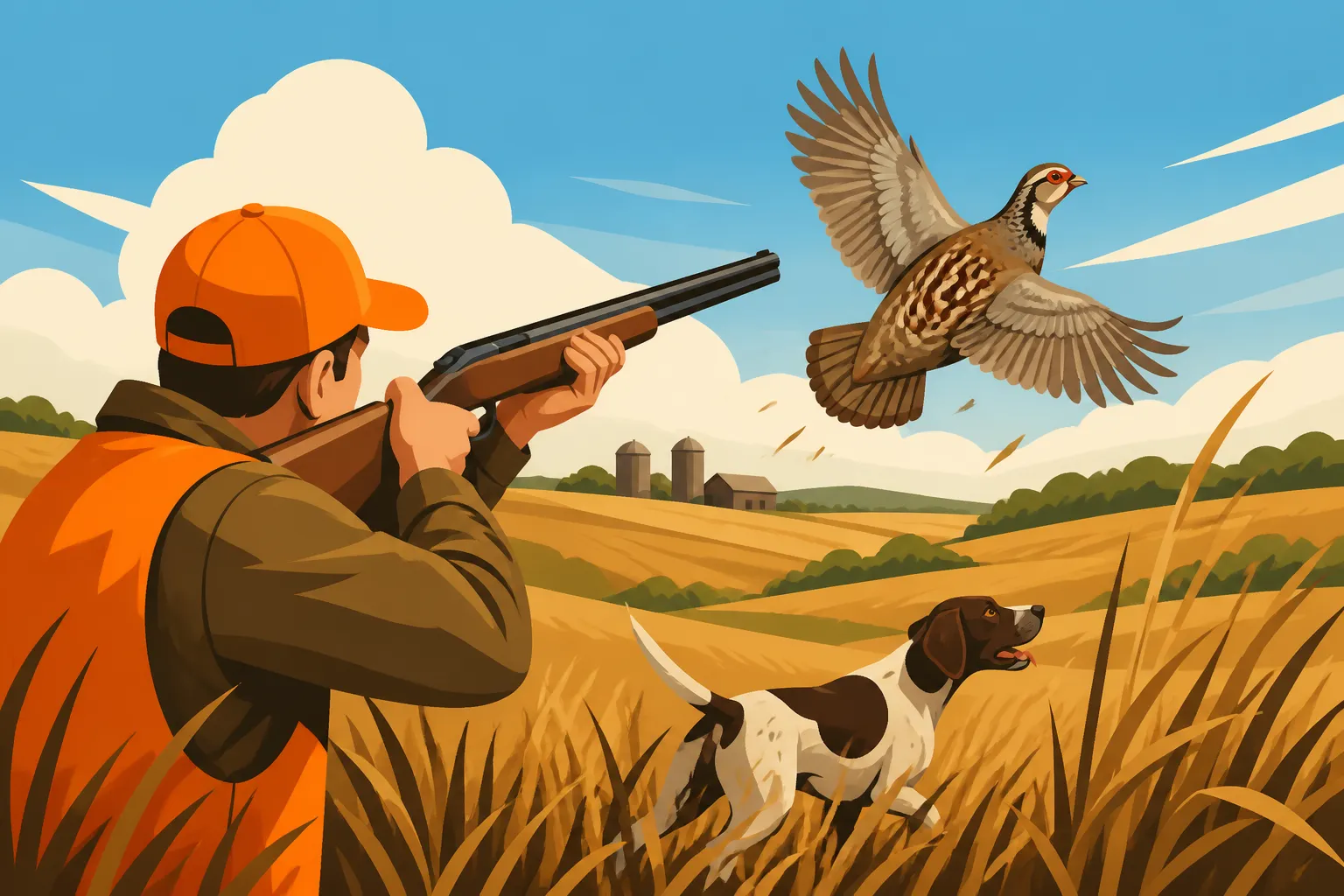
Hungarian Partridge Hunting North Dakota Farmland
Hunting Hungarian partridge on North Dakota farmland can feel like chasing ghosts sometimes. These diminutive, speedy birds, often overlooked in the shadow of their pheasant cousins, present a unique and exhilarating challenge for upland hunters. If you've ever felt the frustration of a covey exploding from seemingly nowhere or struggled to locate them consistently, this guide is for you. We're going to dive deep into the specific strategies and local knowledge needed to successfully pursue Hungarian partridge across North Dakota's vast agricultural landscapes.
Understanding Hungarian Partridge on North Dakota Farmland
Hungarian partridge, often affectionately called "Huns," thrive in agricultural environments, making North Dakota's expansive farmlands prime territory. They aren't forest birds; they're creatures of open spaces, field edges, and brushy cover. Knowing their habits and preferred hangouts is the first step to putting birds in the vest.
Identifying Key Habitats and Food Sources
Unlike pheasants that often gravitate towards dense cattails or tall grass, Huns prefer more open, yet still protective, cover. Think fencelines overgrown with weeds, road ditches with a good mix of grass and forbs, and field edges that provide a transition between crops and undisturbed land. They love areas where they can feed on waste grain, weed seeds, and insects, but always have quick access to escape cover from predators like hawks or coyotes.
When you're out scouting or walking, pay close attention to diverse agricultural landscapes. Fields of small grains like wheat or barley, particularly after harvest, are strong attractants for food. But a bare stubble field might not hold birds without some adjacent cover. Look for shelterbelts, abandoned farmsteads, or even just a thick patch of Kochia weed along a county road. These small pockets of habitat are critical. You'll often find them utilizing what little cover is available, sometimes even just a slight depression in a field or a snowdrift providing a bit of overhead protection.
Interpreting Covey Behavior and Movement Patterns
Huns are classic covey birds, meaning they stick together in groups, especially outside of breeding season. A typical covey size might range from 5 to 20 birds, sometimes even more. Their survival strategy is all about sticking close and flushing as one. When disturbed, they'll often burst into the air with a rapid, whirring flight, typically flying low and fast for a short distance before dropping back into cover, often out of sight. This makes getting a shot off quickly and accurately paramount.
Their daily movements are largely dictated by food, water, and cover needs, but also by weather. On a crisp, sunny morning, you might find them dusting in a dirt road or feeding actively near a grain field. As the day progresses, they might move to heavier cover for loafing or protection from the midday sun. In cold or snowy conditions, they'll seek out the densest available cover, like a brushy coulee or a dense patch of weeds on a south-facing slope that catches the sun. Understanding these patterns, sometimes by using tools like the GoHunt app to observe topography and cover types, helps predict where they'll be at different times of the day.
Essential Gear and Canine Companions for Partridge Hunting
Successful Hungarian partridge hunting isn't just about finding the birds; it's about being prepared with the right tools and, perhaps most importantly, the right four-legged partner.
Shotgun and Ammunition Choices for Fast-Flying Birds
When you're hunting Huns, speed and quick handling are your friends. These birds are small and incredibly fast, offering a fleeting target. A lightweight 12, 20, or even 28-gauge shotgun with open chokes (like improved cylinder or skeet) is typically preferred. The goal is to get the shot string on target quickly before the birds disappear over the horizon. Many hunters opt for an over-under or side-by-side for quick follow-up shots, but a pump or semi-auto can be just as effective if you practice smooth handling.
For ammunition, smaller shot sizes are key. #6 or #7.5 shot is standard, with some even using #8 shot for very close-flushing birds. The idea isn't to hit them with a few large pellets, but to send a dense pattern of smaller shot that covers a wider area, increasing your chances of connecting with such a nimble target. High-brass loads often aren't necessary; standard field loads with a respectable velocity will do the trick. The focus should be on patterning your chosen load and choke combination before season to ensure you know exactly what your gun is doing at typical flushing distances.
The Indispensable Role of Good Bird Dogs
Trying to hunt Hungarian partridge without a good bird dog is like trying to find a needle in a haystack blindfolded. Huns hold incredibly tight, and even after you flush and shoot, they can be notoriously difficult to find in cover, especially if they're only wounded. A well-trained pointing dog, like a German Shorthaired Pointer or an English Setter, is invaluable for locating these birds, holding them on point, and allowing you to get into position for a shot. The sight of a dog locked up on point, tail rigid, nose to the wind, is one of the true joys of upland hunting.
Retrievers, such as Labrador or Golden Retrievers, also excel at finding downed birds in thick cover, preventing lost game. While many pointing breeds are also excellent retrievers, having a dog that's enthusiastic about finding fallen birds, even after they've run a bit, is a massive advantage. Consistent training is vital. Your dog needs to be steady to wing and shot, and respond to commands, especially when a covey bursts, to avoid flushing other birds prematurely or running off after a single. A well-trained dog will allow you to focus on the shot, confident that any downed bird will be recovered efficiently.
Strategic Approaches to Hunting Farmland Partridge
Hunting Hungarian partridge requires a blend of keen observation, strategic movement, and a dash of patience. Their tendency to flush quickly and fly far can be discouraging, but with the right approach, you can turn those frustrations into success.
Walking Field Edges and Fencerows for Success
When hunting North Dakota farmland for Huns, your primary focus should be on edges and transition areas. These birds rarely venture far into vast, open fields unless actively feeding. Instead, they prefer the protective cover offered by the boundary lines. This means systematically walking Hunting Hungarian Partridge Field Edges or fencerows, shelterbelts, and the strips of uncultivated land along county roads.
Think about how a field meets a pasture, or where a crop field transitions to a grass waterway. These seams in the landscape are natural travel corridors and hiding spots for partridge. Walk slowly and deliberately, allowing your dog to work the cover thoroughly. Huns will often sit incredibly tight, sometimes not flushing until you are practically on top of them. A good strategy is to walk into the wind, if possible, allowing your dog to pick up scent more effectively and for the birds to hold tighter. When approaching a corner or a change in cover density, be ready, as these are prime spots for a covey to burst out.
Mastering the Art of the Flush and Shot
The Hungarian partridge flush is legendary for its suddenness and speed. When a covey erupts, it can be a jarring experience, often leading to missed shots due to hurried movements. The key to mastering the flush is anticipation and smooth execution. Once your dog goes on point, take a moment to assess the situation. Identify potential flight paths and prepare yourself for the explosion of wings.
As the birds flush, resist the urge to shoulder your gun in a panic. Instead, bring your shotgun smoothly to your shoulder, acquire a single bird, and swing through it before pulling the trigger. Don't try to shoot into the "middle" of the covey; focus on one bird. Their flight is often straight and fast, so a consistent swing is more important than a lightning-fast reaction. Remember, these birds are small, and a tight pattern is needed to connect. After the shot, mark where any downed birds fall, and observe the direction the rest of the covey flew. This information is crucial for potential follow-up attempts. You might find similar advice for Hunting Sharptail Grouse at First Light which also involves rapid flush scenarios.
Adapting Tactics for Varying Weather and Conditions
North Dakota weather is famously unpredictable, and partridge hunting tactics need to adapt accordingly. On warm, dry days, Huns might be spread out and move more, seeking shade or water sources. Your dog might have a harder time with scent, so focusing on thicker, damper cover might be beneficial. In contrast, cold, snowy, or windy conditions tend to make Huns hold much tighter, often hunkering down in the densest available cover to escape the elements.
During severe winter weather, they'll often stack up in protective areas like dense shelterbelts or deep coulees. This can make them easier to find but also means they might flush in larger, more chaotic coveys. Pay attention to wind direction; birds will often flush into the wind to gain lift. In high winds, they might stick to the lee side of hills or dense cover. After a fresh snowfall, tracking can be easier, but the birds themselves might be less active. Using a mapping tool like GoHunt can help you quickly identify these micro-habitats that offer protection from specific weather patterns, such as identifying south-facing slopes or dense tree lines.
Scouting and Securing Access on North Dakota Farmland
North Dakota offers incredible upland hunting, but successfully pursuing Hungarian partridge often hinges on thorough scouting and, crucially, securing access to private land. The majority of prime Hun habitat lies within agricultural properties.
Utilizing Mapping Tools and Aerial Imagery for Pre-Season Scouting
Gone are the days of just driving around hoping to spot birds. Modern mapping tools are absolute game-changers for identifying potential partridge habitat from your couch. Services like GoHunt, along with the North Dakota Game and Fish Department's PLOTS (Private Land Open To Sportsmen) maps, provide invaluable aerial imagery and land ownership data. Before you even set foot in the field, you can pinpoint promising areas.
Look for the transition zones: where stubble fields meet grassy ditches, where shelterbelts line up against cultivated land, or where small, overgrown sloughs dot the prairie. Pay attention to topography—even slight elevation changes or depressions can offer critical thermal cover or windbreaks. Identify potential food sources like harvested grain fields or areas with a high density of weeds. Plot out possible walking routes that maximize your chances of encountering birds while respecting property lines. Remember that Scouting PLOTS Land Before Season can give you a head start, as Huns will often utilize these public access areas too, though they can see heavier pressure.
The Importance of Private Land Permission
While North Dakota has a fantastic PLOTS program, the reality for hunting abundant Hungarian partridge is that you'll often need to knock on doors. A vast amount of prime habitat exists on private property, and gaining permission is not just polite, it's legally required for hunting on posted land. Never assume access, even if it looks unposted.
When approaching landowners, be respectful, introduce yourself, state your intentions clearly, and offer to share some of your harvest. Ask about specific areas they prefer you avoid, like livestock pastures or sensitive equipment. Being a good steward of their land – closing gates, avoiding driving on wet fields, picking up any trash – goes a long way in securing future access. Building relationships with landowners is the single most valuable asset a hunter can have in North Dakota. This process of Knocking on Doors in North Dakota Farm Country is an art form, and success comes from being genuine and appreciative. Always carry a pen and paper to note down permissions, and respect a "no" with grace.
From Field to Table: Handling Your Partridge Harvest
Harvesting a Hungarian partridge is a rewarding experience, but the journey doesn't end when the bird hits the ground. Proper field care and preparation are crucial to ensuring you enjoy the delicious table fare these little birds offer.
Field Dressing and Care for Quality Meat
Due to their small size, Hungarian partridge are often not fully field-dressed in the traditional sense immediately after the shot, especially if you're carrying them in a game vest for the day. However, getting them cool as quickly as possible is vital, particularly on warmer days. If you're hunting in milder weather, consider gutting them quickly in the field to allow the body cavity to cool. Simply make a small incision and remove the entrails. This significantly reduces spoilage and improves meat quality.
Once you're back at the vehicle or camp, transfer your birds to a cooler with ice, but ensure they don't sit directly in melted water. Many hunters place them in plastic bags or a dry cooler to keep them cool and clean. Plucking them fresh is often easier, but if you're breasting them out, it can be done at any time. The meat of a Hun is lean, dark, and has a delicate flavor, so treating it with care from the moment it's harvested is important. Remember, North Dakota has specific rules about transporting game, so make sure to leave a wing or head attached if required by regulation for identification purposes until you're at your final destination for processing.
Culinary Tips for Hungarian Partridge
Hungarian partridge are truly a gourmet treat. Their dark, lean meat has a slightly gamey but not overpowering flavor, often described as a richer version of chicken. They are incredibly versatile in the kitchen. Because they are so lean, overcooking is the biggest sin. They cook quickly, so a fast sear, pan-fry, or roasting with some moisture is often best.
Many hunters enjoy them simply pan-fried with a little butter and herbs, or wrapped in bacon to add fat and moisture. They also make excellent additions to stews, pâtés, or even a classic coq au vin if you're feeling adventurous. For a simple and delicious meal, try breasting them out, dredging them lightly in seasoned flour, and quickly pan-frying them until just cooked through. Pair them with wild rice or roasted vegetables for a true taste of the prairie. Whether you're making a simple supper or an elaborate dish, the delicate flavor of these small birds truly shines.
| Condition / Season | Typical Location | Hunter Strategy | Dog Behavior |
|---|---|---|---|
| Early Season (Warm) | Field edges, dense weeds, near water sources | Cover more ground, target shadier areas | May struggle with scent, focus on visible cover |
| Mid-Season (Cool) | Fencelines, stubble fields, shelterbelts | Systematic walking of linear cover | Strong scenting, tight points |
| Late Season (Cold/Snow) | South-facing slopes, deep coulees, dense brush | Focus on thickest available thermal cover | Holds birds tight, careful tracking of runners |
| High Wind | Lee side of hills, protected draws | Walk against wind, target protected pockets | May get erratic, rely on visual cues |
| Rain/Damp | Under dense cover, slightly elevated ground | Slow, deliberate walks, scenting is excellent | Excellent scenting, birds hold very tight |
This table helps illustrate how conditions impact where Huns will be and how you should adjust your approach. For example, understanding Hunting Into a December Cold Snap will tell you that Huns will be hunkered down, requiring a more thorough push through dense cover.
Navigating Regulations and Access for Farmland Hunting
Understanding the rules and securing proper access are non-negotiable aspects of hunting Hungarian partridge in North Dakota. Being informed keeps you legal and helps maintain positive relationships with landowners and the broader hunting community.
Understanding North Dakota Small Game Regulations
North Dakota's hunting regulations are clearly outlined by the North Dakota Game and Fish Department (NDGFD), and it's essential to review them annually, as rules can change. For Hungarian partridge, you'll need a valid North Dakota General Game and Habitat License Cost and a small game license. Non-residents will also need to be aware of specific nonresident license options and costs, such as the North Dakota Nonresident Small Game License Cost. Always carry proof of your license, which can even be done by Carrying Proof of License on Your Phone.
Daily bag limits and possession limits are set to ensure sustainable harvest. Be sure to know these numbers for Huns, as they can sometimes differ from pheasant limits. It’s also critical to understand shooting hours, which typically run from half an hour before sunrise to sunset for upland birds. Keep an eye out for any specific county or unit restrictions that might occasionally apply, though Huns are generally open statewide where habitat exists. Ignoring these details can lead to fines and a ruined hunt, so always check the latest regulations before heading afield.
Respecting Landowner Rights and Ethical Hunting Practices
Hunting on private land in North Dakota is a privilege, not a right. The state has explicit North Dakota Trespass and Permission Law that requires permission to hunt on posted land. Even on unposted land, it is common courtesy and often legally advisable to seek permission, particularly from rural landowners. You can always confirm What Counts as Posted Land in North Dakota through the NDGFD regulations.
Beyond the legalities, ethical hunting practices are paramount. This includes picking up all spent shotgun shells, closing gates behind you, driving only on established trails, and respecting any specific requests from the landowner, such as avoiding certain fields or times of day. Never shoot towards farm buildings, livestock, or roads. It's also important to be able to Retrieving Game From Private Land in North Dakota even if you didn't have explicit permission to hunt that specific adjacent parcel, by asking permission to retrieve wounded game. Leaving a clean, positive impression helps ensure that future generations of hunters will continue to have access to these valuable private lands. A significant portion of North Dakota's Hungarian Partridge Population thrives on these private agricultural areas, making landowner relations critical for hunting opportunities.
Disclaimer
Please note: Hunting regulations and conditions can change. Always consult the latest North Dakota Game and Fish Department regulations prior to any hunting activity. This guide is for informational purposes only and does not supersede official state regulations.