Hunting North Dakota’s Turtle Mountains
For many hunters, the mental image of North Dakota conjures up endless flat prairies, vast croplands, and the iconic Badlands to the west. But if you overlook the Turtle Mountains, nestled along the northern border, you're missing out on a truly unique and challenging hunting experience. This guide will take you deep into this often-underappreciated corner of the state, detailing everything from the terrain and game to access and tactics, helping you plan a successful and memorable hunt in North Dakota’s distinct northern forest.
Understanding the Unique Ecology of the Turtle Mountains
The Turtle Mountains region is an anomaly in North Dakota, offering a completely different hunting landscape than most of the state. It’s a place where rolling hills meet dense timber, dotted with small lakes and wetlands, creating a mosaic of habitats that supports a diverse array of wildlife. This isn't your typical prairie hunt, and that's precisely what makes it so appealing to those seeking a different kind of challenge.
Geographic and Climatic Influences on Wildlife
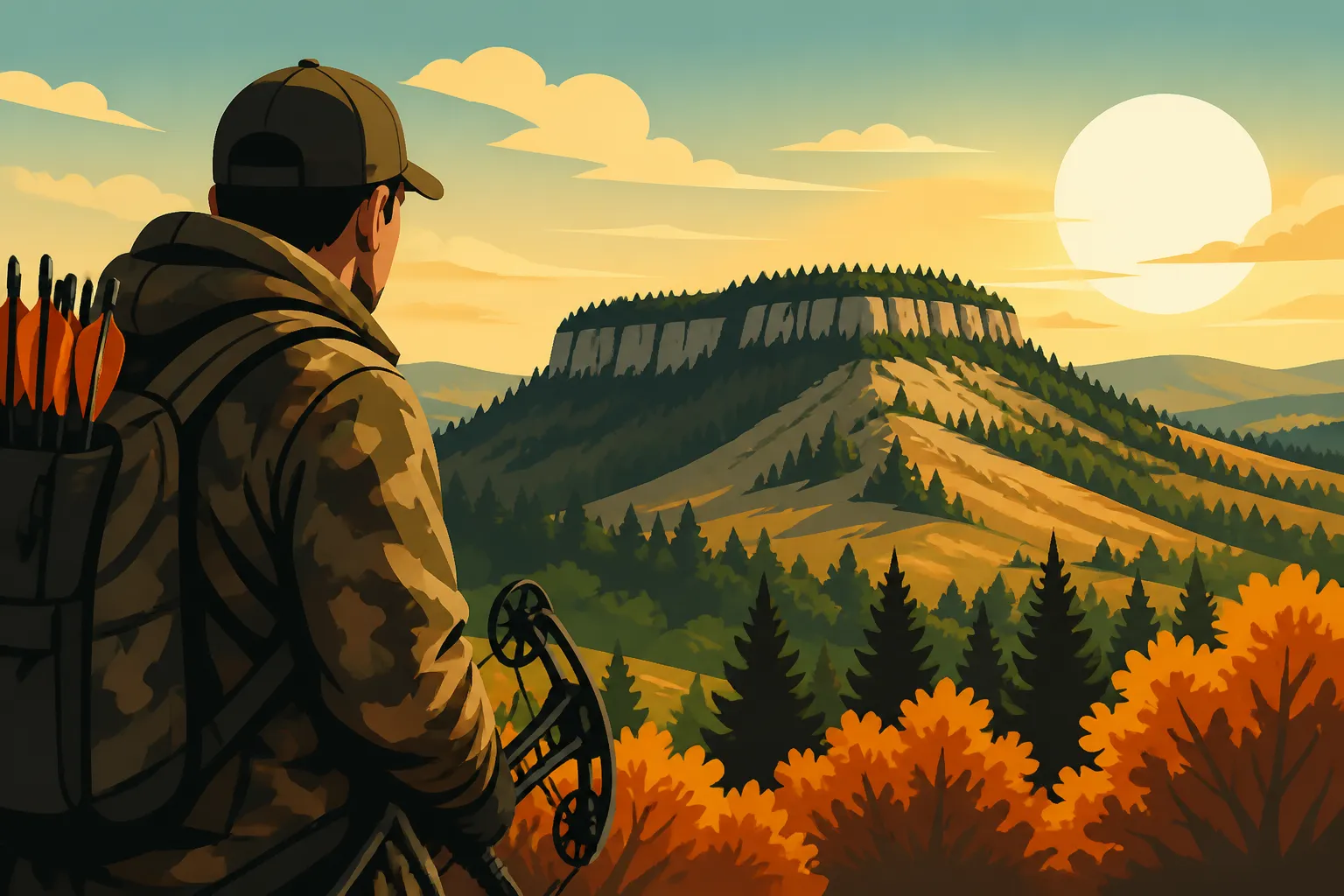
Unlike the largely treeless plains, the Turtle Mountains are an elevated plateau formed by glacial activity, rising roughly 500 to 800 feet above the surrounding prairie. This elevation, combined with its northern latitude, creates a microclimate that supports a boreal forest ecosystem. Think aspen, oak, birch, and fir stands, interspersed with numerous small lakes and bogs. This unique geography captures more snowfall and retains moisture longer into the year, creating cooler, damper conditions than the rest of the state. These factors directly influence the types of vegetation that thrive here, which in turn dictates the game animals that call it home. The dense tree cover provides year-round thermal and escape cover for whitetails, while the mixed forest and brush are ideal for grouse and snowshoe hare. The numerous small bodies of water, many of them spring-fed, also attract migratory waterfowl, though they are often more challenging to hunt here than on the open prairie potholes.
The climate also plays a significant role in hunting success. Early season hunts can be quite mild, but as fall progresses, temperatures drop quickly, and significant snowfall can occur earlier than in other parts of North Dakota. This means hunters need to be prepared for rapid changes in weather, from crisp autumn days to biting cold and deep snow. Understanding these climatic nuances is crucial for packing the right gear and planning your approach, as deer patterns, for example, will shift dramatically with the onset of cold and snow, pushing them towards thicker cover or specific browse areas. Hunting Into a December Cold Snap can be a completely different game here compared to open country.
Dominant Habitat Types and Their Appeal to Game
The Turtle Mountains are characterized by several distinct habitat types, each offering unique opportunities for hunters. The most prevalent is the mixed deciduous and coniferous forest, dominated by aspen groves, balsam poplar, birch, and scattered oak. This dense timber provides excellent cover for deer, especially during the colder months, and is prime habitat for ruffed grouse. You'll find these areas often impenetrable in places, requiring slow, methodical still-hunting or carefully planned deer drives.
Interspersed within this forest are numerous wetlands, marshes, and small lakes. These aquatic habitats are critical for waterfowl, beaver, and muskrat, but they also provide important water sources and edge habitat for deer. The transition zones where forest meets wetland can be incredibly productive, often serving as travel corridors or bedding areas. Openings within the forest, whether natural meadows, old clear-cuts, or small agricultural plots on private in-holdings, provide valuable foraging opportunities for deer and attract upland birds looking for grit and berries. Using mapping tools like onX Hunt can be incredibly helpful for identifying these varied habitat types and planning your approach before you even set foot in the woods. These detailed maps will show you not just property boundaries but also changes in vegetation and elevation that are key to understanding game movement.
Prime Game Species and Hunting Opportunities
While the open prairies are famous for their pheasant and waterfowl, the Turtle Mountains offer a different lineup of prime targets, centered around its unique woodland environment. Deer are king here, but excellent opportunities also exist for various upland birds and even some rarer big game species.
Deer Hunting Strategies in the Timber
Hunting deer in the Turtle Mountains is a completely different ballgame than hunting in the river bottoms or agricultural fields elsewhere in North Dakota. Here, dense timber, rolling hills, and thick underbrush dictate a more strategic and often physically demanding approach. Whitetail deer thrive in this environment, using the extensive cover for bedding and navigating through the thickets. You’re less likely to spot a deer at 500 yards across a field and more likely to jump one at 50 feet in a dense aspen stand.
One of the most effective strategies for deer in the Turtle Mountains is still-hunting or slow-stalking through the timber. This involves moving deliberately, stopping frequently to scan the woods, and listening intently for any movement. Pay close attention to wind direction and thermals, as deer rely heavily on their sense of smell in these thick conditions. Hunters often find success focusing on natural funnels, saddlebacks, and transitions between different cover types. For example, a narrow strip of dense spruce connecting two larger aspen blocks could be a prime travel route. Another popular method, especially for groups, is conducting small, organized deer drives. With multiple hunters, you can effectively push deer out of thick cover towards standers positioned along known escape routes or clearings. Deer Drives With Three or Four Hunters can be incredibly effective when planned well in this type of terrain. Ensure everyone knows their role and the boundaries to maintain safety and effectiveness.
Upland Bird Prospects: Grouse and Partridge
For the upland bird hunter, the Turtle Mountains present a fantastic opportunity to chase ruffed grouse, along with sharptail grouse and Hungarian partridge in the more open, fringe areas. Ruffed grouse are truly creatures of the forest, thriving in the dense, regenerating aspen stands. They are often found near thick edges, along old logging roads, or in areas with a good mix of young and mature timber. Hunting ruffed grouse here is a quintessential walk-and-flush experience, often best done with a good pointing or flushing dog to help locate birds hidden in the thick cover. The explosive flush of a ruffed grouse from beneath a spruce bough is an unforgettable experience.
Sharptail grouse and Hungarian partridge, while typically associated with more open prairie, can also be found in the transitional habitats of the Turtle Mountains, particularly on the edges where the forest gives way to grasslands or agricultural fields. Look for sharptails in brushy draws, native prairie pockets, and areas with taller grass, while Huns might be found along field edges or around old farmsteads on private land. Sharptail Grouse Hunting Mixed Grass Prairie and Hungarian Partridge Hunting North Dakota Farmland offer general strategies that can be adapted for these fringe areas. Remember, the key is to understand the specific habitat preferences of each species within the varied Turtle Mountain landscape.
Other Opportunistic Game: Moose, Bear, and Predators
While deer and upland birds are the primary targets, the Turtle Mountains also offer some intriguing, albeit rarer, hunting opportunities. Moose, though not as numerous as in other parts of North Dakota, do inhabit this region. Their presence is a testament to the boreal nature of the habitat. Moose tags are exceptionally rare and awarded through a lottery system, often requiring many years of applying. If you are fortunate enough to draw one of these coveted "once-in-a-lifetime" tags, the dense willow thickets and boggy areas of the Turtle Mountains can be prime territory. Moose and Bighorn Sheep Hunting in North Dakota details the lottery process for these special species.
Additionally, while North Dakota doesn't have a designated black bear season, incidental sightings occur, and there have been discussions about future seasons as populations fluctuate. For now, they remain elusive, but their presence speaks to the wild nature of the region. Predator hunting, specifically for coyotes and fox, is another option. The thick cover provides excellent ambush opportunities for callers, particularly around the edges of the timber and fields. Finding natural travel corridors or old logging roads and setting up with a good electronic caller can be very effective. Don't underestimate the challenge of hunting predators in such dense cover; it requires patience and keen observation.
Navigating Access and Regulations in the Turtle Mountains
Hunting in the Turtle Mountains requires a solid understanding of land ownership and specific regulations, which can differ from other parts of the state. It’s a mix of public lands, including state forests and wildlife management areas, alongside significant private holdings. Knowing where you can legally hunt and what rules apply is paramount to a successful and legal hunt.
Public Land Options: State Forest and Wildlife Management Areas
The good news for hunters is that the Turtle Mountains boast substantial tracts of public land, offering ample opportunity. The Turtle Mountain State Forest is a gem, providing thousands of acres of accessible timberland. These areas are managed for multiple uses, including timber production, recreation, and wildlife habitat. Hunters can explore extensive networks of trails, old logging roads, and unmarked wilderness. It's crucial to obtain a current map of the State Forest, often available from the North Dakota Forest Service, to understand boundaries and access points. These maps, combined with digital tools like onX Hunt, which clearly delineates public and private boundaries, are invaluable. For example, onX Layers for North Dakota Land Status can be a game-changer for navigating complex land ownership.
In addition to the State Forest, several Wildlife Management Areas (WMAs) are scattered throughout the region. These areas, managed by the North Dakota Game and Fish Department, are specifically acquired and maintained for wildlife production and public hunting access. Examples might include areas like the Wakopa WMA, known for its diverse habitat and excellent hunting prospects. WMAs often have specific regulations regarding vehicle use, camping, or target shooting, so always check the latest North Dakota Game and Fish guide for the specific area you plan to hunt. These public lands are a fantastic resource for residents and non-residents alike, offering diverse habitats that are perfect for pursuing deer, grouse, and other game. Familiarizing yourself with these North Dakota Wildlife Management Areas is key to unlocking hunting opportunities.
Understanding Specific Turtle Mountain Hunting Unit Rules
North Dakota's hunting regulations are divided by units, and the Turtle Mountains fall into specific deer hunting units, such as units 22 and 24, depending on the precise location. These units often have different tag allocations and special rules. For example, deer licenses are typically distributed via a lottery system, and the number of available tags, particularly for antlered deer, can vary significantly from year to year based on deer population surveys and management goals. Antlerless tags might be more readily available, offering additional opportunities.
It is absolutely vital to consult the current North Dakota Game and Fish Department hunting guide for the most up-to-date regulations concerning your chosen unit in the Turtle Mountains. This includes season dates, bag limits, weapon restrictions, and any mandatory harvest reporting requirements. Specific units might have unique requirements for youth hunters or those with disabled permits. Ignoring these details can quickly turn a fun hunt into a costly legal issue. The detailed information found on the NDGF website or in their annual guides is your ultimate authority on legal hunting. North Dakota Hunting Licenses and What They Cost is a critical read for understanding the general licensing framework before diving into unit-specific details.
Private Land Considerations and Permission
While there's plenty of public ground, significant portions of the Turtle Mountains are privately owned, often by farmers, ranchers, or landowners with recreational properties. Gaining access to private land can unlock additional hunting opportunities and reduce pressure, but it absolutely requires permission. North Dakota law dictates that you must have permission to hunt on private land, whether posted or not. The easiest way to get permission is often by knocking on doors and asking politely. Be prepared for rejections, but a friendly, respectful approach often yields results.
When seeking permission, be clear about what you intend to hunt, how many people will be in your party, and the dates you plan to hunt. Offering to share some of your harvest or help with small chores can sometimes sweeten the deal. Always respect the landowner’s property, close gates, avoid driving on wet fields, and leave no trace. Digital tools like onX Hunt are incredibly useful here, as they not only show you property boundaries but often include landowner names, which can help in your outreach. Getting Private Land Permission in North Dakota emphasizes the importance of these relationships and the proper etiquette involved.
Essential Gear and Tactics for Turtle Mountain Success
Hunting the Turtle Mountains presents a unique blend of challenges that demand specific gear and well-thought-out tactics. Forget the wide-open prairie glassing strategies; here, it’s about navigating dense cover, enduring varied weather, and moving stealthily through thick woods.
Footwear, Clothing, and Navigation for Hilly Terrain
The terrain in the Turtle Mountains is rugged and can be surprisingly steep in places, with numerous low-lying wet areas and thick brush. Your footwear is paramount. Invest in waterproof, sturdy hiking boots with good ankle support. You'll be traversing uneven ground, climbing over downed logs, and pushing through thick brush, so comfort and protection are non-negotiable. Cold, wet feet will quickly ruin a hunt. Layered clothing is also critical. The exertion of still-hunting through dense woods can make you warm up quickly, even on a cold day, but temperatures can plummet when you stop moving or if the weather shifts. A good base layer, insulating mid-layers, and a waterproof/windproof outer shell are essential. Blaze orange requirements for big game hunting in North Dakota also apply here, so make sure your outer layer meets the visibility standards.
Navigation is another key consideration. While the Turtle Mountains aren't a vast wilderness in the traditional sense, it's remarkably easy to become disoriented in the dense, monotonous timber, especially on overcast days or in fresh snow. A reliable GPS unit or a smartphone with a robust hunting app like onX Hunt or GoHunt is indispensable. Download offline maps before you go, as cell service can be spotty to non-existent in many areas. Carry a compass and a physical map as a backup, and know how to use them. Mark your truck, key trails, and any notable landmarks. Using the PLOTS App Without Cell Service is a good reminder of the importance of offline mapping capabilities for any remote hunting. Always let someone know where you're going and when you expect to return.
Effective Hunting Methods for Dense Cover
Successfully hunting in the dense cover of the Turtle Mountains often comes down to adapting your methods to the environment. Still-hunting, as mentioned, is a primary tactic. Move slowly, taking perhaps only a few steps per minute, pausing frequently to scan the woods ahead and to your sides. Use your binoculars to pick apart the shadows and look for horizontal lines (a deer's back) in a vertical world (trees). Listen for subtle sounds: a twig snapping, a rustle in the leaves, or the soft blowing of a deer. This is a game of patience and observation.
Another effective method, particularly during the firearm seasons, is stand hunting. Identify natural funnels, pinch points, or bedding areas, and set up a treestand or ground blind. With the dense cover, deer often feel secure moving throughout the day, so an all-day sit can be productive, especially during the rut. Hunting the Rut in Early-to-Mid November is a prime time for this. Scouting before the season is crucial for identifying these key locations. Look for rub lines, scrape lines, and well-used game trails. If snow is on the ground, fresh tracks can tell you a lot about recent deer movement. When setting up a ground blind, remember to brush it in well to break up its outline against the natural surroundings.
Post-Harvest Considerations in Remote Areas
Harvesting an animal in the dense, hilly terrain of the Turtle Mountains presents its own set of logistical challenges. Unlike the prairie where you might drive right up to a downed deer, here you could be a considerable distance from a road or even a clear trail. Planning for game recovery is just as important as the hunt itself. If you're successful, immediately mark the spot where the animal fell or where you last saw it. Pay attention to landmarks.
Field dressing quickly is essential, especially if temperatures are mild, to begin the cooling process. Consider bringing a game cart or a heavy-duty sled if snow is on the ground. For larger animals like deer or moose, quartering the animal in the field may be the only practical way to get it out of difficult terrain. Bring a sharp knife, game bags, and perhaps a small saw. The thought of Recovering a Deer From a Coulee or from a remote thicket should be part of your pre-hunt planning. Always have a plan for getting your animal out and processed, even if it means a long, strenuous pack out.
Planning Your Turtle Mountain Hunt
A successful hunt in the Turtle Mountains, like any hunting trip, hinges on thorough planning. This includes understanding the best times to pursue specific species, securing lodging, and knowing what local resources are available.
Best Times of Year to Hunt Specific Species
The timing of your Turtle Mountain hunt will largely depend on your target species. For deer, the archery season opens earlier, typically in late August or early September, extending well into the general gun season. This offers flexibility, but the prime time for trophy whitetails often aligns with the rut, which typically peaks in early to mid-November. The gun season in North Dakota is generally a short, intense period, and the Turtle Mountains units will see significant pressure during this time. Muzzleloader season follows, offering a more primitive weapons experience often with fewer hunters afield, but potentially harsher weather.
For ruffed grouse, the season generally opens in mid-September. Early season grouse hunting can be challenging due to dense foliage, but as the leaves fall in October, visibility improves, and birds become easier to spot and flush. Late October into November is often considered prime for grouse, before deep snow sets in. Sharptail grouse and Hungarian partridge seasons typically open around the same time as pheasant season, in early October. Targeting them early in the season, before heavy snowfall, is generally best. Always consult the North Dakota Game and Fish Department's current proclamations for precise season dates, as they can shift slightly year to year.
| Species | Primary Season | Best Time to Hunt | Key Considerations |
|---|---|---|---|
| White-tailed Deer | Archery, Gun, Muzzleloader | Early-Mid Nov (Rut), Late Archery (Dec) | Dense cover, physical exertion, lottery for gun tags |
| Ruffed Grouse | Fall Upland Season | Mid-October to Mid-November | Foliage density, dog work, explosive flushes |
| Sharptail Grouse | Fall Upland Season | Early October, Pre-snow | Edge habitats, mixed prairie, dog work |
| Hungarian Partridge | Fall Upland Season | Early October, Pre-snow | Field edges, old homesteads, covey hunting |
| Moose | Limited Lottery | Varies by unit, typically Fall (if drawn) | Extremely rare tag, specific unit, dense willow cover |
| Coyote/Fox | Year-Round (with license) | Fall/Winter (snow for tracking, calling success) | Predator calling, ambush tactics, thick cover |
Lodging, Amenities, and Local Resources
The Turtle Mountains region offers a range of lodging options, from small-town motels in communities like Bottineau or Rolla to rustic cabins in the State Forest or near lake resorts. If you prefer a more immersive experience, camping is permitted in designated areas within the Turtle Mountain State Forest and other public lands, providing a truly wild experience. However, be prepared for cooler temperatures and potential snow, especially later in the season. Some private campgrounds and RV parks also dot the area.
For amenities, Bottineau is often considered the gateway to the Turtle Mountains and offers the most comprehensive services, including grocery stores, gas stations, restaurants, and sporting goods shops where you can pick up any forgotten essentials. Smaller towns closer to the core hunting areas might have limited supplies, so it’s wise to stock up in a larger town before heading out. Local bait shops or small-town hardware stores often serve as informal information hubs for local hunting conditions, so don't hesitate to strike up a conversation. Access to local taxidermists or meat processors might be available, especially during deer season, but it's always best to research and contact them ahead of time.
Minimizing Impact and Practicing Ethical Hunting
Hunting in the Turtle Mountains, particularly in public areas, requires a strong commitment to ethical practices and minimizing your environmental impact. These are relatively pristine environments, and keeping them that way is everyone's responsibility. Pack out everything you pack in—including spent shell casings, food wrappers, and any trash. Leave no trace of your presence.
Respect private property boundaries, even if you are hunting on adjacent public land. Be mindful of noise, especially around residential areas or other recreational users. If you encounter other hunters, give them plenty of space. Ethical hunting also includes knowing your effective range, making clean shots, and diligently tracking any wounded animal. This dense cover can make tracking incredibly challenging, so take extra care with your shot placement. Familiarize yourself with Blood Trailing After Dark in North Dakota if you anticipate difficult recovery conditions. By practicing responsible and ethical hunting, we ensure these unique opportunities in the Turtle Mountains remain for generations to come.
Disclaimer
This article is for general informational purposes only and does not constitute professional advice. Laws, prices and regulations vary by location and change over time. Consult a qualified professional for guidance on your specific situation.