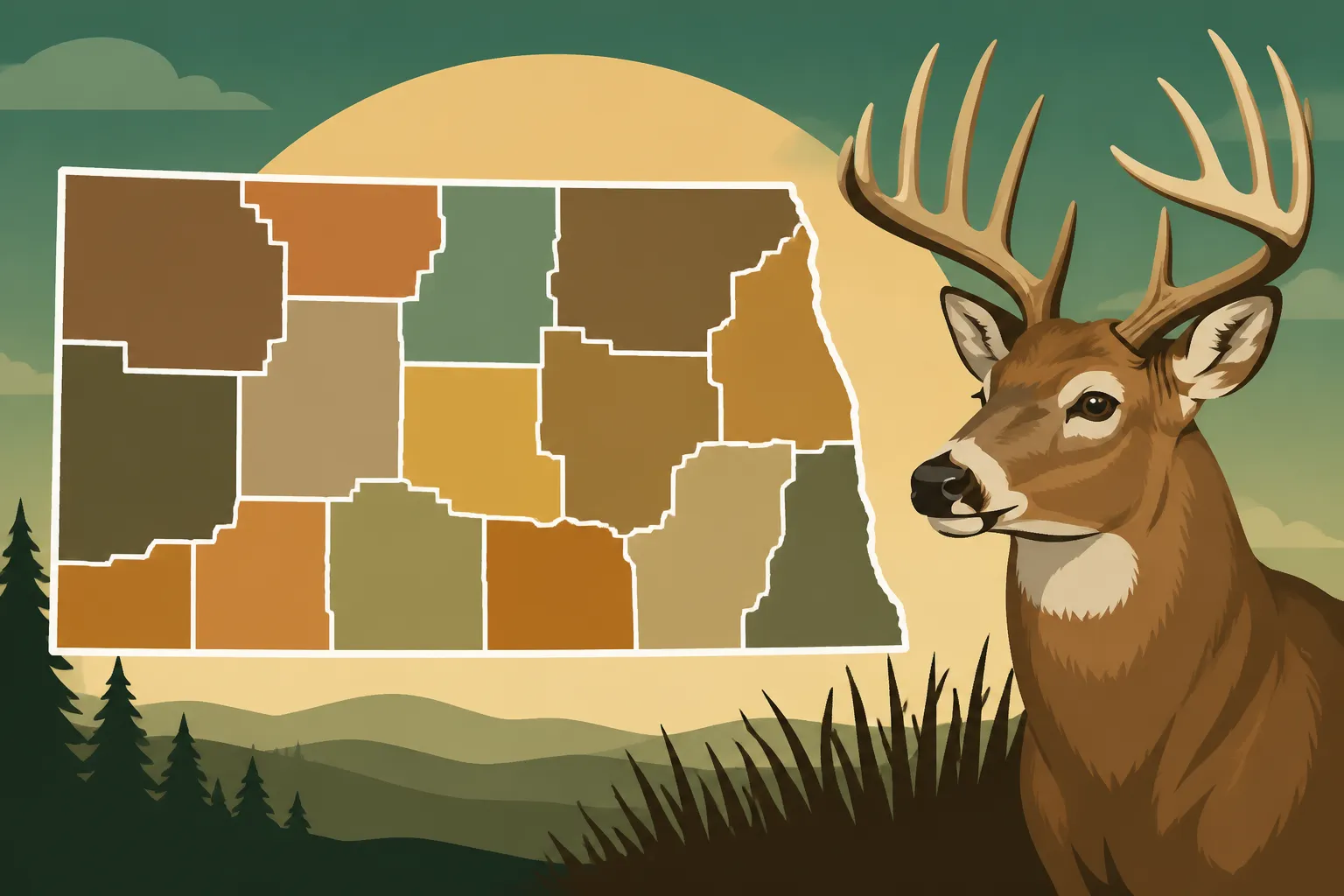
North Dakota’s Fourteen CWD Hunting Units
The anxiety that comes with hunting in an area affected by Chronic Wasting Disease is real. Hunters often feel overwhelmed by the ever-changing rules, the concern for the health of the herd, and the ethical responsibility to do their part. This guide aims to clear up the confusion surrounding North Dakota's fourteen designated CWD hunting units, giving you a comprehensive understanding of what you need to know before you head into the field.
Understanding Chronic Wasting Disease (CWD) in North Dakota
What is CWD and How Does it Affect Deer?
Chronic Wasting Disease (CWD) is a devastating neurological condition that impacts deer, elk, moose, and other cervids. It’s caused by abnormal proteins known as prions, which slowly but relentlessly damage the animal's brain and nervous system, leading to a host of debilitating symptoms over time. Imagine watching a once-vigorous deer gradually lose its coordination, become severely emaciated, and exhibit unusual behavioral changes like excessive thirst or a vacant stare – it's a truly heartbreaking and unsettling sight, and it’s always fatal for the infected animal. There is currently no known cure, no vaccine, and once an animal contracts CWD, its fate is sealed. Adding to the challenge, these resilient prions can persist in the environment, such as in soil, for many years, making the disease incredibly difficult to contain once it establishes itself in an area.
This isn't merely a concern for the animals; it's a significant concern for hunters who cherish North Dakota's robust and healthy deer populations. While there have been no documented cases of CWD transmission from cervids to humans, major public health organizations like the Centers for Disease Control and Prevention (CDC) and the World Health Organization (WHO) strongly recommend against consuming meat from CWD-positive animals. This recommendation is based on an abundance of caution, as research continues to explore any potential, albeit unproven, risks. For us hunters, it means taking on an extra layer of responsibility to ensure the animals we harvest are healthy and safe for consumption, adding another crucial dimension to our role as stewards of the land and its wildlife.
The History of CWD in North Dakota
North Dakota has, unfortunately, not been immune to the challenges that CWD presents. The disease first made its initial appearance in the state back in 2009, when it was detected in a mule deer harvested in the rugged southwestern Badlands. That initial detection sent ripples through the hunting community and wildlife management agencies, signaling a new era of increased vigilance and proactive management measures. Since that first case, the North Dakota Game and Fish Department (NDGFD) has been diligently monitoring the disease's presence and spread, significantly increasing its testing efforts, and implementing various strategies to manage its impact on our beloved deer herds across the state.
The spread of CWD hasn't been uniform; it has often followed natural corridors like river systems or areas characterized by high deer densities, which unfortunately act as natural pathways for disease transmission. It's an important read to understand How CWD Spread From the Missouri River Corridor, which highlights some of the unique environmental challenges faced in trying to contain it. Over the years, additional positive cases have surfaced in various hunting units, leading directly to the designation of the current fourteen CWD hunting units. It’s a dynamic situation, and the NDGFD continuously updates its data, recommendations, and regulations based on the latest scientific findings and disease trends, underscoring the vital need for hunters to stay informed season after season.
Current CWD Prevalence and Distribution
Understanding the current North Dakota CWD Prevalence Rate Trends is absolutely crucial for any hunter participating in deer season. While CWD is a serious and concerning issue, it's important to keep in mind that the overall prevalence of the disease within North Dakota's broader deer population is still considered relatively low when compared to some neighboring states or regions with longer histories of CWD. However, this lower prevalence certainly doesn't mean we can afford to be complacent. The "fourteen CWD hunting units" are precisely those geographical areas where confirmed positive cases have been detected in wild cervids, or where there is a heightened risk of CWD due to their proximity to known infected zones. These units span diverse parts of the state, ranging from the rugged, iconic Badlands in western North Dakota to some more agricultural regions further to the east.
The NDGFD meticulously tracks these positive detections, using this detailed data to inform their critical management decisions, including where to focus mandatory testing efforts, where to deploy CWD sampling stations, and where to implement specific hunting regulations. This data-driven, targeted approach is absolutely vital for allocating resources effectively and ensuring that hunters in these identified higher-risk areas are well-equipped with the necessary knowledge and tools to comply with all regulations. As responsible hunters, staying acutely aware of these specific CWD units and their associated rules is our fundamental first step in participating responsibly in comprehensive CWD management efforts.
Navigating North Dakota's CWD Hunting Units
Identifying the Fourteen Designated Units
It can sometimes feel like you’re trying to solve a complicated puzzle when you're attempting to figure out precisely which hunting units fall under the CWD designation. The North Dakota Game and Fish Department (NDGFD) works diligently to clearly outline these areas, but ultimately, it's up to us, the hunters, to put in the effort and do our homework. Currently, there are fourteen specific deer hunting units that have been officially identified as either CWD-positive zones or areas deemed to be at a higher risk for the disease. These aren't just arbitrary lines drawn on a map; they represent areas where CWD has been confirmed in wild deer, or where ecological factors strongly suggest a higher probability of its presence. For example, some of these units might be located along major river systems that facilitate deer movement or might border other states with historically higher CWD prevalence.
Knowing exactly Which North Dakota Units Have Confirmed CWD is paramount, as different rules, regulations, and hunter responsibilities apply within these specific CWD boundaries. You absolutely wouldn't want to unknowingly harvest a deer in one of these critical zones and then fail to comply with the necessary mandatory testing or carcass transport regulations. It's not just about avoiding potential penalties or citations; it's fundamentally about being a proactive part of the solution to manage and, hopefully, limit the continued spread of this devastating disease. Always make it a point to double-check the most current regulations and CWD unit designations right before your hunt, as these units and their specific guidelines can sometimes be adjusted based on new scientific findings or shifts in disease prevalence.
Why Specific Units Are Designated CWD Zones
The specific designation of these fourteen hunting units as CWD zones is far from random; it represents a strategic and informed effort by North Dakota's wildlife managers to concentrate surveillance, testing, and management efforts precisely where they are most critically needed. These units are typically chosen because they have had confirmed positive cases of CWD in harvested animals, or because they are geographically adjacent to other areas where CWD is known to exist. For instance, some units might share a border with states like Montana or South Dakota, both of which have a longer history and often higher prevalence of CWD. The disease is known to travel, often with natural deer migrations or through environmental contamination of soil, so areas situated along key deer travel corridors or those with consistently high deer densities are frequently prioritized for intensive monitoring and management.
Think of this unit designation process as a highly focused approach to a complex and persistent problem. Rather than attempting to implement broad, blanket regulations across the entire state – which would present an immense logistical challenge and likely impose an undue burden on hunters in genuinely low-risk areas – the NDGFD strategically targets its precious resources. This allows for more intensive, localized testing, the implementation of specialized carcass disposal recommendations, and enhanced public awareness campaigns specifically within the regions where the disease is actively being managed. It’s all about being precise, efficient, and science-driven in our collective fight against CWD, ultimately helping to protect the long-term health and vitality of our deer herds for current and future generations of hunters.
Using Resources to Find CWD Unit Boundaries
One of the biggest, and frankly, most understandable frustrations for hunters is trying to stay on top of all the ever-changing boundaries and regulations, especially when they can be adjusted year to year. Thankfully, there are now excellent and easily accessible resources available to help you pinpoint the exact CWD unit boundaries. The North Dakota Game and Fish Department (NDGFD) website is always your first and best stop for official, up-to-date information. They provide detailed maps, often interactive ones, that clearly show all the CWD units. These maps are absolutely invaluable for pre-hunt planning, allowing you to meticulously scope out potential hunting areas and ensure you know whether you'll be operating within a CWD zone or not.
Beyond the official NDGFD resources, I highly recommend leveraging reputable hunting technology, such as the GoHunt app. Tools like the GoHunt app offer incredibly detailed mapping overlays that can show you crucial information like public and private land boundaries, as well as specific hunting unit lines, including the precisely defined CWD zones. This kind of advanced technology can be an absolute game-changer when you're actually in the field, allowing you to confirm your exact location in real-time and avoid any unintentional missteps or non-compliance. Imagine being able to confirm right on your smartphone whether that specific coulee you’re about to glass for deer falls within a mandatory testing unit. It effectively takes the frustrating guesswork out of it and helps you hunt with greater confidence and unwavering compliance, ultimately making your hunting experience much more enjoyable and significantly less stressful.
Mandatory CWD Testing and Sampling Stations
When and Where Mandatory Testing Applies
The concept of mandatory testing can sometimes feel like just another hurdle in an already complex hunting season, but it is, without a doubt, a critical and indispensable tool in effectively managing CWD. In North Dakota, mandatory testing is typically implemented in specific, designated CWD hunting units, and usually for a very defined period, often concentrating on the opening weekend or initial phase of the deer gun season. This focused approach allows the North Dakota Game and Fish Department to collect a statistically significant number of samples from the highest-risk areas during the time when hunter harvest is at its peak. The precise rules about when and where mandatory testing applies can shift slightly from year to year, based on evolving disease trends and new scientific data, so always consult the latest North Dakota Gun Season Dates and the department’s current annual hunting proclamation for the most precise and up-to-date details.
For instance, if you find yourself hunting in a unit like 3F1 or 4B, which have historically seen confirmed CWD positives, you can almost certainly expect that mandatory sampling requirements will be in place. This means that if you are fortunate enough to successfully harvest a deer within that designated unit and during the specified timeframe, you are legally obligated to bring the head of your animal to a sampling station for testing. It’s not an optional suggestion; it’s a clear requirement specifically designed to gather vital data on the disease's current prevalence and geographical distribution, which in turn helps wildlife managers make truly informed decisions to protect the long-term health of the herd. Ignoring these requirements not only puts you at significant risk of a citation or fine but also severely hinders the collective, statewide effort to effectively combat CWD.
Locating CWD Sampling Stations
Once you've successfully harvested a deer in a mandatory testing unit, the very next critical step is to quickly locate a CWD sampling station. The North Dakota Game and Fish Department goes to great lengths to make this process as convenient and accessible as possible for hunters, setting up numerous temporary stations in strategic locations both within and immediately near the designated CWD units. These stations might be established at various points, such as local game and fish offices, convenient gas stations, local bait shops, or even temporary sites that are specifically staffed by department personnel or dedicated volunteers. While it may seem daunting, finding a North Dakota CWD Sampling Station isn't usually difficult, but it absolutely does require a bit of prudent pre-hunt planning on your part.
Before you even venture out into the field, make it a priority to check the NDGFD website or the hunting proclamation for a comprehensive list of all active sampling stations, their precise operating hours, and specific directions. It’s an excellent idea to identify the closest one to your primary hunting area and also have a backup plan for another nearby station. Remember, these stations might operate with limited hours, especially on weekdays, so carefully timing your field dressing and subsequent transport of the deer’s head is absolutely key. Having this critical information readily available on your smartphone or a printed map can save you an immense amount of stress and valuable time, ensuring you can comply with the regulations efficiently and get your venison processed without undue delay or complications.
The CWD Testing Process and Results
When you finally arrive at a CWD sampling station with your deer’s head (after carefully removing the carcass from the head following transport regulations), the testing process itself is typically quite straightforward and efficient. You'll generally be asked for your hunting license information, the specific unit where the deer was harvested, and the exact date of harvest. Department staff or trained volunteers will then expertly remove specific lymph nodes or a small portion of the brainstem tissue, which are the precise samples needed for comprehensive laboratory analysis. This sample collection process is usually very quick and, importantly, does not affect the skull or antlers if you have plans for taxidermy; they simply require access to these specific tissues. You’ll also be provided with a unique identification number that directly corresponds to your collected sample. It is absolutely crucial to keep this number safe, as it is your key to checking for your test results online later.
After the sample is meticulously collected, it is then securely sent to a certified laboratory for thorough analysis. The wait time for receiving results can vary, but the NDGFD endeavors to process them as quickly as possible, typically within a few weeks after sample submission. You can usually check your individual CWD test results online using that unique identification number you were given at the station. If, unfortunately, your deer tests positive for CWD, the department will contact you directly to provide guidance on what to do with the carcass. While a positive result is undeniably disheartening news for any hunter, it’s absolutely vital to follow their instructions, which often involve proper and secure disposal to prevent any further environmental contamination. This entire process, while an added step to your hunt, is fundamentally critical to the long-term health and sustainability of North Dakota’s cherished deer herds.
Regulations and Restrictions in CWD Zones
Carcass Transport Rules from CWD Units
One of the most important, and frequently misunderstood, aspects of hunting in a CWD unit involves the strict carcass transport rules. The primary and overarching goal of these specific regulations is to diligently prevent the physical spread of CWD prions from an infected area to a clean, unaffected one. Imagine harvesting a deer in a CWD unit and then transporting the entire carcass, including the brain and spinal column, to a non-CWD unit or even across state lines for processing. This action could inadvertently introduce persistent prions to entirely new geographical areas, potentially contaminating soil and subsequently infecting other susceptible cervids. That is precisely why the North Dakota Game and Fish Department has implemented stringent rules regarding carcass movement.
Generally, you are expressly prohibited from transporting certain "high-risk" parts of a deer carcass out of a designated CWD unit. This typically includes the brain, spinal cord, eyes, spleen, lymph nodes, and potentially other organs where CWD prions are known to concentrate most heavily. What you can usually transport are boned-out meat (meaning all muscle tissue free from bone), quarters with no spinal column or head attached, thoroughly cleaned skull plates, hides with no tissue attached, and taxidermy-ready heads (which, importantly, must first be taken to a sampling station for mandatory testing and proper tagging). The absolute best practice is to completely bone out your deer in the field or at a local meat processor located within the CWD unit before you ever consider leaving the area. Always, without fail, check the official North Dakota Game and Fish regulations for the specific current year, as these rules can be refined and updated based on the latest scientific understanding of CWD. This level of diligence is an essential part of Handling Venison From a CWD Hunting Unit responsibly and ethically.
Baiting and Feeding Restrictions
Beyond strict carcass transport regulations, baiting and feeding restrictions constitute another critical component of CWD management in North Dakota. The rationale behind these specific rules is quite straightforward and scientifically sound: concentrating deer in small, localized areas significantly increases direct deer-to-deer contact. Furthermore, it dramatically increases their contact with shared bodily fluids such as saliva, urine, and feces. All of these are potential, proven vectors for CWD prion transmission. When deer regularly gather at an artificial bait pile or a supplemental feeding site, the risk of disease spread among the herd skyrockets due to these intensified interactions and shared environmental contamination. This is precisely why you will consistently find that in CWD hunting units, baiting and supplemental feeding of deer are either completely prohibited or severely restricted by law.
These important regulations often extend beyond just hunters placing out corn or attractants; they can also apply to general supplemental feeding practices by landowners, although specific nuances can sometimes apply to items like mineral blocks or certain established agricultural practices. It's a direct, science-based response to the understanding that dense aggregations of deer populations provide ideal conditions for CWD transmission. You can discover more specific details about these types of regulations, particularly concerning federal lands, by exploring information on Why Baiting Is Banned on National Grasslands. Always be absolutely sure to meticulously review the current year's official hunting proclamation for any CWD unit you plan to hunt to ensure that you are fully compliant with all baiting and feeding laws, thus doing your part to prevent disease spread.
Special Season Considerations in CWD Zones
While North Dakota’s various hunting seasons are generally designed to be consistent and predictable, CWD units might occasionally be subject to special considerations or modified regulations. These adjustments are not enacted to intentionally make hunting more difficult; rather, they are specifically designed to serve distinct management goals directly related to the disease. For example, in hunting units with a higher confirmed CWD prevalence, the North Dakota Game and Fish Department might make the strategic decision to issue additional antlerless deer tags. The aim here is to help reduce the overall deer density within that specific unit. A lower deer density is scientifically believed to help slow the transmission rate of CWD by reducing the frequency of close deer-to-deer contact, which is a primary mode of spread.
These additional antlerless hunting opportunities can sometimes be offered through various avenues, such as early special seasons, dedicated lottery drawings, or even during extended hunting periods later in the fall. These are all integral parts of a dynamic management strategy that directly responds to the realities of CWD on the ground within the state. Hunters who apply for North Dakota's Lottery-Based Deer Gun Season should pay exceptionally close attention to the specific unit details in the proclamation, as some CWD zones might indeed have different tag allocations or even slightly adjusted season dates compared to non-CWD units. Staying thoroughly informed about these potential changes not only gives you a distinct advantage in planning your hunt but also ensures you are actively contributing to the overall health and sustainable future of North Dakota’s cherished deer herd.
Minimizing the Risk of CWD Spread
Best Practices for Field Dressing
Field dressing your harvested deer is an absolutely essential and time-honored part of the hunting process, but when you’re hunting in a designated CWD unit, this act takes on an even greater significance and responsibility. The overarching goal here is to meticulously minimize the potential spread of CWD prions, which are most concentrated in the brain, spinal cord, and lymphatic tissues. Therefore, instead of bringing the entire carcass out of the CWD unit, many conscientious hunters wisely choose to field dress their animal right where it falls. When performing the field dressing, exercise extreme caution to avoid cutting into the spinal column or the brain cavity. Focus intently on carefully removing only the internal organs (viscera).
After you've thoroughly completed the field dressing, it's a very wise and recommended practice to leave the "high-risk" parts, specifically the gut pile, at the actual kill site. This crucial step helps ensure that any potential CWD prions remain confined to that specific, designated CWD unit. Additionally, it is imperative to wear disposable gloves throughout the entire field dressing process and to thoroughly clean all your knives, saws, and other tools with a strong 10% bleach solution (which is one part bleach mixed with nine parts water) immediately afterward. This bleach solution is scientifically known to effectively break down prions. These relatively simple steps, while perhaps a bit more meticulous and time-consuming than your usual routine, are incredibly effective in preventing the inadvertent movement of CWD prions and contribute profoundly to the overall success of CWD disease management efforts.
Disposing of Carcass Waste Responsibly
Proper disposal of carcass waste is another absolutely critical piece of the CWD puzzle, especially when you are hunting within those fourteen identified units. You absolutely cannot just unceremoniously dump high-risk carcass parts, such as heads or spinal columns, wherever you please, particularly not near public roadsides or in areas easily accessible to other wildlife. If you’ve responsibly field-dressed your deer at the kill site, leaving the gut pile there is often an acceptable and recommended practice as it effectively confines any potential prions to that specific geographical location. However, for heads, spinal columns, or other skeletal parts that might need to be removed from the immediate kill area, utilizing proper and approved disposal facilities is paramount.
Many CWD units will have specifically designated carcass disposal sites or large collection bins, often conveniently located at or near CWD sampling stations, local landfills, or specific drop-off points facilitated by the North Dakota Game and Fish Department. It is entirely your personal responsibility as a hunter to actively seek out and utilize these officially approved disposal methods. These designated sites are meticulously engineered and managed to contain any potential prions and effectively prevent them from entering the wider environment, where they have the notorious ability to persist for many years and potentially infect other susceptible deer. If you're utilizing a local meat processor, they are usually exceptionally well-versed in CWD regulations and will handle the disposal of all their processing waste products strictly according to state guidelines. Never underestimate the profound importance of this step; it is a direct and impactful way you can personally prevent further disease transmission.
Hunting Gear and Vehicle Decontamination
When hunting in CWD units, taking just a few extra minutes to meticulously decontaminate your hunting gear and vehicle can make a truly significant difference in preventing the inadvertent spread of prions. While CWD prions are not transmitted as easily as common bacteria or viruses, they are notoriously incredibly persistent and can stubbornly adhere to various surfaces. After field dressing, it is highly recommended to thoroughly clean any knives, saws, and all other tools you used with a strong 10% bleach solution (one part bleach to nine parts water). This specific solution is scientifically recognized for its efficacy in breaking down prions. Crucially, don't forget your disposable gloves, hunting boots, and any other clothing or equipment that may have come into direct contact with deer fluids or tissues.
For your vehicle, if you've transported any part of a deer carcass – even if it was just boned-out meat – it’s a very good idea to thoroughly clean the cargo area. Start by removing any visible soil, blood, or tissue, and then meticulously wipe down all surfaces with that same bleach solution. For persistent items like caked dirt or mud on your boots or ATV tires, a vigorous scrub with soap and water, followed by a rinse and application of a bleach solution if feasible, is highly recommended. Remember, CWD prions can unfortunately linger in soil, so ensure your vehicle's undercarriage and tires are as clean as humanly possible before you leave a CWD-designated area. This diligent and responsible approach helps ensure you're not inadvertently carrying CWD prions to new, unaffected areas, thereby protecting both the delicate environment and other precious deer herds.
Future Outlook and Hunter Responsibilities
Impact on Deer Management and Population
Chronic Wasting Disease casts a long and serious shadow over deer management, fundamentally altering how the North Dakota Game and Fish Department (NDGFD) approaches conservation and population control across the state. The confirmed presence of CWD often necessitates a significant shift from purely population-driven management strategies to approaches that are primarily focused on disease management and mitigation. This can and often does involve increasing antlerless harvest opportunities in affected units, which is believed to help reduce overall deer densities. A lower deer density, in turn, is hypothesized to slow the transmission rate of the disease by reducing the frequency of close deer-to-deer contact. You might notice more tags specifically available for does in CWD zones, which, while highly beneficial for disease management, can sometimes feel like a departure from traditional trophy hunting focused primarily on bucks. These strategic shifts are a direct and necessary response to the disease's potential long-term impacts on the overall health and sheer size of the deer herd.
Ultimately, CWD has the very real potential to cause significant and sustained declines in deer populations over an extended period, as it is, by its nature, always fatal to the infected animal. This grim reality makes the NDGFD's proactive management efforts, including mandatory testing and stringent carcass restrictions, incredibly important for the long-term sustainability and vitality of our cherished deer hunting traditions in North Dakota. Hunters play an undeniably active and crucial role in this ongoing effort by consistently complying with all regulations and enthusiastically participating in testing programs, which provide critical data essential for informing these dynamic management decisions. The department also heavily utilizes information gathered about North Dakota CWD Prevalence Rate Trends to continually adapt and refine these strategies, further highlighting the dynamic and ever-evolving nature of managing this persistent disease.
Hunter's Role in CWD Surveillance
As hunters, we are arguably the single most crucial component in the entire CWD surveillance network across North Dakota. We are the individuals directly in the field, deeply interacting with the deer population, and our successful harvests provide the very samples that are critically needed for CWD testing. Participating diligently in mandatory testing when required, and even opting for voluntary testing in other units, provides invaluable data to the North Dakota Game and Fish Department. This comprehensive data allows them to precisely map the disease's geographical spread, accurately identify potential hot spots, and thoroughly understand the prevalence rates within different hunting units. Without the unwavering cooperation and participation of hunters, the ability to effectively monitor and manage CWD would be severely hampered and significantly less effective.
Beyond simply providing samples for testing, hunters also serve as the vital "eyes and ears" for wildlife managers across the expansive North Dakota landscape. If you happen to observe any deer exhibiting symptoms consistent with CWD – such as extreme emaciation, obvious listlessness, consistently drooping ears, or excessive salivation – it's absolutely vital to report these sightings promptly and accurately to the NDGFD. While it can undoubtedly be upsetting to witness an animal in such distress, reporting sick animals is critically important for early detection and helps the department respond swiftly and decisively to potential new outbreaks. Your vigilance, keen observation skills, and active participation are fundamental to protecting North Dakota's cherished and irreplaceable deer resource. For more in-depth information on how game and fish gather comprehensive data, you might be interested in How Game and Fish Counts the Deer Herd.
Looking Ahead: Changes and Continued Efforts
The fight against Chronic Wasting Disease is, without a doubt, an ongoing marathon, not a quick sprint. Looking ahead, hunters in North Dakota should anticipate that CWD management strategies will continue to dynamically evolve. This might include strategic adjustments to existing CWD unit boundaries, potential changes in mandatory testing protocols, or even the implementation of new, research-driven regulations. The North Dakota Game and Fish Department is constantly learning from new scientific discoveries, evolving research, and from the cumulative experiences of other states that are also grappling with CWD. They are deeply dedicated to adapting their approach to be as effective, efficient, and scientifically sound as possible in managing this complex disease.
One crucial thing, however, remains constant: the unwavering need for well-informed, ethical, and highly responsible hunters. Staying consistently updated on the very latest regulations, intelligently utilizing modern tools like the GoHunt app for current boundary information, and actively participating in all surveillance efforts are absolutely essential steps for every hunter. While CWD undoubtedly presents a significant and persistent challenge to North Dakota’s cherished deer herds and time-honored hunting traditions, through our collective effort, unyielding commitment, and continued vigilance, we can collaboratively work towards mitigating its profound impact and ensuring healthy, sustainable deer populations for generations of hunters to come. It’s a shared responsibility, and every hunter's dedication and commitment truly make a tangible difference.
Table: North Dakota's Designated CWD Hunting Units (2024-2025 Season)
Please note: Unit boundaries and specific regulations can change annually. Always consult the latest North Dakota Game and Fish Department proclamation for the most current information before hunting.
| CWD Hunting Unit | Primary Region/Counties | Key Characteristics & Notes | Mandatory Testing (Typically) | Carcass Transport Restriction |
|---|---|---|---|---|
| 1 | Northwestern | Primarily Williams, Divide, Burke, Mountrail. Historically among the first units with detections. | Yes (Specific Dates) | Restricted (High-risk parts) |
| 2B | North Central | Primarily Ward, McHenry, Renville. Bordering areas with CWD history. | Yes (Specific Dates) | Restricted (High-risk parts) |
| 3A1 | Northeast | Primarily Cavalier, Pembina, Walsh. Near Canadian border, potential for cross-border transmission. | Yes (Specific Dates) | Restricted (High-risk parts) |
| 3B1 | Central | Primarily Benson, Eddy, Nelson. River corridor, agricultural lands. | Yes (Specific Dates) | Restricted (High-risk parts) |
| 3F1 | Southwest Badlands | Primarily Billings, Golden Valley, Slope. Mule deer and whitetail habitat, early detection area. | Yes (Specific Dates) | Restricted (High-risk parts) |
| 3F2 | Badlands East | Primarily Dunn, Mercer, Stark. Adjacent to 3F1, similar habitat. | Yes (Specific Dates) | Restricted (High-risk parts) |
| 3H1 | South Central | Primarily Burleigh, Emmons, Morton. Missouri River corridor, high deer density. | Yes (Specific Dates) | Restricted (High-risk parts) |
| 3H2 | South Central | Primarily Logan, McIntosh, Emmons. Adjacent to 3H1, more agricultural interface. | Yes (Specific Dates) | Restricted (High-risk parts) |
| 3H3 | Southeastern | Primarily Dickey, LaMoure, Sargent. Historically lower prevalence but continually monitored. | Yes (Specific Dates) | Restricted (High-risk parts) |
| 3K1 | Central Badlands | Primarily McKenzie. Expansive badlands terrain, critical mule deer and whitetail habitat. | Yes (Specific Dates) | Restricted (High-risk parts) |
| 3K2 | Western | Primarily Dunn, McKenzie. Intersecting with 3F2, important transition zone habitat. | Yes (Specific Dates) | Restricted (High-risk parts) |
| 4A | Western Badlands | Primarily Bowman, Slope. High mule deer density, borders Montana, significant surveillance. | Yes (Specific Dates) | Restricted (High-risk parts) |
| 4B | Western Badlands | Primarily Adams, Hettinger, Grant. Mixed habitat, borders South Dakota, consistent monitoring. | Yes (Specific Dates) | Restricted (High-risk parts) |
| 4C | Southwestern | Primarily Sioux, Grant, Morton. Adjacent to 4B, agricultural lands and river bottoms. | Yes (Specific Dates) | Restricted (High-risk parts) |
Disclaimer
The information provided in this guide is for general informational purposes only and is subject to change. Hunting regulations, CWD unit boundaries, and testing requirements are determined by the North Dakota Game and Fish Department and can be updated annually. Always consult the official North Dakota Game and Fish Department website and current year's hunting proclamation before engaging in any hunting activities.