Public Ground Near Grand Forks
Trying to find good hunting spots when you're living in or visiting a city like Grand Forks can feel like a real uphill battle. It's easy to assume all the prime ground is private, leased, or simply too far away for a quick trip. But don't despair! This guide is here to walk you through the various public hunting land options available near Grand Forks, offering practical tips and strategies to help you fill your tags and enjoy the prairie outdoors.
The Unique Challenges of Hunting Near Grand Forks
Let's be honest, hunting near any sizable population center comes with its own set of frustrations. You're often dealing with more pressure, smaller tracts of accessible land, and game that's a lot more wary than their rural counterparts. The open prairie around Grand Forks means less natural cover in many areas, pushing deer, pheasants, and even waterfowl into denser pockets or onto private ground that’s heavily managed. It’s not the vast, sprawling wilderness of the Badlands, and anyone telling you otherwise isn't being realistic.
This reality means that successful hunting around Grand Forks isn't just about showing up with your gear. It requires a different kind of preparation: diligent scouting, a keen understanding of local land access rules, and the patience to adapt your tactics to highly pressured animals. You might not find sprawling timber blocks or deep river breaks right outside the city, but you will find opportunities if you know where to look and how to approach them. We’re talking about targeting species that thrive in agricultural landscapes and utilizing every available acre of public access.
The typical game you'll encounter closer to Grand Forks primarily includes white-tailed deer, ring-necked pheasants, various waterfowl species, and a healthy population of small game like rabbits and squirrels. While mule deer and elk are largely absent from this eastern part of the state, the opportunities for a mixed-bag hunt are still quite good, especially if you're willing to put in the legwork. Understanding the local terrain—which is predominantly flat agricultural land punctuated by shelterbelts, drainage ditches, and prairie potholes—is key to unlocking its hunting potential.
Navigating Public Land Programs Around Grand Forks
North Dakota offers a variety of public land programs that can be a lifeline for hunters seeking access, especially near urban centers like Grand Forks. Knowing the nuances of each program is crucial for maximizing your chances and ensuring you stay within legal boundaries. It’s not always as simple as seeing a green sign; each type of land has its own character and best uses for hunting.
PLOTS (Private Land Open To Sportsmen)
The PLOTS program is a true gem for North Dakota hunters, including those in the Grand Forks area. It incentivizes landowners to open their private land for public hunting and fishing access. These tracts are often strategically located in prime habitat and can be absolute goldmines if you know how to find and approach them. They might be crop stubble fields, dense cattail sloughs, or thick shelterbelts—all magnets for game.
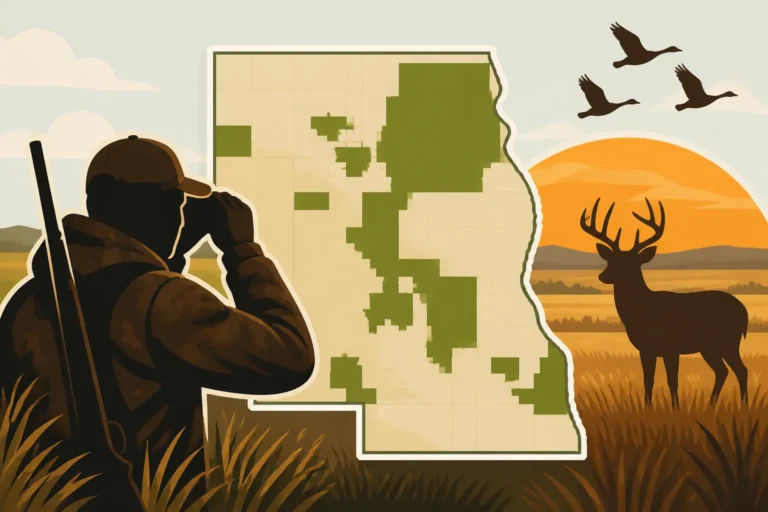
The biggest challenge with PLOTS land near a city is often finding tracts that aren't already heavily pressured. Many hunters will drive right by smaller, less obvious PLOTS areas, or ignore those that require a bit more walking. This is where your scouting and mapping tools become indispensable. Tools like onX Hunt can overlay PLOTS boundaries right onto a satellite map, letting you virtually scout these areas from your couch. You might discover a small, overlooked slough tucked behind a farmstead or a thin strip of cover along a drainage ditch that holds birds or deer, simply because it doesn't scream "prime hunting." Remember, the Scouting PLOTS Land With the ND Hunt App is your best friend here.
For pheasant hunters, PLOTS acres often include excellent upland habitat. You might find fields of tall grass, cattail sloughs, or even standing crops left unharvested specifically for wildlife cover. Walking North Dakota PLOTS Land for Pheasant is a classic approach, but doing your homework to locate less-traveled spots can really pay off. Deer hunters can also find success, particularly in river bottom PLOTS or those adjacent to heavier cover, as Finding PLOTS Ground Others Walk Past is a strategy that works well for whitetails too.
Wildlife Management Areas (WMAs)
The North Dakota Game and Fish Department manages numerous Wildlife Management Areas across the state, and some are certainly accessible from Grand Forks. These WMAs are acquired and managed specifically for wildlife production and public recreation, including hunting. They often represent some of the state's best remaining natural habitats and can be managed for a specific purpose, like waterfowl nesting or deer wintering areas.
WMAs can vary greatly in size and habitat, from expansive tracts of mixed grassland and woodlands to smaller parcels primarily focused on wetland preservation. Near Grand Forks, you're more likely to encounter WMAs with a strong emphasis on waterfowl and upland birds, but many also hold healthy populations of white-tailed deer. The benefit of WMAs is that they are generally well-marked and offer guaranteed public access, though this often means higher hunter pressure, especially on opening weekends.
Successful hunting on WMAs requires careful consideration of the specific WMA’s layout and rules. Some might have special regulations or access points. Always consult the North Dakota Game and Fish website for specific WMA maps and any localized rules. Knowing the boundaries and understanding the habitat within a WMA can help you anticipate game movement and avoid crowded areas. Don't be afraid to walk a little further than most to get away from the easy access points.
Waterfowl Production Areas (WPAs)
Waterfowl Production Areas are federally managed lands specifically established to conserve wetlands and associated uplands for waterfowl breeding, nesting, and migration. The prairie pothole region, which extends into the Grand Forks area, is dotted with these crucial habitats. While their primary focus is waterfowl, WPAs often provide excellent hunting opportunities for pheasants, and even deer, especially in the upland edges or thicker cover surrounding the wetlands.
Hunting WPAs near Grand Forks can be incredibly rewarding for waterfowl enthusiasts. You can find everything from small, isolated potholes perfect for a solo Jump-Shooting a North Dakota Prairie Pothole adventure, to larger wetlands ideal for setting up Decoy Spreads for Prairie Pothole Mallards. Be mindful that WPAs are often unstaffed and require self-reliance, so always be aware of your surroundings and any specific federal regulations that might apply. They're a critical part of the North Dakota Waterfowl on the Prairie Pothole Flyway.
Beyond birds, it's not uncommon for white-tailed deer to use the thick cover found in and around WPAs for bedding and security, especially during hunting season. A strategic hunter might find success by scouting the edges of these areas for deer trails or by targeting the upland grass adjacent to water for pheasants. Remember, while waterfowl is in the name, these areas are diverse ecosystems. Keep an eye out for opportunities beyond the ducks and geese. Hunting a Waterfowl Production Area for Deer can be surprisingly effective.
State School Lands
North Dakota also has vast tracts of State School Lands, which were originally granted by the federal government to support public education. These lands are generally open to public hunting, though they are managed by the Department of Trust Lands, not Game and Fish. The key takeaway here is that while they are publicly accessible, they don't always have the same level of habitat management as a WMA or PLOTS tract might.
You'll often find State School Lands interspersed with private agricultural fields. They can be excellent for chasing pheasants, partridge, or deer, especially if they contain decent cover or are adjacent to prime food sources. The critical factor with State School Lands is accurate identification. They are marked on land plat maps and can be easily identified using mapping apps like GoHunt or onX Hunt, which overlay land ownership data.
The main challenge with State School Lands is ensuring you're actually on them and not accidentally trespassing on private property, which can sometimes be difficult due to their scattered nature. Always double-check your location with a reliable mapping tool. These lands rarely have the same level of physical signage you’d expect on a WMA or PLOTS area, so the onus is on the hunter to know exactly where they are.
Here’s a quick overview of these public land types:
| Public Land Type | Primary Game Focus | Typical Grand Forks Habitat | Key Access Consideration |
|---|---|---|---|
| PLOTS | Deer, Pheasant, Waterfowl, Small Game | Crop edges, shelterbelts, sloughs, grass | Check NDGF website/app for current maps; can be pressured |
| WMAs | Deer, Waterfowl, Upland Birds | Diverse; wetlands, timber, grasslands | Well-marked; check specific WMA rules; can be popular |
| Waterfowl Production Areas | Waterfowl, Pheasant, Deer | Wetlands, potholes, associated uplands | Federal land; respect regulations; great for bird hunting |
| State School Lands | Deer, Upland Birds, Small Game | Mixed with agriculture, scattered cover | Requires accurate map interpretation; minimal signage |
Strategies for Success on Grand Forks Public Ground
Hunting effectively near Grand Forks means embracing a strategic mindset. It's not about stumbling into game, but about deliberate planning, intelligent use of technology, and adapting your tactics to the specific environment.
Leveraging Technology for Scouting and Navigation
In an area with fragmented public land and wary game, modern mapping apps are absolutely non-negotiable. Services like onX Hunt and GoHunt provide invaluable tools for pre-season scouting and in-field navigation. Before you even set foot in the field, you can use these apps to:
- Identify Public Land Boundaries: Precisely locate PLOTS, WMAs, WPAs, and State School Lands. This is perhaps the most critical function, preventing trespass and ensuring you're legally hunting.
- Analyze Topography and Habitat: Even in flat country, subtle elevation changes, drainage patterns, and vegetation types are visible on satellite imagery. You can pinpoint shelterbelts, draws, or dense cattail sloughs that might hold game. Look for areas with diverse habitat edges, as these are often prime travel corridors.
- Locate Access Points and Parking: Plan your entry and exit routes to minimize disturbance and identify legal parking. This is especially important on smaller parcels where parking might be limited to section line roads.
- Track Your Movement: In the field, these apps let you see your current location relative to boundaries, drop waypoints for game sign, and track your path, making it easier to navigate unfamiliar terrain and stay oriented.
By thoroughly scouting online, you can eliminate unproductive ground and focus your limited hunting time on areas with the highest potential, even before you leave Grand Forks.
Targeting Specific Species with Local Tactics
Different game animals require different approaches, especially when hunting close to human activity.
For white-tailed deer, think about pressure and cover. Whitetails near Grand Forks will quickly learn to move under the cover of darkness or utilize the thickest, most overlooked pockets of habitat during daylight hours. Focus on river bottoms, dense shelterbelts, unharvested standing corn fields, or deep sloughs that offer security. Hunting a Standing Corn Field for Deer or looking for Late-Season Food Sources for North Dakota Whitetails are proven tactics. Consider hunting the edges of agricultural fields early and late in the day, or still-hunting through thicker cover during midday. Using a ground blind, especially one brushed into a field edge, can be highly effective in these open environments.
Pheasant and upland bird hunting near Grand Forks often revolves around walking cover. Look for PLOTS or WMAs with good grass, cattail sloughs, or the edges of dense shelterbelts. A well-trained dog can be a huge asset in flushing birds from thick cover. Try Working a Shelterbelt for Roosters or walking larger blocks of CRP grass. Don't overlook smaller, isolated patches of cover that other hunters might pass up, especially later in the season. These can hold surprising numbers of birds that have been pushed around.
For waterfowl, the Grand Forks area is right in the heart of the prairie pothole region. This means abundant opportunities if you can find open water and secure a good hide. Look for WPAs, WMAs, or PLOTS with wetlands. Scouting is paramount here to identify where birds are feeding and resting. Layout blinds can be essential for hunting cut fields, while portable blinds work well on slough edges. Pay attention to migration patterns and weather fronts, as these heavily influence bird movement. Decoying Divers on North Dakota's Lake Sakakawea is a technique for larger water, but small potholes still offer great opportunities.
Adapting to Hunter Pressure and Timing
The reality of public land hunting near Grand Forks is that you will encounter other hunters. To maximize your success and enjoyment, you need a strategy to mitigate this pressure.
- Hunt Midweek: If your schedule allows, hunting on Tuesday, Wednesday, or Thursday can dramatically reduce the number of other hunters you encounter. Game animals, especially deer, quickly learn to avoid areas with heavy weekend activity.
- Go Early, Stay Late: Be the first one in and the last one out. Animals are often most active during the low-light hours of dawn and dusk. This applies whether you're deer hunting a Shelterbelt Edge for Deer or waiting for ducks to fly into a pothole.
- Walk Further: Many hunters stick close to their vehicles. If you're willing to walk an extra half-mile or even a mile into a public parcel, you'll often find less disturbed areas and more relaxed game. This is particularly true for larger WMAs or extensive PLOTS tracts.
- Hunt During Inclement Weather: While not always pleasant, a light rain, steady snow, or even a brisk wind can deter fair-weather hunters, leaving more ground for you. Deer, in particular, often become more active during certain weather changes. Hunting After a Hard Prairie Winter or Hunting Into a December Cold Snap can be prime times for resilient hunters.
By combining detailed scouting with the right tactics and understanding how to navigate hunter pressure, you can absolutely find rewarding hunting experiences on public ground near Grand Forks. It takes effort, but the satisfaction of finding success in these environments is truly special.
Disclaimer
This article is for general informational purposes only and does not constitute professional advice. Laws, prices and regulations vary by location and change over time. Consult a qualified professional for guidance on your specific situation.