What North Dakota Trespass Law Requires
It’s a scenario every hunter dreads: you’re deep into a promising stalk, the wind is right, and then you realize the deer you’re after just crossed onto land that might be private. Or perhaps you’re planning a hunt and staring at a map, unsure if that seemingly open field actually requires permission. Navigating property lines and understanding landowner rights can feel like a minefield in North Dakota, but this guide is here to untangle the complexities of trespass law, ensuring your hunt stays legal, ethical, and stress-free.
Understanding North Dakota's Posted Land Laws
The vast, open landscapes of North Dakota can be deceptive. What looks like wide-open public access might, in fact, be private land, and knowing the difference before you step foot on it is absolutely crucial. Misunderstanding "posted" can quickly turn a great day afield into a legal headache.
What "Posted" Really Means on the Prairie
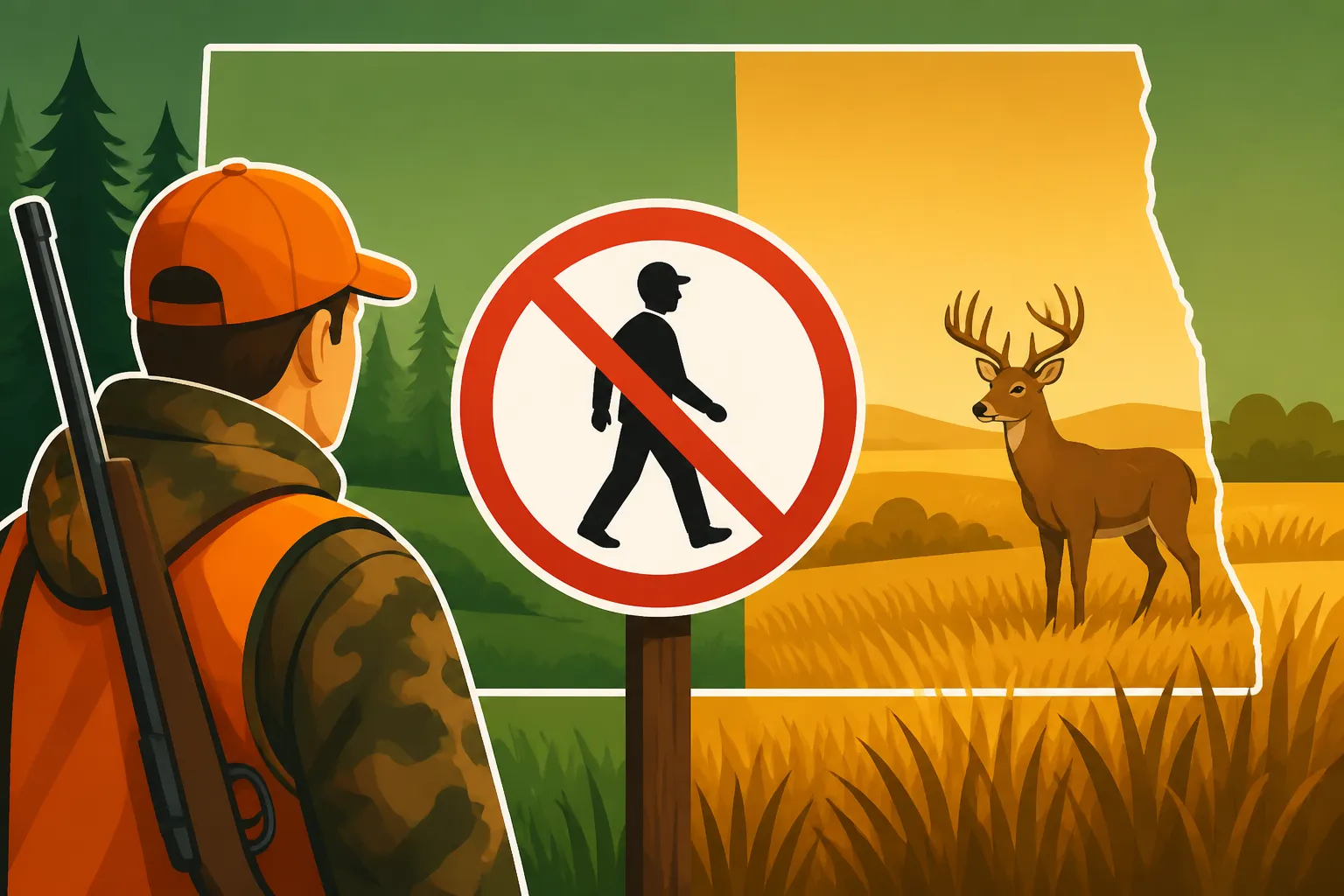
In North Dakota, "posted" isn't just a suggestion; it's a legal declaration of private property. However, what constitutes legally posted land has very specific definitions. It’s not enough for a single, weathered sign to be stuck on a fence post every mile or so. The law specifies that land is considered legally posted if there are signs conspicuously placed at all corners of the property and at intervals of not more than 880 feet (one-half mile) along all exterior boundaries. These signs must be at least 11 by 14 inches in size, contain the words "No Hunting" or "No Trespassing," and must include the name of the owner, tenant, or occupant. They also need to be legible from the outside of the boundary.
This means you can't just assume that because you don't see a sign, the land is open. Many landowners choose not to post their property at all, and it is still private land where hunting without permission is trespassing. The burden of knowing whose land you're on, and if it's open for public use, often falls squarely on the hunter. Imagine you're driving down a gravel road, scouting for North Dakota Deer Population Estimate, and you see a beautiful patch of cattails that looks like prime pheasant cover. If it's not posted according to the strict guidelines, it's still private, and you'd be breaking the law to hunt it without explicit permission. Always assume land is private unless it's clearly marked as public, or you have explicit permission. For more details, you might want to look into What Counts as Posted Land in North Dakota.
The Importance of Written Versus Verbal Permission
When it comes to getting permission to hunt on private land in North Dakota, you have a couple of options: verbal or written. While verbal permission is legally binding if given, written permission is always the superior choice, offering protection for both you and the landowner.
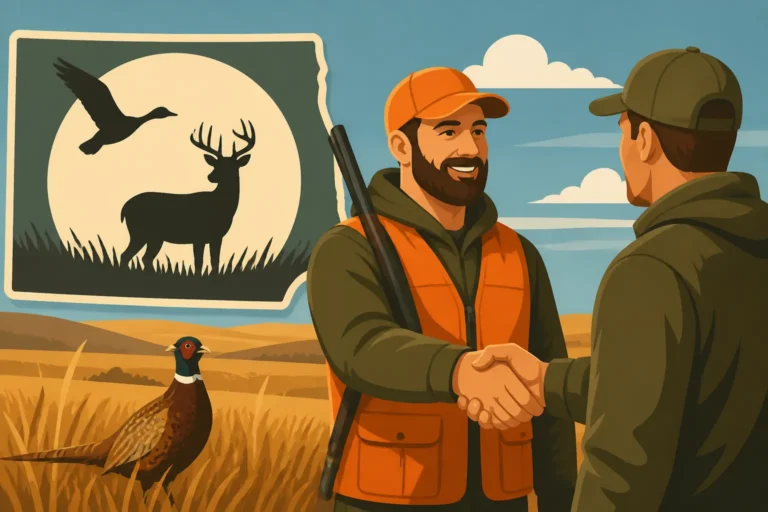
Verbal permission might be as simple as a handshake agreement with a farmer you've known for years, or a quick phone call where they say, "Sure, come on out." While this is often sufficient for established relationships, it leaves a lot open to interpretation if there's ever a dispute. What if the landowner forgets they gave you permission, or a new tenant moves in who isn't aware of the agreement? What if you need to prove your permission to a game warden? In these situations, a verbal agreement offers no tangible proof.
Written permission, on the other hand, is a clear, undeniable record. It should ideally include the date, the specific land parcel, the names of those granted permission, the duration of the permission, and the landowner's signature. This clarity protects you from any misunderstandings or accusations of trespassing. It also protects the landowner by setting clear boundaries and expectations. For instance, if you're targeting White-Tailed Deer Across North Dakota on a farmer's woodlot, written permission can specify exactly which fields or timber blocks you're allowed to enter, and what dates you can hunt. It removes ambiguity and ensures everyone is on the same page. In many cases, especially for non-residents or when trying to gain access to highly sought-after private ground, landowners may even require written permission forms. It's truly a win-win, offering peace of mind for all parties involved. Consider exploring Do You Need Written Permission in North Dakota? for more context.
Navigating Private Land Without Express Permission
Even the most diligent hunters can find themselves in tricky situations near property lines. What happens if a wounded animal crosses onto private ground? Or if you accidentally step over a boundary without realizing it? Knowing how to react responsibly can make all the difference.
Retrieving Game from Private Land
This is perhaps one of the most stressful situations a hunter can face: you've made a good shot on a deer or a pheasant, and the animal runs or flies a short distance, only to drop dead (or appear to drop dead) on land you know is private and for which you don't have permission. Your first instinct is to go get it, but it's critical to pause and understand North Dakota's law regarding game retrieval.
Under North Dakota law, you cannot enter private land to retrieve wounded or killed game without first obtaining permission from the landowner or occupant. This means that no matter how close that trophy buck or limit of pheasants is, you must find the landowner, explain the situation, and ask for permission to enter their property. Trespassing, even to retrieve game, is still trespassing. If you're unable to contact the landowner, you should contact the North Dakota Game and Fish Department, who may be able to assist in making contact or advising on next steps. Entering without permission could result in fines, confiscation of your game, or even a hunting license suspension. It’s an incredibly tough pill to swallow if permission is denied or unattainable, but maintaining ethical conduct and respecting private property is paramount. It protects your hunting privileges and upholds the reputation of all hunters. The article Retrieving Game From Private Land in North Dakota provides further guidance on this specific challenge.
Accidental Trespass and How to Handle It
Let's face it, with acres upon acres of land, confusing fence lines, and dynamic mapping data, accidental trespass can happen to anyone. You might be deep in a draw Hunting North Dakota's Badlands Mule Deer Country or walking a CRP field for pheasants, and suddenly realize your mapping app shows you've crossed a property line without knowing it. How you handle this moment is crucial.
First and foremost, immediately stop hunting. Unload your firearm or secure your bow, and make yourself clearly visible. Do not try to sneak out or pretend you weren't there. Your next step should be to exit the private property the most direct and least intrusive way possible. If you can identify the landowner (perhaps through a quick check on your onX Layers for North Dakota Land Status or Using the PLOTS App Without Cell Service), try to make contact. Explain calmly and honestly that you believe you accidentally trespassed, that you're leaving immediately, and sincerely apologize. Most landowners appreciate honesty and a respectful approach, even if they're frustrated. If you simply leave without acknowledgment, you risk being seen as a deliberate trespasser, which can lead to far harsher consequences if observed by the landowner or reported to law enforcement. Acknowledging your mistake and demonstrating respect for private property can often de-escalate a potentially negative situation.
Tools and Tactics for Staying Legal and Respectful
In today's hunting world, technology can be your best friend when it comes to staying on the right side of property lines. Coupled with good old-fashioned communication skills, these tools and tactics empower you to hunt confidently and ethically.
Using Mapping Apps to Avoid Trespass
Gone are the days when a crumpled paper map and a compass were your only guides. Modern mapping applications have revolutionized how hunters navigate and understand land ownership, becoming indispensable tools for avoiding trespass. Brands like onX Hunt and GoHunt offer detailed satellite imagery overlaid with property boundaries, landowner names, and color-coded public land designations (like PLOTS, WMA, National Grasslands).
These apps allow you to plan your hunt meticulously beforehand. You can scout potential hunting areas from your couch, identify public access points, and see exactly where private land begins and ends. When you're in the field, your phone or GPS device becomes a real-time tracker, showing your position relative to these boundaries. This is especially useful when you're Hunting North Dakota's Missouri River Bottomland where property lines can be intricate due to meandering waterways, or when you're trying to differentiate between private fields and Scouting PLOTS Land Before Season. By checking your app frequently, you can ensure you stay on legal ground and avoid accidental trespass. Many also provide landowner contact information, making the "art of asking for permission" much easier. Remember, while these apps are powerful, they are tools, and should be used with common sense and always double-checked against physical signage where possible. Investing in one of these apps is a small price to pay for peace of mind and staying legal. You can also learn more about Finding North Dakota Property Lines using these kinds of tools.
The Art of Asking for Permission
While mapping apps are fantastic for identifying who owns the land, they don't give you permission. That still requires human interaction, and in North Dakota, asking for permission is an art form that can either open doors or slam them shut.
Tips for a Successful Approach:
- Timing is Key: Don't show up on opening day or during meal times. A weekday afternoon, when farmers might be less rushed, is often a good bet.
- Be Presentable and Polite: Dress respectfully, not in your hunting gear covered in mud. Speak clearly, introduce yourself, and state your purpose directly. "Hello, Mr./Ms. [Last Name], my name is [Your Name], and I was hoping to ask if you allow hunting for [species] on your land this season."
- Show Respect for Their Property and Livelihood: Understand that their land is their business and their home. Offer to help with chores, pick up trash, or close gates. Ask about their concerns – livestock, crops, other hunters. Let them know you'll treat their property like your own.
- Be Specific: Don't just ask to hunt "everywhere." Ask for specific areas you've scouted (perhaps with the help of your
onX Huntapp). "I noticed you have a shelterbelt along the north forty, and I was hoping to chase some pheasants there." - Offer Something in Return (Optional): Sometimes offering a portion of your harvest, or assistance with predator control (coyotes are a real problem for some ranchers) can sweeten the deal.
- Accept "No" Gracefully: If they say no, thank them for their time and move on. Don't argue or try to guilt-trip them. A polite "no" leaves the door open for future requests or positive interactions.
- Leave a Card: If you have a business card or a simple card with your name and phone number, leave it with them. This shows professionalism and gives them a way to contact you later.
Many hunters find success by building relationships over time. Start by offering to help, and hunting permission might follow later. Remember, you're not just asking for access; you're representing all hunters, and your behavior can either reinforce or break down the image of respectful sportsmen. For more in-depth advice on this, check out Knocking on Doors in North Dakota Farm Country.
| Permission Type | When to Use It | Pros | Cons |
|---|---|---|---|
| Verbal | Familiar landowners, quick requests, short-term access. | Quick and easy, common among established relationships. | No proof, prone to misunderstanding, less secure if disputes arise or landowners change. |
| Written | New landowners, extensive hunting plans, non-residents, for peace of mind. | Legal proof, clear terms, protects both hunter and landowner, ideal for formal arrangements. | Requires more effort upfront, might seem overly formal for casual requests. |
| Public Land | Always the default when no private land access is secured. | Legally accessible (within regulations), no landowner contact needed. | Can be crowded, regulations vary by specific public land type, may require more scouting. |
Consequences of Violating North Dakota Trespass Law
Ignoring property boundaries or failing to obtain permission isn't just a minor inconvenience; it carries significant legal and ethical weight in North Dakota. Hunters who disregard trespass laws face a range of penalties, and their actions can have far-reaching impacts on the hunting community as a whole.
Penalties for Trespassing While Hunting
In North Dakota, trespassing while hunting is not taken lightly. The specific penalties can vary depending on the severity of the offense, whether it's a first-time violation, and if other offenses (like hunting out of season or without a license) are involved. However, hunters can expect:
- Fines: These can range from a few hundred dollars to over a thousand, and may increase for repeat offenses.
- Forfeiture of Game and Equipment: Any game taken illegally, or even equipment used during the trespass (firearms, bows, vehicles), can be confiscated.
- License Revocation/Suspension: This is perhaps the most impactful consequence for a passionate hunter. Your hunting privileges can be suspended for a period of time, sometimes even permanently for serious or repeated violations. This means you wouldn't be able to purchase a North Dakota hunting license, or even hunt in other states that are part of the Interstate Wildlife Violator Compact.
- Criminal Charges: In more severe cases, especially if property damage occurs or there's a confrontation, trespass can escalate to criminal charges, leading to potential jail time or a criminal record.
It’s important to remember that ignorance of the law is generally not considered an excuse. The responsibility is on the hunter to know where they are and whose land they're on. A simple mistake can lead to very serious repercussions that affect your ability to hunt for years to come. For more information on legal consequences, refer to North Dakota Wildlife Violation Penalties.
The Ethical Imperative: Respecting Private Property
Beyond the legal ramifications, there's a profound ethical dimension to respecting private property in North Dakota. Hunting is a privilege, not a right, and that privilege is constantly under scrutiny. When hunters disrespect private land, it erodes the trust between landowners and the hunting community.
One hunter's irresponsible action—leaving gates open, driving off-road, littering, or knowingly trespassing—can lead to dozens of landowners closing their property to all hunters. They don't differentiate between the "bad apple" and the respectful hunter; they often just see "hunters" causing problems. This makes it incredibly difficult for everyone else to secure access, impacting future hunting opportunities for generations. Landowners in North Dakota are often incredibly generous, allowing access to their land for free. Abusing that generosity is not only illegal but a betrayal of trust that hurts the entire sporting community. Embracing the ethics of private land respect means actively seeking permission, treating the land better than you found it, and being a good ambassador for hunting. It's about preserving access for all, not just for your own immediate gratification. North Dakota Trespass and Permission Law outlines these principles further.
Disclaimer
This article is for general informational purposes only and does not constitute professional advice. Laws, prices and regulations vary by location and change over time. Consult a qualified professional for guidance on your specific situation.