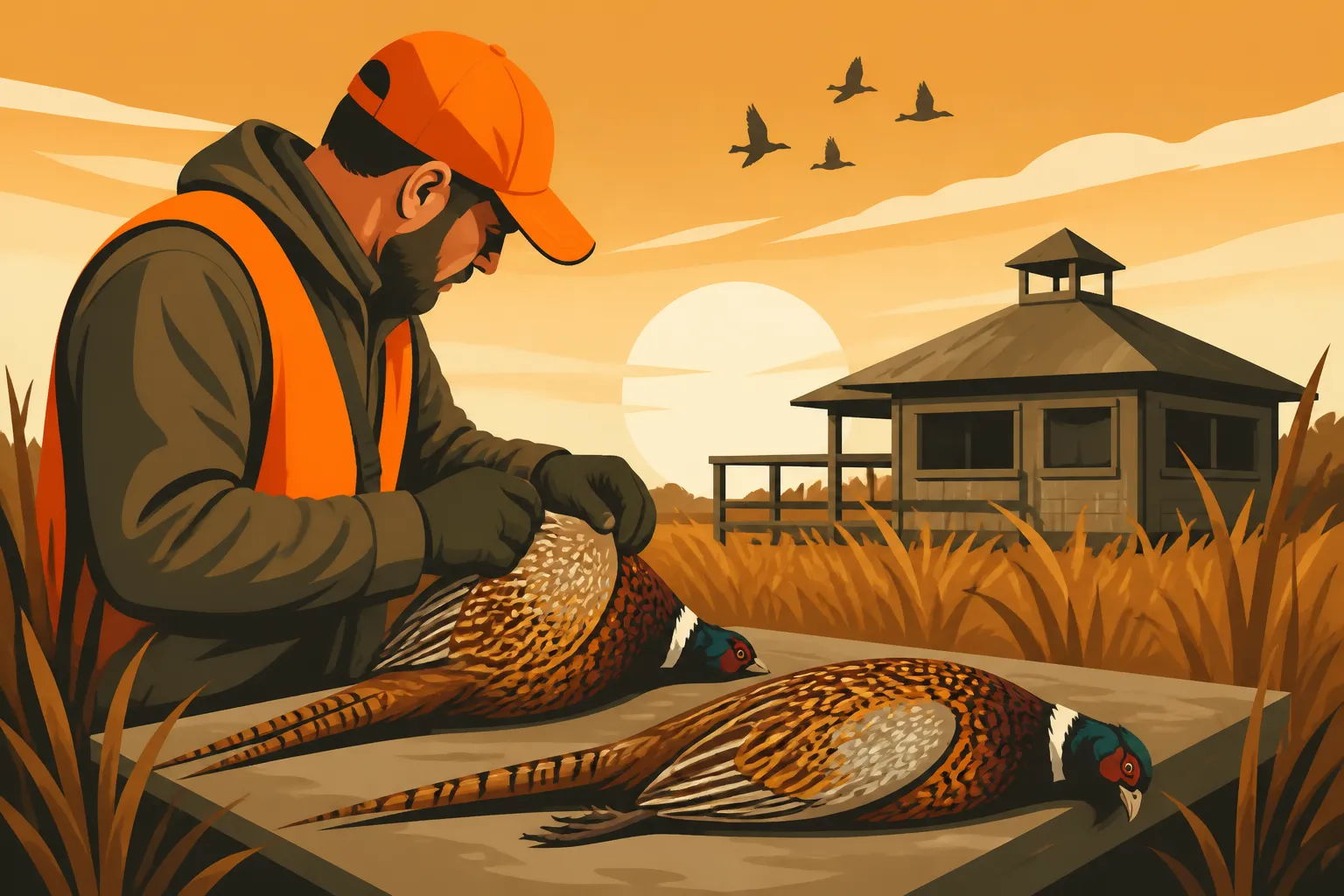
Processing Birds Near a Pheasant Lodge
You've just finished a fantastic day in the field, maybe walking countless miles through prime cover, your dog locked on point, or flushing a wily rooster from a cattail slough. The thrill of the retrieve, the heft of the bird in your hand—it’s what we live for. But then reality sets in: you have a limit of beautiful pheasants, and now you have to figure out how to get them from feathered glory to table-ready perfection, especially when you're far from home base, staying at a North Dakota pheasant lodge. This guide will walk you through the often-overlooked, but absolutely crucial, steps and options for processing your birds right there, or nearby, ensuring your hard-earned harvest is treated with the respect it deserves.
The Post-Hunt Predicament: Why Bird Processing Matters
After a long day of Walking a Pheasant Field at Midday or Running a Pointer Through CRP Grass, often covering considerable ground under North Dakota's vast skies, you're tired. Your feet might ache, your dog is likely sacked out by the fireplace, and the last thing many hunters want to do is spend hours plucking or breasting out birds. Yet, proper game care is paramount. It's not just about adhering to ethical hunting principles; it's about preserving the quality of the meat, preventing spoilage, and ensuring that delicious wild game makes it to your dinner plate tasting its very best.
Preserving Quality and Flavor
Imagine working tirelessly for a rooster, only for its meat to be ruined by improper handling. It's a hunter's nightmare. The moment a bird is harvested, the clock starts ticking. Warm temperatures can quickly degrade meat quality, leading to off-flavors or even spoilage. This is especially true for pheasants, which have a richer, more delicate flavor than some other upland birds. Rapid cooling is essential, and how you process them – whether you pluck the whole bird, breast them out, or skin them – directly impacts texture, moisture, and ultimately, the eating experience. You want that pheasant to taste like the wild prairie, not like an afterthought.
Navigating Regulations and Transport
North Dakota, like most states, has specific regulations regarding the transport of game birds. These rules are designed to prevent the spread of disease and ensure that birds are legally harvested. For instance, often a certain amount of "proof of species" – a wing, head, or leg – must remain attached to the bird until it reaches your permanent residence or a meat processor. This can influence your decision on whether to breast birds immediately at the lodge or keep them whole for transport to a local processor. Understanding these nuances before you even head out for your hunt, perhaps by reviewing North Dakota Pheasant and Upland Season Rules, can save you a lot of headaches later on. Knowing what's required for transport is just as important as knowing how to pull the trigger.
Your Options for Feathered Friends: DIY vs. Professional Processors
When it comes to turning a harvested pheasant into a meal, hunters generally have two main routes: doing it yourself (DIY) or utilizing a professional game processor. Both have their merits and drawbacks, and the best choice often depends on your resources, time, skill level, and personal preference while you're enjoying your North Dakota Deer Camp Traditions or simply unwinding after a long pheasant day.
Doing It Yourself at the Lodge
Many pheasant lodges, especially those that cater to the self-sufficient hunter, offer basic facilities for DIY bird processing. This might range from a designated outdoor cleaning station with running water to a more equipped room with stainless steel tables.
- Breasting Out: This is by far the most common DIY method, particularly for those pressed for time or who prefer to minimize mess. It involves removing only the breast meat from the bird. It's relatively quick, efficient, and leaves you with a compact package of prime meat. The downside is you leave behind the legs and thighs, which, though smaller, contain delicious meat often great for stews or casseroles. Many hunters find this a reasonable trade-off after a long day. You'll typically need a sharp knife, a cutting board, and a place to discard the carcass.
- Skinning and Deboning: A step beyond breasting, skinning the bird and deboning the legs and thighs yields more meat than just the breast, without the intensive labor of plucking. While quicker than full plucking, it still takes more time and skill than simply breasting. This method is excellent if you want to use the dark meat but don't want to deal with feathers. The meat will be "cleaner" and easier to work with than a plucked bird with skin, as there's no shot or pin feathers to contend with.
- Full Plucking: This is the most traditional, and arguably the most labor-intensive, method. Plucking a pheasant by hand is a skill that takes practice and patience. The reward, however, is a whole bird with skin on, which offers a different culinary experience, especially when roasting. Some lodges might have a rudimentary plucking machine or scalding pot set up, which can significantly reduce the effort. If you're staying at a lodge with a dedicated processing area, you might find this feasible, but it's a serious time commitment, especially if you've shot a full limit.
When considering DIY at the lodge, think about the tools you brought, the facilities available, and how much energy you have left. Sometimes, even if you can do it yourself, the convenience of professional help is a welcome luxury. It's always a good idea to inquire about the lodge's processing facilities when you're Booking a Guided North Dakota Pheasant Hunt or looking into What's Included in a Pheasant Lodge Stay.
Utilizing Local Professional Game Processors
North Dakota, being a hunting mecca, has its fair share of local meat lockers and game processors, particularly in towns surrounded by prime pheasant country. These businesses specialize in turning wild game into freezer-ready packages.
- Full Service Processing: A professional processor will typically handle everything: skinning or plucking, deboning, grinding (if desired), and packaging the meat into vacuum-sealed or freezer-paper-wrapped portions. They understand the regulations and can ensure your birds are legal for transport. This option offers maximum convenience and professional-grade results. You drop off your birds, and pick up neatly packaged meat ready for the freezer. The cost, of course, is a factor, but for many, it's a worthwhile investment in time and quality.
- Customization: Many processors offer various options, from simply breasting and packaging to plucking the whole bird, or even turning portions into sausages or other specialty products. If you have specific culinary plans, a professional processor can often accommodate them.
- Finding a Processor: If your lodge doesn't have a direct recommendation, a quick search for "game processor near [lodge location]" is a good starting point. Online hunting communities or platforms like BookYourHunt, which often have reviews or listings for services around popular hunting areas, can also be helpful resources for finding reputable processors. Sometimes, talking to locals in the nearest small town can yield the best, most trusted recommendations.
Hybrid Approaches
Sometimes, the best solution is a mix of both. You might breast out birds at the lodge to quickly cool them down and reduce bulk, then take the breasts to a local processor for professional vacuum-sealing and final packaging. Or, if you only shot a couple of birds, you might breast them yourself, but for a full limit, you might opt for a professional service. The key is flexibility and planning.
Making the Right Choice: Factors to Consider for Your Pheasant Harvest
Deciding how to process your pheasants isn't a one-size-fits-all answer. Several factors should play into your decision, ranging from practical logistics to your personal hunting philosophy.
Time and Convenience
This is often the biggest driver. After a full day of hunting, how much time and energy do you realistically have? If you're on a multi-day hunt with early mornings and late nights, spending a few hours processing birds each evening might not be appealing. Professional processing offers unparalleled convenience, allowing you to maximize your time in the field or relaxing at the lodge. If you’re self-guided and on a tight schedule, maybe hunting North Dakota Public Land Hunting Hours right up until dark, saving time on processing can be a game-changer.
Equipment and Facilities
What tools does your lodge provide? Do you have your own sharp knives, cutting boards, and a cooler with ice? Does the lodge have a dedicated cleaning area with good lighting and easy water access? If you plan to pluck, do you have a scalding pot or a plucker? Lack of proper equipment can make DIY processing a frustrating, messy, and potentially unsanitary experience. A clean, well-lit space, even if basic, is crucial for hygienic processing.
Cost Considerations
Doing it yourself typically only incurs the cost of your supplies (knives, bags, ice), which is minimal. Professional processing, on the other hand, will have a fee. These fees can vary based on the services chosen (plucking vs. breasting, packaging type, specialty products) and the weight of the birds. While North Dakota processors maintain competitive rates, it’s always wise to call ahead for current pricing if you’re considering this option. Think about whether the value of your time and the professional quality justifies the expense.
Desired End Product
How do you plan to cook your pheasants? If you primarily pan-fry breasts, then simply breasting them out is perfectly sufficient. If you dream of a beautiful roasted pheasant with crispy skin, then a whole, plucked bird is what you'll want. The skin adds flavor and moisture during cooking. Consider your culinary goals and choose the processing method that best supports them. A resource like GoHunt, while primarily focused on big game, can sometimes offer community insights into preparing different game species, which might influence your processing choice.
Local Health and Safety Practices
When choosing a commercial processor, inquire about their health and safety practices. A reputable processor will maintain a clean facility, follow proper cooling protocols, and have hygienic packaging procedures. This ensures your meat is safe and of the highest quality. Don't be afraid to ask questions; they should be transparent about their operations.
Care Beyond the Clean: Transporting Your Game Home
Once your birds are processed, whether by your own hand or a professional, the next critical step is ensuring they get home safely and legally. This involves proper cooling, packaging, and adherence to transportation regulations.
Chilling and Freezing
Immediate and proper chilling is non-negotiable for preserving meat quality. If you've breasted birds at the lodge, get them into a cooler with ice (or ideally, ice water slurry for rapid cooling) as quickly as possible. Once thoroughly chilled, transfer them to freezer bags or vacuum seal them. If you’re leaving them whole for a processor, get them to the facility promptly. For longer journeys home, freezing is usually the best option. Most lodges will have freezer space available, or you can retrieve your professionally processed, frozen birds from a local locker. Frozen birds, properly packed, can last for many hours, even a day or two, in a quality cooler without significant thawing, especially when traveling long distances after a successful trip pursuing North Dakota's Long Archery Season.
Packaging for the Journey
Good packaging is crucial to prevent freezer burn and maintain hygiene. Vacuum sealing is the gold standard as it removes air, which is the primary cause of freezer burn. If vacuum sealing isn't an option, use heavy-duty freezer bags or wrap meat tightly in freezer paper, ensuring no air pockets. Label everything clearly with the date and contents (e.g., "Pheasant Breasts – 10/26").
Adhering to Transport Regulations
Remember those proof-of-species regulations we talked about earlier? Ensure that if you're transporting whole, unprocessed birds, you're following North Dakota's rules (e.g., leaving a wing attached). If you’ve had birds professionally processed and packaged, the processor will generally handle this compliance. However, it's always your responsibility as the hunter to understand and abide by the law, especially when crossing state lines. Check the regulations for North Dakota and any states you'll be traveling through. A quick look at the North Dakota Migratory Bird Certification rules will illustrate the type of detailed regulations that exist for game bird transportation.
| Aspect | DIY at Lodge | Commercial Processor |
|---|---|---|
| Convenience | Low (requires effort post-hunt) | High (drop off, pick up) |
| Cost | Low (supplies only) | Moderate to High (service fees) |
| Time Investment | High (your time) | Low (minimal hunter time) |
| Equipment Req. | Basic (knife, board, cooler) or Specialized (plucker) | None (they have it all) |
| Meat Yield | Varies (breast only vs. whole bird) | Often maximizes yield (deboning expertise) |
| Quality/Package | Depends on skill/materials; can vary | Professional, vacuum-sealed, consistent quality |
| Regulatory Ease | Hunter responsible for compliance | Processor typically ensures compliance |
| Flexibility | High (process as you go) | Limited (business hours, turnaround times) |
Making the Most of Your Harvest: Beyond the Breast
While pheasant breasts are undoubtedly delicious, don't overlook the other parts of the bird. The legs and thighs, though smaller, are packed with flavor and are fantastic slow-cooked. The carcass, even after breasting, can be used to make a rich, flavorful stock—perfect for risottos or soups.
Many lodges and outfitters understand the challenges of bird processing for visiting hunters. Don't hesitate to ask questions when you're booking or arrive. They might have recommendations for local processors, offer processing services themselves (sometimes for an additional fee), or at least provide suitable space and disposal options. Some lodges pride themselves on their ability to offer comprehensive services, making the end of your hunt as stress-free as the beginning. Whether you're hunting early-season birds or employing Late-Season Pheasant Tactics in Deep Snow, ensuring your birds are properly cared for is the final, vital step in a successful hunting trip.
Disclaimer
This article is for general informational purposes only and does not constitute professional advice. Laws, prices and regulations vary by location and change over time. Consult a qualified professional for guidance on your specific situation.