Hunting the Standing Rock Fall Turkey Option
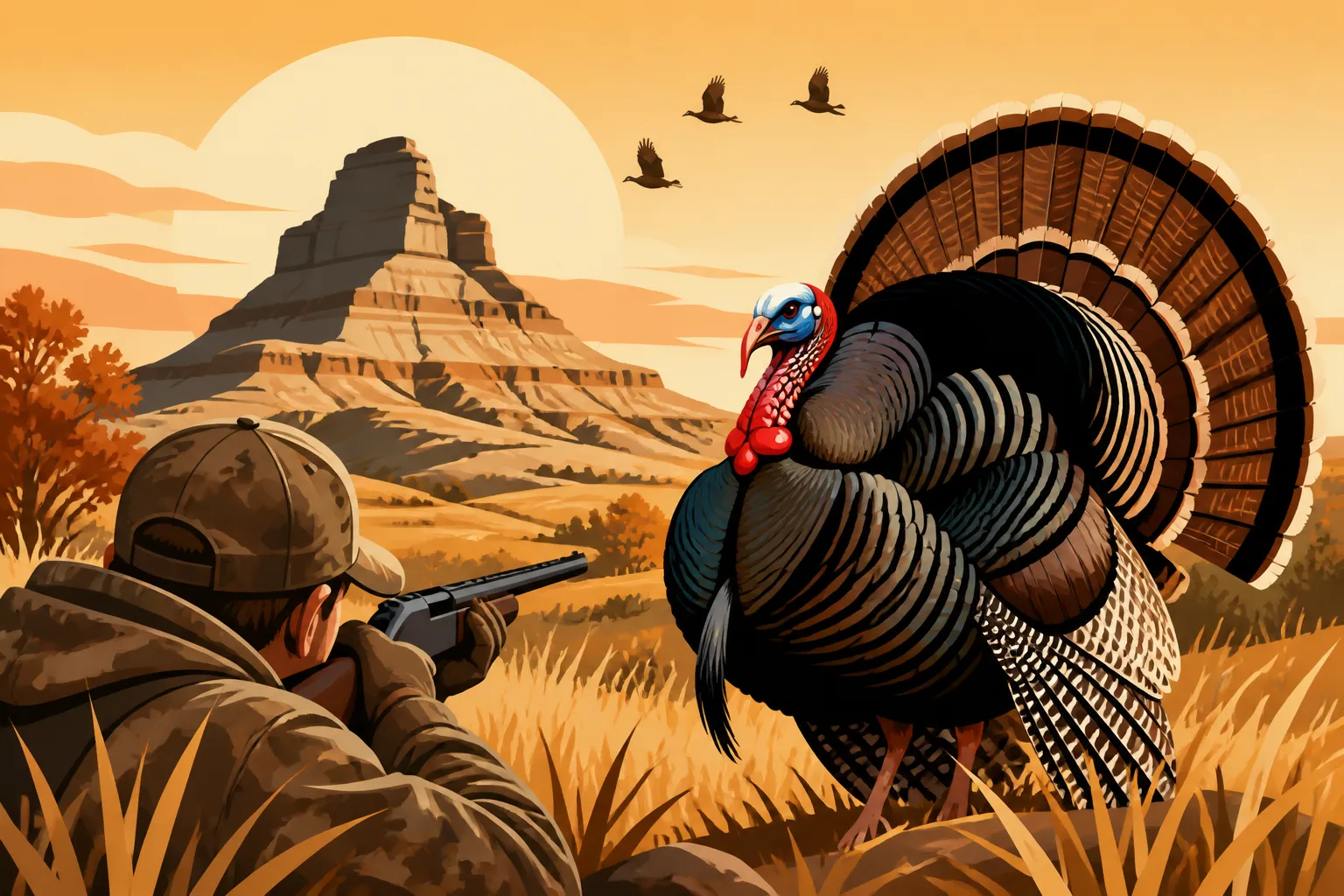
The pursuit of wild turkeys in the fall can be a rewarding challenge, but when you venture into lands with unique regulations, like the Standing Rock Indian Reservation, the whole process can feel like deciphering a complex puzzle. Hunters often grapple with understanding separate licensing requirements, distinct access rules, and how these tribal regulations intersect, or don't, with state guidelines. This guide is designed to cut through that confusion, providing clear, actionable insights for successfully hunting the Standing Rock fall turkey option.
Understanding the Standing Rock Fall Turkey Opportunity
Hunting on the Standing Rock Sioux Reservation offers a distinct experience, particularly for fall turkey. It’s not just another public land opportunity; it’s a chance to engage with a different set of rules and a unique landscape, often holding healthy populations of wild turkeys. Many hunters find the prospect daunting, fearing they'll accidentally violate a rule or misinterpret access, but with proper preparation, it's an incredibly enriching hunt.
Why Standing Rock Stands Apart for Turkey Hunting
The Standing Rock Sioux Tribe maintains sovereign authority over hunting and fishing within its reservation boundaries. This means that while North Dakota state hunting regulations apply to most of the state's land, a completely separate set of rules governs hunting on the Standing Rock Reservation. For fall turkey hunters, this is particularly significant because it means you'll need a tribal license and permit, regardless of whether you also possess a North Dakota state license. This separate jurisdiction often translates to different season dates, bag limits, and even approved hunting methods than what you might find in neighboring state units, creating a unique challenge and opportunity for those willing to learn the ropes. It's not uncommon for these areas to hold strong turkey populations dueishing to less overall pressure or specific tribal wildlife management practices.
One of the key aspects that sets Standing Rock apart is the direct relationship you develop with the tribal Game and Fish Department. Unlike applying through a state lottery system, the process for acquiring a tribal permit is more localized and often involves direct contact with tribal offices. This isn't just a transactional exchange; it's an introduction to respecting tribal sovereignty and understanding local customs, which are paramount to a positive hunting experience. Hunters must understand that they are guests on tribal lands, and respectful behavior, adherence to all tribal laws, and appreciation for the land and its people are expected above all else. This distinct cultural and legal framework is precisely what makes the hunt memorable for many.
Furthermore, the habitat within the Standing Rock Reservation provides excellent turkey country. You'll find a mosaic of river bottomlands along the Missouri River, expansive agricultural fields, and pockets of timber and brushy draws. This diverse landscape offers ideal roosting sites, ample food sources, and plenty of cover for turkeys, often leading to robust flocks. The isolation of some areas, combined with targeted management by the Standing Rock Game and Fish, can create a hunter's paradise, especially for those seeking a less crowded experience than typical public lands might offer. Understanding these unique factors is the first step toward a successful and respectful hunt on tribal grounds.
Fall Turkey Behavior and Habitat on the Reservation
Fall turkeys, especially on the Standing Rock Reservation, present a different challenge than their spring counterparts. Gone are the days of locating a booming gobbler on the roost and trying to call him into range during the breeding season. In the fall, turkeys are typically in larger family groups, often consisting of hens and their poults, or bachelor groups of mature gobblers. Their primary focus shifts from breeding to feeding and preparing for winter, making food sources and thermal cover critical to locating them. You'll often find these birds ranging across agricultural fields, particularly those with harvested grain like corn or sunflowers, or in the dense timber pockets that line river and creek bottoms, providing both food and shelter.
The vastness of the Standing Rock lands means that understanding specific habitat types is crucial for finding turkeys. Along the Missouri River corridor, which forms a significant portion of the reservation's eastern boundary, you'll encounter dense riparian timber that serves as prime roosting and foraging habitat. These areas are often thick and challenging to navigate, but they can hold large flocks of birds seeking protection from the elements and a steady supply of mast crops or insects. Moving away from the river, the landscape transitions into rolling hills, native prairie, and cultivated fields. Turkeys in these areas will often use shelterbelts, abandoned farmsteads, and brushy coulees for cover and travel lanes, especially when moving between feeding and roosting locations.
Successful fall turkey hunting here often involves extensive scouting, either physically or by utilizing mapping tools like GoHunt, to identify these key habitat components. Look for signs such as fresh tracks in dusty field edges, droppings, and scattered feathers. Focus on areas where food sources (like waste grain or wild berries) are abundant and where there's easy access to roosting trees, typically large mature cottonwoods or hardwoods. Understanding that turkeys will move throughout the day, often feeding in fields during morning and late afternoon and retreating to cover during midday, helps inform your hunting strategy. Recognizing these patterns within the specific Standing Rock habitat is essential for putting yourself in the right place at the right time.
Navigating Licensing and Regulations for Standing Rock Turkeys
The biggest hurdle for many hunters considering the Standing Rock fall turkey option is the distinct set of licensing and regulatory requirements. It’s easy to get tangled up in what applies where, especially when accustomed to state-only rules. However, once you understand the basic framework, the process becomes much clearer and more manageable.
Acquiring Your Standing Rock Tribal Permit
To hunt fall turkey on the Standing Rock Sioux Reservation, the first and most crucial step is to obtain a tribal hunting permit from the Standing Rock Game and Fish Department. This is non-negotiable and replaces any North Dakota state turkey license you might hold for hunting within reservation boundaries. The tribe issues its own tags, and these permits are specific to tribal lands. You generally cannot purchase these online through the state's portal; instead, you’ll need to contact the Standing Rock Game and Fish Department directly. Their office, typically located in Fort Yates, North Dakota, is the primary point of contact for information and permit issuance. It’s always best to call ahead or check their official website for the most current information regarding application periods, required documents, and payment methods.
The application process typically involves filling out a form, providing identification, and paying the applicable fee. These fees can vary for tribal members, non-tribal residents of North Dakota, and nonresidents, so be sure to clarify your specific category. Don't assume your state hunting license or hunter education card is sufficient; while hunter education is often required by the tribe for non-tribal members, it's distinct from the tribal hunting permit itself. It's a good idea to complete North Dakota Hunter Education Requirements beforehand if you haven't already. You'll want to confirm which forms of payment are accepted and if there are specific hours for obtaining permits. Remember, you are operating under a sovereign nation's laws, so respect for their process and personnel is paramount.
It's also important to inquire about the specific season dates and bag limits at the time of purchase, as these can differ from the state’s general North Dakota Fall Turkey Season Rules. The tribal Game and Fish Department will provide you with a copy of their regulations, which you must carry with you while hunting. These documents often outline acceptable weapons, shooting hours, and any specific areas that might be off-limits or have special restrictions. Pay close attention to these details, as ignorance of the law is never an excuse. Understanding the Standing Rock Fall Turkey Tag Numbers will give you an idea of the availability and how competitive these tags might be in a given year.
Distinguishing Tribal Rules from State Regulations
This is where many hunters get tripped up, thinking a North Dakota state license allows them to hunt anywhere in the state. For the Standing Rock Reservation, this isn't the case. The tribe operates under its own jurisdiction. This means that if you are hunting within the exterior boundaries of the Standing Rock Reservation, you must abide by the Standing Rock Sioux Tribe's Game and Fish codes and possess the appropriate tribal license. Your North Dakota state license is valid only for lands outside these reservation boundaries. Conversely, a Standing Rock tribal permit is only valid on tribal lands and does not grant you permission to hunt elsewhere in North Dakota.
A common scenario might involve driving through reservation land to get to state land, or vice-versa. During this transit, if you are carrying hunting equipment, ensure it is properly cased and unloaded if tribal law requires it, even if state law might be more lenient. The key takeaway is to know exactly where you are at all times. Using a mapping app like GoHunt with tribal boundary overlays can be incredibly helpful for this, ensuring you don't inadvertently cross into the wrong jurisdiction without the correct permits. It's not just about avoiding a ticket; it's about respecting the sovereignty of the tribe.
This dual regulatory system extends to other aspects, such as North Dakota Blaze Orange Requirements. While North Dakota has specific requirements for gun seasons, the Standing Rock Tribe may have its own rules, or no rules, regarding blaze orange. Always consult the Standing Rock regulations specifically for these details. The tribal regulations will also cover things like methods of take, reporting requirements for harvested game, and possibly even rules about carrying firearms in vehicles. Before your hunt, ensure you have a clear understanding of all the tribal rules. If you have any doubts or questions, the Standing Rock Game and Fish Department is the authoritative source for clarification.
Important Notes on Access and Permission
Beyond licensing, access to hunting lands on the Standing Rock Reservation also operates under unique rules. While some tribal lands might be open for general hunting with a valid permit, much of the reservation is privately owned by tribal members or held in trust by the tribe. Unlike North Dakota's PLOTS (Private Land Open To Sportsmen) program, which designates specific private lands for public hunting, direct verbal or written permission is often required for hunting on privately owned tribal lands. Assuming that a tribal permit grants you carte blanche access to all lands within the reservation boundaries would be a grave mistake and a serious violation of tribal law and etiquette.
It is crucial to scout thoroughly and identify land ownership before your hunt. While mapping services can help identify public versus private parcels, directly contacting landowners for permission on tribal lands is always the best approach. This demonstrates respect and good faith, often leading to more positive interactions and successful hunts. Sometimes, tribal Game and Fish might have specific maps or guidelines indicating areas open to permit holders without additional permission, but this should never be assumed. Always ask, and if in doubt, err on the side of caution. Remember North Dakota Trespass and Permission Law rules generally do not apply here; tribal laws govern trespass.
Another aspect to consider is road access. Some roads within the reservation might appear public but could actually be private driveways or tracks leading to residences. Blocking these or driving off established paths without explicit permission is disrespectful and can lead to confrontation. When Scouting PLOTS Land With the ND Hunt App, remember that this app is for state PLOTS land; it will not show you specific tribal access points. For the Standing Rock, direct inquiry or local knowledge is often the key. Always close gates, pack out all your trash, and leave no trace, showing the utmost respect for the land and its people.
Essential Tactics for Fall Turkey Hunting on Tribal Lands
Fall turkey hunting on Standing Rock tribal lands requires a slightly different approach than spring hunting, with an emphasis on locating flocks, breaking them up, and calling them back together. Given the typical behavior of fall birds, these tactics are highly effective, especially when combined with a deep understanding of the local habitat.
Locating and Patterning Fall Turkey Flocks
The first, and arguably most important, step in successful fall turkey hunting is to locate where the birds are. Unlike spring, where gobblers announce their presence, fall birds are often quieter and more spread out. Scouting becomes paramount. Begin by identifying key food sources: harvested grain fields (corn, wheat, sunflower), areas with abundant acorns, or open fields with insect populations. Turkeys will spend a significant portion of their day foraging, so these feeding areas are excellent places to start. Look for fresh tracks, droppings, and scratch marks in the dirt. You can also use good optics to glass fields from a distance at dawn and dusk, watching for flocks moving to and from roosting sites.
Once you’ve identified potential feeding areas, focus on patterning the birds' movements. Where are they entering the field? Where are they exiting? Where are they going to roost? Fall turkeys will often use the same roosting trees or areas night after night, especially if undisturbed. These Roosting a Fall Gobbler the Night Before locations are often in large, mature timber along river bottoms or in dense shelterbelts. By observing their routines, you can anticipate their movements and set up an ambush. Remember that fall flocks are often large, sometimes dozens of birds, so their sign can be quite evident if you know what to look for.
Early morning and late afternoon are prime times for observation. If you can locate a flock feeding in a field, take note of the specific field or timber block. Return the next morning before dawn and listen. While they may not gobble like in spring, you might hear soft "tree yelps" or wing beats as they pitch down from the roost. A reliable mapping application like GoHunt can help you mark these locations and plan your approach for the next day, ensuring you're not walking blind into an area. The more time you spend scouting and observing, the higher your chances of success.
Breaking Up the Flock and Calling Them Back
One of the most effective and time-honored fall turkey tactics is to "break up the flock." Once you've located a group of turkeys, the goal is to spook them and scatter them in multiple directions. This can be done by running towards them, making loud noises, or simply positioning yourself to intercept them as they move. The key is to get them to scatter, making it difficult for them to immediately regroup. The natural instinct of a scattered fall turkey, particularly a young one or a hen, is to call out to re-establish contact with the rest of the flock. This is where your calling skills come into play.
After scattering the birds, find a concealed location, ideally near where the birds were scattered or along a likely route they might use to regroup. Give them about 15-30 minutes to settle down. Then, begin with soft, reassuring Calling a Fall Gobbler Flock calls like a lost hen yelp or a kee-kee run. The kee-kee run, which mimics a lost young bird, is especially effective in the fall. These calls are designed to sound like a lonely turkey trying to find its family, triggering a strong instinct in the scattered birds to respond and come investigate. You’re essentially playing on their social instincts and need for security within the flock.
Patience is crucial. Sometimes birds will respond quickly, other times it might take an hour or more. Listen intently for soft yelps or clucks in return. As birds get closer, their calls will become more frequent and louder. Be ready; fall turkeys, especially jakes and hens, can come in very quickly and silently. Always be aware of your surroundings, and be prepared to take a shot as soon as a bird comes into ethical range. This tactic relies heavily on your ability to mimic the calls of a lost bird and your patience to wait for them to respond.
Spot and Stalk in North Dakota's Fall Landscape
While breaking up a flock and calling is a classic fall tactic, Spotting Pronghorn From a Section Road and stalk methods can also be incredibly effective for fall turkeys, particularly in North Dakota's open landscapes and vast agricultural areas on the Standing Rock Reservation. This approach works best in areas where visibility is good, allowing you to locate birds from a distance without disturbing them. Instead of focusing on calling, the goal here is to use the terrain and available cover to physically get within shooting range of an unsuspecting flock.
Begin by driving or walking elevated points that offer wide views of fields, prairie, and timber edges. Use binoculars or a spotting scope (a GoHunt mapping app can help you identify high points) to meticulously scan for feeding or loafing turkeys. Once a flock is spotted, carefully assess their direction of travel, the available cover between you and them, and the wind direction. Wind is less critical than for big game, but it can still help mask your approach. The key is to use every dip, rise, fenceline, or patch of brush to conceal your movement.
The challenge of spot and stalk lies in maintaining concealment while closing the distance. Turkeys have incredible eyesight, and a single flicker of movement can send an entire flock running or flying. Move slowly, deliberately, and stop frequently to re-evaluate the birds' position. If they appear to be feeding away from you, that's your best opportunity to make ground. If they're moving towards you or staring in your direction, freeze and wait for them to change their focus. This method requires immense patience and a keen eye for terrain features, but it can be incredibly rewarding when you successfully outwit a sharp-eyed flock of fall turkeys.
Scouting and Accessing Standing Rock Hunting Areas
Successful hunting, especially on unfamiliar lands like the Standing Rock Reservation, hinges on thorough scouting and understanding access points. This isn't just about finding game; it's about respecting land ownership and navigating diverse terrain responsibly.
Utilizing Mapping Tools for Tribal Lands
While the North Dakota Game and Fish Department's PLOTS guide and apps are fantastic for state lands, they won't fully cover the complexities of the Standing Rock Reservation. However, modern mapping tools like GoHunt, OnX Hunt, or even Google Earth can still be invaluable. These platforms often allow you to overlay private and public land boundaries, which is crucial for identifying tribal trust lands, allotted lands, and potentially private holdings within the reservation. Be aware, however, that the accuracy of tribal land ownership boundaries can sometimes be less precise on commercial apps than state or federal lands, so always cross-reference and verify with tribal Game and Fish resources if possible.
When using these mapping tools, focus on identifying key features relevant to fall turkeys: river and creek bottomlands, large timber blocks, agricultural fields (especially those with standing or harvested crops), and any obvious travel corridors like coulees or shelterbelts. Mark potential roosting sites and feeding areas, and identify access roads. It's also helpful to look for choke points or funnels where turkeys might naturally congregate or travel through. The detailed satellite imagery can reveal subtle terrain changes that might offer a strategic advantage for a spot-and-stalk approach or a calling setup.
Remember that while mapping tools provide a general overview, they don't grant permission. They are aids for planning, not substitutes for personal landowner contact or adherence to tribal access rules. Use them to narrow down areas for physical scouting, identify potential points of contact for permission, and ensure you're aware of major land designations. For instance, knowing if you're looking at a large tract of tribal trust land versus a small, privately allotted parcel will dictate your approach to seeking permission. Reading Aerial Photos for Badlands Deer offers similar insights that can be adapted for turkey scouting, focusing on topography and cover.
Physical Scouting and Locating Key Turkey Sign
There's no substitute for boots-on-the-ground scouting, especially for fall turkeys. Once you’ve used mapping tools to narrow down potential areas on Standing Rock, it’s time to get out there before the season opens. Physical scouting allows you to confirm habitat features, identify fresh turkey sign, and understand the lay of the land in a way that maps simply cannot convey. Look for turkey tracks in soft dirt or mud, especially along field edges, creek beds, and two-track roads. Droppings are another strong indicator of turkey presence; large, coiled droppings usually mean gobblers, while smaller, straighter droppings indicate hens and poults.
Beyond tracks and droppings, look for scratch marks in leaf litter or dirt where turkeys have been foraging for food. These areas often appear as disturbed patches of ground with leaves or soil pushed aside. Scattered feathers, especially flight feathers, can indicate a roosting area or a frequent loafing spot. Pay close attention to the edges of agricultural fields, particularly corn or sunflower fields, as these are magnets for turkeys seeking waste grain. Also, investigate dense timber blocks for large, mature trees that might serve as roosts; you might even find feathers or droppings directly beneath these trees.
During your scouting trips, also pay attention to potential access challenges. Are there locked gates? Is the ground too soft for your vehicle? Are there obvious "No Trespassing" signs that were not visible on a map? Make notes of these on your physical map or in your mapping app. Knock on doors if you identify private landowners adjacent to areas you want to hunt, always approaching with respect and a clear explanation of your intentions. Local knowledge, gained through respectful interaction, can be invaluable for Finding PLOTS Ground Others Walk Past (or in this case, tribal lands) that might hold overlooked birds.
Responsible Access and Ethical Hunting Practices
Hunting on the Standing Rock Reservation comes with a profound responsibility to adhere to ethical hunting practices and respect the local community and land. This goes beyond just following the law; it's about being a good guest and an ambassador for hunters. Always secure explicit permission before stepping onto any private tribal land. Do not assume that a tribal permit automatically grants access to all tribal lands; just like in state settings, much of the land is privately owned. If a gate is closed, close it behind you. If it's locked, don't attempt to open it.
When interacting with tribal members, whether seeking permission or just passing through, always do so with courtesy and respect. Learn a few basic phrases of greeting if you can, and always be mindful of cultural sensitivities. Leave no trace behind: pack out all your trash, including spent shell casings. Avoid disturbing livestock, farm equipment, or cultural sites. Drive only on established roads and trails, unless you have explicit permission to do otherwise. Hunting Pressure on North Dakota Public Land can be intense, and the opportunity to hunt on tribal lands is a privilege, not a right, which should be treated with the utmost care.
Ethical hunting also means making clean, quick kills and properly caring for your harvested bird. Know your effective range and stick to it. If you wound a bird, make every effort to recover it. Report your harvest to the Standing Rock Game and Fish Department as required by their regulations. By demonstrating respect for the land, the wildlife, and the people of the Standing Rock Sioux Tribe, you not only ensure your own positive experience but also help preserve future hunting opportunities for others.
Preparing for Your Standing Rock Fall Turkey Hunt
A successful fall turkey hunt on Standing Rock requires more than just a license and knowing where to go; it demands thorough preparation. From gear selection to understanding unique cultural nuances, being ready for anything will make your experience more enjoyable and successful.
Gear Essentials for Fall Turkey Hunting
While many items on a fall turkey hunter’s checklist might overlap with spring hunting, there are some specific considerations for the diverse landscape and cooler temperatures typical of North Dakota’s fall. Your primary weapon for fall turkey can vary, but shotguns are popular, often loaded with heavier shot sizes like 4, 5, or even 6, suitable for larger, tougher fall birds. Some hunters prefer to use a North Dakota Legal Firearms for Deer Hunting rifle for fall turkeys, which is permitted in many areas and can be highly effective for spot-and-stalk in open country, but always check Standing Rock regulations specifically for allowed calibers and methods. Regardless of your choice, ensure your firearm is patterned correctly and you are proficient with it.
Optics are critical for identifying and patterning birds from a distance. A good pair of binoculars (10×42 are versatile) and potentially a spotting scope for long-range glassing will greatly enhance your ability to locate flocks in expansive fields and river bottoms. Camouflage is, of course, essential. Fall patterns that blend with late-season foliage, harvested fields, and prairie grasses will be most effective. Layers of clothing are a must, as North Dakota fall mornings can be chilly, but midday can warm up. Moisture-wicking base layers, insulating mid-layers, and a quiet, waterproof outer shell will keep you comfortable. A comfortable pair of waterproof hiking boots is also non-negotiable, as you’ll likely be covering many miles on foot.
Don't forget your calling setup. While aggressive gobbling calls aren't typically used, a variety of friction calls (slate, glass, aluminum) and mouth calls capable of producing accurate yelps, clucks, purrs, and the all-important kee-kee run are crucial. A quality decoy, such as a hen or jake, can sometimes help seal the deal, especially when calling birds back together after a scatter. Other essentials include a good knife, game bags for carrying out your bird, a compass or GPS device (with pre-loaded maps from GoHunt for offline use), a headlamp for early morning or late evening treks, and plenty of water and snacks.
Physical Conditioning for Diverse Terrain
Hunting fall turkeys on the Standing Rock Reservation can be physically demanding. The terrain, while not as mountainous as some western states, can be deceptively challenging. You might find yourself navigating dense river bottom timber, trudging through muddy fields, or walking miles across rolling prairie. All of these activities require a decent level of physical fitness to sustain throughout a multi-day hunt. Don't underestimate the energy expenditure involved in constantly walking, stopping, glassing, and potentially sprinting to break up a flock.
Prior to your hunt, it's wise to engage in some cardiovascular exercise, such as walking, jogging, or cycling, to build endurance. Incorporate exercises that strengthen your legs and core, as these muscles will be heavily utilized when traversing uneven terrain or carrying a harvested bird. If possible, hike with a loaded backpack to simulate the weight of your gear. The more prepared your body is, the more enjoyable and effective your hunt will be. Physical Prep for Badlands Elk Terrain provides excellent general advice for physically demanding hunts that can be adapted.
Beyond physical exertion, consider the mental conditioning. Fall turkey hunting often involves long periods of quiet waiting, followed by moments of intense action. Patience, resilience, and the ability to stay focused for extended periods are invaluable. The weather in North Dakota can also be unpredictable, swinging from mild to cold, rainy, or even snowy in a single day. Being mentally prepared for these conditions, and having the right gear to cope, will make a significant difference in your overall experience and success.
Cultural Sensitivity and Respectful Interaction
Hunting on the Standing Rock Reservation is not just a hunting trip; it's an opportunity to experience and respect a unique culture. Understanding and demonstrating cultural sensitivity is paramount. When on tribal lands, you are a guest, and respectful interaction with tribal members is not just good manners, it's a critical component of a successful and positive experience. Take the time to understand the history and values of the Standing Rock Sioux Tribe.
This sensitivity extends to how you conduct yourself and interact with the landscape. Avoid any actions that could be perceived as disrespectful to the land, its people, or its heritage. Be aware of any sacred sites or areas that might be off-limits for hunting or even casual visitation. If you encounter tribal members, offer a friendly greeting and be prepared for polite conversation. Asking questions about local customs, if done respectfully, can sometimes open doors to invaluable local knowledge or even guided opportunities, although direct guiding for fall turkey might not be common. North Dakota Deer Camp Traditions highlight the importance of local customs and community in hunting, which translates directly to tribal lands.
In essence, your behavior on the Standing Rock Reservation reflects not just on you, but on all hunters. By acting with integrity, respect, and a genuine appreciation for the privilege of hunting on their lands, you contribute to a positive relationship between hunters and the Standing Rock Sioux Tribe, helping to ensure these unique hunting opportunities continue for years to come.
Table of Standing Rock vs. North Dakota General Fall Turkey Rules (Illustrative)
To help visualize the differences, here's an illustrative comparison. Please note: This table provides general examples for comparison and is NOT official Standing Rock or North Dakota game law. Always consult the most current regulations directly from the Standing Rock Sioux Tribe Game and Fish Department and the North Dakota Game and Fish Department before hunting.
| Feature | North Dakota State (General Fall) | Standing Rock Sioux Tribe (Illustrative Fall) | Key Difference |
|---|---|---|---|
| Licensing Authority | North Dakota Game and Fish Department | Standing Rock Sioux Tribe Game and Fish Department | Separate, distinct licenses required. |
| Required Permit | North Dakota Fall Turkey License | Standing Rock Tribal Fall Turkey Permit | Tribal permit needed instead of state license. |
| Season Dates | Typically Sept. 1 – Jan. 7 (varies by unit) | May differ; often specific to tribal management | Tribe sets its own season dates. |
| Bag Limit | 1-2 birds per license (varies by unit) | May differ; tribal regulations will specify | Tribe sets its own bag limits. |
| Residency Affects | Resident/Nonresident pricing & lottery draw | Tribal/Non-Tribal (resident/non-resident) pricing | Different categories and pricing structures. |
| Public Land Access | State PLOTS, WMAs, National Grasslands (with state license) | Tribal lands (with tribal permit, often requires landowner permission) | Requires permission on many tribal lands. |
| Weapons Allowed | Shotgun, Archery, Rifle (check specific unit rules) | Shotgun, Archery, Rifle (check tribal rules) | Tribal rules may have specific restrictions. |
| Hunter Education | Required for certain ages | Often required for non-tribal members | Similar requirement, but tribal mandate. |
| Reporting Harvest | Required to NDGFD | Required to Standing Rock G&F Department | Report to the tribal authority. |
Disclaimer
The information provided in this guide is for general informational purposes only and is not intended as legal advice or an official interpretation of hunting regulations. Hunting laws and regulations, particularly those pertaining to tribal lands, are subject to change and vary by jurisdiction. Always consult the most current official regulations directly from the Standing Rock Sioux Tribe Game and Fish Department and the North Dakota Game and Fish Department before planning or engaging in any hunting activities.