Reading a Missouri River Bottom for Deer
The sprawling, often labyrinthine terrain of the Missouri River bottom in North Dakota can feel like an overwhelming challenge for deer hunters. It’s a place of thick timber, winding sloughs, and hidden pockets that make pinpointing deer movement incredibly difficult, leaving many hunters feeling lost and frustrated. This comprehensive guide aims to peel back the layers of this unique habitat, helping you understand how deer utilize its intricacies so you can effectively read the landscape and increase your chances of success.
Understanding the Missouri River Bottom Ecosystem
The Missouri River bottom is far more than just a strip of trees along a waterway; it’s a dynamic and rich ecosystem that offers everything a deer needs to survive and thrive. Understanding its unique characteristics is the first step in learning how to hunt it effectively.
The Unique Landscape of the Missouri River Bottom
Imagine a ribbon of life cutting through the prairie, that's the Missouri River bottom. It's characterized by an incredibly varied terrain, often within a surprisingly small area. You'll find towering cottonwood galleries, dense thickets of willow and dogwood, deep oxbow lakes that used to be part of the main channel, and often fertile sloughs that hold water year-round. Adjacent to these riverine features, you’ll frequently encounter expansive agricultural fields – corn, soybeans, alfalfa – that act as major attractants for deer, particularly as seasons progress. Beyond the immediate floodplain, steep bluffs often rise, forming natural barriers and forcing deer movement into predictable corridors.
What makes this habitat truly unique is the pervasive influence of water. The river itself dictates everything, from the formation of new oxbows to the drainages that crisscross the floodplain. Seasonal flooding can completely reshape the landscape, creating new deer trails, washing away old ones, and altering bedding and feeding zones. This means the bottomland is rarely static; it demands a hunter's constant adaptation and keen observation. The diversity of vegetation here is astounding, providing an all-you-can-eat buffet and impenetrable security cover. Massive cottonwoods provide canopy, while dense undergrowth like red osier dogwood, sumac, and wild rose create bedding areas so thick you can barely crawl through them. This rich tapestry of cover is precisely why deer flock to these areas, but it's also why they can be so challenging to hunt.
Deer Movement Patterns in Riverine Habitats
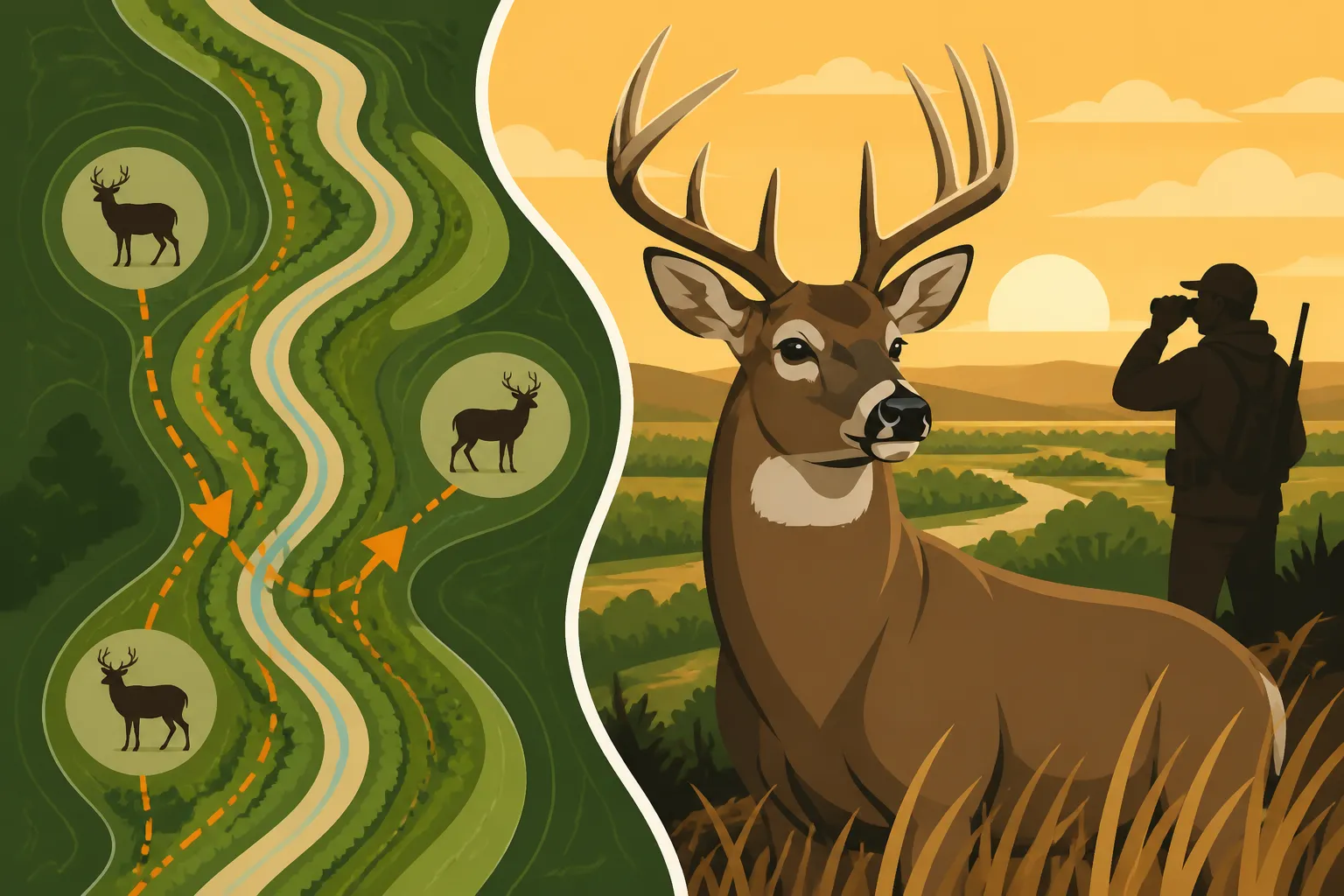
Deer aren't just meandering through the river bottom; their movements are incredibly calculated and tied to their immediate needs for security, food, and breeding. They use the dense cover of the river bottom for bedding, particularly during daylight hours, knowing that its tangles offer protection from predators and human disturbance. These bedding areas are often nestled in the thickest pockets of willows or dogwoods, sometimes on slightly elevated ground to offer a better vantage point or to stay dry. From these secure spots, deer will often travel along well-worn trails to adjacent feeding grounds, whether those are natural browse lines within the bottomland itself or the abundant agricultural fields nearby.
The river itself, along with the rising bluffs, creates natural funnels and pinch points that are invaluable for hunters to identify. Deer prefer the path of least resistance, and the river system often dictates these paths. Look for areas where the thick timber narrows between an oxbow and an open field, or where a deep coulee forces deer to cross at a specific, shallower point. These are your pinch points – natural bottlenecks where deer are concentrated. Understanding these patterns requires time afield, but using digital mapping tools like GoHunt can give you a significant head start, allowing you to identify potential travel corridors and bedding areas from above before you even set foot on the ground. Knowing these patterns will be crucial for any successful attempt at Still-Hunting North Dakota's Missouri River Bottomland.
Key Sign and How to Interpret It
Deer leave a treasure trove of information behind them, if you know how to read it. In the Missouri River bottom, where visibility can be limited, understanding this sign is paramount.
Deciphering Rubs and Scrapes
Rubs are essentially signposts left by bucks to communicate their presence and dominance. They're made when a buck scrapes the velvet from his antlers, sharpens them, or simply vents frustration by rubbing against a sapling or tree trunk. The key is to look for fresh rubs, indicated by raw wood and sap still oozing. Pay attention to the size of the rub – a larger diameter tree usually indicates a larger buck. More importantly, observe the rub line. A series of rubs often points in the direction a buck is traveling between bedding and feeding, or along a general patrol route. If you find a dense cluster of rubs, you’re likely near a core area for a buck.
Scrapes, on the other hand, are the deer equivalent of a social media post, primarily used for communication, especially during the rut. A scrape consists of an overturned patch of dirt, often beneath a low-hanging "licking branch," where deer will rub their preorbital glands. Bucks will urinate into the scrape to deposit scent from their tarsal glands, and does will visit them to indicate their readiness to breed. Again, freshness is key; a wet, recently disturbed scrape is hot. Look for scrapes along primary travel routes, at the edges of fields bordering timber, or at natural pinch points. If you find an active scrape, particularly a "primary scrape" that's used repeatedly, it's a prime location for a stand, as deer will periodically check it. You can learn more about how deer use these areas by researching topics like Scrape Lines Along a Section Line Trail to see how these behaviors translate across different terrains.
Reading Tracks and Trails
Tracks and trails are the most direct evidence of deer movement, but they require careful interpretation. Fresh tracks will have crisp edges, with dirt often still moist or recently disturbed. Older tracks will have rounded edges, may be filled with debris, or show signs of weather erosion. Learning to differentiate between a lone deer track and a series of tracks indicating a frequently used trail is vital. Primary trails are the deer highways, often wide, well-worn paths that connect major resources like bedding areas to feeding grounds. Secondary trails are less distinct, often branching off primary trails, leading to specific bedding sites, water sources, or smaller feeding pockets.
When it comes to individual tracks, size matters. Larger, deeper tracks often indicate a bigger, heavier deer, potentially a mature buck. Bucks also tend to drag their hooves slightly, especially when moving slowly, leaving a faint drag mark between prints. Does and fawns typically have daintier, cleaner prints. Pay close attention to the direction of travel, particularly near field edges or creek crossings. A consistent direction of travel during daylight hours suggests a daily pattern you can intercept. Muddy areas or fresh snow (if you’re hunting later in the season) offer the best canvas for track interpretation; research Reading North Dakota Mud for Fresh Deer Movement for more in-depth insights into this.
Bedding Areas and Feeding Patterns
Identifying bedding areas and understanding feeding patterns are the cornerstones of successful deer hunting in the river bottom. Bedding areas in these rich habitats are typically found in the thickest, nastiest cover available – dense stands of young willows, impenetrable dogwood thickets, or even areas of heavy cattails near oxbows. These spots offer security, but deer also choose them based on thermal regulation. South-facing slopes, for instance, offer warmth from the sun on cold days, while north-facing slopes provide shade during warmer periods. They also look for spots that give them a wind advantage, allowing them to smell danger approaching from downwind while they visually monitor upwind.
Connecting these bedding areas to feeding zones is where the real strategy comes into play. Deer are constantly moving between security and sustenance. In the early season, they might be browsing on lush green growth within the bottom, or frequenting alfalfa and soybean fields. As the season progresses, and especially after the first hard frosts, their focus shifts to high-energy foods like standing corn, acorns (if available from oak stands on the bluffs or specific bottomland trees), or even hidden food plots planted by landowners. You’ll often find primary trails radiating out from bedding thickets directly to these food sources. Understanding Late-Season Food Sources for North Dakota Whitetails is crucial for targeting deer when the natural forage begins to dwindle.
Strategic Hunting Approaches in River Bottoms
Hunting the Missouri River bottom demands a flexible approach, utilizing a mix of stand hunting, methodical still-hunting, and sometimes aggressive calling tactics.
Utilizing Elevated Stands and Ground Blinds
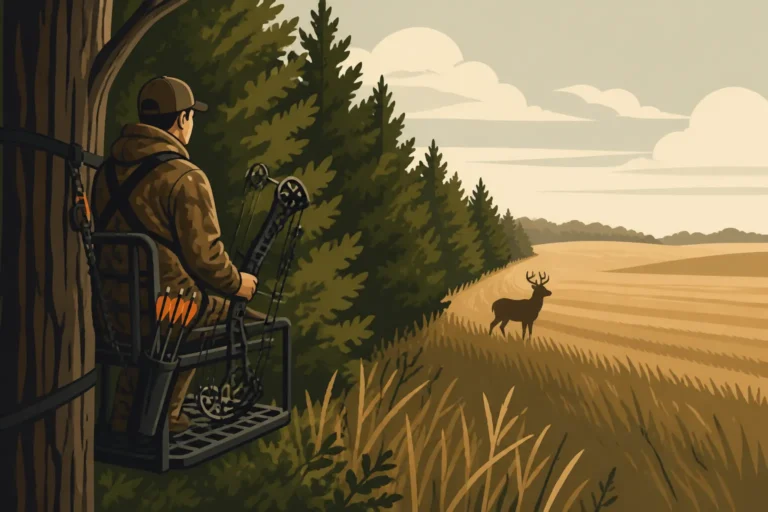
Both elevated treestands and ground blinds have their place in the river bottom, each with distinct advantages and disadvantages. Treestands offer a clear vantage point above the dense undergrowth, helping you see deer through the timber and significantly improving scent control by getting your scent cone above the deer's nose. They are ideal for intercepting deer moving along primary trails, especially at pinch points or where trails merge. However, hanging a stand in the gnarly, often brushy trees of the river bottom can be challenging, and finding a suitable tree with clear lanes can be tough.
Ground blinds, conversely, excel in areas with extremely dense cover where treestand placement is impossible or too exposed. They offer excellent concealment, allowing you to blend into the natural surroundings, especially when properly brushed in. They are particularly effective along field edges, near active scrapes, or deep within thickets where deer bed. The main drawback is scent control; your scent is at deer level. Strategic placement relative to prevailing winds is paramount. Always approach your stand or blind with the wind in your favor, and consider using a mapping tool like GoHunt to plot your entry and exit routes, minimizing disturbance. Understanding concepts like Hanging a Stand on a Shelterbelt Edge or Brushing In a Blind on a Field Edge can translate well into river bottom scenarios.
Still-Hunting and Scouting
Still-hunting is a highly effective, albeit demanding, technique for the dense, often noisy river bottom. It involves moving incredibly slowly, taking only a few steps at a time, then pausing for several minutes to observe, listen, and scan. The goal isn't to cover ground quickly, but to move through the deer's habitat in a way that allows you to spot deer before they spot you. This means utilizing every bit of cover, stepping only when the wind is blowing or a crow is cawing to mask your sound, and constantly looking for horizontal lines (a deer's back) in a world of vertical lines (trees). It’s about becoming part of the landscape.
Year-round scouting is truly the backbone of successful river bottom hunting. This isn't a place you can just show up and expect to succeed. After the season closes and before spring green-up, spend time walking trails, locating rubs and scrapes, and identifying bedding areas. In the summer, observe where deer are feeding and how water levels affect access. The more you know about your specific hunting area, the better equipped you'll be to adapt to seasonal changes. Tools like GoHunt can help you overlay historical data or recent satellite imagery to pinpoint changes in crop rotation, water levels, or logging activities, all of which influence deer behavior. Always prioritize scouting during different times of the year, similar to how one might go about Scouting PLOTS Land Before Season.
Calling and Decoying Tactics
While often associated with open country, calling and decoying can be surprisingly effective in the right river bottom scenarios, especially during the peak of the rut. Grunt calls can be excellent for stopping a cruising buck or luring one closer through the thick timber. A tending grunt or a contact grunt can pique a buck's curiosity, making him believe another deer is in the vicinity. Similarly, doe bleats can draw in curious bucks looking for companionship. For aggressive bucks, especially dominant ones, rattling antlers can mimic a fight, often bringing them in to investigate or challenge the "intruders." In dense cover, however, you need to be mindful of volume; too loud, and you might spook them. Learning the nuances of Grunt Calls in River Bottom Timber can make a huge difference.
Decoys require a bit more finesse in the timbered river bottom. A full-size buck or doe decoy can be highly effective during the rut, drawing bucks in for a closer look or a confrontation. Position your decoy with the wind in your face and the decoy facing slightly away from your anticipated approach lane, making it appear realistic and providing a quartering-away shot opportunity. The challenge in the river bottom is visibility; you need to place the decoy in an opening where it can be seen from a distance, but also where it has a natural backdrop to break up its outline. Sometimes, a simple silhouette decoy or even just a set of antlers on a stick can be enough to draw in a curious buck. For more aggressive tactics, consider how Rattling and Decoying Prairie Pothole Bucks might be adapted for the timbered river bottom.
Seasonal Considerations for Missouri River Deer
The Missouri River bottom is an ever-changing landscape, and deer behavior shifts dramatically with the seasons. Adapting your strategy to these changes is critical for consistent success.
Early Season Strategies
When archery season opens in late summer or early fall, the river bottom is often at its densest. The foliage is thick, providing abundant natural browse and incredible security for deer. During this period, deer are highly patterned, primarily moving between their secure bedding areas and predictable food sources. Your best bet is to focus on these food sources: lush green fields of alfalfa or soybeans adjacent to the river timber, early mast crops (if your area has any oak or fruit trees), or even small, hidden clover plots within the bottomland.
Mornings and evenings will be the most active times, with deer traveling relatively short distances from cover to feed. Stand placement should prioritize these travel corridors and feeding area edges. Due to the dense foliage, shot opportunities can be limited, so look for natural openings or lanes where you can get a clear shot. Scent control is especially important in the warmer early season, as deer are not yet stressed and are very alert. This is a time when the sheer amount of cover can be both a blessing and a curse; it hides the deer, but also provides ample opportunity for them to feel secure.
Rut Phase Hunting
As October gives way to November, the magic of the rut transforms the river bottom. This is when buck movement increases dramatically, as they actively seek out does. The normally nocturnal bucks become much more visible during daylight hours. Your strategy should shift to intercepting these cruising bucks. Focus on the pinch points we discussed earlier – areas where the bluffs, river, or dense thickets funnel deer into narrow travel corridors. These are prime locations for stands.
Doe bedding areas become hot zones during the rut, as bucks will be checking these areas frequently for receptive females. Listen for grunts, bleats, and the sounds of chasing. This is the optimal time for calling and rattling, as bucks are more prone to responding aggressively to challenges or calls from potential mates. Understanding Hunting the Rut in Early-to-Mid November is paramount for maximizing your chances during this exciting, but often fleeting, period. The intense activity means scent control and subtle movements are still crucial, but the rewards can be substantial.
Late Season Tactics
After the gun seasons conclude and colder weather sets in, the river bottom changes once again. Leaves fall, opening up visibility but also reducing natural cover. Deer, now often stressed from hunting pressure and needing to replenish energy reserves for winter, become heavily reliant on persistent food sources. Standing cornfields adjacent to the river bottom are absolute magnets for deer, as are any remaining green browse or hidden food plots.
The extreme cold and snow often push deer to seek out the best thermal cover – typically the densest, most sheltered thickets on south-facing slopes, which catch what little sun is available. Tracking in fresh snow becomes a highly effective method, allowing you to follow fresh deer sign directly to bedding areas or feeding grounds. Hunting Into a December Cold Snap often means targeting these specific thermal cover areas and the food sources they connect to. Hunters should also prioritize low-impact, quiet approaches to avoid spooking deer that are already on edge. When visibility improves with leaf drop, glassing open areas or field edges from a distance can be effective, similar to how one might consider Glassing a Section of CRP Grass on the prairie.
Here's a quick overview of some common deer sign you'll encounter in the Missouri River bottom:
| Deer Sign Type | Description | Interpretation for River Bottom | Best Time to Hunt |
|---|---|---|---|
| Tracks | Impressions left by hooves in mud, snow, or soft dirt. | Look for fresh tracks (sharp edges) along primary trails, creek beds, or field edges. Large, deep tracks with drag marks often indicate a mature buck. Follow tracks leading from thick cover to food. | All season, especially after rain or fresh snow. |
| Scrapes | Patch of overturned soil, often under a low-hanging "licking branch," with urine/glandular scent. | Indicates a buck's communication hub, particularly active during the rut. Focus on scrapes along travel corridors, pinch points, or field edges. A fresh, moist scrape is a hot sign. | Peak Rut (late Oct-Nov) |
| Rubs | Bark scraped off trees or saplings by a buck's antlers. | Signposts indicating a buck's presence and travel routes. A line of rubs often points the direction of travel. Larger rubs indicate a larger buck. Look for fresh rubs (raw wood, sap). | Pre-Rut to Post-Rut (Oct-Dec) |
| Trails | Worn paths through vegetation from repeated deer movement. | Identify primary trails (high traffic, wide) connecting bedding to feeding, and secondary trails leading to specific spots. Use these as natural ambush points. | All season |
| Bedding Areas | Depressions in dense cover where deer have rested, often with matted grass or droppings. | Found in thickets, cattails, or sheltered slopes. Approach carefully from downwind, noting exit routes. These are prime spots to jump a deer or set up an evening stand nearby. | Midday, or evenings if set up near feeding. |
| Droppings | Pellets of deer excrement, varying in size and consistency. | Fresh, dark, moist droppings indicate recent activity. Can help determine if deer are feeding heavily on browse (softer) or grain (harder, more distinct pellets). Clustered droppings suggest a bedding or frequent feeding area. | All season |
The Missouri River bottom is truly a challenging yet rewarding landscape to hunt. By understanding its unique ecological features, diligently reading the signs left by deer, adapting your hunting strategies to the changing seasons, and using modern scouting tools like those offered by GoHunt, you'll be well on your way to unlocking its secrets and finding success. Remember, patience and persistence are your greatest allies in this magnificent, wild place.
Disclaimer
Hunting is an inherently dangerous activity. This guide provides general information and strategies for hunting deer in North Dakota's Missouri River bottomland and is not a substitute for proper hunter education, local regulations, or personal judgment. Always prioritize safety, adhere to all North Dakota Game and Fish Department rules and regulations, and respect private property. The author and publisher are not responsible for any accidents, injuries, or legal infractions that may occur.