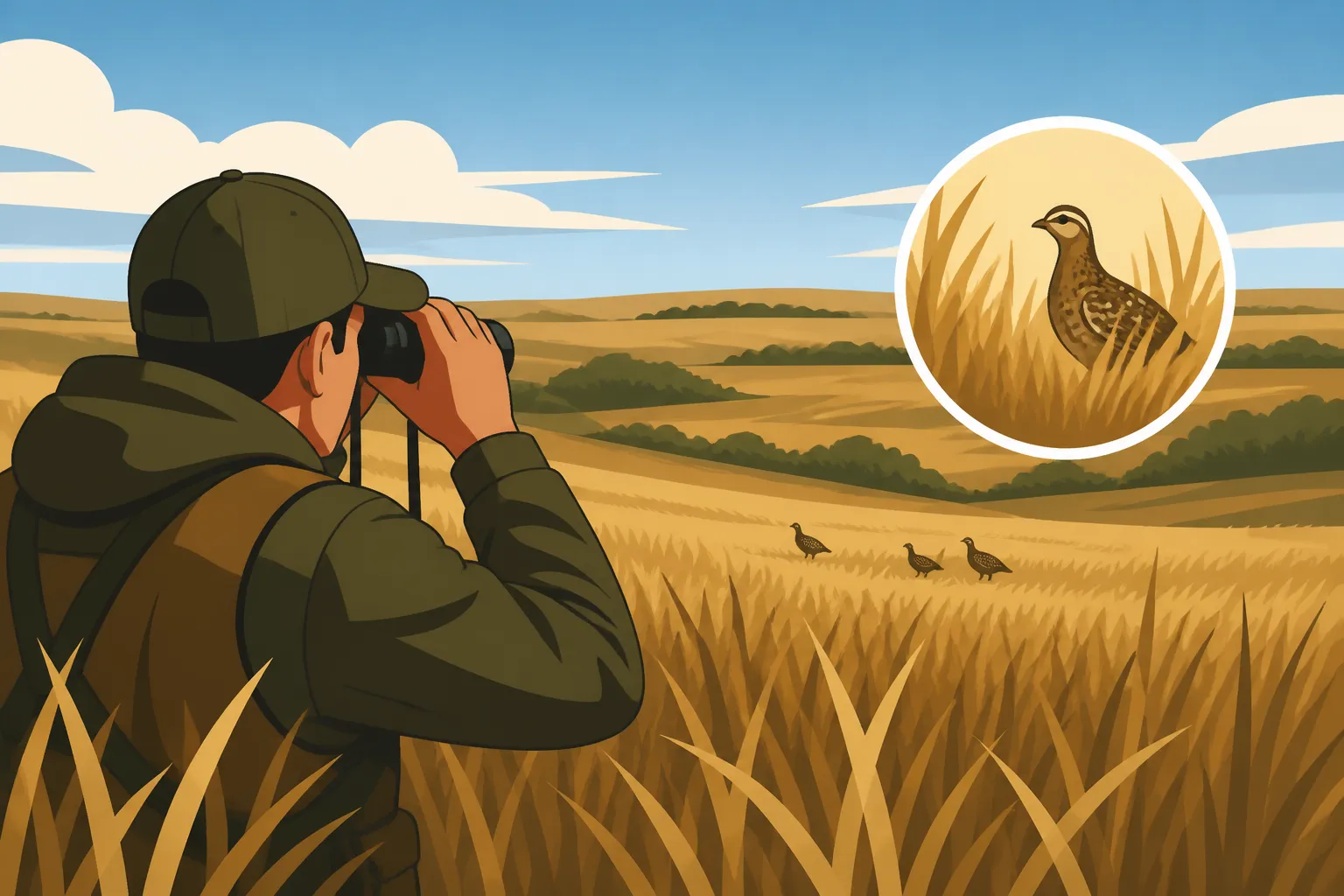
Glassing a Section of CRP Grass
One of the most persistent frustrations for hunters in North Dakota's vast, open landscapes is knowing how to effectively locate game hiding in what seems like endless seas of grass. You stare out across a sprawling section of Conservation Reserve Program (CRP) land, knowing deer, pheasants, and grouse are in there, but how do you find them without blindly walking miles and bumping every animal? This guide will break down the art and science of glassing CRP grass, turning those seemingly impenetrable fields into readable maps for spotting game.
Understanding CRP Grass as Crucial North Dakota Habitat
CRP, or Conservation Reserve Program, land is a cornerstone of North Dakota's wildlife habitat. These acres, often former cropland, are enrolled in government programs to conserve soil and water quality, and in doing so, they become absolutely vital for a myriad of game species. For hunters, it’s not just "grass"; it's a dynamic ecosystem providing critical cover, nesting areas, and sometimes even food sources.
Why CRP Holds So Much Game
The sheer density and height of the grass in CRP fields offer unparalleled protection. During the spring and summer, it’s a perfect nursery for pheasant and duck broods, and fawns are born and hidden within its protective folds. As seasons progress, this thick cover becomes a sanctuary from predators and harsh weather. Think about a cold, blustery October day; a deer isn't going to bed in a sparse stubble field. It's going to hunker down in the tallest, densest cover available, which is often CRP. For upland birds like pheasants and sharptail grouse, CRP offers a safe haven to escape the keen eyes of hawks and eagles, and a relatively secure place to roost at night.
Furthermore, these fields are often adjacent to active agricultural lands, offering an ideal combination of food and cover. A pheasant might feed in a harvested cornfield in the morning but retreat to the thick CRP for midday loafing or to escape hunting pressure. Deer will browse agricultural crops or native forbs along field edges and then melt into the CRP for bedding. This interplay between food and cover makes scouting and understanding CRP vital. You can find more insights on optimal bird habitat by reading about Pheasant Hunting North Dakota's Prairie.
The Challenges of Hunting Dense Grassland
While CRP is a game magnet, it also presents significant challenges for hunters. Walking through dense, chest-high grass can be exhausting and noisy, making it difficult to sneak up on wary game. Visibility is often limited, both for you looking in and for game looking out. This is precisely why glassing becomes such an indispensable skill. Instead of expending energy walking every acre, you can use optics to systematically search vast areas, saving your legs for the retrieve once you've located your target. Trying to jump-flush birds or still-hunt deer in these areas without first glassing can be a frustrating, low-percentage effort.
Essential Gear and Techniques for Effective Glassing
Glassing isn't just about pointing binoculars at a field. It's a strategic process that requires the right tools and a disciplined approach. Investing in quality optics and understanding how to use them can drastically improve your success rate when hunting North Dakota’s open country.
Choosing the Right Optics and Support
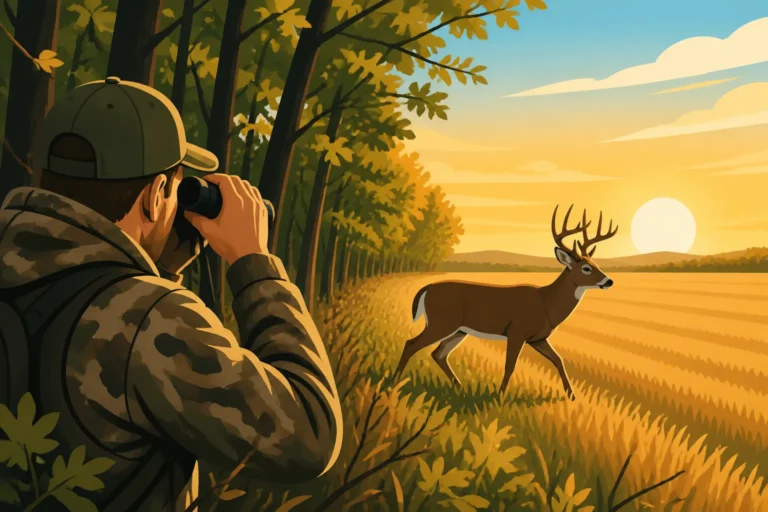
First and foremost, you need good binoculars. For general glassing, a pair of 10×42 or 10×50 binoculars are excellent all-around choices. They offer a good balance of magnification, field of view, and light-gathering capability. Brands like Leupold, Vortex, and Maven offer excellent quality optics that won’t break the bank. If you plan to glass at longer distances, especially for mule deer in the Badlands or antelope on the prairie, a spotting scope (20-60x or 15-45x) becomes invaluable. A spotting scope on a stable tripod allows you to pick apart distant cover and discern subtle details that binoculars might miss.
And speaking of tripods, don’t skimp here. A flimsy tripod will cause your optics to shake, leading to eye strain and missed details. A sturdy tripod, preferably one with a fluid head for smooth panning, is crucial for sustained, comfortable glassing. Some hunters even mount their binoculars on a tripod for maximum stability. When you're spending hours scanning, every bit of comfort helps you stay focused and effective. You'll find that having good support makes a huge difference when trying to spot subtle movements in tall grass.
Mastering the Systematic Glassing Grid
The key to effective glassing is a systematic approach. You can't just randomly scan and expect to find game consistently. The most common and effective technique is to establish a grid pattern. Pick a section of CRP grass you intend to glass. Start at one end of the field, either the far left or far right, and pick a landmark. Begin scanning slowly, left to right, covering a narrow horizontal strip of the field. Once you reach the other side, drop your optics slightly and scan back, right to left, overlapping your previous pass by about 10-15%. Repeat this process, working your way down the field, like you’re reading a book.
The speed of your scan is crucial. Resist the urge to rush. Move your optics just slowly enough that if an animal were standing there, you’d pick up at least a piece of it – an ear, an antler tip, a horizontal line in a vertical world. Many experienced hunters use a similar systematic grid when Glassing Badlands Coulees for Elk or when searching for deer across the open prairie. This disciplined method ensures you don't miss any pockets of cover. Tools like the GoHunt app can assist in defining these sections, allowing you to mark off areas you've covered, especially on larger parcels or when Scouting PLOTS Land Before Season.
Reading the Landscape: What to Look For in CRP Grass
CRP grass isn't a uniform green blanket. It has contours, varying heights, and subtle disturbances that can reveal the presence of game. Learning to interpret these signs is as important as the act of glassing itself.
Identifying Subtle Shapes and Anomalies
When you’re glassing, you're not looking for an entire deer or a flock of pheasants initially. You're looking for anything that breaks the natural pattern of the grass. This could be:
- A horizontal line: Most grass grows vertically. A horizontal line could be the back of a bedded deer or the top of a rooster pheasant's tail.
- An odd color: A patch of brown or tan that doesn't quite match the surrounding vegetation, or the iridescent bronze of a pheasant’s back.
- A subtle curve or lump: The rounded back of a deer or the distinct shape of an antler.
- Movement: Even a slight flick of an ear, a tail swish, or the rustle of grass when there's no wind can give away an animal's presence.
- Shadows: Sometimes, the shadow cast by an animal in dense cover is more apparent than the animal itself, especially in early morning or late evening.
Pay close attention to changes in terrain within the CRP. Is there a slight rise? A shallow swale? A fence line? These are all natural places for animals to seek shelter or travel. Even a small depression can offer enough thermal cover to hide a deer from the wind. This kind of detailed observation is crucial, as you can see demonstrated in guides about Reading a Missouri River Bottom for Deer where subtle changes in topography guide hunter movements.
Timing and Environmental Factors
The time of day and weather conditions play a significant role in successful glassing.
- Early Morning and Late Evening: These are prime times. Game animals are often more active, moving to and from feeding areas, or simply standing up to stretch before bedding down or after getting up. The low angle of the sun at these times can create long shadows that highlight animals or throw them into sharp relief, but also cause glare.
- Midday: Don't dismiss midday, especially on cold or windy days. Animals will often be bedded down in the thickest cover, trying to conserve energy or escape the elements. This is when the systematic grid method, combined with patience, really pays off.
- Wind: A strong wind can make it harder to spot movement, but it can also make animals feel more secure, allowing you to approach once spotted. Deer and upland birds will often bed on the leeward side of hills or thickets to escape the direct force of the wind.
- Sun Angle: Try to position yourself so the sun is at your back, shining onto the area you're glassing. This reduces glare and illuminates the subject. If you have to glass into the sun, use a sunshade on your optics or try to find an elevated position that allows you to look down into the shadows. Using the GoHunt mapping features can help you predict sun angles for different times of day in your hunting unit.
Optimizing Your Glassing Strategy for Specific Game
While the general principles of glassing apply across the board, tailoring your approach slightly for deer, pheasants, or grouse can increase your odds of success. Understanding typical behavior patterns and preferred cover for each species is key.
Finding Deer in CRP
Deer, particularly whitetails, will use CRP for bedding during the day. They often prefer edges—the transition zone between the CRP and a crop field, timber, or a tree line. They also gravitate toward any elevation changes, even subtle ones, which offer a slight vantage point or better thermal protection. When glassing for deer, pay extra attention to these edge habitats and any slight swells or depressions in the terrain. Look for the glint of an antler, the horizontal line of a back, or the distinct shape of a deer’s ear poking above the grass. Sometimes, you'll only see a small patch of hide that looks "off." It takes patience, but that brown patch that doesn't quite look like a rock is often your buck.
Consider how deer move. They'll often follow subtle trails through the thick grass, especially if leading to a water source or preferred feeding area. These trails can be difficult to spot from a distance, but sometimes a slight parting of the grass, or even a different hue of green where more moisture is present from repeated traffic, can give them away. If you locate a doe or two, chances are a buck isn't far away, especially as the rut approaches. Learning about Hunting the Rut in Early-to-Mid November highlights the importance of finding these bedding areas.
Locating Upland Birds in CRP
Pheasants and sharptail grouse thrive in CRP. They use it for roosting, loafing, and escape cover. When glassing for pheasants, focus on the lower third of the grass, looking for flashes of color, quick movements, or the distinctive tail feathers of a rooster. They often congregate in small groups, so if you spot one, scan the immediate area thoroughly for others. Sharptails, being a bit more open-country birds, might be found closer to more sparse sections of grass or even along edges where the CRP transitions to native prairie.
For both species, identifying feeding patterns related to nearby food sources is critical. If CRP borders a wheat or cornfield, birds will move between the two. Glass the edges of the CRP closest to these food sources, especially in the mornings and evenings. Wind also plays a huge role; birds often hold tighter in dense cover on windy days, making them harder to flush but potentially easier to spot when glassing a section of CRP grass, as they might be less prone to running. You might also want to consult guides on Hunting Sharptail Grouse at First Light for more species-specific tactics.
Using Technology to Enhance Your Glassing
Modern hunting apps like GoHunt have revolutionized how we scout and approach areas like CRP. You can use these apps to:
- Identify Public Land: Easily see where PLOTS (Private Land Open To Sportsmen) or other public access lands are located, helping you target specific CRP sections. This is critical for knowing How Many Acres of Public Land North Dakota Has.
- Topographical Maps and Satellite Imagery: Use the layers to identify subtle elevation changes, drainage features, or areas of thicker vegetation within a CRP field. These details are often invisible from the ground but can be crucial for predicting where game might be.
- Mark Waypoints: If you spot an animal, you can instantly drop a waypoint on your map, allowing you to plan your approach or return later. This is particularly useful when scouting for deer or even when trying to pinpoint where a covey of Huns might be hiding.
- Sun/Moon Data: Many apps provide sun and moon phase data, helping you plan your glassing sessions for optimal light conditions. Knowing the exact time the sun will hit a certain section of CRP can be a game-changer.
- Wind Direction: Integrating real-time wind data into your planning can help you choose the best vantage points for glassing without having your scent carried directly to the game.
By combining traditional glassing techniques with the power of modern mapping tools, you can turn seemingly overwhelming CRP fields into manageable, productive hunting grounds.
A Quick Comparison of Glassing Techniques
To give you a clearer picture, here’s a simple table comparing different glassing approaches and when they might be most effective in North Dakota's CRP.
| Technique/Tool | Primary Use Case | Optimal Conditions | Benefits | Limitations |
|---|---|---|---|---|
| 10x Binoculars | General scouting, broad area scans | Any daylight | Portable, wide field of view, quick acquisition | Less detail at long range |
| Spotting Scope/Tripod | Detailed examination of distant CRP, identifying specific animals | Longer distances, stable vantage point | High magnification, excellent detail | Less portable, narrow field of view, slower scan |
| Systematic Grid Scan | Thoroughly searching any sized CRP field | High game density, unknown locations | Ensures no area is overlooked, disciplined | Time-consuming, requires patience |
| Edge Focusing | Deer and pheasant hunting | CRP adjacent to food/cover | Targets high-probability areas | Can miss game deeper in the field |
| Topographical Analysis | Planning approaches, predicting bedding | Any time with mapping tools | Identifies hidden features, reduces wasted effort | Requires practice with maps |
Mastering the art of glassing a section of CRP grass isn't just about the tools you use, it's about the patient, systematic application of those tools, combined with a deep understanding of the habitat and the game that calls it home. Good luck out there!
Disclaimer
Hunting is an inherently dangerous activity. Always prioritize safety, understand and follow all North Dakota Game and Fish Department regulations, and respect private land boundaries. This guide is for informational purposes only and should not replace proper hunter education or professional guidance.