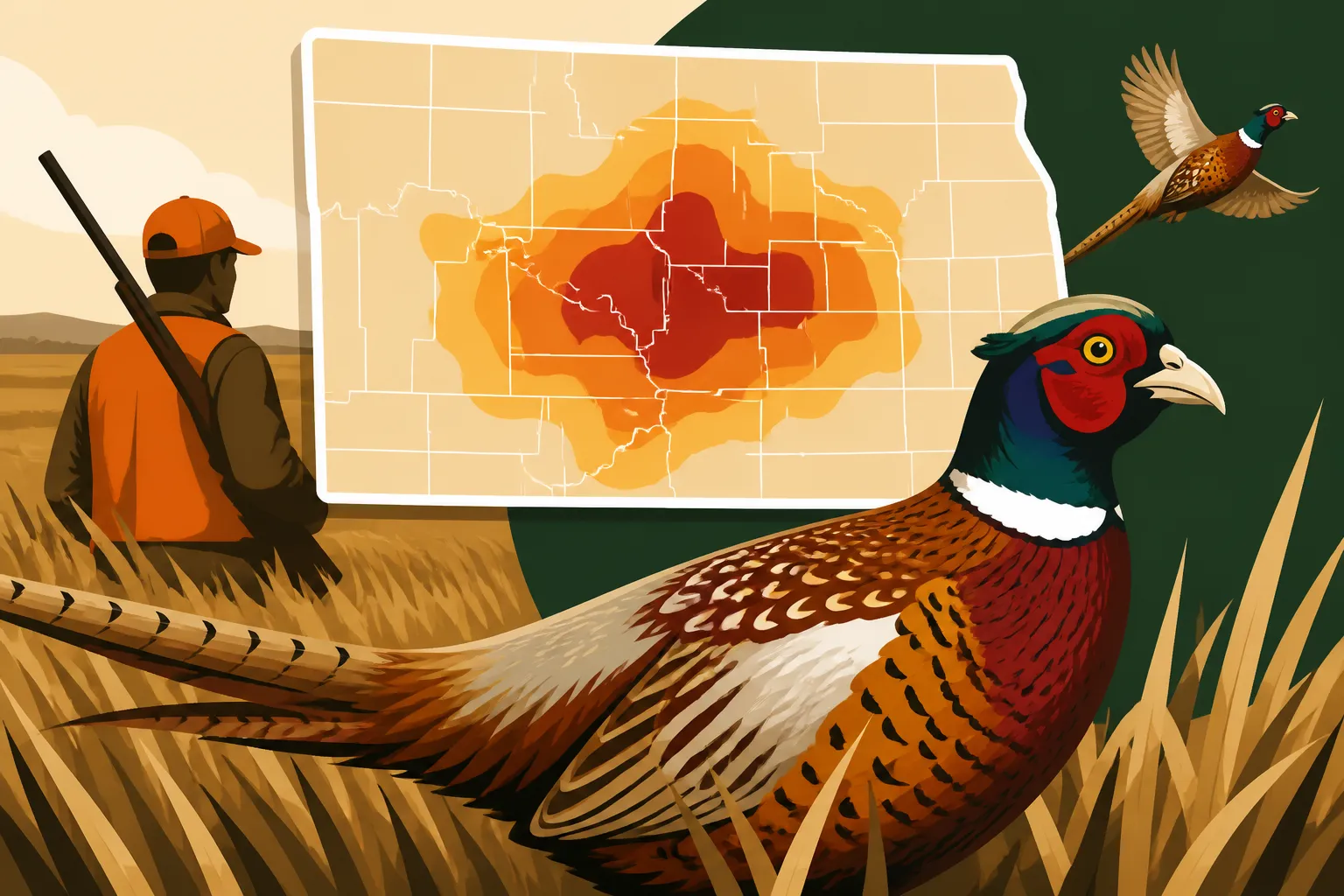
Where North Dakota Pheasants Are Densest
For any pheasant hunter, there's that ever-present question that gnaws at you as you plan your fall adventures: where are the birds really at? You've likely spent countless hours pouring over maps, scanning satellite imagery, and wondering if this year will finally be the one where you hit that magical spot. This guide is dedicated to helping you decipher the puzzle of pheasant distribution across North Dakota, focusing on where these elusive long-tails tend to congregate in the highest numbers, and why.
Understanding Prime Pheasant Real Estate in North Dakota
North Dakota isn't just known for its vast expanses; it's a mosaic of habitats, some far more appealing to pheasants than others. If you want to find high concentrations of birds, you first need to understand what makes a particular patch of prairie, a specific shelterbelt, or a certain agricultural field irresistible to them. It’s all about survival, food, and cover – the trifecta of pheasant happiness.
The Ideal Blend of Cover and Food Sources
Pheasants are masters of blending in and utilizing dense cover to escape predators and harsh weather. This isn't just any cover, though. We're talking about specific types that provide thermal protection in winter, nesting sites in spring, and security year-round. Think about fields of dense cattails along a slough, thick patches of switchgrass, or CRP (Conservation Reserve Program) acres that haven't been disturbed. These areas offer the kind of sanctuary a pheasant needs to thrive.
But cover alone isn't enough; they need a readily available food source nearby. This is why you'll often find pheasants concentrated near agricultural fields, especially those with waste grain or standing crops like corn or sunflowers. The birds will feed, then retreat into the heavy cover to digest and hide. A successful hunting area often has this critical juxtaposition: a buffet right next to a fortress. Knowing the importance of North Dakota CRP Acres and Pheasant Numbers can give you a real leg up here, as these tracts are specifically designed to provide that prime habitat.
Water Access and Winter Survival
While pheasants aren't ducks, water plays a crucial, though often overlooked, role in their survival, especially during dry spells or late-season freezes. They get much of their moisture from dew, insects, and succulent plants, but proximity to sloughs, dugouts, or even snowdrifts for moisture becomes increasingly important in certain conditions. More critically, these moist areas often support the very dense cover pheasants seek out.
Winter is the ultimate test for North Dakota pheasants. Areas with good winter cover, like deep draws filled with brush, tree rows, or dense cattails that stand up to heavy snow, are vital. These pockets provide thermal cover against brutal winds and sub-zero temperatures. Without adequate winter protection, pheasant populations can take a severe hit. This directly impacts Winter Survival and North Dakota Pheasant Numbers, making these hardy birds dependent on specific landscapes that can shield them from the elements. A smart hunter understands that finding these robust wintering areas often means finding higher pheasant densities come fall.
Key Regions for High Pheasant Density
North Dakota is a big state, and while you might find a pheasant just about anywhere, some regions consistently report higher populations than others. It's not a secret; it's simply where the habitat is best suited for these birds to flourish.
Southwestern North Dakota's Pheasant Strongholds
If you've spent any time researching North Dakota pheasant hunting, you've likely heard whispers and shouts about the southwest. This region, encompassing counties like Bowman, Slope, and southern Golden Valley, often tops the charts for pheasant densities. Why here? It's a combination of factors. The landscape features rolling hills, plenty of diverse small grain agriculture, and an abundance of undisturbed grasslands, especially those enrolled in conservation programs. The land here often features a good mix of woody draws, dense grass fields, and stubble, creating that ideal patchwork of cover and food.
These counties also tend to have slightly milder winters compared to the far northern stretches of the state, which contributes to better overwinter survival rates. Hunters who focus their efforts here often find that while pressure can be higher, so too are the rewards. It's a classic example of "follow the habitat, find the birds."
The Southeast and James River Valley
Moving eastward, the southeastern part of the state, particularly the James River Valley, also boasts significant pheasant numbers. Counties such as Dickey, Sargent, and LaMoure are consistently productive. This area is characterized by its rich agricultural lands, interspersed with numerous sloughs, wetlands, and extensive CRP plantings. The James River itself, with its timbered bottomlands and brushy corridors, provides excellent linear cover that birds use as travel lanes and thermal protection.
Here, the challenge can sometimes be finding accessible public land amidst the productive private farms. However, for those willing to do their homework and seek out permission or concentrate on The PLOTS Program Explained, the pheasant hunting can be phenomenal. The birds in this region benefit from plentiful food sources and diverse cover types, leading to robust populations.
West Central and Missouri River Corridor
While perhaps not as consistently dense as the southwest, the west-central portion of North Dakota, particularly along the Missouri River corridor and its tributaries, can be highly productive. Counties like Morton, Oliver, and Mercer often hold good numbers of pheasants. The river breaks, coulees, and shelterbelts provide excellent winter cover, and the surrounding agricultural fields offer ample food.
This area can sometimes be overlooked by hunters flocking to the southwestern hotspots, which can mean slightly less pressure if you find the right spots. The varied topography, with its mix of river bottom timber, open prairie, and crop fields, creates a diverse habitat that pheasants exploit. For those interested in Pheasant Hunting North Dakota's Prairie, these areas offer excellent opportunities, especially in larger tracts of public land or through careful scouting of private properties.
Factors Influencing Annual Pheasant Densities
Pheasant numbers aren't static; they fluctuate from year to year based on a variety of environmental and human-influenced factors. A successful hunter isn't just looking for historically good areas but also understanding the current conditions that drive population shifts.
Weather Patterns and Brood Rearing Success
The single biggest factor influencing pheasant densities year-to-year is often the weather, particularly during the nesting and brood-rearing seasons in spring and early summer. Ideal conditions involve a mild winter, a warm and dry spring for nesting success, and gentle summer rains that promote insect growth (a critical food source for pheasant chicks) without drowning young birds.
Conversely, a harsh winter with prolonged deep snow can decimate adult populations by limiting access to food and cover. A wet, cold spring can lead to significant nest and chick mortality, impacting the fall harvest directly. Drought conditions can also reduce insect populations and vegetative cover. This is why paying attention to reports like North Dakota Pheasant Brood Survey Results is so important; these surveys offer a glimpse into how successful the breeding season was and what to expect in the fall. You can use tools like GoHunt to look up historical weather data for specific regions you're considering, helping you predict potential hotspots.
Habitat Availability and Land Use Changes
Habitat is king for pheasants, and any changes to the landscape can profoundly affect their numbers. The amount of quality nesting cover, winter thermal cover, and reliable food sources directly correlates with pheasant density. When acres of CRP are re-enrolled or new conservation programs are initiated, it can boost local populations. Conversely, large-scale changes in agricultural practices, such as converting diverse small grain fields to monocultures or removing shelterbelts, can reduce available habitat and scatter birds.
Hunters should always be looking for areas that maintain a diverse blend of habitat types. This often means focusing on public lands like Waterfowl Production Areas (WPAs) or State Wildlife Management Areas (WMAs), as well as private land enrolled in programs like PLOTS. These areas are managed with wildlife in mind, ensuring a consistent level of quality habitat even as surrounding lands change. Understanding How Pheasants Were Introduced to North Dakota also highlights the importance of managed habitats in their successful establishment.
Predation and Hunting Pressure
While less impactful than weather and habitat, predation and hunting pressure certainly play a role in local pheasant densities. Predators such as foxes, coyotes, raccoons, and raptors can take a toll on nests, chicks, and even adult birds, particularly in areas with less robust cover. Healthy predator populations are a natural part of the ecosystem, but an imbalance can sometimes suppress pheasant numbers in smaller, isolated areas.
Hunting pressure also influences where pheasants are found, especially on public lands. Birds quickly learn to avoid high-traffic areas and will move to thicker, less disturbed cover as the season progresses. This means that while a particular field might be dense with birds on opening weekend, by mid-season, they've either been harvested or have moved to more secluded spots. This is where scouting tools, like those offered by GoHunt, become invaluable for identifying less-pressured corners of public land or finding smaller, overlooked parcels.
Finding High-Density Areas: A Hunter's Strategy
Knowing where the birds generally are is one thing; finding the exact spots on a specific day is another. This requires a combination of research, scouting, and on-the-ground intuition.
Leveraging Maps and Digital Scouting Tools
Before you ever set foot in a field, modern technology gives you a massive advantage. Satellite imagery on mapping apps can reveal incredible detail about cover types, field edges, sloughs, and shelterbelts. You can pinpoint those crucial junctions of food and cover, identify potential travel corridors, and mark areas that look promising. Pay close attention to changes in vegetation, the presence of standing water, and any linear features like fencerows or tree lines that birds might use for protection.
Platforms like GoHunt provide robust mapping layers that can show you public land boundaries, including PLOTS tracts and federal lands like Waterfowl Production Areas. This allows you to plan your access points and identify areas less likely to be pressured by other hunters. Scouting from your couch can help you eliminate vast swaths of unproductive ground, saving you precious time and boot leather. Look for isolated patches of dense cover or unharvested crops, as these are often magnets for pheasants.
On-the-Ground Scouting and Asking for Permission
Nothing beats good old-fashioned boots-on-the-ground scouting, but even this can be done strategically. Drive rural roads slowly, observing field edges for bird sign, looking for flush pheasants, or even just noting the type and quality of cover. Take mental notes or drop pins on your mapping app. Pay attention to how the land lays, recognizing subtle changes in topography that might offer shelter.
For private land, the phrase "a closed mouth doesn't get fed" rings true. Many North Dakota landowners are incredibly gracious if approached respectfully and well in advance of the season. Dress nicely, be polite, and offer to share your contact information. Often, small, isolated parcels of private land that might be too small for a farmer to actively hunt can hold incredible numbers of birds. Asking for permission gives you access to less-pressured areas that public land hunters might overlook, potentially leading to some of the densest pheasant encounters. Always be mindful of North Dakota Trespass and Permission Law to ensure you're hunting legally and ethically.
Focusing on Public Lands: PLOTS and WPAs
North Dakota is blessed with extensive public hunting opportunities, especially through its PLOTS (Private Land Open To Sportsmen) program and numerous federal Waterfowl Production Areas (WPAs). These lands are specifically managed to provide habitat for pheasants and other game. When seeking high-density areas on public land, focus on PLOTS tracts that offer diverse cover, especially those adjacent to private agricultural fields. The birds will use the PLOTS land for cover and roosting, and the private land for feeding.
WPAs, while primarily managed for waterfowl, often contain excellent upland habitat, including dense grasses and cattail sloughs, which pheasants utilize heavily. These areas can be fantastic, especially mid-week when pressure might be lower. Remember to consult the annual PLOTS guide or use the ND Hunt App (or GoHunt's integrated maps) to find current PLOTS locations, as they can change year-to-year. Successfully Walking North Dakota PLOTS Land for Pheasant often comes down to targeting these well-managed tracts and being willing to walk farther than other hunters.
Top Counties for North Dakota Pheasants
While pheasant densities fluctuate, some counties consistently stand out due to their ideal blend of habitat, agriculture, and land-use practices. It's not an exact science, but these often appear at the top of harvest reports and hunter surveys.
Consistent Performers
Based on historical data and hunter reports, several counties frequently offer the best chances for high pheasant numbers. These are the areas where the habitat mosaic is just right, year after year.
| Region | Top Performing Counties | Key Habitat Characteristics | Considerations |
|---|---|---|---|
| Southwest | Bowman, Slope, Golden Valley (southern), Hettinger | Diverse agriculture, rolling hills, abundant CRP, woody draws, slightly milder winters | Can experience higher hunting pressure, but consistently good numbers. |
| Southeast | Dickey, Sargent, LaMoure, Ransom | Rich agricultural land, James River bottomlands, numerous sloughs, extensive CRP, diverse wetland complexes | Requires more private land permission; PLOTS access is key. |
| West Central | Morton, Oliver, Mercer, Grant | Missouri River breaks, varied topography, mix of timber, prairie, and crop fields, good winter cover in coulees | Can be overlooked, offering potential for less crowded hunts. Variable densities. |
| North Central | McLean, Sheridan, Wells | Prairie pothole region, mix of agriculture and grasslands, numerous wetlands, good cover in larger tracts | Densities can vary more with winter severity; target areas near larger bodies of water. |
This table provides a general overview, but always remember that local conditions and recent weather can make a significant difference. It’s always best to combine this regional knowledge with current year forecasts and on-the-ground scouting. The North Dakota Game and Fish Department provides excellent annual harvest reports and North Dakota Pheasant Population Estimate surveys, which can help confirm these trends and highlight any anomalies for the current season.
Looking Beyond the Obvious
Sometimes, the densest pheasant hunting isn't in the most famous counties, but in overlooked corners of the state or on smaller, less-pressured parcels. These might be small PLOTS tracts that don't look like much on a map, shelterbelts along a section line, or even unexpected pockets of thick cover in otherwise open agricultural country.
The key is to think like a pheasant. Where would you go to escape the wind, find food, and feel secure from predators (and hunters)? Often, it's the nastiest, thickest, most overlooked cover that holds the most birds, especially after opening weekend. Don't be afraid to try areas that others pass by. A smaller, more remote WPA, a long, winding PLOTS field of undisturbed tall grass, or a neglected farmstead can often surprise you with an abundance of birds. And for those who enjoy the challenge, Running Pointing Dogs on North Dakota Pheasant in these smaller, denser pockets can be incredibly rewarding.
Disclaimer
This article is for general informational purposes only and does not constitute professional advice. Laws, prices and regulations vary by location and change over time. Consult a qualified professional for guidance on your specific situation.